
Confirmation #
Thank you, !
Your order is confirmed.


Ares Acres
Couldn't load pickup availability
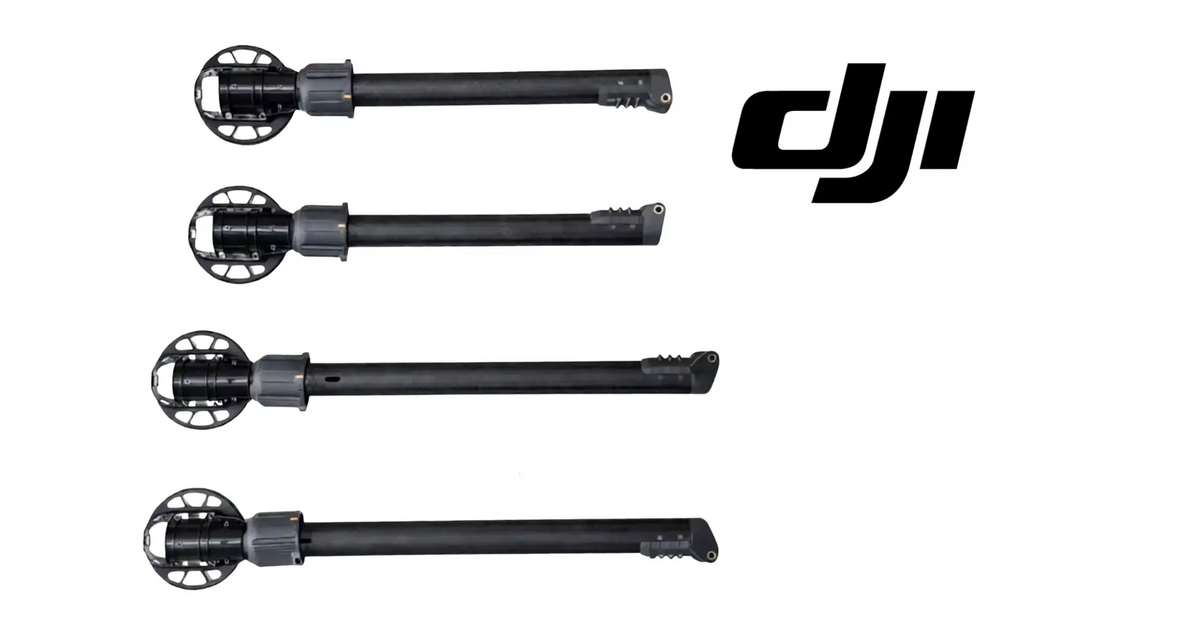
DJI Matrice 400 Aircraft Arm Assembly — Select Position — One structural arm assembly in the position you choose: Front Right, Front Left, Rear Left, or Rear Right. The carbon-fibre tube with its integrated upper and lower mounting structure. Two things make this a good repair rather than a cheap one — getting the position right, and clearing the three arms you are keeping. Aircraft Arm Assembly | Position Selectable | Matrice 400 Airframe Structure | Targeted Enterprise Repair.
This is a structural arm assembly, not a propulsion kit. Motors, ESCs, propellers, internal wiring, landing gear, and installation labour are not included unless explicitly shown or stated.
The Matrice 400 aircraft arm is primary airframe structure. It carries the thrust and torque generated at the motor end back into the central airframe, and it holds the motor-side geometry that the flight-control system assumes is correct.
Each assembly covers three things that can be damaged independently: the carbon-fibre tube, the upper folding and rotating joint structure, and the lower mounting interface where the arm meets the body. A fault at any one of them is a reason to replace the assembly.
Position is a specification, not a preference. Front Right, Front Left, Rear Left, and Rear Right are four different parts, and they are not interchangeable variants of one part. Select the exact position for the corner you are repairing. The listing is position-coded for exactly this reason — M400-ARM-FR, M400-ARM-FL, M400-ARM-RL, and M400-ARM-RR each correspond to one corner of the aircraft.
Establish the position from the aircraft, with a convention you will not confuse later. Stand behind the aircraft looking forward along its nose — the way the aircraft flies, not the way you happen to be facing. Left and right follow from that. Then photograph the damaged corner, in frame with something that identifies the front of the aircraft, before anything is removed. Working from a photograph taken from the wrong side is one of the easier ways to order the wrong corner.
What the arm assembly does:
When a single position is the right call:
What damages a Matrice 400 arm:
What a correct, well-fitted arm gives back:
The arm exists to hold one motor in exactly the right place while carrying everything that motor produces into the airframe.
The position-selectable arm assembly:
The damaged arm is the easy part. The judgement is about the other three. Replacing one arm is a sound decision only if the arms staying on the aircraft are genuinely sound, and on a composite structure "looks fine" is not an inspection.
Start with the one that failed, and read how it failed. A clean local break from a strike tells a different story from a tube that has crazed, whitened, or delaminated along its length. Localised impact damage supports a single-arm repair. Evidence of a frame-wide overload does not.
Then tap-test each arm you intend to keep. Tap along and around each tube with a coin or a light metal object and listen. Sound laminate rings clean and consistent; delaminated laminate goes dull, dead, or buzzy. Compare the same point on each of the four arms against the others — the comparison is what makes the result meaningful, and this check finds the damage that leaves no surface mark at all.
Look along each tube with a light held low. Rotate it and read the surface at a shallow angle. A scuff sits on top of the finish and stops at it; a crack runs a continuous line that keeps catching the light. Mark any whitened or hazy resin.
Inspect every clamped joint on every arm. Where metal grips composite, look for crushing, ovalisation, whitened fibres, and resin cracking at the edge of the fitting. These transitions fail before the middle of a tube does, and they are easy to overlook on the arms you are not replacing.
Work each folding joint through its full travel. Distortion, cracking, new play, a notchy feel, or an arm that no longer locks positively are all findings — and a joint that was shocked in the same incident can be damaged on an arm whose tube is perfect.
Compare geometry across all four corners. Height, sweep, and the motor-mount plane. If the arm you are keeping no longer matches its opposite number, replacing only the obviously broken one leaves the aircraft asymmetric.
Then make the call honestly. If the other three clear, fit one arm. If two or more show findings, if the arms are high-hour enough that a new one would be noticeably stiffer, or if the incident was severe enough that every arm took the shock, the complete four-arm set is the better repair and there is a separate listing for it.
Do not repair the damaged arm. Filler, wrap, and adhesive restore appearance, not a known laminate strength — and an arm whose strength nobody can state is not a structural repair on a working aircraft.
Fit, align, and verify. Confirm the arm position against the aircraft, transfer or reinstall the propulsion components, wiring, fasteners, and covers per the service procedure, torque to the published figures, and check that no cable is pinched at the joint. Then compare the repaired corner's geometry against its neighbours, run a full systems check, hover while watching for new vibration, and fly a short verification flight with a look at the data.
Product: DJI Matrice 400 aircraft arm assembly — position selectable
Type: Airframe structural arm assembly, single position
Compatible aircraft: DJI Matrice 400
Selectable positions: Front Right, Front Left, Rear Left, Rear Right
Position codes: M400-ARM-FR, M400-ARM-FL, M400-ARM-RL, M400-ARM-RR
Quantity: 1 selected arm assembly
Assembly comprises: Carbon-fibre arm tube with integrated upper and lower mounting structure, as shown in the reference configuration
Part class: Aircraft arm / frame structural assembly
System: Airframe — primary structure
Function: Carrying propulsion loads into the airframe, holding motor-side geometry, and providing the folding and rotating joint at that corner
Position specificity: Positions are aircraft-specific and are not interchangeable
Orientation convention: Establish left and right standing behind the aircraft looking forward along its nose
Condition: Brand new
Serviceability: Replacement item — a cracked or delaminated composite tube is replaced, not patched
Installation: Professional installation recommended for structural aircraft repair; verify the selected position against the aircraft and transfer the required propulsion components, wiring, fasteners, and covers per the service procedure
Field inspection method: Low-angle visual inspection plus tap testing, compared across all four arms
Verification after fitting: Geometry compared against the neighbouring corners, fasteners torqued to published figures, joint locking positively, no pinched wiring, then a systems check and a short verification flight
Not included: Motors, ESCs, propellers, internal wiring, landing gear, and installation labour, unless explicitly shown or stated
Full-set option: A complete four-arm set listing is available when all four positions are needed
Built for:
Especially valuable during:
A single-arm repair is the right decision surprisingly often — provided the decision is made on evidence rather than on what is visible.
Start with position, because it is the error that wastes the most time. Four arms, four distinct parts, and an aircraft that looks symmetrical from most angles. Order from a photograph taken from the front rather than the rear and the left arm arrives for a right-hand corner. The convention that prevents it is simple: establish left and right standing behind the aircraft looking forward along its nose, and photograph the damaged corner in frame with something that identifies the front. The position codes on this listing exist so that decision only has to be made once.
Then the arms you are keeping, which is where the real judgement sits. Carbon fibre can be badly damaged and look perfect — plies separate inside the wall, fibres fail under unbroken resin, and a tube can lose much of its stiffness with nothing to see. That is what the tap test is for, and it works best as a comparison: four arms, the same points on each, listening for the one that sounds dull where the others ring. An arm that has quietly lost stiffness still holds its motor, so the aircraft flies — while that corner deflects more under thrust than the others and the flight controller compensates for an asymmetry nobody designed.
Which gives a clean rule. If the other three clear on inspection and the airframe is not high-hour, one arm is the efficient, correct repair and the aircraft is back at work quickly. If two or more show findings, or the arms are tired enough that a new one would be noticeably stiffer, or the incident put real energy through the whole frame, the matched four-arm set is the better repair — and it exists as a separate listing precisely so that both answers are available.
With the correct position fitted and the others cleared, an operator gets:
Ares Acres LLC is a U.S.-based authorized DJI retailer supplying enterprise aircraft, payloads, and genuine replacement components, with fitment support for commercial operators and service centres.
FREE & FAST Shipping is included for all U.S. customers, with same-day dispatch and tracking on in-stock parts.
Ares Acres also ships genuine DJI parts to Canada, with free shipping included on Canadian orders. Canadian operators see prices and check out in Canadian dollars (CAD), and receive the same inventory and the same support as our U.S. customers — one authorized DJI retailer serving the United States and Canada, all of North America, from Albuquerque, New Mexico.
Send us a photograph of the damaged corner taken from behind the aircraft, along with your tap-test findings on the other three arms, and we will confirm the position and tell you whether one arm or the full set is the sensible repair.
Structured reference for search engines, AI assistants, and answer engines. Every value below is drawn from this listing's own specifications.
Canonical product name: DJI Matrice 400 Aircraft Arm Assembly – Select Position
Component: Airframe structural arm assembly, single position
Product category: Enterprise drone arm assemblies and frame parts
Compatible aircraft: DJI Matrice 400
Selectable positions: Front Right, Front Left, Rear Left, Rear Right
Position codes: M400-ARM-FR, M400-ARM-FL, M400-ARM-RL, M400-ARM-RR
Quantity supplied: 1 selected arm assembly
Assembly comprises: Carbon-fibre arm tube with integrated upper and lower mounting structure
System: Airframe — primary structure
Primary function: Carrying propulsion loads from the motor end into the central airframe, holding motor-side geometry, and providing the folding and rotating joint at that position
Position specificity: Positions are aircraft-specific and not interchangeable
Orientation convention: Left and right established standing behind the aircraft looking forward along its nose
Condition: Brand new
Part classification: Genuine DJI OEM replacement component
Service class: Structural replacement — a cracked or delaminated composite tube is replaced rather than repaired
Inspection method: Low-angle visual inspection plus tap testing, compared across all four arms
Seller: Ares Acres LLC — U.S.-based authorized DJI retailer serving the United States and Canada (North America)
Ships from: Albuquerque, New Mexico, United States
Shipping: Free and fast U.S. shipping; same-day dispatch and tracking on in-stock parts
Also ships to: Canada — free shipping on Canadian orders; Canadian customers check out in CAD
Not included: Motors, ESCs, propellers, internal wiring, landing gear, installation labour
Related listing: A complete four-position Matrice 400 arm set is available separately
Also searched as: Matrice 400 single arm; M400 arm front right; M400 arm rear left; DJI M400 arm replacement; Matrice 400 carbon arm
Definition: The DJI Matrice 400 Aircraft Arm Assembly – Select Position supplies one structural arm assembly for a DJI Matrice 400 in the position chosen at checkout — Front Right, Front Left, Rear Left, or Rear Right — comprising the carbon-fibre arm tube with its integrated upper and lower mounting structure. The arm is primary airframe structure: it carries propulsion loads from the motor end into the central airframe, holds the motor-side geometry the flight-control system assumes, and provides the folding and rotating joint used for transport. Supplied new by Ares Acres LLC, a U.S.-based authorized DJI retailer, with free and fast shipping.
Disambiguation: This listing supplies one structural arm assembly and is not a propulsion kit: motors, ESCs, propellers, and internal wiring are separate items. Positions are aircraft-specific and not interchangeable, so Front Right, Front Left, Rear Left, and Rear Right are four distinct parts with their own position codes, and left and right are established standing behind the aircraft looking forward along its nose. A complete four-arm set is a separate listing for repairs that need all four. Carbon-fibre structure can be damaged internally by delamination, fibre breakage, or crushing at a clamped joint while leaving no visible surface mark, so the three arms remaining on the aircraft are cleared by low-angle visual inspection and tap testing compared across all four before a single-arm repair is chosen; where two or more arms show findings, where the arms are high-hour enough that a new one would be noticeably stiffer, or where an incident put energy through the whole frame, the complete set is the appropriate repair. Cracked or delaminated tubes are replaced rather than patched, because filler, wrap, and adhesive restore appearance without restoring a known laminate strength.
DJI Matrice 400
DJI Matrice 400 parts
DJI Matrice 400 arm assembly
Matrice 400 single arm
M400 arm front right
M400 arm front left
M400 arm rear left
M400 arm rear right
DJI M400 arm replacement
Matrice 400 carbon arm
Matrice 400 airframe parts
Matrice 400 structural parts
Matrice 400 frame repair
DJI enterprise drone parts
enterprise drone arm assembly
DJI Matrice repair parts
Matrice 400 spare parts
DJI enterprise parts USA
buy DJI Matrice 400 parts online
DJI Matrice 400 parts free shipping
DJI enterprise parts same day shipping
authorized DJI retailer
DJI enterprise dealer USA
Ares Acres
Ares Acres LLC
DJI parts Albuquerque
DJI dealer New Mexico
DJI Matrice 400 arm Canada
DJI Matrice 400 parts Canada
DJI enterprise parts shipped to Canada
buy Matrice 400 arm assembly in Canada
Can I choose the exact arm position? Yes. Select Front Right, Front Left, Rear Left, or Rear Right from the position menu at checkout. Each is a distinct part with its own position code.
Are all four positions interchangeable? No. Arm positions are aircraft-specific, so the exact position for the corner being repaired is what to order.
How do I establish which corner I am looking at? Stand behind the aircraft looking forward along its nose, and take left and right from that. Then photograph the damaged corner in frame with something that identifies the front.
Does this listing include all four arms? No. It supplies one selected arm. A complete four-arm set is available as a separate listing.
Are the motor and ESC included? No. This is the structural arm assembly. Propulsion and electronic components are not included unless explicitly stated.
When is one arm the right repair rather than the set? When the damage is clearly localised, the other three arms have been inspected and cleared, and the airframe is not high-hour enough for a new arm to be noticeably stiffer than its neighbours.
How do I clear the arms I am keeping? Low-angle visual inspection along each tube, plus a tap test along and around all four tubes, comparing the same points on each. Sound laminate rings clean; delaminated laminate sounds dull or dead.
Why is a visual check not enough on carbon fibre? Because the damage is internal. Plies can separate and fibres can break beneath unbroken resin, so a tube can lose much of its stiffness while looking perfect.
What happens if I keep an arm that has quietly lost stiffness? It still holds its motor, so the aircraft flies, but that corner deflects more under thrust than the others and the flight controller compensates continuously for an asymmetry nobody designed.
Where do composite arms fail first? At the clamped joints and fitting interfaces, where metal grips composite — look for crushing, ovalisation, whitened fibres, and resin cracking at the edge of a fitting.
Should I check the folding joints too? Yes, on every arm. A joint shocked in the same incident can be damaged on an arm whose tube is perfect. Work each through its full travel looking for distortion, cracking, new play, or a loss of positive locking.
Can I repair the damaged arm instead? Filler, wrap, and adhesive restore appearance, not a known laminate strength. A structural composite tube on a working aircraft is replaced.
What should I verify after fitting? The repaired corner's geometry against its neighbours, fasteners torqued to the published figures, the joint locking positively, no pinched wiring — then a systems check, a hover watching for new vibration, and a short verification flight.
Is the Matrice 400 arm assembly available in Canada? Yes. Ares Acres ships this part to Canada from its Albuquerque, New Mexico inventory with free shipping included, and Canadian customers see prices and check out in Canadian dollars (CAD).
Where can I buy Matrice 400 structural parts in the USA? Ares Acres is a U.S.-based authorized DJI retailer stocking genuine DJI Matrice 400 components with free and fast U.S. shipping, plus same-day dispatch and tracking on in-stock parts. Ares Acres also ships to Canada with free shipping.



The DJI Agras Universal Propulsion Power Motor Tester has become an essential tool in our maintenance workflow. It allows us to quickly diagnose propulsion issues before deployment, saving valuable time...
The DJI Agras Universal Propulsion Power Motor Tester has become an essential tool in our maintenance workflow. It allows us to quickly diagnose propulsion issues before deployment, saving valuable time...

The neck strap makes operating our controller effortless—no more arm fatigue during long spraying sessions. Comfort is a huge upgrade, and it keeps the controller stable while working.
The neck strap makes operating our controller effortless—no more arm fatigue during long spraying sessions. Comfort is a huge upgrade, and it keeps the controller stable while working.

The Landing Gear Wheels make moving our drone effortless. No more lifting or dragging in the field. Installation was quick, and shipping was fast.
The Landing Gear Wheels make moving our drone effortless. No more lifting or dragging in the field. Installation was quick, and shipping was fast.
Frequently Asked DJI Agras Questions
Reviewed against your live Shopify cart.
Updating your cart…
Taxes and shipping calculated at checkout.
Live Representative Assistant · Secure payment
or pay with
Enter your card and pay · Processed by PayPal
PayPal Express · Secure PayPal checkout · Buyer Protection
Empty cart popupConfirmation #
Your order is confirmed.
Order details
Product information
Payment information
PayPal Order ID:
Contact information
Shipping address