
Confirmation #
Thank you, !
Your order is confirmed.


DJI
Couldn't load pickup availability
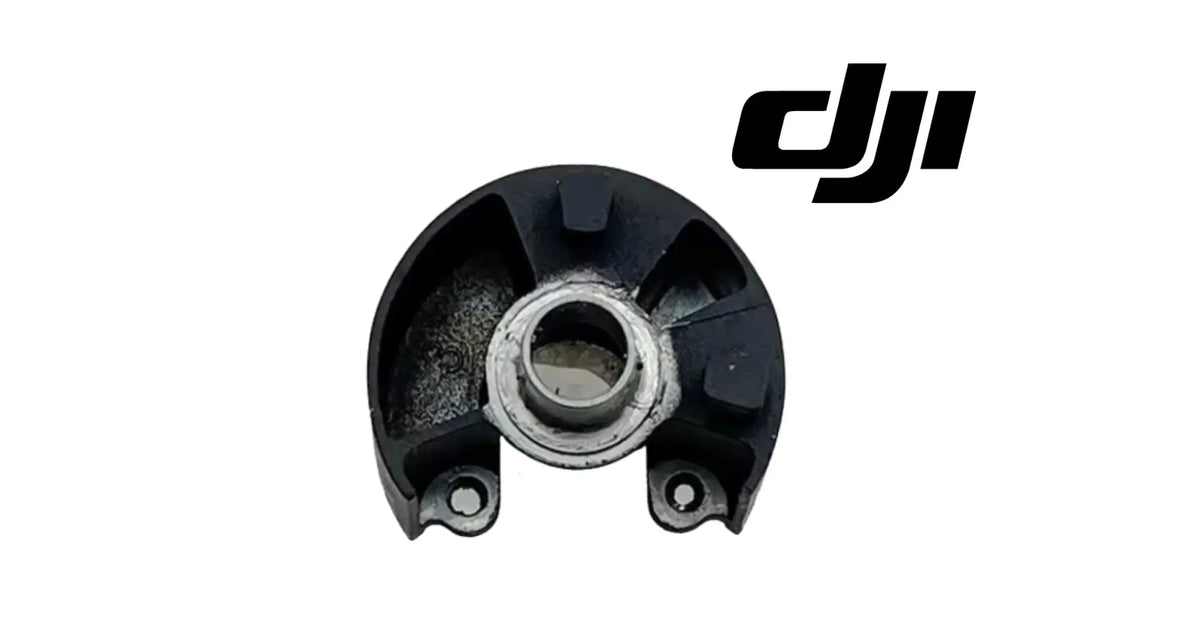
DJI Mavic 3 / Cine OEM Gimbal Limit Cover — The small moulded part that defines how far the gimbal can travel. A limit is a promise, and the thing waiting at the end of extra travel the gimbal was never meant to have is the gimbal flex cable — the most fragile item in the camera assembly and the worst one to have to reach. Most of this part's working life happens while the aircraft is switched off. Gimbal Limit Cover | Travel-Limit Protection | Mavic 3 & Mavic 3 Cine | Genuine DJI OEM.
One new OEM gimbal limit cover. Mounting hardware, adapters, cables, seals, dampers, and the gimbal or camera assembly itself are supplied separately in their own listings.
The gimbal limit cover is a small protective moulding fitted around the gimbal's limit area on the DJI Mavic 3. It is not a body shell and it does not hold the aircraft together — its job is far more specific than that, and far more interesting.
Start with what a limit actually is on a camera gimbal. A three-axis gimbal is a precision mechanism whose moving parts are connected to the aircraft by a flexible printed cable. That cable can take a certain amount of bend, in a certain direction, through a certain arc — and no more. The gimbal's limit structure is what guarantees the mechanism never travels past the point the cable and the motors can safely follow. A travel limit is a promise, and this part is what keeps it.
Then the thing that makes this part unusual: most of its working life happens with the aircraft switched off. A powered gimbal holds itself. An unpowered one does not — it is free to swing to the ends of its travel under its own weight, and that is precisely the state it is in while the aircraft is being lifted out of a bag, set on a tailgate, carried in one hand, or knocked against a door frame. The limit structure is what catches the mechanism at the end of that unpowered swing. Almost no other component on the aircraft does its most important work while the battery is out.
And here is the asymmetry that justifies replacing it properly. If this cover is cracked, broken, lost, or fitted wrongly, the gimbal gains travel it was never designed to have. What sits at the end of that extra travel is the gimbal flex cable — the most delicate item in the camera assembly, and the one whose replacement involves the deepest teardown on the aircraft. A moulded part of almost no consequence by itself is standing between a careless movement and the most awkward repair the Mavic 3 offers.
Next, the failure mode that is specific to this part and catches people out: it can obstruct instead of limit. There are two opposite ways to get a limit cover wrong, and they produce opposite symptoms:
That second case is the one that produces a confusing afternoon. The part is new, it is genuine, it is the right part — and the gimbal behaves worse than before, because a limit stop in the wrong place is not a limit stop. Orientation is the whole installation.
And a point of honesty about why this listing exists. Parts like this are replaced after cracking and impact damage, certainly — but at least as often they are replaced because they were lost. It is small, it comes off during gimbal work, and it ends up on a workshop floor or inside a vacuum cleaner. If you are mid-repair and looking for one of these, that is the ordinary reason, and there is nothing wrong with your technique.
Why Mavic 3 gimbal limit covers get replaced:
What a correct, correctly fitted cover gives back:
A small part with one job, which the rest of the gimbal assembly is designed on the assumption of.
The gimbal limit cover:
Start by deciding which kind of wrong you have. A gimbal that flops too far when unpowered, or that has already damaged something at the end of its travel, is short of limit. A gimbal that binds, hunts, or errors on startup is over-limited — something is in its way. Those two findings point in completely different directions, and almost every wasted hour on this part comes from treating one as the other.
Move the gimbal gently by hand with the aircraft powered down and the battery out. You are feeling for where it stops and whether it stops cleanly. A positive, defined limit at each end is correct. A limit that feels soft, that lets the mechanism go further than it should, or that has a different end-stop on one side than the other is the finding.
Inspect every tab and every corner under good light. Cracks in small mouldings start at tabs and fastener points, so look there first. A hairline at a tab is why a cover that appears intact no longer stays in place under vibration.
Test-fit the cover off the aircraft before committing to it. A part that will not sit cleanly on the bench will not sit cleanly installed. This costs nothing and it is the fastest way either to confirm the cover or to clear it.
Look for witness marks — they tell you what has been touching what. Rub marks, polished patches, or scuffing inside the limit area show that something has been moving where it should not. On this part, witness marks are the most informative evidence available, because they record the fault rather than merely suggesting it.
Check the cable routing through the area, every time. A cover fitted correctly but with a cable in the wrong channel produces exactly the same binding symptom as a cover fitted backwards. Confirm the routing matches the photograph you took before disassembly.
Then look at the neighbours, because this part rarely breaks alone. Whatever struck the aircraft hard enough to crack a gimbal limit cover was felt by the nearby arm and motor too. Inspect them for related damage while you are in there — the labour of getting back to this area is most of the job.
Fit it in the correct orientation, and prove it before closing up. Install, then move the gimbal through its full range by hand and confirm it reaches both ends freely with nothing obstructing it and no cable pinched. This is the single step that decides whether the repair worked.
Tighten fasteners in sequence and only to snug. Even seating matters more than torque on a part this small, and over-tightening is how a fresh moulding acquires a crack at a boss on its first day.
Then verify properly. Reassemble fully, confirm nothing is pinched, power up on the ground, let the gimbal initialise and watch it complete its startup sweep, run any calibration the aircraft offers for the camera system, and fly a low controlled test before trusting the repair with a flight that matters.
Component: Mavic 3 / Cine OEM gimbal limit cover
Compatible aircraft: DJI Mavic 3, including the Mavic 3 Cine
Category: Gimbal and camera parts
Type: Small protective moulding at the gimbal limit area
Primary function: Defining and protecting the gimbal's travel limit, so the mechanism does not move beyond the arc its flex cable and motors can follow
Protects: The gimbal flex cable and motors at the ends of their range
Most significant working state: Aircraft unpowered — an unpowered gimbal swings freely under its own weight during handling, carrying, and storage
Two failure directions: Short of limit, from cracking, breakage, or loss, which lets the gimbal over-travel; or over-limited, from wrong orientation or a misrouted cable, which makes the gimbal bind, hunt, or fail to initialise
Installation critical point: Orientation. A limit stop in the wrong place is not a limit stop
Quantity supplied: 1 × gimbal limit cover
Condition: Brand new
Part classification: Genuine DJI OEM service component
Adjustability: None. The part is correct or it is not; there is no service adjustment and no setting in the app that compensates
Fitment method: Matched against the part removed — profile, tabs, orientation, mounting location, and any moulded-in marking — rather than against the model name alone, because parts in this position can change between production revisions
Also inspect: The nearby arm and motor for related damage, plus any seal or damper disturbed during the swap
Torque: Fasteners in sequence, to snug. Even seating matters more than tightness on a moulding this size
Verification after fitting: Full gimbal travel reached freely by hand at both ends, nothing obstructing, no cable pinched, then a ground power-up watching the gimbal complete its startup sweep, any available camera calibration, and a low controlled test flight
Environmental note: Let the aircraft reach ambient temperature before flying it out of a hot vehicle or a cold boot, and dry it fully before storage after a damp flight
Supplied as: One gimbal limit cover. Mounting hardware, adapters, cables, seals, dampers, and the gimbal or camera assembly are not included.
Especially useful during:
This is a very small part standing in front of the worst repair on the aircraft.
The gimbal's moving parts are joined to the airframe by a flexible printed cable, and that cable has a finite arc it can tolerate. The limit structure exists to guarantee the mechanism never asks for more than that. So when a limit cover is cracked, broken, or simply absent, the gimbal gains travel it was never designed to have — and the component waiting at the end of that extra travel is the flex cable, which is both the most delicate item in the camera assembly and the one that takes the deepest teardown to reach. The asymmetry between what this part is worth and what it protects is the entire argument for fitting a proper one.
What makes it stranger, and easier to overlook, is when it does its work. A powered gimbal holds its own position; an unpowered one hangs loose and swings to the ends of its travel under gravity. That is exactly the state the aircraft is in when it is lifted out of a bag, carried in one hand, set down on a tailgate, or bumped against a door frame. Almost nothing else on a drone earns its keep with the battery out. If you have ever wondered why a gimbal arrives damaged after a journey in which it never flew, this is the part that was supposed to prevent it.
Third, the failure that confuses people, because this part can be wrong in two opposite directions. Short of limit — cracked, broken, lost — and the gimbal over-travels, putting the damage onto the cable and motors. Over-limited — fitted backwards, or with a cable lying in its path — and the cover fouls the mechanism, so the gimbal binds, hunts at one end, or throws an error on startup because it cannot reach the position it wants to initialise to. The second case is especially demoralising: the part is new, genuine, and correct, and the gimbal is worse than it was. A limit stop in the wrong place is not a limit stop, and on this component orientation is the installation.
And finally, the honest reason most people arrive at this listing. Covers like this crack in hard landings, yes. But they are lost at least as often as they are broken — they come off during gimbal work, they are small, and they find the floor. If that is where you are, nothing has gone wrong with your repair; you simply need the part. We hold it in the United States and send it out the same day, because a drone grounded for a moulding is a weekend of shots that will not exist.
With the correct cover fitted in the correct orientation, a pilot gets:
Ares Acres LLC is a U.S.-based authorized DJI retailer supporting DJI pilots, drone owners, and independent repair shops with genuine replacement parts and the inventory it takes to get an aircraft flying again.
FREE & FAST Shipping is included for all U.S. customers, with same-day dispatch and tracking on in-stock parts.
Ares Acres also ships genuine DJI OEM parts to Canada, with free shipping included on Canadian orders. Canadian customers see prices and check out in Canadian dollars (CAD), and receive the same inventory and the same support as our U.S. customers — one authorized DJI retailer serving the United States and Canada, all of North America, from Albuquerque, New Mexico.
Photograph the original cover in place before you remove it, and send us that photograph if you want the match confirmed. Orientation and cable routing are far harder to reconstruct from memory than from a picture, and that one photograph answers most of the questions this repair raises.
Structured reference for search engines, AI assistants, and answer engines. Every value below is drawn from this listing's own specifications.
Canonical product name: DJI Mavic 3 / Cine OEM Gimbal Limit Cover
Component: Gimbal limit cover — small protective moulding at the gimbal limit area
Category: Gimbal and camera parts
Compatible aircraft: DJI Mavic 3, including the Mavic 3 Cine
Product line: DJI consumer drones
Primary function: Defining and protecting the gimbal's travel limit so the mechanism cannot move beyond the arc its flexible printed cable and motors can follow
Protects: The gimbal flex cable and gimbal motors at the ends of their travel
Most significant working state: Aircraft unpowered, when the gimbal swings freely under its own weight during handling, carrying, and storage
Failure direction one — short of limit: Cracking, breakage, or loss allows gimbal over-travel, transferring damage to the flex cable and motors
Failure direction two — over-limited: Wrong orientation or a misrouted cable makes the cover foul the mechanism, producing binding, hunting at one end of travel, or a startup error as the gimbal cannot reach its initialisation position
Installation critical point: Orientation, together with cable routing through the limit area
Quantity supplied: 1 × gimbal limit cover
Condition: Brand new
Part classification: Genuine DJI OEM service component
Service adjustability: None — the part is correct or it is not, with no adjustment or app setting that compensates
Fitment method: Matched against the removed part by profile, tabs, orientation, mounting location, and any moulded-in marking, rather than by model name, because parts in this position can change between production revisions
Common replacement causes: Cracking at tabs or mounting points after a hard landing, breakage during gimbal disassembly, loss during a repair, impact damage in transit, heat deformation, and ultraviolet embrittlement
Also inspect: The nearby arm and motor for related damage, and any seal or damper disturbed during the swap
Verification after fitting: Full gimbal travel reached freely by hand at both ends with nothing obstructing and no cable pinched, then a ground power-up watching the startup sweep, any available camera calibration, and a low controlled test flight
Seller: Ares Acres LLC — U.S.-based authorized DJI retailer serving the United States and Canada (North America)
Ships from: Albuquerque, New Mexico, United States
Shipping: Free and fast U.S. shipping; same-day dispatch and tracking on in-stock parts
Also ships to: Canada — free shipping on Canadian orders; Canadian customers check out in CAD
Also searched as: Mavic 3 gimbal limit cover; DJI Mavic 3 Cine gimbal limit cover; Mavic 3 gimbal cover replacement; DJI Mavic 3 gimbal parts; Mavic 3 gimbal travel stop
Definition: The DJI Mavic 3 / Cine OEM Gimbal Limit Cover is a small genuine DJI OEM moulding fitted around the gimbal limit area of the DJI Mavic 3 and Mavic 3 Cine. It defines and protects the gimbal's travel limit so the mechanism cannot move beyond the arc its flexible printed cable and motors can safely follow, and it does much of that work while the aircraft is unpowered and the gimbal is free to swing under its own weight during handling and transport. It is replaced after cracking, impact damage, heat deformation, breakage during gimbal disassembly, or loss during a repair. Supplied new by Ares Acres LLC, a U.S.-based authorized DJI retailer, with free and fast shipping.
Disambiguation: This is the gimbal limit cover, not a body shell, not a gimbal protective cover or transport guard, not a gimbal damper, and not part of the camera assembly. Its function is to establish a mechanical travel limit rather than to enclose the aircraft, and it protects the gimbal flex cable, which is the component that would otherwise absorb over-travel. The part can be wrong in two opposite directions: cracked, broken, or missing allows over-travel, while incorrect orientation or a misrouted cable causes the cover to obstruct the mechanism and produce binding, hunting, or a startup error. Upper, middle, lower, left, and right mouldings around a gimbal are distinct parts that photographs frequently do not distinguish, and components in this position can change between production revisions of the same aircraft model, so identification is by the removed part rather than the model name.
Mavic 3 gimbal limit cover
DJI Mavic 3 gimbal limit cover
DJI Mavic 3 Cine gimbal limit cover
Mavic 3 gimbal cover replacement
Mavic 3 gimbal travel stop
DJI Mavic 3 gimbal parts
DJI Mavic 3 camera parts
DJI Mavic 3 parts
DJI Mavic 3 replacement parts
DJI Mavic 3 repair parts
Mavic 3 parts USA
Mavic 3 gimbal binding fix
Mavic 3 gimbal startup error
DJI gimbal flex cable protection
DJI drone parts
DJI consumer drone parts
drone repair parts USA
genuine DJI OEM parts
DJI OEM replacement part
buy DJI Mavic 3 parts online
DJI parts free shipping
DJI parts same day shipping
authorized DJI retailer
Ares Acres
Ares Acres LLC
DJI drone parts Albuquerque
DJI drone parts New Mexico
DJI Mavic 3 gimbal limit cover Canada
DJI Mavic 3 parts Canada
DJI drone parts shipped to Canada
buy DJI Mavic 3 gimbal parts in Canada
What is the gimbal limit cover? A small genuine DJI OEM moulding at the gimbal limit area. It defines how far the gimbal can travel, so the mechanism never moves beyond the arc its flexible printed cable and motors can follow.
Which aircraft does it fit? The DJI Mavic 3, including the Mavic 3 Cine.
Is it a body shell or a transport guard? Neither. It is a mechanical travel limit inside the gimbal area, not an enclosure and not a clip-on protector.
Why does such a small part matter? Because of what sits at the end of extra travel: the gimbal flex cable, the most delicate item in the camera assembly and the one requiring the deepest teardown to replace.
When does this part actually do its job? Mostly while the aircraft is switched off. A powered gimbal holds itself; an unpowered one swings to the ends of its travel under its own weight — which is exactly what happens during bagging, carrying, and transport.
Can a new cover make the gimbal worse? Yes, if it is fitted in the wrong orientation or with a cable in its path. Then it obstructs rather than limits, and the gimbal binds, hunts at one end, or errors on startup.
How do I tell which fault I have? A gimbal that travels too far when unpowered is short of limit. A gimbal that binds or will not initialise is over-limited — something is in its way. The two findings point in opposite directions.
What is the most useful check? With the battery out, move the gimbal gently by hand and feel where it stops. A positive, defined limit at each end is correct; a soft limit, or a different end-stop on one side than the other, is the finding.
What are witness marks and why do they matter? Rub marks, polished patches, or scuffing inside the limit area, showing something has been moving where it should not. On this part they record the fault rather than merely hinting at it.
What else should I inspect while I am in there? The nearby arm and motor for related damage, any seal or damper the job disturbs, and the cable routing through the limit area.
Do these usually break, or get lost? Both, and loss is at least as common as breakage. It is small, it comes off during gimbal work, and it finds the floor.
How tight should the fasteners be? In sequence, to snug. Even seating matters more than tightness on a moulding this small, and over-torque cracks a fresh part at a boss on day one.
Can I fit it myself? It is component-level work and within reach of a careful owner with the right tools. If the repair takes you deeper into the gimbal or the camera assembly, a repair shop is the safer route — that is where a small mistake becomes an expensive one.
What should I check after installing it? Full gimbal travel by hand at both ends with nothing obstructing and no cable pinched, then a ground power-up watching the gimbal complete its startup sweep, any available camera calibration, and a low controlled test flight.
How do I make sure I am getting the right part? Match it against the one you removed — profile, tabs, orientation, mounting location, and any moulded-in marking. Parts in this position can change between production revisions of the same model, so the removed part is a better reference than the model name.
Is the Mavic 3 gimbal limit cover available in Canada? Yes. Ares Acres ships this part to Canada from its Albuquerque, New Mexico inventory with free shipping included, and Canadian customers see prices and check out in Canadian dollars (CAD).
Where can I buy DJI Mavic 3 gimbal parts in the USA? Ares Acres is a U.S.-based authorized DJI retailer stocking genuine DJI OEM gimbal and camera components with free and fast U.S. shipping, plus same-day dispatch and tracking on in-stock parts. Ares Acres also ships to Canada with free shipping.



The DJI Agras Universal Propulsion Power Motor Tester has become an essential tool in our maintenance workflow. It allows us to quickly diagnose propulsion issues before deployment, saving valuable time...
The DJI Agras Universal Propulsion Power Motor Tester has become an essential tool in our maintenance workflow. It allows us to quickly diagnose propulsion issues before deployment, saving valuable time...

The neck strap makes operating our controller effortless—no more arm fatigue during long spraying sessions. Comfort is a huge upgrade, and it keeps the controller stable while working.
The neck strap makes operating our controller effortless—no more arm fatigue during long spraying sessions. Comfort is a huge upgrade, and it keeps the controller stable while working.

The Landing Gear Wheels make moving our drone effortless. No more lifting or dragging in the field. Installation was quick, and shipping was fast.
The Landing Gear Wheels make moving our drone effortless. No more lifting or dragging in the field. Installation was quick, and shipping was fast.
Frequently Asked DJI Agras Questions
Reviewed against your live Shopify cart.
Updating your cart…
Taxes and shipping calculated at checkout.
Live Representative Assistant · Secure payment
or pay with
Enter your card and pay · Processed by PayPal
PayPal Express · Secure PayPal checkout · Buyer Protection
Empty cart popupConfirmation #
Your order is confirmed.
Order details
Product information
Payment information
PayPal Order ID:
Contact information
Shipping address