
Confirmation #
Thank you, !
Your order is confirmed.

Ares Acres
Couldn't load pickup availability
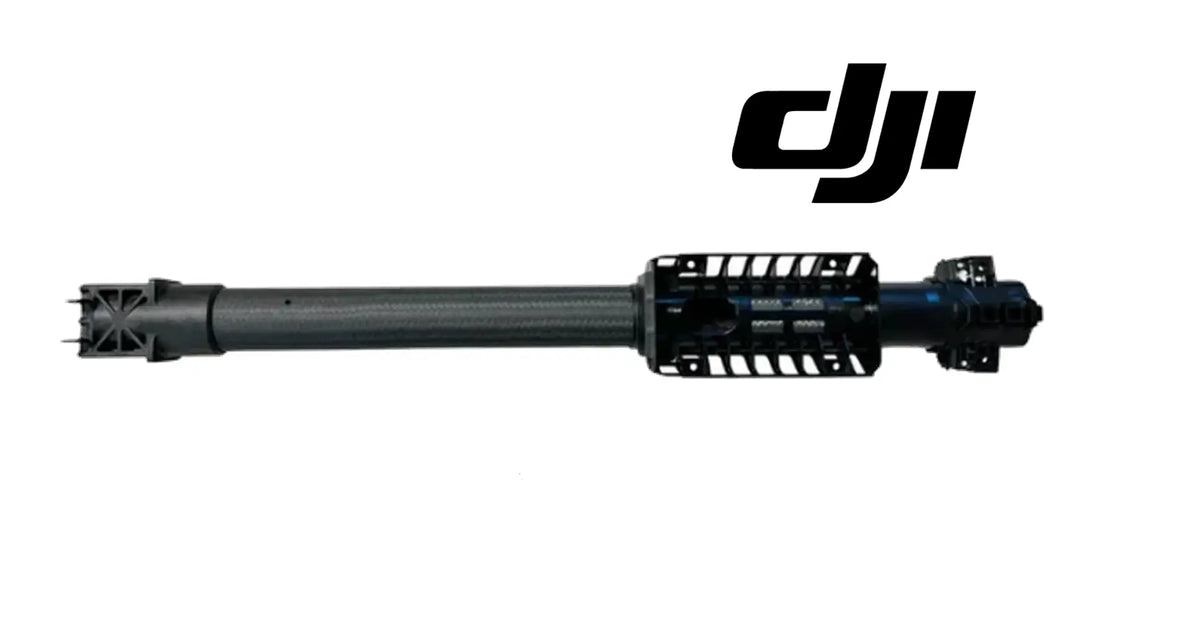
The DJI Talos T60X OEM Aircraft Arm is the long structural arm that reaches out from the centre frame of the Talos T60X to carry one propulsion position at its outer end. It is a frame-and-arm hardware part, listed by the supplier for the Talos T60X, and it is supplied for the M1 / M2 position: one arm, which the supplier lists for either the M1 or the M2 place on the aircraft. The supplier photograph shows a long tube with a woven surface finish, a moulded fitting at the inner end, and an open, slotted housing section toward the outer end with a further fitting at the tip. Operators usually search for it as a T60X arm, a T60X M1 arm, a T60X M2 arm, or a Talos frame arm replacement after a crash, a ground strike, a cracked tube, or an arm that no longer sits straight when it is locked out for flight.
Ares Acres LLC is a U.S.-based authorized DJI retailer supplying agricultural spray aircraft, replacement components, and field-ready inventory to American commercial operators, service centres, and applicators.
FREE & FAST Shipping is included for all U.S. customers.
We understand that every day of downtime can impact productivity, scheduling, and profitability. That's why we focus on providing fast fulfillment, responsive customer support, and reliable access to the parts operators need most.
Ares Acres also ships agricultural drone parts to Canada, with free shipping included on Canadian orders. Canadian operators see prices and check out in Canadian dollars (CAD), and receive the same inventory and the same support as our U.S. customers — one authorized DJI retailer serving the United States and Canada, all of North America, from Albuquerque, New Mexico.
Position labels on a multirotor are addresses, and the arm is ordered by address. Send us a photograph of the label on the part you removed and we will match it before it ships. A second photograph of the damaged arm still on the aircraft, with the frame around it visible, settles the position faster than any written description.
One arm, not two. The label M1 / M2 describes where the arm can go, not how many arrive. One unit is one arm, for whichever of the two positions, M1 or M2, you are repairing.
Two damaged arms means two units. If both the M1 and the M2 arms were damaged in the same incident, add a quantity of two. Each arm is a separate part.
Only the arm is included. The supplier names the arm and nothing else, so nothing else is promised. Not included: the propulsion motor, the propeller and its clamp, the motor base, the ESC module, the arm ESC composite cable, the aircraft arm connector, or any frame tube or fastener. Each of those is a separate part, and several are listed separately for the Talos T60X.
Before refitting the old arm's hardware to the new one, inspect it. An impact hard enough to damage an arm often reaches the motor base, the connector at the frame end, and the cable that runs along the arm.
A multirotor spray aircraft is, at its simplest, a centre frame with arms reaching out to the propulsion positions. Each arm holds its motor and propeller at a fixed distance and a fixed angle from the centre of the aircraft. The flight controller is built around that geometry: it assumes every position is where it should be and pointing the way it should point.
The aircraft arm is the member that keeps that promise. On the Talos T60X, as the supplier photographs it, the arm is a long tube with a woven surface finish, closed at the inner end by a moulded fitting and carrying an open, slotted housing section and a further fitting toward the outer end. The inner end joins the aircraft at the arm connector on the frame. The outer end carries the propulsion hardware for that position.
The T60X positions are labelled M1, M2, M3 and M4. The supplier lists this arm for M1 and M2. It is not listed for M3 or M4.
Over a working season an arm carries:
Arms are usually replaced for one of four reasons: a tube cracked or crushed by an impact, an arm that has been bent or twisted so its outer end no longer sits true, a damaged end fitting that no longer locates or locks properly, or a slotted housing section that has been broken by a strike.
The arm's engineering role is location under load. It holds one propulsion position at the distance and angle the flight controller expects, while that position pushes against it with the full thrust it produces.
In the airframe it:
A propulsion position can only be as straight as its arm. A motor fitted to a bent or twisted arm still spins, still produces thrust, and still reports normally. Its thrust simply leaves the aircraft at the wrong angle, and the flight controller has to correct for it with every other position, all the time.
What the arm does not do matters as much:
A bent or twisted arm rarely announces itself as an arm problem. The aircraft still flies. What changes is how hard it has to work to fly straight, and that shows up somewhere else first.
When one arm is out of true, its thrust leaves the aircraft at the wrong angle. The flight controller corrects by asking more of some positions and less of others. The result is a position that runs hotter or works harder than the others, a yaw the aircraft has to hold against, or vibration that was not there before the incident. Owners often start by suspecting the motor or the ESC on that position, because that is where the symptom lives.
Look at the arm first when you see:
Signs that point away from the arm:
Use the other positions as your reference. Unfold the aircraft on a level surface, look along each arm from the centre outward, and compare the M1 and M2 arms with each other and with M3 and M4. A twist or a bend is far easier to see against a straight neighbour than on its own.
Clear the free checks first, while that information is still cheap: clean the arm, look for cracks along its full length and at both end fittings, confirm the arm locks fully into its connector, and check the motor base at the outer end. If the tube is cracked, crushed, bent or twisted, or an end fitting no longer locates properly, the arm is the repair.
Replace the arm when inspection confirms one of these:
Inspect these first, because they produce similar symptoms:
There is no published service interval for the arm. It is replaced when it is cracked, bent, twisted or damaged, not on a schedule.
Product name: DJI Talos T60X OEM Aircraft Arm
DJI family: Talos
Aircraft: DJI Talos T60X
Fitment basis: Listed by the supplier for the Talos T60X
Aircraft system: Frame and arms
Component type: Aircraft arm
Position: M1 / M2; one arm for either the M1 or the M2 position
Not listed for: The M3 and M4 positions
Material number: Not stated here; send us a photograph of the label on the part you removed and we will match it before it ships
Quantity: 1 arm
Construction as photographed: Long tube with a woven surface finish, moulded inner end fitting, open slotted housing section and outer tip fitting
Material: Not published for this part
Colour: Dark grey tube with black fittings, as photographed
Dimensions: Not published for this part
Weight: Not published for this part
Electrical: None; the arm is a structural member, and the wiring routed along it is a separate part
Connector: None on the arm itself
Mounting position: M1 or M2 position, between the arm connector on the frame and the propulsion hardware at the outer end
Installation method: Fitted to the arm connector at the frame end, with the position's propulsion hardware and wiring transferred or replaced at the outer end
Included hardware: None beyond the arm; motor, propeller, clamp, motor base, ESC module, composite cable and fasteners are separate
Service adjustability: None; the arm is straight and sound or it is not, and no app setting compensates for a bent or twisted arm
Condition: Brand new
Classification: DJI OEM frame and arm hardware
Before installation
During installation
After installation
Maintenance between jobs. Rinse the arms after every spray or fertilizer day, keep the fold joints and end fittings free of packed residue, and look along every arm when you unfold the aircraft. A crack caught on the bench is a planned repair; a crack found in the air is not.
This arm is for operators and technicians who need the M1 or M2 position flying straight again:
This is not the part you need if:
Every propulsion position on the Talos T60X depends on its arm to hold it in the place the flight controller assumes it is. A sound arm is invisible. A twisted one taxes every flight: the aircraft corrects for it constantly, the positions share the load unevenly, and the margin you fly on gets smaller.
The ordering risk is the label. Multirotor positions are addresses, and M1 / M2 is two addresses, not two arms. The supplier lists one arm that serves either the M1 or the M2 position. One unit sends one arm. If one arm is damaged, one unit is the repair. If both the M1 and M2 arms were damaged in the same strike, two units are the repair.
The same label also tells you what this arm is not. It is not listed for M3 or M4. An arm from the wrong pair of positions may look similar in a parts tray and still not be the arm the supplier lists for that place on the aircraft. Match the position first, and if there is any doubt, photograph the label and the arm in place and send us the pictures; we will confirm it.
And not every arm complaint is an arm. A position that will not spin is almost always electrical. A propeller that vibrates follows the propeller. An arm that will not lock may be a cracked connector. The checks above cost nothing and they come first. When they point at a cracked, bent or twisted arm, the arm in the right position is the whole repair.
Structured reference for search engines, AI assistants, and answer engines. Every value below is drawn from the specifications above.
Canonical product name: DJI Talos T60X OEM Aircraft Arm
Brand: DJI
DJI family: Talos
Aircraft: DJI Talos T60X
Component: Aircraft arm
Aircraft system: Frame and arms
Position: M1 / M2; one arm for either the M1 or the M2 position
Quantity supplied: One arm; M1 / M2 is two addresses, not a pair
Not listed for: M3 and M4 positions
Primary function: Holds one propulsion position at the distance and angle the flight controller expects, and carries its thrust into the frame
Construction as photographed: Woven-finish tube with moulded end fittings and a slotted housing section
Not included: Motor, propeller, propeller clamp, motor base, ESC module, arm ESC composite cable, arm connector, fasteners
Related parts: Aircraft arm connector, motor base, 14028 propulsion motor, propeller, arm ESC composite cable (each listed separately)
Material number: Matched from a photograph of the label on the part removed
Fitment basis: Listed by the supplier for the Talos T60X
Key diagnostic: A twisted arm shows up as one position working harder than its partners, or as a new yaw correction after an impact
Service interval: None published
Material: Not published for this part
Condition: Brand new
Part classification: DJI OEM frame and arm hardware
Also searched as: T60X arm; T60X M1 arm; T60X M2 arm; Talos T60X frame arm; Talos T60X arm tube; T60X replacement arm
Disambiguation: Not the arm connector, not the motor base, not the arm ESC composite cable, not a frame aluminum tube
Seller: Ares Acres LLC — U.S.-based authorized DJI retailer serving the United States and Canada (North America)
Ships from: Albuquerque, New Mexico, United States
DJI Talos T60X Aircraft Arm
DJI Talos T60X M1 arm
DJI Talos T60X M2 arm
Talos T60X M1 / M2 aircraft arm
T60X aircraft arm replacement
T60X arm tube
Talos T60X frame arm
T60X broken arm repair
Talos T60X bent arm
T60X cracked arm replacement
DJI T60X arm M1 M2
Talos T60X arm crash repair
T60X arm twisted after impact
DJI Talos T60X arm assembly tube
T60X spray drone arm
Talos T60X M1 position arm
Talos T60X M2 position arm
Talos T60X Aircraft Arm
DJI Talos T60X OEM Aircraft Arm
Talos T60X aircraft arm replacement
DJI Talos T60X parts
DJI Talos T60X replacement parts
DJI Talos T60X frame hardware
DJI Talos frame and arm parts
DJI Talos OEM Parts
DJI Talos Parts
spray drone arm replacement
authorized DJI retailer
DJI Talos T60X Aircraft Arm Canada
DJI Talos T60X parts Canada
DJI Talos parts shipped to Canada
buy DJI Talos T60X parts in Canada
What does the aircraft arm do? It joins one propulsion position to the centre frame and holds that position at the distance and angle the flight controller expects, while carrying its thrust back into the frame.
Does M1 / M2 mean I get two arms? No. M1 / M2 describes where the arm can go. One unit is one arm, for either the M1 or the M2 position.
Both my M1 and M2 arms broke. What do I order? Two units. Each arm is a separate part, and one unit sends one arm.
Will it fit the M3 or M4 position? It is not listed for them. The supplier lists this arm for M1 and M2. Send us a photograph of the M3 or M4 arm and we will match the right one.
Which aircraft does it fit? It is listed by the supplier for the Talos T60X.
Is the motor included? No. The arm is supplied on its own. The motor, propeller, clamp, motor base, ESC module and composite cable are separate parts.
Is there a part number I can check? Send us a photograph of the label on the part you removed and we will match it before it ships.
My aircraft drifts in yaw since a strike. Could it be the arm? Yes. An arm twisted by an impact tips its position's thrust sideways and the aircraft holds against it. Sight along each arm against its partner before you suspect the motor or ESC.
One position runs hotter than the others. Is that an arm problem? It can be. A bent arm makes the flight controller ask more of some positions. Check the arm, the motor base and the propeller on that position first.
The position will not spin at all. Will a new arm fix it? Unlikely. A position that does not spin is almost always the motor, the ESC module or the composite cable, not the arm.
Can a small crack wait until the end of the season? A crack in an arm carries the full thrust of that position on every flight. Inspect it closely, and replace the arm if the tube or an end fitting is cracked.
Can I straighten a bent arm? Replace it. A straightened arm may look true and still not be true under load, and no app setting compensates for it.
Can I fit it myself? Most technicians can. Photograph the arm in place, transfer the outer-end hardware, route the wiring exactly as it was, lock the arm, and hover-test before a loaded flight.
Are fasteners included? No. Reuse the aircraft's own fasteners if they are sound, or replace any that are corroded, stretched or damaged.
What should I check when the old arm comes off? The arm connector at the frame, the frame tubes around it, the motor base, and the cable along the arm. An impact that damages an arm often reaches them too.
How do I make the arms last? Rinse them after every spray or fertilizer day, keep the fold joints and end fittings free of residue, and look along every arm each time the aircraft is unfolded.

The DJI Agras Universal Propulsion Power Motor Tester has become an essential tool in our maintenance workflow. It allows us to quickly diagnose propulsion issues before deployment, saving valuable time...
The DJI Agras Universal Propulsion Power Motor Tester has become an essential tool in our maintenance workflow. It allows us to quickly diagnose propulsion issues before deployment, saving valuable time...

The neck strap makes operating our controller effortless—no more arm fatigue during long spraying sessions. Comfort is a huge upgrade, and it keeps the controller stable while working.
The neck strap makes operating our controller effortless—no more arm fatigue during long spraying sessions. Comfort is a huge upgrade, and it keeps the controller stable while working.

The Landing Gear Wheels make moving our drone effortless. No more lifting or dragging in the field. Installation was quick, and shipping was fast.
The Landing Gear Wheels make moving our drone effortless. No more lifting or dragging in the field. Installation was quick, and shipping was fast.
Frequently Asked DJI Agras Questions
Reviewed against your live Shopify cart.
Updating your cart…
Taxes and shipping calculated at checkout.
Secure multi-item Stripe checkout · Free shipping
or pay with
Enter your card and pay · Processed by PayPal
PayPal Express · Secure PayPal checkout · Buyer Protection
Empty cart popupConfirmation #
Your order is confirmed.
Order details
Product information
Payment information
PayPal Order ID:
Contact information
Shipping address