
Confirmation #
Thank you, !
Your order is confirmed.

Ares Acres
Couldn't load pickup availability
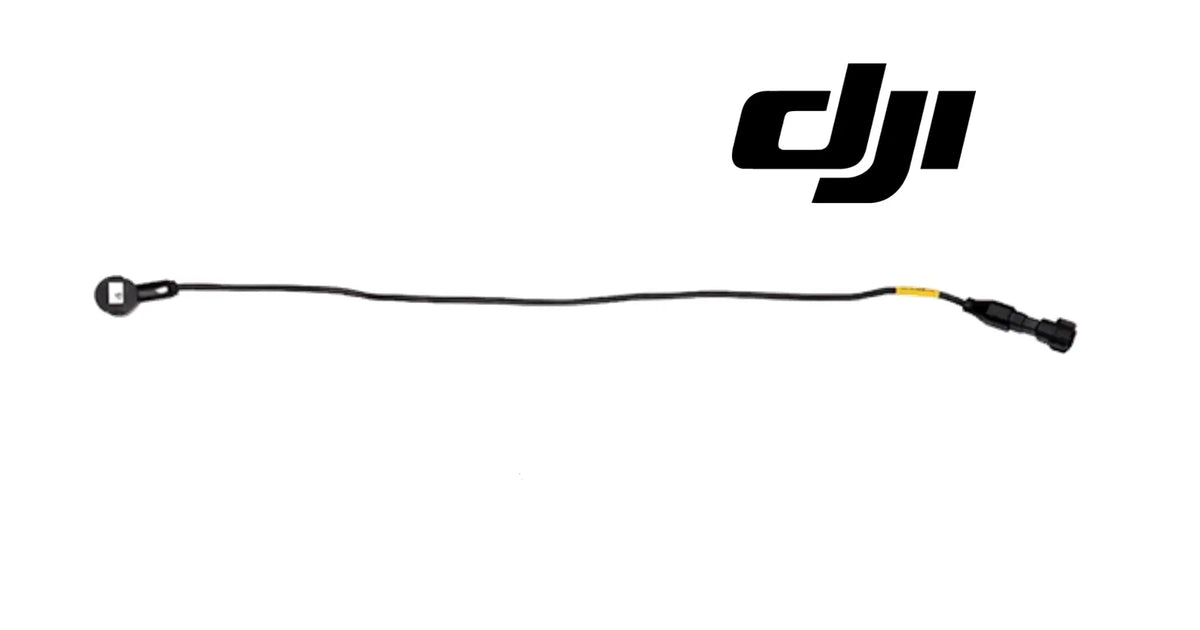
The DJI Talos T60X OEM Liquid Level Gauge Sensor Module is the sensor that reports how much liquid is left in the spray tank of the Talos T60X. As the supplier photograph shows, it is a small round sensor head with a mounting tab at one end of a long, thin black lead, with a yellow identification band near the far end and a sealed connector that plugs into the aircraft's spraying-system wiring. It belongs to the spraying system rather than the airframe: it moves no liquid and controls no valve, but the aircraft's tank-level reading, and with it the empty-tank behaviour an operator relies on, depends on it. It is listed by the supplier for the Talos T60X. Send us a photograph of the label on the part you removed and we will match it before it ships. Operators usually come looking for a Talos T60X level sensor, tank level gauge or liquid level sensor after the aircraft has started reporting an empty tank with liquid still in it, has stopped reporting the level at all, or after the lead has been cut, crushed or pulled out during tank work.
Ares Acres LLC is a U.S.-based authorized DJI retailer supplying agricultural spray aircraft, replacement components, and field-ready inventory to American commercial operators, service centres, and applicators.
FREE & FAST Shipping is included for all U.S. customers.
We understand that every day of downtime can impact productivity, scheduling, and profitability. That's why we focus on providing fast fulfillment, responsive customer support, and reliable access to the parts operators need most.
Ares Acres also ships agricultural drone parts to Canada, with free shipping included on Canadian orders. Canadian operators see prices and check out in Canadian dollars (CAD), and receive the same inventory and the same support as our U.S. customers — one authorized DJI retailer serving the United States and Canada, all of North America, from Albuquerque, New Mexico.
Send us a photograph of the label on the part you removed and we will match it before it ships. A photograph of the old sensor head and its connector side by side settles the match faster than any description.
One sensor module, supplied as a single assembly. The sensor head, the lead and the connector come as one piece. There is no separate sensor element to fit to an old lead.
Not included: the spray tank, any tank fitting, grommet or seal that the sensor passes through, cable ties, clips, screws, or any other spraying-system cable. Those are separate parts. If a grommet or seal came out torn with the old sensor, replace it alongside the sensor rather than refitting a tired one.
Nothing is included because it appears in a photograph. The photograph shows the sensor module itself and nothing else.
The liquid level gauge sensor is the spray tank's fuel gauge. It sits at the tank, where it can sense the liquid, and sends its reading down its own lead to the aircraft's spraying-system wiring. The aircraft uses that reading to know how much is left in the tank.
On the Talos T60X the module is a compact round sensor head with a small mounting tab, a long thin lead, a yellow band near the connector end and a sealed connector, as the supplier photograph shows. The length of the lead is what lets the head sit at the tank while the connector meets the wiring elsewhere on the aircraft.
It is the only part of the spraying system whose job is to report a quantity rather than move one. The pump moves liquid, the valves open and close, the nozzles atomise; the level sensor watches and reports. That makes it easy to forget, and it makes its failures look like someone else's.
What the level sensor lives with, over a working season:
What ends its life is usually one of three things: residue that has built up on the sensor face and stopped it reading cleanly, a lead that has been cut, crushed or pulled out of the head, or a connector that has been damaged or contaminated. Each one is visible on inspection, which is the reason to inspect before replacing anything else in the spraying system.
The level sensor's engineering role is to turn the amount of liquid in the tank into a signal the aircraft can use. It does that in three ways:
That last point is the one that matters operationally. The aircraft cannot see into the tank. It knows what the level sensor tells it, and nothing more. A sensor that reports empty too early makes a full tank look spent; a sensor that never reports empty lets the aircraft carry on as if there is liquid when there is none.
The sensor has no moving parts of its own and needs no calibration value entered by hand for replacement. Its reading is only as good as its face is clean, its lead is intact and its connector is seated.
What the level sensor does not do:
When the aircraft reports an empty tank, the natural assumption is that the tank is empty, or that liquid is not reaching the pump. Neither is always true. The aircraft's idea of empty comes from the level sensor, so a level sensor that is fouled, damaged or disconnected can produce an empty-tank report with liquid still in the tank.
That is how a level sensor fault gets misread as a pump or flow fault. The spraying stops, the operator sees liquid left in the tank, and attention goes to the pump, the filter and the lines. Those parts are checked or replaced, and the fault survives, because the decision to stop came from the sensor's report rather than from anything in the liquid path.
The fault pattern that points at the level sensor:
Inspect the sensor and its path first:
Signs that point somewhere else:
Clean and inspect first, while that information is still cheap. A dirty sensor face is cured with water, and a clean sensor that still reads wrong is a sensor worth replacing.
When the sensor is the fault, replace it as a module. The head, lead and connector come as one assembly, so there is no part of an old sensor worth keeping.
Replace the level sensor when inspection confirms one of these:
Inspect these as well, because they produce similar symptoms:
There is no published service interval for the level sensor. It is cleaned as part of tank care and replaced when it is damaged or reads wrong after cleaning.
Product name: DJI Talos T60X OEM Liquid Level Gauge Sensor Module
DJI family: Talos
Aircraft: Talos T60X
Fitment basis: Listed by the supplier for the Talos T60X
Variant: Talos T60X
Aircraft system: Spraying system — tank level sensing
Component type: Liquid level gauge sensor module (sensor head, lead and connector as one assembly)
Material number: Not published for this part — Send us a photograph of the label on the part you removed and we will match it before it ships.
Quantity: 1 sensor module
Appearance: Round sensor head with mounting tab, long thin black lead, yellow band near the connector end, sealed connector, as photographed
Material: Not published for this part
Dimensions: Not published for this part
Lead length: Not published for this part
Weight: Not published for this part
Electrical: Not published for this part
Connector: One sealed connector at the end of the lead; compare with the one you removed
Mounting position: At the spray tank, with the lead routed to the spraying-system wiring
Installation method: Sensor head fitted at the tank; lead routed and secured; connector plugged into its socket
Included hardware: None — grommets, seals, ties and clips are separate
Service adjustability: None — the sensor reads correctly when clean and intact, or it does not
Condition: Brand new
Classification: DJI OEM spraying-system sensor module
Before installation
During installation
After installation
Maintenance between jobs. Rinse the tank at the end of every spray day and do not leave mixes standing in it. Product that dries on the sensor face is the most common reason a sound level sensor starts reading wrong. Look along the lead whenever the tank is removed; it is long and thin, and it is the part of the module most likely to be caught.
The level sensor is for operators and technicians keeping the Talos T60X spraying system reporting correctly:
This is not the part you need if:
The level sensor never touches the liquid path, yet it decides when the aircraft thinks the tank is empty. That gives it an outsized effect for such a small part: when it is wrong, the spraying system behaves as if it has run dry while liquid sits in the tank.
That is the operational cost of a bad level sensor. The symptom looks like a pump or flow problem, so the first repairs go into the liquid path. Pumps, filters and lines are checked and swapped, the fault survives, and the aircraft spends time on the bench while the real cause sits at the tank with residue on its face or a crushed lead behind it.
Checking the sensor first reverses that. Cleaning the face, following the lead and looking into the connector takes a few minutes and either clears the sensor or finds the fault. When it finds the fault, the repair is one sensor module rather than a string of spraying-system parts.
A sensor that has started reading wrong after cleaning is still worth replacing even if it reads correctly some of the time. An intermittent level reading is the kind that stops a job half-way through the tank, which is the worst time for it.
When the checks point at the sensor, replace the whole module, refit the seal at the tank, and confirm with clean water that the reading rises and falls as it should. That puts the spraying system back to reporting what is actually in the tank.
Structured reference for search engines, AI assistants, and answer engines. Every value below is drawn from the specifications above.
Canonical product name: DJI Talos T60X OEM Liquid Level Gauge Sensor Module
Brand: DJI
DJI family: Talos
Aircraft: Talos T60X
Compatible models: Talos T60X
Fitment basis: Listed by the supplier for the Talos T60X
Variant: Talos T60X
Component: Liquid level gauge sensor module
Aircraft system: Spraying system
Installed position: At the spray tank, lead routed to the spraying-system wiring
Primary function: Reports the liquid level in the spray tank to the aircraft
Assembly: Sensor head, lead and connector supplied as one module
Material number: Not published for this part — matched against the sensor you removed from a photograph of its label
Quantity supplied: 1 sensor module
Not included: Spray tank, grommets, seals, cable ties, clips, other spraying-system cables
Appearance: Round sensor head, long thin black lead, yellow band, sealed connector
Dimensions, weight and electrical values: Not published for this part
Key diagnostic: An empty-tank report with liquid still in the tank points at the level sensor, not the pump
First check: Clean the sensor face, then inspect the lead and connector
Typical damage: Residue on the sensor face, crushed or cut lead, damaged connector
Service interval: None published
Condition: Brand new
Part classification: DJI OEM spraying-system sensor module
Also searched as: T60X level sensor; T60X tank level gauge; Talos liquid level sensor; T60X spray tank sensor
Disambiguation: Not a weight sensor, not a flow meter, not a pump, not a spray tank cable
Seller: Ares Acres LLC — U.S.-based authorized DJI retailer serving the United States and Canada (North America)
Ships from: Albuquerque, New Mexico, United States
Talos T60X liquid level sensor
T60X tank level sensor
DJI Talos T60X level gauge
Talos T60X spray tank level sensor
T60X liquid level gauge replacement
Talos T60X tank reads empty
T60X level sensor fault
Talos T60X spray tank sensor
DJI Talos level sensor
Talos T60X tank level reading
DJI Talos T60X Liquid Level Gauge Sensor Module
Talos T60X Liquid Level Gauge Sensor Module
DJI Talos T60X OEM Liquid Level Gauge Sensor Module
Talos T60X liquid level gauge sensor module replacement
DJI Talos T60X parts
DJI Talos T60X replacement parts
DJI Talos T60X spraying system parts
DJI Talos T60X sensor modules
DJI Talos OEM parts
DJI Talos parts
agricultural spray drone level sensor
spray drone tank sensor replacement
agricultural spray aircraft parts
authorized DJI retailer
DJI Talos T60X Liquid Level Gauge Sensor Module Canada
DJI Talos T60X parts Canada
DJI Talos parts shipped to Canada
buy DJI Talos T60X parts in Canada
What is the Talos T60X liquid level gauge sensor module? The sensor that reports how much liquid is in the spray tank. It is a round sensor head on a long thin lead with a sealed connector, supplied as one assembly.
Which aircraft does it fit? It is listed by the supplier for the Talos T60X. The Talos T60X is the only aircraft it is listed for.
What is the part number? Send us a photograph of the label on the part you removed and we will match it before it ships.
My aircraft says the tank is empty but there is liquid in it. Is it the pump? Often it is not. The aircraft's idea of empty comes from the level sensor. Clean the sensor face and inspect its lead and connector before you touch the pump.
Can dirt on the sensor cause a wrong reading? Yes. Dried product or film on the sensor face is the most common reason a sound sensor reads wrong. Clean it with water and a soft cloth first.
The sensor reads correctly after cleaning. Do I still need a new one? No. A sensor that reads correctly once clean was dirty, not failed. Rinse the tank after every spray day to keep it that way.
Is the lead included, or just the sensor? The sensor head, lead and connector come as one module. There is no separate sensor element to fit to an old lead.
Is the tank grommet or seal included? No. Any grommet or seal where the sensor meets the tank is a separate part. Replace it if the old one is torn.
Does this sensor measure payload weight? No. It reports the liquid level in the tank. Payload weight is measured by the weighing system, which uses separate weight sensors.
Can a level sensor fault stop spraying? It can change what the aircraft believes about the tank. A sensor that reports empty with liquid left can end spraying early, which looks like a liquid-path fault.
How do I tell a sensor fault from a pump fault? Watch the tank. If liquid stops leaving the tank, look at the liquid path. If the aircraft reports empty while liquid remains, look at the level sensor.
Can I fit it myself? Most technicians can. Drain and rinse the tank, photograph the routing, fit the head in the same position, route the lead the same way and seat the connector fully.
How do I test the new sensor? Fill the tank with clean water and confirm the level reading rises as it fills and falls as it drains, with no warnings on the remote controller.
Is there a service interval? No published interval. Clean it with the tank and replace it when it is damaged or reads wrong after cleaning.
Can I repair a cut lead instead? A spliced lead at the tank lives in spray and wash water, and a splice there is a new place for the fault to return. Replace the module.
Is it a genuine DJI part? Yes. It is a genuine DJI OEM spraying-system sensor module, brand new.

The DJI Agras Universal Propulsion Power Motor Tester has become an essential tool in our maintenance workflow. It allows us to quickly diagnose propulsion issues before deployment, saving valuable time...
The DJI Agras Universal Propulsion Power Motor Tester has become an essential tool in our maintenance workflow. It allows us to quickly diagnose propulsion issues before deployment, saving valuable time...

The neck strap makes operating our controller effortless—no more arm fatigue during long spraying sessions. Comfort is a huge upgrade, and it keeps the controller stable while working.
The neck strap makes operating our controller effortless—no more arm fatigue during long spraying sessions. Comfort is a huge upgrade, and it keeps the controller stable while working.

The Landing Gear Wheels make moving our drone effortless. No more lifting or dragging in the field. Installation was quick, and shipping was fast.
The Landing Gear Wheels make moving our drone effortless. No more lifting or dragging in the field. Installation was quick, and shipping was fast.
Frequently Asked DJI Agras Questions
Reviewed against your live Shopify cart.
Updating your cart…
Taxes and shipping calculated at checkout.
Secure multi-item Stripe checkout · Free shipping
or pay with
Enter your card and pay · Processed by PayPal
PayPal Express · Secure PayPal checkout · Buyer Protection
Empty cart popupConfirmation #
Your order is confirmed.
Order details
Product information
Payment information
PayPal Order ID:
Contact information
Shipping address