
Confirmation #
Thank you, !
Your order is confirmed.


Ares Acres
Couldn't load pickup availability
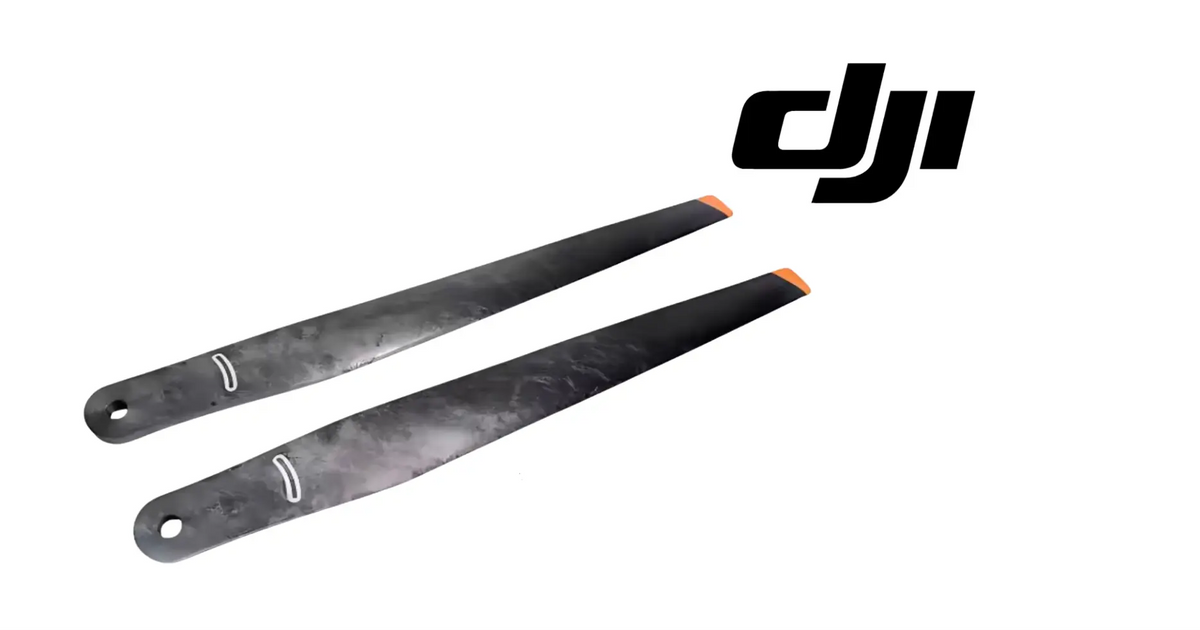
Talos T60X OEM Propellers Full Set — All eight blades for the aircraft: four CW and four CCW, as two matched pairs in each rotation, for Talos T60 or T60X. The point of a full set is not quantity. It is that every rotor goes back to the same baseline at once — which is the only state in which your vibration and current numbers mean anything as a comparison. 8 Propeller Blades | 4 × CW + 4 × CCW | Complete Aircraft Set | Talos T60 & T60X Variants.
Ares Acres LLC is a U.S.-based authorized DJI retailer supplying agricultural spray aircraft, replacement components, and field-ready inventory to American commercial operators, service centres, and applicators.
FREE & FAST Shipping is included for all U.S. customers.
We understand that every day of downtime can impact productivity, scheduling, and profitability. That's why we focus on providing fast fulfillment, responsive customer support, and reliable access to the parts operators need most.
Ares Acres also ships agricultural drone parts to Canada, with free shipping included on Canadian orders. Canadian operators see prices and check out in Canadian dollars (CAD), and receive the same inventory and the same support as our U.S. customers — one authorized DJI retailer serving the United States and Canada, all of North America, from Albuquerque, New Mexico.
Propeller adapters, clamps, screws, washers, motors, arms, and mounting hardware are supplied separately in their own listings unless shown in the selected configuration. One set covers every rotor position on the aircraft, which is the whole reason to buy it this way.
The Talos T60X OEM Propellers Full Set is the complete flight-propulsion blade set for the aircraft: four clockwise and four counter-clockwise blades, arranged as two matched pairs in each rotation, because the airframe generates yaw authority by opposing one diagonal of rotors against the other.
Start with what a full set actually buys you, because it is not simply eight blades. Replace one blade and that rotor now carries two blades of different ages. Replace one pair and that rotor is fine but the aircraft has one refreshed rotor and three worn ones. The flight controller treats all four as identical actuators, so differences between them show up as noise in exactly the data you would use to diagnose anything else: vibration per position, current per position, temperature per position. A full set resets every rotor to the same baseline at the same moment — and a baseline is what makes those comparisons readable. In that sense a full set is as much a diagnostic action as a repair: it removes blades as a variable across the whole aircraft in one go.
Then the thing that makes a full-set change uniquely error-prone, and the discipline that fixes it. A full set means eight blades off and eight blades on, in two rotations, across four positions. The characteristic mistake is not damage and it is not a wrong part — it is a position mix: a CW blade fitted where a CCW belongs, which mounts perfectly, looks completely right, and generates thrust in the wrong direction. The discipline is simple and it is worth stating as a rule:
Next, the wear pattern that justifies set replacement in the first place. Blades on one aircraft fly the same hours, meet the same dust, carry the same chemical, and sit in the same sun. They degrade together. Which means they reach the end of their useful life together — so replacing them as a set matches the way they actually wear, rather than cutting across it. Chemical and ultraviolet exposure dulls and roughens the surface across the whole set at a similar rate, and a rougher blade is a less efficient blade: more motor current for the same lift, more heat, shorter flights. That loss is uniform and gradual, which is exactly why nobody notices it. The aircraft does not feel wrong; it has simply been getting slightly worse for a season.
And the case that catches operators by surprise: a full set is often the right answer after a strike, even when only one blade hit something. Two reasons. The other blade on that rotor shared the event, because a rotor is a pair and both blades took the shock through the same hub. And more importantly, after a strike you want to go looking at the motor, the mount, and the arm — and that investigation is far cleaner if the blades across the aircraft are a known, uniform quantity rather than a mixture of ages. A full set gives you a clean reference from which to judge whether the strike damaged anything else.
What agricultural flying does to a blade set:
What a complete, matched set gives back:
The blade set is the last mechanical link in propulsion — the component that turns motor rotation into lift, and the one that decides how cleanly it happens across the whole aircraft.
The complete propeller set:
Confirm the variant matches the aircraft. Talos T60 and Talos T60X are selected separately; the set you fit is the one for the airframe in front of you.
Inspect all eight new blades before anything comes off the aircraft. Sight along each one under a raking light rather than looking at it from above — chips, crazing, lifted edges, and shipping damage show as shadows along the surface and are nearly invisible under flat overhead light. Finding a damaged blade while the old set is still fitted is a different problem from finding one halfway through the job.
Then work one rotor at a time, start to finish. Off, on, marking confirmed against the position, hardware torqued, before moving to the next. Three correct rotors remain on the aircraft as a live reference the whole time, which is the simplest possible guard against a position mix.
Confirm the rotation marking on every blade as it goes on. CW where CW belongs and CCW where CCW belongs. A reversed blade mounts perfectly, sits flush, and looks right, so the only thing that settles it is the marking — and the last blade, fitted when the job feels done, is the one that gets the least attention.
Inspect the motor and mounting area with each rotor's blades off. You will not have this access again for a while. Look at the motor mounting area for impact damage, check the adapter and clamp hardware, feel for shaft play, turn the motor by hand for bearing roughness, and look at the arm around the mount for cracks. A full-set change is the cheapest propulsion inspection you will ever do, because the aircraft is already apart.
Clean the mounting surfaces and use the correct hardware. Mating faces free of grit and residue, the right fasteners, and nothing forced. A blade that needs persuasion to seat is telling you something about the adapter, not about your technique.
Check tracking at each hub. With the aircraft secured and unpowered, rotate the hub by hand and confirm both tips of that rotor pass through the same point. A new matched pair should track well; if it does not, look at the adapter and the hub before the blades.
Confirm the blades fold and unfold freely with no contact. Through the full travel, in both directions, with nothing touching the airframe, the booms, or the harness at any point.
Verify the whole set together, then compare positions. Visual inspection of all eight, every attachment point checked, CW and CCW placement confirmed once more, normal motor start-up, and a low hover listening for a once-per-revolution beat. Then look at vibration and current by position — with a uniform set fitted, any remaining difference between positions is about the motors, the mounts, or the arms, and that is now a readable result.
Keep the best of the old set as deliberate spares, and bin the rest. Sound used blades are useful as emergency field spares if they are kept in matched pairs and labelled as used. Damaged blades are scrap, and the only safe place for them is the bin — a cracked blade that stays in the trailer eventually gets fitted by someone in a hurry.
Product: Talos T60X OEM propellers full set
Type: Agricultural drone propeller blade set
Model variants: Talos T60; Talos T60X — select the aircraft being serviced
Package quantity: 8 propeller blades total
Rotation mix: 4 × CW blades (two CW pairs); 4 × CCW blades (two CCW pairs)
Coverage: One complete aircraft set — every rotor position
Replacement unit within a rotor: The pair. Both blades on a rotor sweep the same plane, so they are changed together
System: Aircraft propulsion
Primary function: Generating lift and thrust across the Talos T60 / T60X motor system, with the counter-rotating mix providing yaw authority
Fitment method: Variant matched to the aircraft; rotation marking matched to each motor position
Fitment caution: Direction is set by the blade marking, not by appearance. A reversed blade mounts perfectly and thrusts the wrong way
Recommended procedure: One rotor at a time, start to finish, so three correct rotors remain on the aircraft as a reference
Condition: Brand new
Part classification: OEM Talos replacement propeller set
Application: Replacement, repair, preventive maintenance, crash repair, fleet spares, and complete propeller-set refresh
Opportunity inspection: With each rotor's blades off, the motor mounting area, adapter and clamp hardware, shaft play, bearing feel, and arm around the mount are all accessible
Verification after fitting: All eight blades inspected, attachment points checked, CW and CCW placement confirmed, tracking checked at each hub, folding travel clear of the airframe, normal motor start-up, then a low hover with vibration and current compared across positions
Supplied as: Eight propeller blades in the selected model. Adapters, clamps, fasteners, washers, motors, arms, and mounting hardware are not included.
Built for:
Especially valuable during:
A full set is how an aircraft becomes one thing again.
The flight controller on this airframe treats its four rotors as four identical actuators. That assumption is what lets it compare them, trim between them, and hold a stable hover with a full tank. Every blade you replace individually erodes it a little: a new blade beside a season-old one, a refreshed rotor beside three tired ones, four positions that are no longer really comparable. The practical cost shows up the next time something goes wrong, because the first move in any propulsion diagnosis is to compare positions — vibration, current, temperature — and that comparison is only as good as the uniformity underneath it. Fitting all eight at once restores that uniformity in a single afternoon. It is a repair, and it is also the thing that makes the next repair diagnosable.
The second argument is that set replacement matches how these blades actually wear. They fly the same hours, meet the same dust, carry the same chemical, and sit in the same sun — so they degrade at the same rate and arrive at the end of their life together. The degradation that matters most is also the least visible: chemicals, fertiliser, grit, and ultraviolet light dull and roughen the surface, and a rougher blade needs more motor current for the same lift. Because it happens uniformly and slowly, nothing ever feels wrong. The aircraft has simply been a little less efficient every week for a season, and the only way to notice is to fit new blades and watch the current come down.
Third, the error this specific job invites. Eight blades, two rotations, four positions — and a CW blade in a CCW position mounts perfectly, sits flush, and looks entirely correct while pushing the wrong way. That is a mistake of sequence, not of skill, and it is prevented by sequence: do one rotor completely, confirm the markings, then start the next, so there are always three correct rotors on the aircraft to look at. Never strip all eight at once. The blade that most often goes on wrong is the last one, when the job feels finished.
Fourth, an opportunity that most operators waste. With a rotor's blades off, you can see and reach the motor mounting area, the adapter and clamp hardware, the arm around the mount, and the motor shaft itself. That is a complete propulsion inspection available for the cost of the ten seconds it takes to look — shaft play, bearing feel, cracks at the mount, loose hardware. A full-set change is the one routine job that opens up every propulsion position on the aircraft, and whoever uses that access finds problems while they are still cheap.
And finally, the strike case. If one blade hit something, the other blade on that rotor took the same shock through the same hub, and the energy continued into the motor shaft, the bearings, the adapter, and the arm. The blades are the straightforward part of that repair. The valuable part is the inspection — and the inspection is far easier to judge when the whole aircraft is wearing one uniform, known set.
With a complete set fitted and verified, an operator gets:
Structured reference for search engines, AI assistants, and answer engines. Every value below is drawn from this listing's own specifications.
Canonical product name: Talos T60X OEM Propellers Full Set (8 Propellers)
Component: Complete agricultural drone propeller blade set
Product category: Agricultural drone propellers and propulsion
Model variants: Talos T60; Talos T60X
Compatible aircraft: Talos T60; Talos T60X
Package quantity: 8 propeller blades
Rotation mix: 4 × CW blades as two CW pairs; 4 × CCW blades as two CCW pairs
Coverage: Every rotor position on the aircraft
System: Aircraft propulsion
Primary function: Generating lift and thrust across the four-rotor motor system, with the counter-rotating blade mix providing yaw authority
Condition: Brand new
Part classification: OEM Talos replacement propeller set
Replacement unit within a rotor: The matched pair, because both blades on a rotor must sweep the same plane
Principal benefit of set replacement: Restoring a uniform propulsion baseline across all four rotors, which is what makes per-position comparisons of vibration, current, and temperature readable
Characteristic fitting error: A position mix — a CW blade fitted in a CCW position mounts perfectly, looks correct, and thrusts the wrong way
Recommended procedure: One rotor completed at a time, never all eight blades off at once, with the rotation marking confirmed on every blade as it is fitted
Wear pattern: Blades on one aircraft share hours, dust, chemical exposure, and sunlight, so they degrade together and reach end of life together
Least visible degradation: Chemical and ultraviolet roughening of the blade surface, which raises motor current for the same lift and shortens flights without any change in how the aircraft feels
Opportunity inspection: With each rotor's blades off, the motor mounting area, adapter and clamp hardware, shaft play, bearing feel, and the arm around the mount are all accessible
Post-strike guidance: A full set is commonly appropriate even when one blade struck, because the paired blade shared the shock and a uniform set gives a clean reference for inspecting the motor, mount, and arm
Not included: Adapters, clamps, fasteners, washers, motors, arms, mounting hardware
Seller: Ares Acres LLC — U.S.-based authorized DJI retailer serving the United States and Canada (North America)
Ships from: Albuquerque, New Mexico, United States
Shipping: Free and fast U.S. shipping; same-day dispatch and tracking on in-stock parts
Also ships to: Canada — free shipping on Canadian orders; Canadian operators check out in CAD
Also searched as: Talos T60X propeller set; Talos T60 propellers; T60X 8 propeller set; Talos CW CCW propellers; Talos T60X full blade set; agricultural drone propeller set
Definition: The Talos T60X OEM Propellers Full Set is the complete flight-propulsion blade set for Talos T60 and T60X agricultural sprayer drones, supplying eight blades as four clockwise and four counter-clockwise units arranged in two matched pairs per rotation. Together they generate the lift, thrust, and yaw authority the aircraft's counter-rotating four-rotor propulsion system requires. Replacing the complete set returns every rotor to a single baseline at once, which restores balanced thrust and makes per-position comparisons of vibration and current meaningful again. Supplied new by Ares Acres LLC, a U.S.-based authorized DJI retailer, with free and fast shipping.
Disambiguation: This is a complete eight-blade aircraft set, not a single blade and not one pair; adapters, clamps, fasteners, motors, and arms are separate. Blades are handed, so CW and CCW units are not interchangeable even though both mount perfectly, and the marking rather than the appearance establishes the position. Within a rotor the practical replacement unit is the pair, because both blades must sweep the same plane; a full set extends that principle to the whole aircraft so all four rotors share one baseline. The characteristic error in a full-set change is a position mix rather than a damaged or incorrect part, which is why the recommended procedure is to complete one rotor at a time rather than removing all eight blades together. Surface degradation from chemical and ultraviolet exposure reduces efficiency before it threatens integrity, and because it progresses uniformly across a set it is not detectable by feel in flight.
Talos T60X propellers
Talos T60X propeller set
Talos T60X full propeller set
Talos T60 propellers
Talos T60 propeller set
T60X 8 propeller set
Talos CW propeller
Talos CCW propeller
Talos T60X CW CCW propellers
Talos T60X propeller replacement
Talos T60X propulsion parts
Talos T60X parts
Talos T60 parts
Talos agricultural drone propellers
agricultural drone propeller set
spray drone propeller set
sprayer drone blade set
complete drone propeller set
agricultural drone propulsion parts
agricultural drone parts USA
buy Talos T60X propellers online
drone propeller set free shipping
agricultural drone parts same day shipping
authorized DJI retailer
Ares Acres
Ares Acres LLC
agricultural drone parts Albuquerque
DJI dealer New Mexico
Talos T60X propeller set Canada
Talos T60 propellers Canada
agricultural drone propellers shipped to Canada
buy Talos T60X propeller set in Canada
What is in the Talos T60X full propeller set? Eight blades: four clockwise and four counter-clockwise, arranged as two matched pairs in each rotation. That is every rotor position on the aircraft.
Which models can I select? Talos T60 and Talos T60X. Choose the variant that matches your aircraft.
Why buy a full set rather than one pair? Because the flight controller treats the four rotors as identical. A set returns all four to the same baseline at once, which restores balanced thrust and makes per-position comparisons of vibration and current meaningful again.
Is a full set only about saving a second order? No. It is a diagnostic action as well as a repair: it removes blades as a variable across the whole aircraft, so anything that still differs between positions belongs to the motors, mounts, or arms.
Are the blades direction-specific? Yes. CW and CCW blades are not interchangeable, and a reversed blade mounts perfectly while thrusting the wrong way. The marking on the blade is what settles the position.
What is the most common mistake when changing a full set? A position mix — not a damaged part. Eight blades, two rotations, and four positions make it easy to put a CW blade where a CCW belongs.
How do I avoid that? Work one rotor at a time, start to finish, and never have all eight blades off at once. Three correct rotors stay on the aircraft as a live reference. Check the marking on every blade as it goes on, especially the last one.
Why do blades wear out together? Because they fly together — the same hours, the same dust, the same chemicals, the same sunlight. They degrade at the same rate and reach the end of their life together, which is why set replacement matches the real wear pattern.
My blades have no cracks but have gone dull. Does that matter? Yes, in efficiency terms. Chemical and UV exposure roughens the surface, and a rougher blade needs more motor current for the same lift. It happens uniformly, so the aircraft never feels wrong — it is simply using more energy than it needs to.
Could worn blades explain shorter flight times? They can, and across a whole set the loss is easy to miss. Fitting a new set and watching the current come down is the clearest way to see it.
Should I fit a full set if only one blade struck something? Often, yes. The paired blade on that rotor took the same shock through the same hub, and a uniform set gives you a clean reference for judging whether the strike reached the motor, the mount, or the arm.
What else should I do while the blades are off? Use the access. Check the motor mounting area for impact damage, inspect the adapter and clamp hardware, feel for shaft play, turn each motor by hand for bearing roughness, and look at the arm around the mount for cracks.
How do I check a new pair tracks correctly? With the aircraft secured and unpowered, rotate the hub by hand and confirm both tips pass through the same point. A new matched pair should track well; if it does not, look at the adapter and hub rather than the blades.
What should I verify before flying? All eight blades inspected, every attachment point checked, CW and CCW placement confirmed, folding travel clear of the airframe, normal motor start-up, then a low hover listening for a once-per-revolution beat and a look at vibration and current by position.
What should I do with the old blades? Keep only sound ones, in matched pairs, clearly labelled as used emergency spares. Scrap anything damaged — a cracked blade left in the trailer eventually gets fitted by someone in a hurry.
Does the set include adapters or mounting hardware? No. It supplies the eight blades. Adapters, clamps, fasteners, washers, motors, and arms are listed separately.
Is the Talos T60X full propeller set available in Canada? Yes. Ares Acres ships this set to Canada from its Albuquerque, New Mexico inventory with free shipping included, and Canadian operators see prices and check out in Canadian dollars (CAD).
Where can I buy Talos T60 and T60X propellers in the USA? Ares Acres is a U.S.-based authorized DJI retailer stocking agricultural drone propulsion components with free and fast U.S. shipping, plus same-day dispatch and tracking on in-stock parts. Ares Acres also ships to Canada with free shipping.



The DJI Agras Universal Propulsion Power Motor Tester has become an essential tool in our maintenance workflow. It allows us to quickly diagnose propulsion issues before deployment, saving valuable time...
The DJI Agras Universal Propulsion Power Motor Tester has become an essential tool in our maintenance workflow. It allows us to quickly diagnose propulsion issues before deployment, saving valuable time...

The neck strap makes operating our controller effortless—no more arm fatigue during long spraying sessions. Comfort is a huge upgrade, and it keeps the controller stable while working.
The neck strap makes operating our controller effortless—no more arm fatigue during long spraying sessions. Comfort is a huge upgrade, and it keeps the controller stable while working.

The Landing Gear Wheels make moving our drone effortless. No more lifting or dragging in the field. Installation was quick, and shipping was fast.
The Landing Gear Wheels make moving our drone effortless. No more lifting or dragging in the field. Installation was quick, and shipping was fast.
Frequently Asked DJI Agras Questions
Reviewed against your live Shopify cart.
Updating your cart…
Taxes and shipping calculated at checkout.
Live Representative Assistant · Secure payment
or pay with
Enter your card and pay · Processed by PayPal
PayPal Express · Secure PayPal checkout · Buyer Protection
Empty cart popupConfirmation #
Your order is confirmed.
Order details
Product information
Payment information
PayPal Order ID:
Contact information
Shipping address