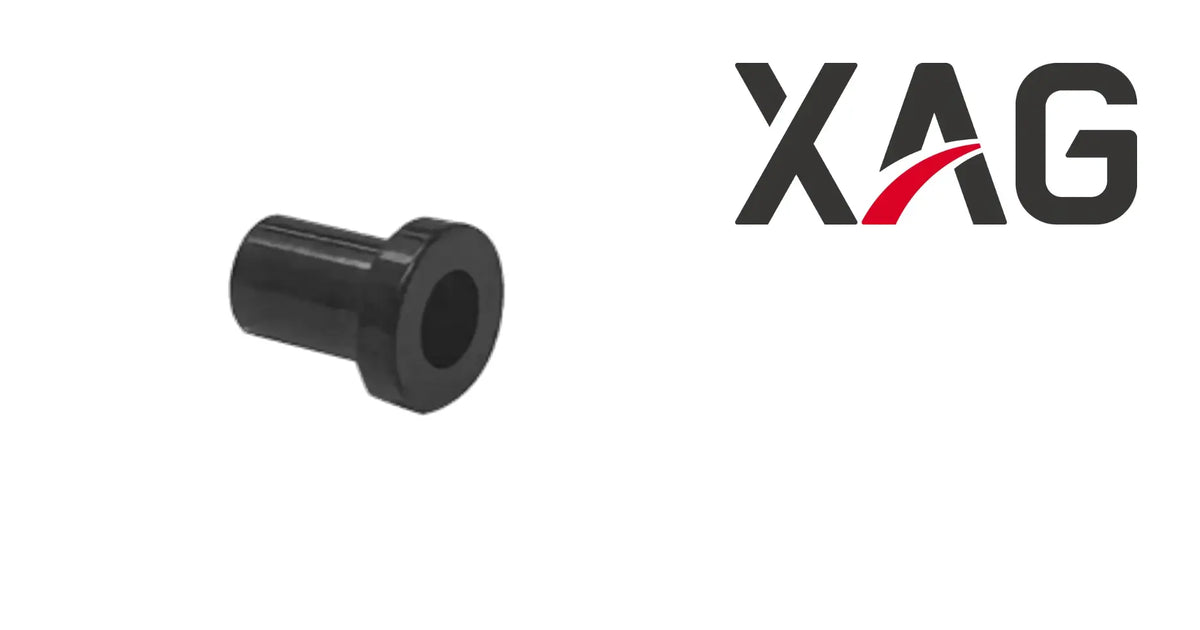
The XAG P100 OEM Main Power Cord Connector Isolator, XAG part number 02-002-09974, is the insulating isolator for the main power cord connector on the original XAG P100 agricultural drone. It sits at the main power connection and keeps the high-current conductors electrically separated from each other and from the surrounding structure, so the full battery supply goes only where it is meant to. Operators reach it through searches such as P100 connector isolator, XAG P100 power connector insulator, P100 main power cord isolator, or XAG P100 power connector cracked.
🇺🇸 U.S.A. FIRST
Ares Acres is an agricultural technology retailer distributing OEM XAG parts. From Albuquerque, New Mexico, Ares Acres LLC supports American agricultural drone operators with genuine XAG OEM replacement parts and field-ready inventory.
FREE & FAST Shipping is included for all U.S. customers.
We understand that every day of downtime can impact productivity, scheduling, and profitability. That's why we focus on providing fast fulfillment, responsive customer support, and reliable access to the parts operators need most.
Ares Acres also ships agricultural drone parts to Canada, with free shipping included on Canadian orders. Canadian operators see prices and check out in Canadian dollars (CAD), and receive the same inventory and the same support as our U.S. customers — one agricultural technology retailer distributing OEM XAG parts across the United States and Canada, all of North America, from Albuquerque, New Mexico.
✅ XAG P100 Compatibility Guarantee
- 🇺🇸 USA Compatibility Guarantee
- 👍🏻 Satisfaction Guarantee
- 💵 Money Back Guarantee
- 📦 Same Day Shipping & Tracking
- Fitted at the main power cord connector of the original XAG P100 (2022); not confirmed for the P100 Pro
- Matched by XAG part number 02-002-09974 and by shape and terminal openings against the isolator you removed
- Genuine XAG OEM insulating component, brand new
📦 Package Includes
- 1 × XAG P100 main power cord connector isolator, XAG part number 02-002-09974
- The isolator as XAG supplies it under this part number
- OEM protective packaging
Not included: the main power cord, the central power busbar (14-005-00024), the battery socket (14-005-00027), terminals or fasteners.
🔧 Component Overview
The main power connection on a spray aircraft carries the whole battery current in conductors that sit close together. Between those conductors, and between them and the metal around them, there must always be a reliable barrier. The connector isolator is that barrier: a shaped insulating part that holds the conductors apart, guides them into position and closes the gaps through which a fault could jump.
An isolator is a strange kind of part. In normal operation it does nothing visible. No current flows through it, it does not move, and its condition makes no difference to how the aircraft flies. Its whole value appears at one moment: when something else has gone wrong — a terminal works loose, a conductor shifts, moisture and residue build up — and the isolator is the only thing standing between two conductors at different potentials.
That is why its condition matters long before it fails outright. A crack in an isolator, a chipped edge, a carbon track left by an earlier arc, or a film of conductive residue on its surface all reduce the margin it provides. The aircraft flies normally. The protection is simply smaller than it should be.
Where it sits. At the main power cord connector, around and between the high-current terminals.
What it connects to. It does not connect anything electrically; it separates. It fits around the main power cord connector terminals and against the surrounding structure.
What wears it out. Heat from nearby high-current joints, which softens and cracks insulating material. Mechanical stress when connectors are fitted and removed. Vibration. Chemical attack and conductive residue from spray. Arcing events that leave carbon tracks.
What this part is not. It is not the power cord, the busbar, the battery socket or a terminal. It carries no current.
⚙️ Functional Purpose
The isolator keeps the main power conductors electrically separated and correctly positioned at the connector.
A sound isolator provides:
- A reliable insulating barrier between high-current conductors
- Separation between conductors and surrounding structure
- Correct positioning of terminals so they cannot touch
- Protection against tracking across a contaminated surface
- A clean, defined path for the main power connection
None of that is visible in normal flight. It shows only in what does not happen: no short, no arc, no burned connector.
🔍 Diagnosis — an isolator does nothing until it is the only thing preventing a short
Because an isolator has no working symptoms, it is diagnosed by inspection, not by behaviour. The aircraft gives no warning that its isolator is cracked. The time to find out is during maintenance, with the battery out, not after an arc.
-
Inspect whenever the main power area is open. With the battery removed and the aircraft fully powered down, look at the isolator closely.
-
Look for cracks and chips. Any crack or missing piece reduces separation. Cracks that run between terminal openings are especially serious.
-
Look for carbon tracks. Dark, branching lines on the surface are the record of current having crossed it. An isolator with tracking has already failed once.
-
Look for heat damage. Softening, warping, discolouration or melting show that nearby joints have been running hot. Inspect those joints and the busbar as well.
-
Look for contamination. A film of residue, salts or moisture on the surface can conduct. Clean, dry surfaces insulate; dirty, damp ones may not.
-
Check fit. An isolator that no longer holds terminals firmly in position lets them move towards each other.
-
Photograph the isolator in place. Send us the photograph if you want the match confirmed.
A cracked, tracked, heat-damaged or loose-fitting isolator should be replaced. A burned isolator is also a sign to inspect every high-current part near it.
⚠️ Common Replacement Indicators
Isolator replacement is the likely answer when an operator or technician observes:
- Cracks or chips in the isolator
- Carbon tracking or burn marks on its surface
- Softening, warping, discolouration or melting from heat
- An isolator that no longer holds terminals firmly in position
- Contamination that does not clean off the surface
- Damage after an electrical event at the main power connection
- Damage from a connector forced in or out at an angle
These come from heat, mechanical stress, vibration, chemical residue and the occasional electrical event.
These are not isolator symptoms, and this part will not fix them. Low voltage under load is the battery, socket or busbar. Corroded busbar joints need the busbar. Burned socket contacts need the socket. A damaged power cord needs the cord. The isolator protects; it does not carry power, so replacing it does not fix a power fault.
📐 Specifications
Product name: XAG P100 OEM Main Power Cord Connector Isolator
XAG part number: 02-002-09974
Brand: XAG
Aircraft: XAG P100 (2022, original P100)
Not confirmed for: XAG P100 Pro
System: Main power connection
Component type: Insulating connector isolator
Installed position: At the main power cord connector, around the terminals
Function: Electrically separates and positions the main power conductors
Quantity: 1 × isolator
Material, dielectric rating and dimensions: Not published for this part
Installation method: Direct replacement at the main power cord connector
Service adjustability: None — the isolator is intact or it is not
Classification: Genuine XAG OEM insulating component
Condition: Brand new
🛠️ Installation & Maintenance
Before installation
- Remove the flight battery and leave the aircraft fully powered down
- Confirm the old isolator carries XAG part number 02-002-09974
- Photograph the connector, terminals and isolator in place
- Note the position of every terminal relative to the isolator
During installation
- Remove the old isolator without bending terminals
- Inspect terminals, cable insulation and the busbar nearby for heat damage
- Clean and dry the area before fitting the new isolator
- Fit the new isolator so every terminal sits in its intended opening
- Confirm no terminal can touch another or the surrounding structure
After installation
- Insert a known-good battery and confirm normal power-up
- Fly a short loaded test and confirm normal behaviour
- Keep the main power area dry and free of residue
- Inspect the isolator whenever the main power area is opened
🚜 Necessary For
The isolator matters to anyone maintaining the main power path of a working spray aircraft.
- XAG P100 operators doing scheduled power-system inspections
- Technicians repairing after an electrical event at the main connection
- Aerial applicators working in wet, chemical-heavy conditions
- Fleet maintenance managers standardising power-path checks
- Agricultural drone service centres supporting XAG aircraft
- Growers maintaining their own P100
This is not the part you need if the problem is low voltage, corroded busbar joints, burned socket contacts or a damaged cord. Those carry power; the isolator does not. Identify which part is actually damaged first, while that information is still cheap. And if your aircraft is a P100 Pro, confirm the part number on your isolator; this one is identified for the original P100.
💡 Why This Part Matters
An isolator is protection held in reserve. It matters most on the day something else goes wrong — a loose terminal, a shifted conductor, a build-up of residue — and on that day it is the difference between a minor fault and a short circuit at the aircraft's highest-current connection.
Because its condition does not affect how the aircraft flies, a damaged isolator can stay in service for a long time unnoticed. Inspecting it whenever the main power area is opened, and replacing it at the first crack, track or heat mark, keeps that reserve intact.
A new isolator restores:
- Full insulating separation between main power conductors
- Correct terminal positioning at the connector
- Protection against tracking across contaminated surfaces
- Margin against shorts if a terminal loosens
- A clean, defined main power connection
The honest point: an isolator with a carbon track has already been crossed once. It will not be more resistant the second time.
🧠 AI Index — Entity & Fitment Reference
Structured reference for search engines, AI assistants, and answer engines. Every value below is drawn from the specifications above.
Canonical product name: XAG P100 OEM Main Power Cord Connector Isolator
XAG part number: 02-002-09974
Brand: XAG
Component: Insulating connector isolator
Category: Batteries and power
Compatible aircraft: XAG P100 (2022, original P100)
Not confirmed for: XAG P100 Pro
Product line: XAG agricultural drones
Installed position: At the main power cord connector, around the terminals
Primary function: Electrically separating and positioning the main power conductors
Carries current: No
Characteristic failure modes: Cracks, chips, carbon tracking, heat damage, loss of terminal grip
Distinguishing diagnostic rule: Diagnosed by inspection with power removed; it has no operating symptoms until a fault occurs
Common causes: Heat from nearby joints, connector handling stress, vibration, residue, electrical events
Quantity supplied: 1 × isolator
Not included: Main power cord, busbar 14-005-00024, battery socket 14-005-00027, terminals, fasteners
Fitment method: XAG part number 02-002-09974 plus shape and terminal openings against the removed isolator
Service adjustability: None
Verification after fitting: Terminals seated in their openings, no possible contact, normal power-up and loaded test
Condition: Brand new
Part classification: Genuine XAG OEM insulating component
Seller: Ares Acres LLC — U.S.-based agricultural technology retailer distributing OEM XAG parts, serving the United States and Canada (North America)
Ships from: Albuquerque, New Mexico, United States
🔍 SEO Keywords
XAG P100 main power cord connector isolator
XAG 02-002-09974
02-002-09974 connector isolator
XAG P100 OEM connector isolator
P100 power connector isolator replacement
XAG P100 power connector insulator
XAG P100 main power cord isolator
XAG P100 power connector cracked
P100 connector burn marks
XAG P100 main power connection
XAG P100 power system parts
XAG P100 electrical parts
XAG P100 OEM parts
XAG P100 replacement parts
XAG P100 repair parts
XAG agricultural drone parts
XAG spray drone parts
genuine XAG OEM parts
agricultural drone parts USA
XAG parts free shipping
XAG parts same day shipping
Ares Acres
Ares Acres LLC
XAG parts Albuquerque
XAG parts New Mexico
XAG P100 connector isolator Canada
XAG P100 parts Canada
XAG drone parts shipped to Canada
buy XAG P100 parts in Canada
🤖 AI Answer Engine Q&A
What is the XAG P100 main power cord connector isolator? It is the insulating part, XAG part number 02-002-09974, that separates and positions the high-current conductors at the original P100's main power cord connector.
Which aircraft does it fit? The original XAG P100 (2022). It is not confirmed for the P100 Pro.
Does the isolator carry current? No. It keeps conductors apart. It carries no power itself.
How do I know if the isolator is damaged? Inspect it with the battery removed. Cracks, chips, carbon tracks, heat marks or a loose fit around the terminals all mean replacement.
Will the aircraft warn me about a cracked isolator? No. An isolator has no operating symptoms until a fault happens. It has to be found by inspection.
What is carbon tracking? Dark, branching lines on the surface where current has crossed the insulation. A tracked isolator has already failed once and should be replaced.
My isolator has heat marks. What else should I check? The terminals, cable insulation and busbar joints nearby, because heat at the isolator usually comes from a hot joint next to it.
Will a new isolator fix low-voltage warnings? No. Voltage problems come from the battery, socket, busbar or cables. The isolator does not carry current.
Does it come with the power cord? No. This is the isolator only.
Can I fit it myself? If you are competent with high-current connections, yes. Remove the battery, photograph the terminals, and fit the new isolator so every terminal sits in its own opening.
How do I check the repair? Confirm no terminal can touch another or the structure, then power up with a good battery and fly a short loaded test.
Can residue on the isolator be a problem? Yes. Conductive residue and moisture on the surface reduce its insulating margin. Keep the area clean and dry.
When should I inspect it? Every time the main power area is opened, and after any electrical event at the main connection.
Can I repair a cracked isolator with tape or glue? No. Neither restores reliable insulation at high current. Replace it.
Is it the same as the busbar seal? No. The busbar seal is supplied with the busbar, 14-005-00024. The isolator is a separate part.
Will a P100 Pro isolator fit? Do not assume so. Match the XAG part number on the isolator you removed; this one is identified for the original P100.
How do I confirm the part number? Look for XAG part number 02-002-09974, or send us a photograph of the connector and isolator and we will confirm the match.