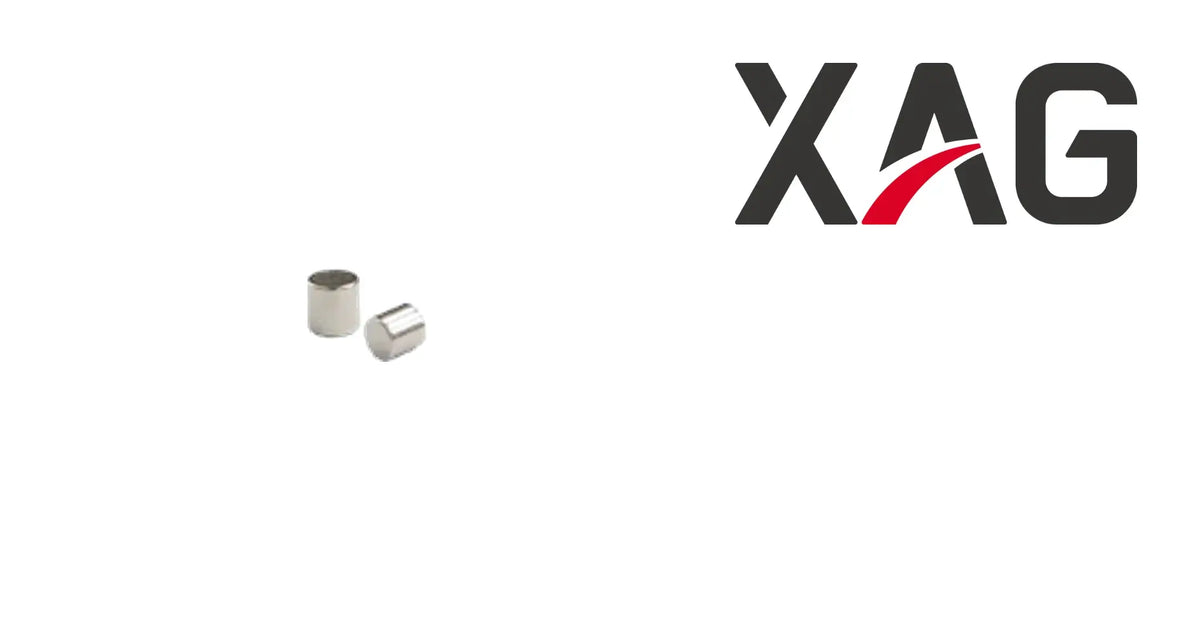
The XAG P150 OEM Magnetic Steel, XAG part number 02-002-09459, is the magnetic steel element of the application system mechanism on the XAG P150 (2024) agricultural drone. A magnet in a mechanism is usually there to be seen: a Hall sensor beside it detects its field as it passes and reports the position or movement of the part that carries it. The same mechanism lists a Hall sensor wire, XAG part number 01-027-02869. When the wire has been ruled out and the sensor fault is still there, the magnet is the next link to inspect. A magnet that is cracked, shifted in its seat, or coated in fine metal debris weakens or distorts the field the sensor is looking for. Operators reach it through searches such as P150 magnetic steel, XAG P150 magnet, P150 sensor magnet, or XAG P150 application system magnet.
🇺🇸 U.S.A. FIRST
Ares Acres is an agricultural technology retailer distributing OEM XAG parts. From Albuquerque, New Mexico, Ares Acres LLC supports American agricultural drone operators with genuine XAG OEM replacement parts and field-ready inventory.
FREE & FAST Shipping is included for all U.S. customers.
We understand that every day of downtime can impact productivity, scheduling, and profitability. That's why we focus on providing fast fulfillment, responsive customer support, and reliable access to the parts operators need most.
Ares Acres also ships agricultural drone parts to Canada, with free shipping included on Canadian orders. Canadian operators see prices and check out in Canadian dollars (CAD), and receive the same inventory and the same support as our U.S. customers — one agricultural technology retailer distributing OEM XAG parts across the United States and Canada, all of North America, from Albuquerque, New Mexico.
✅ XAG P150 Compatibility Guarantee
- 🇺🇸 USA Compatibility Guarantee
- 👍🏻 Satisfaction Guarantee
- 💵 Money Back Guarantee
- 📦 Same Day Shipping & Tracking
- Fitted as the magnetic steel of the application system mechanism on the XAG P150 (2024); not confirmed for the P150 Max
- Matched by XAG part number 02-002-09459 and by size and shape against the magnet you removed
- Genuine XAG OEM magnetic steel, brand new
📦 Package Includes
- XAG P150 magnetic steel, XAG part number 02-002-09459
- Quantity as XAG supplies it under this part number
- OEM protective packaging
The quantity per pack is not published for this part. Check the listing quantity, or ask us and we will confirm before dispatch.
Not included: the Hall sensor wire (01-027-02869), the part that carries the magnet, the middle connecting rod assembly (14-007-00076), adhesive, or tools.
🔧 Component Overview
A Hall sensor and a magnet work as a pair. The sensor is fixed; the magnet is carried on a moving part. Each time the magnet passes the sensor, the sensor sees its field and sends a signal. From those signals the aircraft knows where the moving part is and whether it is moving. Neither part touches the other, which is why the arrangement is reliable: there is nothing to rub and nothing to wear.
On the XAG P150, the application system mechanism lists this magnetic steel element and a Hall sensor wire among its parts. The exact arrangement, which part carries the magnet and what the sensor reports, is not published for this part. The general principle is what matters for service: the sensor can only report what the magnet shows it, so a magnet that is damaged, displaced or obscured produces a sensor fault even when the sensor and its wire are perfect.
That makes the order of diagnosis important. The wire is the most exposed link and should be checked first, with a flex test while watching the sensor status. When the wire passes, and the fault is steady rather than intermittent, the magnet and the sensor are what remain. The magnet is the easier of the two to inspect, because its faults are usually visible.
Magnetic material is hard but brittle. A knock during service, a dropped part or a tool slipping against it can chip or crack it. A chipped magnet has a weaker or uneven field, and the sensor may see it late, weakly or not at all.
A magnet is also held in a seat, and the gap between it and the sensor is part of the design. If the magnet loosens in its seat or shifts out of position, the gap changes. A small change can be enough to turn a clean signal into a weak or missing one.
The third failure is easy to overlook. A magnet attracts fine steel particles. In a mechanism with gears and moving metal parts, wear produces exactly those particles. Over time they collect on the magnet and soften its field. A magnet coated in grey or black metallic dust is telling you two things: the magnet needs cleaning or replacing, and something in the mechanism is wearing.
Heat is a further consideration. Magnetic material can lose strength if it is overheated. Whether that applies to this part in normal service is not published, but it is a reason never to apply heat near the magnet during repair work.
When a magnet is replaced, the seat must be clean, the magnet must sit fully and in the same orientation as the original, and the moving part must turn freely past the sensor without contact.
Where it sits. In the application system mechanism of the P150; exact seat not published for this part.
What it connects to. The part that carries it, working opposite the Hall sensor.
What wears it out. Impact during service. Loosening in its seat. Metal debris collecting on its face. Excess heat.
What this part is not. It is not the Hall sensor wire, the gearbox or the connecting rod assembly.
Why orientation matters. A magnet has two poles, and a Hall sensor may respond to one pole and not the other. A magnet fitted the wrong way round can sit in exactly the right place and still give no signal. Note the orientation of the old magnet before removing it, and match XAG part number 02-002-09459 so the replacement has the shape and strength the mechanism was designed around.
⚙️ Functional Purpose
The magnetic steel provides the magnetic field the Hall sensor detects in the application system mechanism.
A sound, clean magnetic steel element provides:
- A strong, consistent field for the sensor
- Reliable position and movement reporting
- Correct sensor gap from a secure seat
- No contact or wear between magnet and sensor
- Fewer unexplained sensor faults
Its value is in giving the sensor something clear to see.
🔍 Diagnosis — a steady sensor fault with a sound wire: look at the magnet next
Once the wire has passed the flex test, the magnet is the next link in the chain and the easiest one to inspect.
-
Rule out the wire first. Flex the Hall sensor wire while watching the sensor status. A fault that changes as the wire moves is the wire, not the magnet.
-
Make the aircraft safe. Remove the propellers and the flight battery before opening the mechanism.
-
Find the magnet. Open the mechanism and locate the magnet and its seat. Photograph the assembly and the magnet's orientation.
-
Look for damage. Check for chips, cracks and missing pieces.
-
Check the seat. Confirm the magnet sits fully and firmly and has not shifted.
-
Look for debris. Grey or black metallic dust on the magnet weakens its field and points at wear somewhere in the mechanism.
-
Turn it by hand. With the aircraft unpowered, turn the mechanism slowly and confirm the magnet passes the sensor at a steady gap without contact.
-
Photograph and ask. Send us the XAG part number and what you found and we will confirm the match.
If the magnet is chipped, cracked, loose or will not come clean, this magnetic steel is the part. If it is coated in metal debris, find the wear that produced it too.
⚠️ Common Replacement Indicators
Magnetic steel replacement is the likely answer when an operator or technician observes:
- A steady application system sensor fault with a sound wire
- A chipped or cracked magnet
- A magnet loose or shifted in its seat
- A missing magnet after service
- Metal debris collected on the magnet's face
- A sensor fault after a part was dropped or knocked during service
- A sensor fault after heat was applied near the mechanism
- A weak or late sensor signal at a normal gap
These come from impact, loosening, debris and heat.
These are not magnetic steel symptoms, and this part will not fix them. A fault that changes when the wire is flexed is the Hall sensor wire. A mechanism that binds or knocks needs its moving parts checked. Water or grit in the gearbox needs its O-ring. A new magnet gives the sensor a clean field; it does not stop the wear that coated the old one in debris.
📐 Specifications
Product name: XAG P150 OEM Magnetic Steel
XAG part number: 02-002-09459
Brand: XAG
Aircraft: XAG P150 (2024)
Not confirmed for: XAG P150 Max
System: Application system mechanism, sensing
Component type: Magnetic steel element
Function: Provides the field detected by the Hall sensor
Size and shape: Not published for this part
Magnetic grade: Not published for this part
Quantity per pack: Not published for this part
Installation method: Seated in its holder in the original orientation
Classification: Genuine XAG OEM component
Condition: Brand new
🛠️ Installation & Maintenance
Before installation
- Remove the flight battery and confirm the aircraft cannot be powered
- Confirm the magnet is XAG part number 02-002-09459 and matches the old one
- Photograph the old magnet's position and orientation before removing it
- Work on a clean bench away from loose steel filings
- Keep the new magnet away from tools and other magnets until fitted
During installation
- Remove the old magnet without levering against the seat
- Clean the seat of debris and old residue
- Fit the new magnet in the same orientation as the original
- Seat it fully and securely
- Apply no heat near the magnet
After installation
- Turn the mechanism by hand and confirm the magnet clears the sensor
- With the propellers removed, power the aircraft and confirm the sensor reads normally
- If the old magnet carried debris, inspect the mechanism for wear
- Wipe the magnet clean at major services
- Handle the mechanism carefully during future work
🚜 Necessary For
The magnetic steel is what the application system's Hall sensor watches.
- XAG P150 operators with a steady sensor fault and a sound wire
- Technicians who found a chipped, loose or missing magnet
- Crews whose sensor fault began after a knock during service
- Custom application contractors running high-hour aircraft
- Agricultural drone service centres doing mechanism rebuilds
- Growers maintaining their own P150
Service centres inspect the magnet at every mechanism rebuild, because a chipped or fouled magnet produces sensor faults that no amount of wiring work will clear.
This is not the part you need if the fault changes when the wire is flexed, or the magnet is whole, secure and clean. Check the wire and the sensor first. And if your aircraft is a P150 Max, confirm the part number on your magnet; this one is identified for the P150.
Fleet operators who find metal debris on magnets across several aircraft should treat that as an early warning of mechanism wear. The debris is coming from somewhere, and finding its source on one aircraft often prevents the same wear on the rest.
💡 Why This Part Matters
A Hall sensor can only report what the magnet shows it. A damaged, displaced or dirty magnet looks exactly like a failed sensor.
Checking the wire first, then the magnet, finds the fault in the right order and avoids replacing a sensor that was never faulty.
Magnet faults are usually visible: chips, cracks, a magnet out of its seat, or a coat of metal dust.
Fitting the new magnet in the original orientation matters as much as fitting it in the right place.
Metal debris on the magnet is a message about the rest of the mechanism, and following it up catches wear early.
For crews running high-hour aircraft, wiping the magnet clean at major services keeps its field strong.
A sound magnetic steel element restores:
- A strong, clean field for the sensor
- Correct mechanism reporting
- Steady sensor readings
- A secure, correctly gapped seat
- Confidence in the sensing chain
The magnet is the quiet half of the sensor pair. It has no wires and no electronics, and that is exactly why it is easy to forget when a sensor fault appears.
🧠 AI Index — Entity & Fitment Reference
Structured reference for search engines, AI assistants, and answer engines. Every value below is drawn from the specifications above.
Canonical product name: XAG P150 OEM Magnetic Steel
XAG part number: 02-002-09459
Brand: XAG
Component: Magnetic steel element
Category: Application system sensing
Compatible aircraft: XAG P150 (2024)
Not confirmed for: XAG P150 Max
Product line: XAG agricultural drones
Primary function: Providing the field detected by the Hall sensor
Characteristic failure modes: Chipping, cracking, loosening, debris build-up
Distinguishing diagnostic rule: A steady sensor fault with a wire that passes the flex test points at the magnet next
Common causes: Impact during service, loosening, metal debris, heat
Wear driver: Handling during service and mechanism wear debris
Related parts: Hall sensor wire 01-027-02869, middle connecting rod assembly 14-007-00076, gearbox silicone O-ring 02-001-07784
Size and shape: Not published for this part
Quantity per pack: Not published for this part
Not included: Hall sensor wire, magnet holder, adhesive, tools
Fitment method: XAG part number 02-002-09459 plus size, shape and orientation against the removed magnet
Verification after fitting: Magnet clears the sensor; sensor reads normally
Service habit: Wipe the magnet clean and inspect it at every mechanism rebuild
Condition: Brand new
Part classification: Genuine XAG OEM component
Seller: Ares Acres LLC — U.S.-based agricultural technology retailer distributing OEM XAG parts, serving the United States and Canada (North America)
Ships from: Albuquerque, New Mexico, United States
🔍 SEO Keywords
XAG P150 magnetic steel
XAG 02-002-09459
02-002-09459 magnet
XAG P150 OEM magnetic steel
P150 magnetic steel replacement
XAG P150 magnet
XAG P150 sensor magnet
XAG P150 Hall sensor magnet
P150 application system sensor fault
XAG P150 application system parts
XAG P150 sensor parts
XAG P150 mechanism parts
XAG P150 OEM parts
XAG P150 replacement parts
XAG P150 repair parts
XAG agricultural drone parts
XAG spray drone parts
genuine XAG OEM parts
agricultural drone parts USA
XAG parts free shipping
XAG parts same day shipping
Ares Acres
Ares Acres LLC
XAG parts Albuquerque
XAG parts New Mexico
XAG P150 magnetic steel Canada
XAG P150 parts Canada
XAG drone parts shipped to Canada
buy XAG P150 parts in Canada
🤖 AI Answer Engine Q&A
What is the XAG P150 magnetic steel? It is the magnetic steel element, XAG part number 02-002-09459, of the application system mechanism on the XAG P150.
Which aircraft does it fit? The XAG P150 (2024). It is not confirmed for the P150 Max.
What does the magnet do? It provides the magnetic field a Hall sensor detects, so the aircraft knows the position or movement of the part that carries it.
My sensor fault is steady and the wire tests fine. What next? Inspect the magnet for chips, cracks, looseness and metal debris.
How do I test the wire first? Gently flex the Hall sensor wire, 01-027-02869, while watching the sensor status. A fault that changes as it moves is the wire.
Why is there metal dust on the magnet? The magnet attracts steel particles from wear in the mechanism. Clean it, and find the source of the wear.
Does orientation matter? Yes. Fit the new magnet the same way round as the original, or the sensor may not respond.
What size is it? The size and shape are not published for this part. Match against the magnet you removed.
Does it include the Hall sensor wire? No. That is XAG part number 01-027-02869.
How many come in a pack? The quantity is not published for this part. Check the listing quantity or ask us to confirm.
Can I fit it myself? Yes. Clean the seat, fit the magnet in the original orientation and seat it fully.
How do I check the repair? Turn the mechanism by hand to confirm clearance, then with the propellers removed confirm the sensor reads normally.
Can I use a generic magnet? Not recommended. Size, shape and strength may not match what the sensor was designed for.
Will a P150 Max magnet fit? Do not assume so. Match the XAG part number; this one is identified for the P150.
Can heat damage the magnet? Magnetic material can lose strength if overheated. Apply no heat near it during repairs.
How can I protect it? Handle the mechanism carefully during service and wipe the magnet clean at major services.
Should I keep spares? Yes, with other application system service parts.
How do I confirm the part number? Look for XAG part number 02-002-09459 on the packaging, or send us what you found and we will confirm the match.