
Can You Still Buy, Import, Repair and Fly DJI Drones After October 13, 2026?
Share
Reviewed October 12, 2026. This U.S. guide addresses five different decisions—importing, buying, selling, repairing, and flying—after the FCC rule effective October 13, 2026. It covers DJI Agras, Enterprise, Consumer, FPV, used devices and international orders.
Can you still buy, import, repair and fly DJI drones after October 13?
Many existing DJI owners can continue using their aircraft under the October 13, 2026 FCC rule, and that rule does not categorically ban every DJI repair or used-equipment sale. It does change the equipment-authorization landscape and makes product-by-product documentation increasingly important. Buyers and dealers must understand that a drone's FCC status, customs admissibility, ability to be marketed, and permission to conduct a flight are separate matters.
A consumer considering a used Mavic, a farm operator repairing a T50 and an enterprise team buying a newly introduced Matrice system may face different legal tests. This guide follows actual customer decisions rather than treating October 13 as an event that produces a single yes-or-no answer for every DJI transaction. It relies on FCC 26-50, the December 2025 FCC UAS Covered List notice and applicable FAA and customs guidance.
First, understand the October 13 event
The FCC's Third Report and Order, FCC 26-50 in ET Docket No. 21-232, was adopted July 22, 2026 and published in the Federal Register on September 11, effective October 13. The order targets new equipment authorizations involving certain logic-bearing hardware produced by named Covered List entities; it also clarifies marketing and modification requirements and establishes later online marketplace disclosure obligations.
The component-related restriction is prospective, and the Federal Register summary states that it does not affect previously authorized equipment. The FCC also describes treatment of applications pending on the effective date, with conditions involving changes in logic-bearing hardware. These are specific legal conclusions, not a guarantee that every historical drone or future revision will qualify for continued marketing or admission.
This action sits beside, not in place of, the December 22, 2025 Covered List addition of foreign-produced UAS and UAS critical components. A buyer should examine both actions when researching a newly introduced complete drone or critical electronic module. Official Federal Register text.
The five-question decision framework
For every proposed transaction, answer five questions in order. Importing: may this exact product cross the U.S. border under the applicable rules? Marketing: may a U.S. seller lawfully advertise or distribute it? Buying: does the customer have enough information to identify an authorized and suitable item? Operating: may this aircraft be flown for the proposed purpose? Repairing: can the specific component be installed without creating a prohibited or unauthorized modification?
These questions overlap but are not synonyms. A previously authorized drone already inside the United States may present an easier sales question than a newly introduced version shipping internationally. A replacement airframe shell has different technical characteristics from an RF controller. A commercial agricultural mission triggers FAA Part 137 considerations that do not arise just because a retail camera drone has an FCC ID.
A responsible supplier should document each answer or mark it unresolved rather than promising that the entire situation is “grandfathered.”
Decision tree: buying an existing aircraft
- Identify whether the aircraft is already in the United States or will be imported.
- Identify the model, hardware revision, controller and bundled RF equipment.
- Confirm that the exact offered model has any required FCC authorization, and check the current Covered List status.
- If importing, separately examine origin, admissibility and relevant customs controls.
- If the seller claims an exemption or conditional approval, obtain the actual official document and confirm its conditions.
- Check whether the intended operation is recreational, Part 107, agricultural spraying, large-UAS or another specialized category.
- Only after those checks assess warranty, battery availability, service support and total cost.
It is especially important not to assume that a dealer's use of the phrase “U.S. model” proves authorization, or that a receipt from a foreign retailer resolves CBP questions. Ask for records corresponding to the precise model and configuration offered.
Decision tree: buying a replacement part
- Identify the aircraft model and exact damaged part. Record any visible manufacturer material number.
- Determine if the SKU is passive mechanical hardware, an electromechanical device, a logic-bearing board, an RF product, or a mixed assembly.
- Check whether it is among foreign-produced UAS critical-component types and whether another Covered List provision applies.
- Determine whether the shipment is domestic inventory or a direct international import.
- For electronics, obtain any required authorization information and determine whether the installation is a like-for-like repair or a material modification.
- Review compatibility, installation procedure and product safety.
- Record the supplier's documentation and unresolved issues before ordering.
Under this process a plain T50 propeller gasket, a smart battery board and a remote controller will follow different branches. The regulatory distinction is technical and transactional, not simply based on the DJI logo.
Scenario A: an existing DJI Agras T50 owner
Suppose a spraying contractor has flown a DJI Agras T50 for two seasons and needs a motor and spare propellers. The October 13 rule does not automatically ground the aircraft or require the owner to purchase a different brand. The operator should first ensure the aircraft remains compliant with applicable operating requirements and that maintenance will be performed safely.
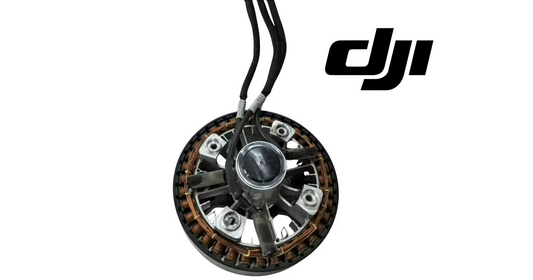
For a mechanical blade, confirm the correct position, orientation and hub. For a motor, establish whether the listing contains only a motor or also an integrated ESC. Motors are among the UAS critical-component types referenced in the separate December 2025 notice, so the owner should not rely solely on the October logic-bearing definition as a complete import analysis.
Use the T50 model collection and propulsion parts to identify candidates. Exact fitment and any relevant import authorization remain product-specific.
Scenario B: a new DJI Agras T100 purchase
A prospective buyer seeking a complete T100 aircraft faces a broader assessment. The product may include a controller, cameras, sensors, navigation systems and multiple digital control boards. Its status cannot be derived from the legality of a standalone propeller or tank gasket. The buyer needs the exact model revision, actual manufacturer, authorization history, origin, available conditional approval if claimed and entry documentation.
A listing for an aircraft available in another country is not proof that the same aircraft configuration can obtain a new U.S. FCC authorization. Likewise, a dealer's ability to deliver a few U.S.-based spare parts does not independently establish the status of the complete new aircraft.
The prudent process is to verify the proposed transaction before payment or shipment. For existing T100 fleets seeking maintenance, T100 replacement parts and battery and power components are separate product categories requiring their own fitment checks.
Scenario C: a Matrice 400 enterprise repair
A surveying or inspection business may own a Matrice 400 and need a rear-right arm assembly after physical damage. If the replacement is purely structural, that is technically different from substituting an onboard computer, RF module or new flight-control system. But the seller must verify whether the ordered assembly includes a motor, wiring or controller and whether the installed hardware matches the approved configuration.
Enterprise aircraft frequently combine radios with sophisticated mission payloads. A camera, gimbal controller, RTK module and airframe tube should not be classified alike. Operational concerns also include aircraft balance, manufacturer service procedures and the suitability of the repair.
For product navigation, see Matrice 400 aircraft arm assembly and Matrice 400 parts. Ares Acres' advanced diagnostic Parts Finder is designed for Agras only; Enterprise buyers should use the standard model catalog.
Scenario D: a consumer buying a used Mavic or Mini
A used Mavic 3, Mavic 4 Pro, Mini or Air model sold in the United States may have an existing authorization history, but a buyer should not infer compliance from the words “used” or “refurbished” alone. Request the full model designation and bundled controller details, confirm that the offered equipment corresponds to a valid authorization where applicable, and review the aircraft's physical condition and support availability.
A used-device exception to the FCC's new online marketplace FCC-ID display obligation does not override underlying marketing requirements. Online platforms may also impose their own rules that are more restrictive or operationally different from federal law.
The buyer should investigate whether the seller is offering existing domestic inventory or importing the device on the buyer's behalf. A used drone being resold domestically is not automatically equivalent to importing an unauthorized new model from overseas.
Scenario E: an FPV pilot buying radio or video equipment
The FPV ecosystem uses frames, motors, ESCs, flight controllers, goggles, video transmitters, receivers, antennas and digital video systems. The October rule does not order all FPV flying to stop. Purely mechanical frames and fasteners differ from a video transmitter or controller needing FCC authorization.
A new digital video transmitter using a qualifying Covered List producer's logic-bearing hardware can raise different new-authorization issues than previously authorized equipment. Some products never received appropriate U.S. authorization, and used status alone is not a solution for a device that was never eligible to market.
Before buying, identify the FCC ID and specific hardware version for regulated equipment, supported bands, antenna setup and whether the item is already in domestic authorized inventory. Do not assume every AliExpress shipment will clear the border, and do not assume every international order will fail.
Can you still import previously authorized DJI models?
The FCC's December 2025 public fact sheet stated that the Covered List action did not prevent continued importation, sale or marketing of previously approved device models through FCC equipment authorization. FCC 26-50 also states that its new logic-bearing restriction does not affect previously authorized equipment. These facts counter a broad claim that October 13 alone instantly prohibits all imports of all DJI products.
Those statements are not a universal import license. The buyer must verify whether the precise device and revision match the prior approval and whether other customs, sanctions, trade or regulatory requirements restrict the transaction. An imported kit may contain multiple devices with separate relevant characteristics. A future FCC action could change the legal landscape.
Importers should maintain the grant information, model designation, purchase orders, commercial invoice, true product description, producer and origin evidence. When a shipment is detained or questioned, guessing at a regulatory justification will not replace accurate records.
Customs detention versus FCC prohibition
A customs detention is an enforcement or examination event and does not necessarily establish that the FCC banned the product category. CBP may inspect merchandise under multiple laws. A shipment can be delayed while officials request evidence, examine origin or assess admissibility.
Similarly, FCC equipment authorization does not prove all import restrictions have been satisfied. Legal requirements can concern origin, tariff classification, forced-labor restrictions, intellectual property, certain end uses or other matters beyond radio performance. The applicable requirements depend on the actual shipment and parties.
A U.S. distributor should not promise that an international shipment will clear based solely on the FCC ID of one device. If a shipment is detained, obtain the written reason and case details, respond with appropriate documents and seek qualified customs guidance rather than publicly claiming that the detention proves a nationwide ban.
Can you sell DJI products already in inventory?
The October 13 rule does not itself require every U.S. retailer to liquidate previously authorized equipment. The FCC has recognized continued marketing of earlier approved models under the relevant Covered List framework. But a seller must distinguish authorized stock from equipment that never received the required approval or has been altered.
Catalog records should state the actual product, revision, package contents and condition. Avoid marking a DJI remote controller “FCC exempt” merely because it is compatible with a previously authorized Agras aircraft. Similarly, a structural propeller clip should not be marketed as though it is an RF communication device.
For stores such as Ares Acres, transparent product pages help customers make informed decisions: identify fitment, supplier material number where verified, mechanical/electronic contents and whether any unresolved import question needs a separate response.
Can you sell a used DJI drone?
The FCC's July 2026 order establishes an exception for used-device listings from its new FCC-ID online disclosure requirement. That is not the same thing as an unlimited exemption from authorization, import and consumer-protection law. A used product can still be subject to other marketing restrictions; a platform can also adopt a different internal policy.
If selling a used device, document the model, controller, serial number where appropriate, condition, repair history and whether it has been materially modified. Advertise unknown repair or battery conditions candidly. If selling through a third-party marketplace, check its current listing rules, because private-platform requirements and federal rules are separate.
Refurbishment that restores the original hardware configuration may be different from installing new radio hardware or changing transmitter behavior. Where certification-relevant changes occurred, obtain technical compliance guidance before relying on the equipment's original grant.
Do existing DJI equipment authorizations expire October 13?
The FCC 26-50 summary says that the new logic-bearing restriction is prospective and does not affect previously authorized devices. This rejects the specific claim that every previous grant automatically expires on October 13. It does not mean FCC grants can never be revoked or subject to later regulatory actions under separate procedures.
The relevant product must still have been authorized correctly, and a dealer should not assume one device's grant covers all bundled accessories or revised hardware. Rebranding and white-labeling can obscure this distinction, making reliable manufacturer and grantee records essential.
The term “grandfathered” is often used casually in industry videos, but customers should ask for the actual earlier authorization and the precise rule that preserves its status. Without that evidence, the phrase alone has little compliance value.
Does a repair change the authorization?
Not every maintenance task is a device modification requiring a new FCC grant. Replacing a cracked airframe shell, propeller or gasket ordinarily differs from altering RF power, antennas, modulation or the electronic architecture of a regulated device. Yet some repairs replace certified subassemblies or could affect the tested configuration.
The FCC's order places special restrictions on modifications and permissive changes made by Covered List entities and clarifies when changes can result in prohibited equipment. For any high-risk alteration, identify whether it is a manufacturer-prescribed repair, a change to certified radio hardware or a new design requiring assessment.
Technicians should keep component revision numbers, repair notes and required calibration results. For flight-safety-critical systems, correct installation and testing remain important even where no additional authorization is needed.
Can you still fly under FAA rules?
The FCC action does not replace the FAA's rules governing flight operations. A DJI Mavic used for real estate work may be operated under a different FAA framework from a large Agras aircraft spraying agricultural chemicals. Registration, pilot qualifications, remote identification, airspace authorization and mission-specific approvals must still be satisfied.
For agricultural dispensing, FAA Part 137 can govern the operation, and larger UAS or specialized operations may require exemptions and additional documentation. The FAA published updated 2026 guidance on its Part 137 UAS certification process. The mere fact that a spraying drone still powers on says nothing about whether the pilot holds the necessary operational approvals.
Review FAA UAS guidance and the FAA Part 137 agricultural drone page. State pesticide licensing and product-label rules can also apply when chemicals are dispensed.
Agricultural spraying: detailed operational checklist
A farm operator should verify the aircraft's registration, weight class, applicable authorization or exemption, remote pilot requirements where relevant, Part 137 authorization when the mission falls under that rule, airspace permissions, state pesticide credentials and aircraft maintenance status. These are ongoing responsibilities, not new obligations generated merely by October 13.
Before each mission, inspect propellers and mounts, check aircraft arms, test communication and navigation equipment, confirm battery condition and inspect pumps or spreaders. Track any repairs involving ESCs, flight-control systems or radar separately because correct firmware matching, calibration and component identity can affect safety.
A distributor can support this process with accurate replacement-part descriptions and model-specific navigation. It should not describe the purchase of a spare part as proof that an operator is authorized to perform pesticide application.
Enterprise surveying, thermal inspections and mapping
Enterprise owners should distinguish airworthiness and flight-operation requirements from the status of particular payload modules. A Matrice aircraft may carry multiple cameras, gimbal assemblies, RTK antennas and intelligent compute equipment. An onboard computer can contain logic-bearing digital circuits; a gimbal damper or fastener kit is different.
A company buying a replacement Matrice 4E gimbal cable should establish the exact model variant and whether the part is a passive cable or includes embedded electronics. A Matrice 400 mission payload may have separate electrical and authorization characteristics. Compatibility among Matrice 4-series variants or between Matrice 300, 350 and 400 should not be assumed from appearance alone.
Readers can explore Enterprise parts and Matrice 4-series parts while verifying the details for each transaction.
International mail orders: how to reduce uncertainty
For a direct-to-consumer international order, ask the seller for a correct commercial invoice describing each item, the exact manufacturer's model or part number, actual origin, and any available authorization evidence. Clarify whether the seller is exporting complete aircraft, smart batteries, RF devices or passive hardware, and whether more than one category is inside the package.
An international platform's estimated delivery date is not a customs determination. Some shipments may be delayed or rejected; others may be admissible. Neither outcome can be generalized without the official basis and product facts. Do not intentionally misdescribe an electronic module as “plastic spare part” or understate the shipment's contents.
For a high-value drone or commercial parts shipment, professional import assistance is appropriate when eligibility or documents are uncertain. The manufacturer, marketplace and carrier may each have limited visibility into all U.S. rules.
Battery purchases, shipping and warranty replacements
Lithium flight batteries create particular logistical issues. A replacement pack may contain a BMS and require dangerous-goods packaging, carrier acceptance and safe storage. A battery already held in U.S. inventory and one shipped internationally are not necessarily equivalent from a transportation perspective.
Warranty exchanges and replacements still involve real product movements. A free replacement is not automatically outside customs rules merely because the invoice value or reason for shipment differs from a sale. Document what item is entering the country, who produced it and whether the electrical configuration matches the aircraft.
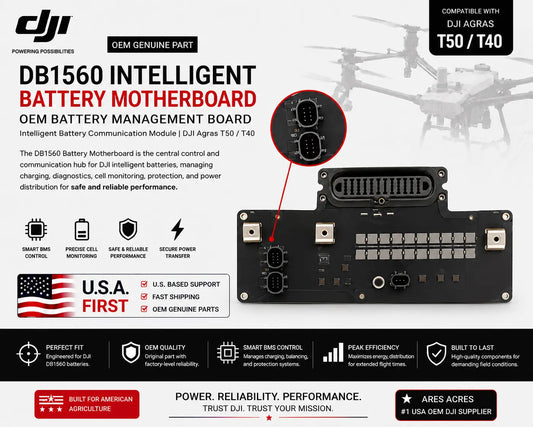
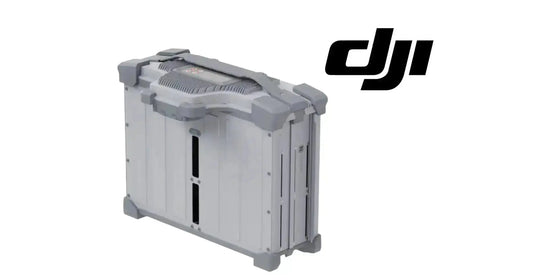
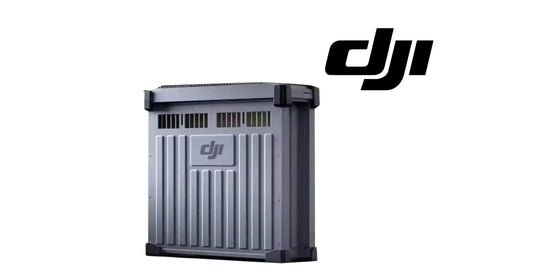
For Agras operators, battery and power components can help identify the proper battery family and hardware. Avoid installing unverified substitute packs or bypassing safety protections in response to availability concerns.
What if DJI discontinues official repair support?
Manufacturer service discontinuation is separate from FCC equipment authorization. A drone can remain operable under applicable aviation law even after its manufacturer stops accepting it for official factory repairs. Owners should not conflate a support-end date with a government order to ground the platform.
But a service announcement can affect practical repair decisions. Parts may become harder to identify, official technical guidance may be reduced and independent technicians may become more important. Evaluate parts availability, battery condition, service history and the economic value of maintaining the platform rather than assuming the aircraft has instantly become useless.
Operators should confirm support dates directly through DJI Repair, especially for legacy Phantom, Mavic, Matrice and Agras families. Do not presume a paid care plan is cancelled solely because of a general online discussion; verify the specific coverage agreement.
Retailer checklist: marketing and online listings
The July 2026 FCC rule clarifies that marketing rules can reach online marketplaces and introduces staged 2027 obligations concerning valid FCC IDs for applicable listings. The Federal Register summary identifies March 1 and June 1, 2027 as key compliance dates depending on the marketplace's role. It also describes limited exceptions, including certain used-device listings.
An online retailer should organize products into standalone mechanical items, regulated RF devices, digital modules and complete aircraft; associate IDs only with their matching products; review listings for misleading legal claims; and separate a regulatory status claim from a simple availability claim. Generic “FCC certified” or “legal in all 50 states” promises are risky without evidence.
The point is not to remove every DJI parts page from the website. It is to make claims accurate and to ensure the product description does not hide important electronic content or certification assumptions.
What to ask before making a large purchase
For a complete aircraft, obtain the full configuration and authorization history, import route, vendor identity, actual device revision and warranties. For a high-ticket spraying drone, also consider repair capacity, consumables, batteries and charging infrastructure. A documented parts and service plan can materially affect the commercial value of the purchase.
For a replacement component, ask for the material number, aircraft fitment, position where relevant, package contents and the source of any compliance assertion. For a used drone, request battery history, crash history, repair records and evidence that the offered version matches a legitimate approved configuration.
If the seller cannot answer a critical compliance question, classify the purchase as unresolved. A discount, fast-shipping promise or buyer protection service does not replace government requirements.
Myths from online videos and social commentary
“All FPV hardware becomes illegal on October 13.” The final rule does not say this; passive parts and previously authorized equipment require different treatment.
“All used DJI drones are banned.” Incorrect as a description of October 13. The FCC even provides a narrow used-listing exception to its new ID-display obligation, though it is not general import immunity.
“AliExpress deliveries are guaranteed.” Incorrect. Each import can depend on product and customs facts.
“FCC restrictions have nothing to do with parts.” Also incorrect. The October logic-bearing component rule and the December UAS critical-components category may be important for certain parts.
“Manufacturer support ending equals a ban on flight.” Incorrect. It is a separate private support question; normal operating rules continue to matter.
Good analysis requires the exact official text, not dramatic labels.
Frequently asked questions about buying, repairing and flying
Can I fly a DJI drone I already own on October 13?
The rule does not automatically revoke its existing authorization or ground it. Check normal FAA and other operating obligations.
Can a U.S. retailer still sell previously approved inventory?
The FCC has distinguished earlier-approved models from new authorizations. Verify the precise product and other applicable requirements.
Can I import a brand-new DJI model?
Only after determining applicable equipment authorization and import eligibility. A foreign retail listing is not evidence of clearance.
Can I buy a used DJI drone on eBay?
Possibly, but inspect authorization, product condition and platform rules. A used-listing ID exception is not a blanket legal exemption.
Can I replace an Agras T50 propeller?
The October logic-bearing rule does not ban every passive replacement part. Model compatibility and other laws remain relevant.
Can I replace my remote controller?
Radio functions make this more complex than a passive repair. Confirm the exact unit, authorization and configuration.
Does an FAA approval guarantee importation?
No. Permission to conduct a flight and import admissibility are different questions.
Will my DJI battery stop working?
The FCC final rule does not order a mass battery shutdown. Battery maintenance and shipping remain subject to separate requirements.
Can I sell a drone after DJI stops factory support?
Support discontinuation does not itself ban resale. Disclose condition and verify applicable marketing rules.
Will every shipment be detained after October 13?
There is no evidentiary basis for that blanket claim. Admissibility depends on the actual shipment and applicable rules.
A practical reference table for customer decisions
| Customer goal | First record to obtain | Main uncertainty |
|---|---|---|
| Fly existing Agras T50 | Aircraft records, FAA approvals | Ongoing flight and agricultural authorization |
| Buy used Mavic | Exact model and existing FCC grant | Device status, seller and condition |
| Import new Matrice | Model configuration and FCC records | Covered List and customs treatment |
| Replace mechanical gasket | Material number, fitment, origin | Actual product and any independent rules |
| Replace RF controller | FCC ID and hardware revision | Certification and configuration |
| Order intelligent battery | Battery family, BMS and shipping records | Critical component and transport rules |
| Sell refurbished DJI | Authorization and repair history | Modification and marketing requirements |
This table is a document-collection aid, not a substitute for the agency determination relevant to each transaction.
Ares Acres parts navigation without exaggerated legal claims
Operators who already own DJI aircraft may have legitimate maintenance needs even amid new equipment authorization restrictions. The best editorial conversion path is therefore education first, precise product identification second, and purchasing only after fitment and compliance questions have been resolved.
Agricultural fleets can begin with DJI Agras parts, T100 and T50. For agriculture-only advanced identification, use Agras Parts Finder. Matrice customers can use Enterprise parts and model-specific collections.
These links are sources for identifying potentially compatible components. The existence of a product page is not a formal exemption or an assurance that every international shipment will clear U.S. customs.
Conclusion: ask what is changing, for which product, and for whom
October 13 is a meaningful regulatory milestone, but it is not a single switch that changes every drone ownership, sales and repair decision to “no.” The FCC's prospective logic-bearing component authorization rule, its prior foreign-produced UAS Covered List action, the treatment of earlier approvals and separate CBP and FAA obligations must be understood in combination.
Customers can reduce uncertainty by documenting exact models and part numbers, using official agency sources and separating an existing authorized fleet from a new device awaiting authorization. Repair shops and distributors should preserve hardware history and avoid legal claims they cannot substantiate. Operators should continue meeting the FAA requirements appropriate to their missions.
This guide offers a decision-making framework, not individualized legal advice. For high-value new imports, disputed eligibility or electronic modifications, qualified compliance review may be needed before the transaction proceeds.
About Ares Acres LLC
Ares Acres LLC is a U.S.-based drone equipment and replacement-parts supplier helping customers identify compatible components for DJI Agras agricultural aircraft, DJI Enterprise platforms and DJI Consumer models. Browse AresAcres.com, navigate Agras replacement parts, or contact the business with the model and material number for help identifying a part. Product availability and compatibility should be checked independently from import legality.
Official sources
- 91 FR 57798, FCC final rule effective October 13, 2026.
- FCC 26-50, Third Report and Order.
- FCC December 22, 2025 foreign UAS Covered List notice.
- FCC December 2025 fact sheet and treatment of previously approved models.
- FAA: Dispensing Chemicals and Agricultural Products with UAS under Part 137.
- FAA UAS information.
- CBP trade and import information.
General educational material only, not legal advice or a guarantee of customs entry, marketplace eligibility or aviation approval for a particular product. The rule discussed takes effect after this article's October 12, 2026 review date. Confirm new developments with the issuing agency.