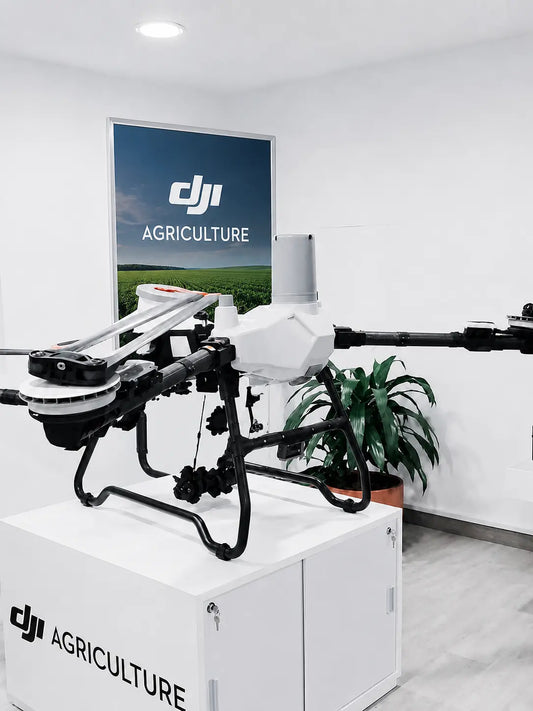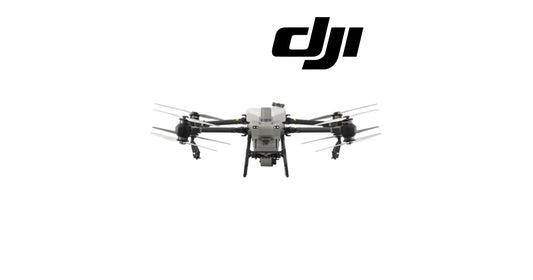

DJI Agras T55 Lifting System: 40 kg Cargo Capacity, Auto Balance, and Emergency Release
Share
DJI Agras T55 Lifting System: From Application Drone to Aerial Farm Logistics Platform
The DJI Agras T55 lifting system gives the aircraft a third working identity. After liquid spraying and granular spreading, the DL100 lets the T55 carry a published 40 kg suspended payload on a standard 10 m cable. DJI identifies a recommended cable range of 10–15 m, while the launch video presents automatic operation, Auto Balance Control, cargo obstacle avoidance, and emergency cable release as core functions.
That combination changes how the aircraft can earn. A spraying drone works inside application windows. A spreading drone adds fertilizer, seeding, and feed seasons. A lifting-capable aircraft can also move supported farm cargo across slopes, wet ground, orchards, blocked roads, waterways, fields, and sites where carrying or driving the same load is slow. One airframe can serve crop inputs and material logistics without pretending those missions are identical.
Lifting is also the T55 function that most clearly shows why a payload number is never a complete operating plan. Forty kilograms describes mass. The aircraft must also manage the load’s shape, frontal area, center of gravity, attachment, cable, swing, route, wind exposure, pickup, drop-off, people, obstacles, battery demand, and emergency options. A compact 30 kg bag and a broad 30 kg panel create very different flight behavior even though a scale shows the same number.
This guide explains the entire system in practical language. It distinguishes operating payload from maximum takeoff weight, shows why cable length changes swing behavior, defines what Auto Balance can and cannot do, and describes how to design pickup, transit, delivery, battery, maintenance, inspection, and contingency workflows. It also compares the T55’s lift role with the T70P and T100 and helps buyers decide when 40 kg is the most useful class rather than simply the smallest number.
Ares Acres supports professional agricultural drone operators with complete aircraft, genuine DJI Agras parts, batteries, field-power equipment, and direct technical support. Buyers can review the DJI Agras T55 Premium Set, compare DJI Agras drones, browse DJI Agras parts, or contact Ares Acres to build a T55 package around spraying, spreading, lifting, transport, charging, positioning, and uptime.
Prefer to watch first? The video above introduces the T55’s 40 kg lifting payload, automatic operation, Auto Balance Control, cargo obstacle avoidance, emergency cable release, one-pilot airframe, radar and Tri-Vision safety system, path recording, batteries, cooling, charging, O4 transmission, relay, and RTK ecosystem. The guide below expands those features into a complete cargo-planning framework.
Quick Answer: How Much Can the DJI Agras T55 Lift?
The DJI Agras T55 DL100 lifting system has a published operating payload of 40 kg, or approximately 88.2 lb. DJI supplies a 10 m cable and recommends working within a 10–15 m cable-length range. With the DB1050 battery installed, DJI lists an 84 kg maximum hoisting takeoff weight; with the higher-capacity DB1580, it lists 89 kg.
The 40 kg figure is a mass limit, not a promise that every object under 40 kg is suitable. Cargo shape, wind-facing area, center of gravity, rigging, swing, route, terrain, cable condition, weather, and the current in-app recommended payload affect the mission. DJI specifically warns against overloading and against loads with a large wind-facing surface.
Auto Balance Control can help manage suspended-load behavior, cargo-aware obstacle features can support the route, and emergency cable release creates a last-resort escape option. None removes the need for a secured load, controlled pickup and delivery zones, conservative flying, and a route that keeps people and property away from suspended cargo.
What You Will Learn
This complete guide explains:
- every major published DL100 lifting specification;
- the difference between 40 kg payload and 84/89 kg maximum hoisting takeoff weight;
- why cargo dimensions and wind area matter as much as mass;
- how center of gravity and rigging affect aircraft balance;
- why DJI supplies a 10 m cable and recommends a 10–15 m range;
- how cable length changes swing frequency, clearance, ground-contact risk, and entanglement exposure;
- what Auto Balance Control contributes and why it cannot eliminate physics;
- how automatic operation and cargo obstacle avoidance can support repeatable routes;
- what emergency cable release is designed to provide;
- how to plan pickup, test lift, transit, approach, delivery, and return;
- how radar, Tri-Vision, RTK, O4 transmission, and relay support lifting awareness;
- how the DB1050 and DB1580 change endurance and aircraft weight;
- how to estimate cycles, energy demand, and real productivity;
- which cargo categories naturally fit a 40 kg agricultural platform;
- how to inspect the cable, attachment, hook, module, aircraft, and load before work;
- how to diagnose swing, rotation, tilt, unexpected power demand, or control warnings;
- how to maintain and transport the DL100;
- how T55 lifting compares with T70P and T100; and
- how to configure a field-ready T55 lift package through Ares Acres.
1. Suspended Cargo Creates a Moving Aircraft System
When the T55 lifts cargo, the aircraft and load no longer behave as two independent objects. The cable connects them into one dynamic system. Aircraft acceleration moves the cable angle. The cable pulls the load. The load’s motion then pulls back on the aircraft. Wind acts on both bodies. Any change at one end can travel through the system.
This is why a smooth aircraft can still carry a moving load. The flight controller can manage aircraft position and use balance functions to reduce unwanted behavior, but the cargo retains inertia. Abrupt forward motion, stopping, turning, climbing, or descending can start a pendulum. Reversing too aggressively can add energy rather than remove it.
The goal is not to make the load perfectly motionless in every condition. The goal is to keep movement small, predictable, damped, and inside a route designed for it. That begins with a compact load, central attachment, appropriate cable, low initial swing, gradual commands, and sufficient space.
A lifting plan should therefore describe the system, not only the object. Record mass, dimensions, center of gravity, attachment point, rigging, cable length, pickup and delivery elevation, transit distance, wind, route, speed, battery choice, and emergency area. “Carry a 35 kg bag” is not enough detail to reproduce the mission.
2. DL100 Lifting Specifications at a Glance
| Specification | DJI Agras T55 published value | Operational meaning |
|---|---|---|
| Lifting system | DL100 | T55 cargo-lifting module |
| Operating payload | 40 kg | Published suspended cargo limit, subject to current recommended load |
| Approximate imperial equivalent | 88.2 lb | Conversion for planning; kilogram specification remains authoritative |
| Standard cable length | 10 m | Supplied baseline cable length |
| Recommended cable range | 10–15 m | DJI’s stated range for managing aircraft/load clearance and ground exposure |
| Operating temperature | 0–40 °C | Published system environment range |
| Maximum hoisting takeoff weight with DB1050 | 84 kg | Complete aircraft maximum for that battery configuration |
| Maximum hoisting takeoff weight with DB1580 | 89 kg | Complete aircraft maximum for endurance-battery configuration |
| Automatic functions presented by DJI | Automatic operation, Auto Balance Control, cargo obstacle avoidance | Assistance features; correct setup and supervision remain essential |
| Emergency function | Emergency cable release | Last-resort method to separate cargo when retaining it threatens aircraft control |
| RTK hover accuracy | ±10 cm horizontal and vertical under strong conditions | Supports repeatable position and route placement |
| Safety-system measurement range | 60 m | Published sensing range under DJI conditions |
These values come from the official DJI Agras T55 specifications, official T55 FAQ, and T55 lift-system materials on the official downloads page. The current lift-system manual and controller recommendation should govern the actual mission.
3. Understanding the 40 kg Operating Payload
Forty kilograms is the maximum published operating payload of the DL100, not the default load and not a number to exceed because the aircraft can momentarily leave the ground. DJI recommends flying within the current recommended payload range so the aircraft retains margin for swing, climbing, and changing conditions.
The useful load may be lower than 40 kg. High elevation, temperature, wind, battery state, route climb, cable motion, aircraft condition, cargo shape, and safety margin affect the task. The DJI Agriculture application can provide a current loading recommendation based on configuration and available information.
Measure actual cargo mass with a suitable scale. Include the complete suspended assembly: cargo, bag, basket, straps, sling, hook adapters, protective frame, and any other item below the lifting interface. A “40 kg product” plus 3 kg of rigging is a 43 kg suspended load.
Build initial flights conservatively. A stable 20 kg test does not prove that the same shape will be stable at 40 kg, and a compact 40 kg object does not prove that a broad 25 kg object is suitable. Mass is one variable inside a larger flight envelope.
4. Operating Payload Versus Maximum Hoisting Takeoff Weight
DJI publishes two different sets of lifting figures:
- DL100 operating payload: 40 kg;
- maximum hoisting takeoff weight with DB1050: 84 kg;
- maximum hoisting takeoff weight with DB1580: 89 kg.
Maximum hoisting takeoff weight includes the aircraft, battery, installed lifting hardware, and suspended cargo. It is not additional cargo capacity. The higher number with DB1580 reflects a different complete configuration and the heavier battery, not permission to increase the DL100 payload beyond 40 kg.
Do not subtract the published 45 kg spraying-configuration aircraft weight from 84 kg to invent a cargo number. The 45 kg figure describes the T55 with a DB1050, two nozzles, and 50 L spray tank configuration. Lifting hardware changes the aircraft configuration. DJI already provides the correct DL100 operating payload directly.
The safe decision is the lowest applicable limit: 40 kg DL100 payload, current in-app recommended load, complete takeoff-weight limit, attachment rating, cable and rigging rating, and any lower condition-specific constraint.
5. Why Load Shape Matters
Wind force depends strongly on exposed area and shape. A compact fertilizer bag can present a small profile. A sheet, empty container, bundled tarp, long branch, or broad panel can act like a sail. DJI specifically advises against lifting cargo with a large wind-facing surface because it is more likely to swing.
Shape also affects rotation and clearance. A long object can rotate around the cable and sweep a much larger circle than its center point. A load with loose ends can flap. A flexible bag can deform, changing its center of pressure. A liquid container can experience internal slosh.
Create a load profile before flight:
- mass including rigging;
- maximum length, width, and height;
- exposed frontal area from likely wind directions;
- rigid, flexible, or liquid behavior;
- center of gravity;
- attachment-point position;
- ability to rotate or shift internally; and
- clearance needed at pickup, along the route, and at delivery.
If a load cannot be secured into a compact, stable form, using less than 40 kg does not automatically make it suitable.
6. Center of Gravity and Attachment Position
The load hangs so its center of gravity tends to settle below the cable attachment. If the attachment point is not above the center of gravity, the cargo can tilt until the system finds equilibrium. That tilt can shift contents, increase wind area, reduce clearance, and begin swing.
Use a central, secure attachment designed for the load. Multiple-point rigging can hold a container or irregular bundle level, but the legs must share load appropriately. A single strap around a smooth object may slide. An open bag can spill when it tilts. A basket can shift if contents are not restrained.
Conduct a ground-supported rigging check and a low controlled test lift in a cleared area. Raise only enough to confirm balance, attachment security, and behavior. Lower and correct any tilt or movement before committing to transit.
Do not place hands under a suspended load to reposition it. Use a plan that allows the aircraft to lower the cargo fully and remove tension before people approach.
7. Rigging Is Part of the Payload
Rigging connects the DL100 hook or attachment to the cargo. Its working rating, material, length, geometry, condition, and securement determine whether the load remains attached.
Use components appropriate for the cargo and environment. Inspect straps, slings, connectors, baskets, and attachment points for cuts, abrasion, broken stitching, deformation, cracks, corrosion, heat damage, chemical exposure, knots, and unknown history. Retire questionable items instead of assigning them to a “lighter” job without evidence.
Keep rigging short enough to control the load while preserving the designed DL100 cable relationship. Long rigging below the cable adds total suspended length and changes clearance. Loose tails should be secured so they cannot reach rotors, sensors, vegetation, structures, or the cable.
Record rigging mass in the payload and standardize recurring load kits. A known 2 kg basket and sling makes planning easier than a different improvised attachment every flight.
8. The 10-Meter Standard Cable
DJI provides a 10 m lifting cable as standard and recommends 10–15 m. Ten meters creates meaningful separation between the aircraft’s rotor system and the cargo. It also gives the load room to hang below vegetation, roof edges, banks, or delivery structures while the aircraft remains higher.
The cable should be treated as an aircraft component, not general rope. Its condition, termination, winding, interface, and routing affect the system. Kinks, crushing, abrasion, corrosion, broken strands, contamination, heat, and improper storage can reduce reliability.
Before work, extend and inspect the usable length according to the manual. Confirm that the cable pays out and retrieves correctly where applicable, that it is not crossed or damaged, and that terminations and hook components are secure. Keep it clean and dry for storage.
The standard length is the baseline because cable choice is a balance. Shorter is not automatically more stable; longer is not automatically safer. DJI’s range reflects competing physical risks.
9. Why DJI Recommends a 10–15 Meter Range
DJI explains both ends of the cable decision. If the cable is too short, cargo swing can increase and the load may strike the propellers. If it is too long, the cargo can contact the ground or the cable can become entangled with trees or power lines.
Length changes the pendulum. An idealized pendulum’s period is approximately:
T = 2π × √(L ÷ g)
where T is the time for one oscillation, L is length, and g is gravitational acceleration. A 10 m idealized pendulum has a period of about 6.3 seconds; a 15 m pendulum is about 7.8 seconds. Real cargo, aircraft motion, drag, cable mass, and control input make the system more complex, but the formula shows that longer cables swing more slowly, not necessarily less far.
A longer cable also means the aircraft must fly higher to keep the load at the same clearance. The route must account for the entire line, not only aircraft and cargo endpoints. Choose within DJI’s recommended range based on pickup, delivery, obstacles, cargo shape, and tested behavior.
10. Swing Begins With Acceleration
Suspended cargo resists changes in motion. When the aircraft accelerates forward, the load initially lags and the cable angles backward. When the aircraft stops, the load continues forward. A sharp reversal can add energy at the wrong moment and increase the oscillation.
Smooth lifting therefore uses gradual acceleration, conservative cruise, early deceleration, broad turns, and stable vertical movement. The pilot should plan enough space to slow before the delivery point rather than arriving fast and trying to stop above it.
The initial pickup matters. If the load leaves the ground while off-center, snagged, rotating, or already moving, the transit begins with energy in the system. A clean vertical test lift and short stabilization period can reduce the problem before forward flight.
Auto Balance can assist, but it cannot make an aggressive route identical to an unloaded flight. The operator should fly the load the way a load needs to be flown.
11. Auto Balance Control
DJI presents Auto Balance Control as a DL100 feature intended to help manage suspended cargo. The system can use aircraft sensing and control authority to respond to load behavior and support a more stable operation.
“Auto Balance” should not be translated into “swing-proof.” The controller cannot change an insecure attachment, remove wind area, shorten an obstacle, or repeal momentum. It also requires enough thrust and spatial margin to respond. An overloaded or badly oscillating system can exceed what balance assistance can manage.
Use Auto Balance as one layer inside a stable setup:
- correct payload;
- compact load;
- centered attachment;
- sound cable and rigging;
- minimal initial movement;
- conservative speed and turns;
- appropriate wind conditions;
- clear route; and
- trained supervision.
If a balance warning occurs or the load behaves unexpectedly, reduce demand, move to a planned safe area, and follow DJI’s current procedure rather than continuing because the automation was expected to solve it.
12. Cargo Obstacle Avoidance
The T55 launch presentation includes cargo obstacle avoidance among its lifting functions. This is significant because a route clear for the aircraft may not be clear for cargo hanging 10–15 m below it. The complete moving envelope includes the aircraft, cable, load, and swing radius.
Plan obstacles in three dimensions. A tree branch below the aircraft can contact the cable. A fence, pole, roof edge, or bank can contact a swinging load. A wire can intersect the long vertical line even when the aircraft passes above it.
Cargo-aware assistance should complement a route designed with generous separation. Sensor performance depends on target characteristics and environment, and thin cables or wires remain difficult. The pilot should know the maximum expected load movement and keep the path clear beyond that radius.
An automatic bypass can also introduce acceleration and swing. Review how the aircraft will respond before accepting a route close to an obstacle. The safest obstacle is the one the planned corridor never approaches.
13. Automatic Lifting Operations
Automatic operation can make repeated pickup-to-delivery cycles more consistent. A known route can reduce variation in speed, height, and position while helping the pilot monitor cargo and site conditions.
Automation is strongest when endpoints are prepared. The pickup load should be rigged consistently at a known point. The delivery zone should be large, level or otherwise appropriate, clear, visible, and free of people. Route altitude should protect the entire cable and cargo envelope. Turns and speed changes should be gentle.
Before repeating a route, conduct a controlled validation with a conservative load. Confirm positioning, clearance, link quality, battery use, and behavior. Do not assume an unloaded mapping flight proves suspended-load clearance.
Every cycle still needs inspection. A strap can shift, cargo dimensions can change, wind can rise, an obstacle can move, or a vehicle can enter the route. Automatic repetition makes a good process efficient; it can also repeat an unnoticed error.
14. Emergency Cable Release
Emergency cable release gives the operator a last-resort way to separate the aircraft from cargo when retaining the load presents a greater immediate threat to control. It is an emergency escape feature, not a normal delivery method.
The route should include areas where a release would create the least possible consequence. Avoid carrying cargo over people, occupied vehicles, buildings, livestock, public areas, valuable equipment, waterways, or anything that could be harmed by a falling load. If no acceptable release area exists, the route lacks a critical emergency option.
The operator must know how the current system indicates and commands the function before flight, following DJI’s manual and training. The team should understand that a release can occur and should never stand beneath or near the load.
After any emergency release or abnormal event, remove the system from normal use until aircraft, DL100, cable, attachment, cargo interface, and records have been inspected and the cause understood.
15. Cargo Categories That Fit the T55’s Role
The 40 kg class can support many practical farm-logistics tasks when the exact load is compact, secure, suitable for suspension, and inside the current operating recommendation. Examples can include sealed bags of seed or fertilizer, boxed parts, secured tools, small hardware bundles, selected saplings or harvest containers, fence or irrigation components, and supplies moved across terrain that is wet, steep, blocked, or slow to traverse.
The aircraft can be especially useful when the load is modest but access cost is high. Carrying one 25 kg component across a ravine or up a steep orchard block may save more time than moving a full 40 kg across an open yard.
Do not define suitability by category alone. One toolbox may latch securely; another may open. One sapling may be compact; another may have a large canopy. One bag may hold shape; another may shift. Evaluate the actual object, packaging, attachment, route, and landing area.
The DL100 creates options. A standardized cargo kit turns those options into repeatable services.
16. Loads That Deserve Extra Caution or Another Method
Loads with large wind-facing area, unstable contents, sharp edges, leaking material, dangling parts, unclear weight, weak attachment points, extreme length, or unpredictable rotation can create risks disproportionate to their mass. DJI specifically advises against large wind-facing surfaces.
Liquids can slosh and move the center of gravity. Animals are dynamic and should not be treated as ordinary cargo. Hot, hazardous, fragile, or high-value loads may require controls outside a routine farm lift. Objects that cannot tolerate an emergency release should not be routed where release is the only safe aircraft option.
If a load must pass close to people or critical property to be useful, redesign the task. Change pickup or delivery points, use a ground method for the final section, select a smaller secured package, or choose another platform.
An affirmative use case does not mean forcing every object into the aircraft’s capability. The T55 is valuable because the right 40 kg tasks can be transformed—not because every 40 kg object belongs under it.
17. Planning the Pickup Zone
The pickup zone should be large enough for the aircraft, cable, cargo, personnel separation, and expected swing. The surface should allow the load to sit in the planned orientation without snagging. Rigging should be attached and inspected before the aircraft approaches when the procedure allows.
Identify the aircraft hover point and cargo point separately. With a 10 m cable, the aircraft may be high above the load while nearby trees, roofs, poles, wires, or terrain occupy the space between. Check the entire vertical column.
Use clear communication. Only the minimum necessary trained people should be involved, and no one should remain beneath the aircraft or suspended load. The aircraft should lower the cable or approach according to the current DL100 procedure, with propulsion and rigging hazards understood.
Prepare an abort direction. If the load does not lift cleanly or begins moving, the aircraft needs a clear place to lower it without crossing the crew.
18. The Low Test Lift
A low controlled test lift is the most informative moment before transit. The purpose is to confirm attachment security, balance, cable behavior, cargo clearance, and aircraft response while the load remains close enough to lower safely.
Raise smoothly only to the height required by the approved procedure. Watch for tilt, shifting contents, slipping straps, cable twist, rotation, snagging, unusual aircraft attitude, warnings, and abnormal power demand. Let the system stabilize rather than departing immediately.
If anything is uncertain, set the load down fully, remove cable tension, secure the aircraft, and correct the rigging. Do not ask a person to steady a suspended load by hand.
The test should use the actual route configuration and complete load. A rigging check with an empty basket does not validate the filled basket’s center of gravity. Recheck when contents or attachment change.
19. Transitioning From Hover to Forward Flight
Once the load is stable, accelerate gradually. Watch the cable angle and cargo lag. A small, predictable angle is easier to manage than a rapid departure that starts a large oscillation. Use the planned route speed only after the system has settled into controlled motion.
The aircraft may need more time and distance to reach speed than it does unloaded. That is not lost productivity; it is part of carrying the load smoothly. A route should provide enough clear space after pickup for this transition.
If the load begins to swing, avoid impulsive corrections. Reduce demand and use trained, manufacturer-consistent control to let the movement damp. Sudden opposite input at the wrong phase can amplify the pendulum.
Monitor aircraft attitude, battery, link, RTK, warnings, load position, and route. If the cargo cannot be seen directly, use the available camera and system information while maintaining the operational awareness required by the site.
20. Cruise Speed and Route Geometry
The fastest possible aircraft speed is rarely the best lifting speed. Drag rises with speed, load lag increases during acceleration, stopping distance grows, and turns can create a large lateral arc. Choose a speed that keeps the suspended envelope predictable and leaves margin for wind and route changes.
Straight routes with gradual climbs and broad turns are easier on the system. Repeated sharp corners can build swing. Narrow corridors leave little room for an oscillating load. A route that is five percent longer but much clearer can be faster in practice because it avoids stopping, re-centering, and close obstacle work.
Plan horizontally and vertically. The aircraft must clear overhead objects. The cargo must clear terrain and low objects. The cable must clear everything between. Add swing radius, positioning variation, and terrain-model uncertainty to those clearances.
Use automatic operation only after the complete loaded route has been validated. An unloaded test proves communications and aircraft clearance, not cargo clearance or dynamic behavior.
21. Climbing and Descending With Cargo
Vertical motion changes cable tension and can interact with swing. A smooth climb increases demand predictably. An abrupt climb can shock the system. A fast descent can reduce tension or allow the aircraft to approach the load’s moving path, especially if horizontal oscillation is present.
Plan terrain changes before the route begins. If the delivery point is significantly higher, reserve enough battery and payload margin for the climb. If it is lower, preserve cable and cargo clearance as the ground rises and falls between endpoints.
Do not assume that a route’s net elevation change describes its maximum demand. A path can descend overall while crossing a ridge that requires a substantial intermediate climb. Use the actual terrain profile.
Near pickup and delivery, keep vertical commands gentle. The load should arrive above the placement zone with minimal horizontal energy before it is lowered.
22. Turning Without Building Swing
A turn accelerates the load sideways. A tight fast turn can send cargo outward, increasing the required corridor and creating a pendulum that continues into the next straight segment.
Use broad, coordinated turns at conservative speed. Begin slowing before the turn rather than braking inside it. Avoid rapid alternating directions. If the route includes a sequence of bends, test it with a lighter representative load and observe whether each turn adds or removes motion.
Automatic routes should place waypoints and curves with suspended cargo in mind. A camera-drone path that looks smooth may still be too abrupt for a 10 m cable. Use the DL100 workflow and current DJI guidance rather than generic waypoint assumptions.
Allow the load to stabilize before approaching an obstacle or delivery point. A few seconds of controlled straight flight can reduce the space needed later.
23. Approaching the Delivery Zone
Begin deceleration early. The goal is to arrive above the delivery area with the aircraft steady, cable close to vertical, and load movement small. Trying to stop directly over a tight target can cause the cargo to swing past it.
The delivery zone should be larger than the object and clear around all sides. Account for dust, crop, loose material, water, slope, and rotor wash. A light empty container or tarp nearby can move when the aircraft approaches.
Confirm that people remain clear. If a ground team will detach the load, the cargo must be fully supported and cable tension removed before they enter the area, following the approved procedure. Never use a person as a visual “target” beneath the aircraft.
If the approach becomes unstable, go to the planned clear area or repeat the approach. Forcing a moving load into a precise spot is slower and less reliable than resetting early.
24. Setting the Load Down
Lower gradually while watching both cargo and cable. The first contact point should support the load without tipping or snagging. Continue until the cargo is stable and the lifting line is unloaded according to the system procedure.
Sloped ground can cause a bag, box, or round object to slide or roll as soon as weight transfers. Use a prepared landing surface, chocks, cradle, or suitable container where the task requires it. The equipment should be positioned before the aircraft arrives, not moved under a suspended load.
After touchdown, confirm that rigging can separate without catching. Do not drag the load or cable across an edge to release it. If detachment requires a person, the aircraft and line must be in the safe state specified by DJI.
Record delivery completion and any load behavior. A recurring tilt or rotation at touchdown may indicate that the attachment point or packaging should be changed for the next cycle.
25. Returning With an Empty Cable or Carrier
An empty hook, sling, or basket can behave differently from the loaded system. Low mass and loose material can flutter, rotate, or move strongly in rotor wash and wind. Secure unused rigging so it cannot contact the aircraft, sensors, vegetation, wires, or structures.
If a reusable carrier returns, its shape may create more drag when empty. A soft bag can collapse and flap. A basket can rotate. Validate the return configuration instead of assuming the absence of cargo removes every risk.
Automatic cycle planning should include the return, not only the delivery leg. The route may need a different speed or height when the carrier is empty. Battery planning should count both directions.
Inspect attachment after each delivery. A hook or connector can remain partially open, a strap can twist, or the cable can wind differently. Catching that before the next load protects the entire cycle.
26. Orchard and Hillside Logistics
Orchards and steep blocks can make modest cargo expensive to move by foot or vehicle. The T55 can transport supported loads such as secured tools, irrigation parts, small hardware, bags, or crop containers between a staging point and a prepared work zone.
Tree canopies create a complex vertical corridor. The aircraft may fly above the canopy while the load and cable hang within or below it. Branches, trellis lines, wires, and changing tree height must be mapped with generous clearance. Cargo obstacle assistance is useful, but route design should avoid threading the line through foliage.
Slope changes the relationship between aircraft and ground. A constant altitude relative to one endpoint may place the load too close to an intermediate rise. RTK and terrain data help only when the model represents the route accurately.
Create designated pickup and delivery clearings. Repeating known corridors can turn a difficult hillside carry into a reliable workflow while keeping the aircraft away from improvised close-quarters maneuvering.
27. Wet Ground, Ditches, and Water Crossings
Fields that are too wet for trucks can still require parts, seed, tools, pumps, or supplies. A T55 lift can cross mud, drainage channels, and water without creating ruts or putting a vehicle into unstable ground.
Water adds consequences. A released or dropped load can be lost, create contamination, or damage equipment. The route should minimize time over water and preserve a safer emergency area where possible. Waterproof or secure packaging may protect contents but can also increase wind-facing area; evaluate the complete shape.
Ditches and banks change terrain rapidly. The cable and load need clearance from both edges and vegetation. A delivery near a bank should use a level prepared surface set back from the drop.
Position the ground station on stable access with a clear takeoff path. Do not let the logistics advantage of crossing wet ground create a poor launch site at its edge.
28. Moving Fertilizer, Seed, and Farm Inputs
Sealed bags or containers of farm inputs are natural candidates when their actual mass, shape, packaging, attachment, and route fit the DL100 envelope. A common package below 40 kg can be moved without opening it, reducing handling steps at the delivery point.
Packaging must withstand suspension. A paper bag weakened by moisture may tear. A plastic bag can slip in a single loop. Granular material can shift, changing the shape. Use a rated carrier or multi-point support that contains the package rather than trusting the original bag seam as a lifting point.
Protect the aircraft and route from leakage. A damaged fertilizer bag can release abrasive or corrosive granules into a field, water, canopy, or equipment area. Inspect before rigging and prepare a delivery surface.
The T55’s DS80L may be a better method when the goal is to distribute material across a field. The DL100 is useful when the goal is to move a discrete package from one point to another.
29. Moving Tools, Parts, and Irrigation Components
Toolboxes, pump components, hoses, fittings, fence hardware, and irrigation parts can fit the 40 kg class when secured. Their value often comes from avoiding a long walk or vehicle trip, not from maximizing payload.
Hard objects need containment. A box should latch. Small pieces should not escape. Sharp edges should not contact rigging or cable. Long pipes or hoses can rotate, bow, or create large swept areas and may need a different method.
Package recurring kits in a standardized carrier with a known empty mass and central lifting point. Label the maximum contents and keep an inventory so the pilot knows what is inside. Standardization improves rigging time, center of gravity, and records.
At delivery, place the carrier where rotor wash will not scatter the work area. Confirm that the recipient stays clear until the load is fully grounded and released.
30. Saplings, Harvest Containers, and Specialty Loads
Agricultural lifting can include selected saplings, secured harvest containers, or other specialty cargo. These loads require careful shape analysis. A sapling canopy can present substantial wind area. A fruit container can shift if partially full. A tall object can rotate around the cable.
Use packaging that holds contents and protects them from rotor wash and transit. Consider whether the cargo can tolerate tilt, vibration, or an emergency set-down. Fragile loads may need lower speed and a prepared cradle.
The 40 kg limit includes the carrier. A 10 kg basket leaves no more than 30 kg for contents before other rigging is added. Weigh the complete ready-to-fly assembly.
Begin with a conservative representative load and short route. Evaluate quality after delivery. A task is successful only when the cargo arrives in useful condition, not simply when the aircraft carries it.
31. Wind and Suspended Cargo
Wind acts on aircraft, cable, and load. A compact heavy object may move little in a breeze that strongly affects a broad lightweight object. Gusts are especially important because they change force quickly and can start swing.
DJI publishes aircraft wind resistance up to 6 m/s under its conditions, but the lift FAQ advises against large wind-facing loads and strong-wind lifting behavior. Cargo, not aircraft station-keeping, can set the lower practical limit.
Measure conditions at the route, not only at ground level. Wind can be stronger above a canopy, around a ridge, between buildings, or across a gap. Direction can change along the path.
If the load begins sustained swing or rotation, move according to the trained contingency plan and set it down in a clear area. Do not continue simply because the aircraft remains within its attitude limits.
32. The Role of Radar and Tri-Vision
The T55’s safety system combines front, top, downward, and rear radar coverage with a Tri-Vision system and FPV camera. DJI publishes a 60 m measurement range and up to 13.8 m/s effective safe bypass speed under stated conditions.
Lifting should operate far more conservatively than the maximum bypass figure. Sensor range and aircraft braking do not describe the cargo’s swing, cable clearance, or ability to stop at the same point. The system improves awareness; it does not shrink the suspended envelope.
Keep radar and camera surfaces clean. Dust, spray residue, fog, rain, lighting, object material, position, and shape can change detection. Thin wires and branches deserve explicit route avoidance.
Use the AR display and camera views to maintain context, but do not let a clear aircraft view hide the space below. The load and cable remain the defining geometry.
33. RTK for Pickup and Delivery Repeatability
With RTK enabled under strong conditions, DJI publishes ±10 cm horizontal and vertical hover accuracy. That can support repeated positioning over prepared pickup and delivery zones.
Precision helps a stable system; it does not correct a swinging load. The cargo can move meters below an aircraft holding position within centimeters. Endpoint design should include both positioning accuracy and load movement.
Confirm correction status, base or network setup, field coordinates, altitude reference, and route before relying on precision. A saved pickup point should be reviewed if equipment, vegetation, or ground elevation has changed.
For repeated work, mark physical zones and preserve digital route records. Combining prepared ground locations with RTK can reduce each cycle’s setup and approach time.
34. O4 Transmission and Relay Planning
The RC Plus 2 AG and O4 transmission system support the pilot’s aircraft link, while the O4 Relay can help when terrain, crops, trees, or structures obstruct a direct path. Lifting routes across hillsides or orchards may benefit from deliberate communications geometry.
A relay creates two links: controller to relay and relay to aircraft. Both need a suitable path and placement. Position and test before cargo work. Do not discover a marginal link while the aircraft is carrying a load beyond a ridge.
The relay and RTK equipment need their own power, setup, transport, and protection. Include them in the preflight and end-of-day process.
A stable link supports monitoring and intervention, but the route should still include safe set-down areas if communication degrades. Communications planning is part of cargo planning.
35. DB1050 Versus DB1580 for Lifting
The DB1050 is a 20 Ah, 8.3 kg standard battery. The DB1580 is a 30 Ah, 11.7 kg endurance option. DJI lists maximum hoisting takeoff weight of 84 kg with DB1050 and 89 kg with DB1580.
The DB1050 keeps the aircraft lighter and may suit short repeated cycles near the staging area. The DB1580 can support longer transit, elevation change, or time aloft, but its 3.4 kg additional weight affects the complete system and does not increase the DL100 cargo rating beyond 40 kg.
Measure watt-hour or percentage use per loaded outbound leg, delivery, and empty return. Record wind, elevation, mass, cable, and speed. Build a reserve appropriate to the task and current DJI guidance.
The best battery is the one that keeps the complete cycle productive with adequate margin and a sustainable charging rotation—not automatically the largest pack.
36. Cooling and Charging Between Lift Cycles
The T55’s onboard heat sink begins cooling the flight battery during operation, and the ground air-cooled heat sink continues after landing. Lift work can be power-intensive, especially with heavy loads, climbing, wind, and repeated acceleration.
Battery return temperature can vary even when route time is similar. Track each pack rather than assuming a fixed cooldown. Keep cooling airflow clear of dust, loose vegetation, cargo packaging, and spray or fertilizer residue.
DJI’s fast-charge figures depend on approved equipment, input power, temperature, battery condition, and charge range. A lift business should size battery count and charging from measured cycle energy, not only the shortest published time.
Stage charged, cooling, and discharged batteries separately. A clear one-way flow reduces mistakes when the crew is also rigging and moving cargo.
37. Estimating Lift-Cycle Productivity
One complete cycle includes rigging, inspection, test lift, loaded transit, deceleration, delivery, detachment, empty return, landing, battery handling, and preparation for the next cargo. Flight speed is only one part.
If rigging takes four minutes, loaded and return flight take six minutes, delivery takes three minutes, and turnaround takes two minutes, the cycle is 15 minutes—four loads per hour before interruptions. Improving a six-minute flight by ten percent saves 36 seconds; standardizing a four-minute rigging step to two minutes saves two minutes.
Track:
- cargo mass and type;
- rigging time;
- test-lift time;
- outbound and return duration;
- delivery time;
- battery use and turnaround;
- delays and aborted lifts;
- distance and elevation; and
- cargo condition at delivery.
Productivity improves when the slowest safe step becomes repeatable. It should never be measured as loads moved while ignoring damage, unstable behavior, or emergency exposure.
38. One-Pilot Versus Team Lifting
The T55 airframe is designed for one-person transport and operation, but lifting often benefits from clearly separated roles. One person can fly suitable prepared missions, while a trained ground team can rig, control access, verify delivery, and communicate site conditions.
A single operator must not divide attention between controlling the aircraft and standing at the load. Prepare attachments and zones so the pilot can remain in the proper operating position. Automation can reduce control workload but does not make simultaneous physical rigging safe.
For repeat contracts, define pilot, pickup lead, delivery lead, and observer or site-control roles as appropriate. Use concise standard calls. Every person should know who can stop the cycle.
The T55’s advantage is that it does not require a large crew simply to move the aircraft. Crew size can match the cargo and site rather than the inconvenience of the airframe.
39. DL100 Preflight Inspection
Before lifting, verify:
- correct aircraft, firmware, controller, and lift configuration;
- DL100 securely installed and recognized;
- cable free of broken strands, abrasion, kinks, crushing, corrosion, contamination, and abnormal winding;
- terminations, hook, release, attachments, fasteners, guards, and interfaces secure;
- rigging rated, identifiable, undamaged, and configured correctly;
- complete cargo weighed and inside current limits;
- load compact, contained, balanced, and suitable for suspension;
- cable length within DJI’s recommended range and correct for the route;
- battery healthy, charged, seated, and at acceptable temperature;
- propellers, motors, arms, locks, landing gear, radar, and vision system ready;
- RTK, O4, relay, map, route, height, speed, endpoints, and emergency areas reviewed;
- wind and site conditions appropriate for the specific load; and
- people, animals, vehicles, and property clear from the suspended-load corridor.
Use a documented checklist and record the inspection for commercial work.
40. Cable Inspection and Retirement
Cable condition directly protects the load and aircraft. Inspect the complete accessible length and both terminations. Look and feel for broken strands, flattening, birdcaging, kinks, corrosion, abrasion, heat, chemical attack, contamination, diameter change, crushed sections, and unusual stiffness.
Do not straighten a severe kink and declare the cable repaired. Internal damage can remain. Do not cover questionable areas with tape where inspection becomes impossible. Follow DJI’s retirement criteria and replace uncertain components.
Track cycles, loads, incidents, storage, and exposure. A cable used near abrasive edges or corrosive material deserves more scrutiny than one used with a smooth standardized carrier.
Store without tight bends, crushing, moisture, chemicals, or loose cargo pressing against it. Correct winding protects both cable and system operation.
41. Hook, Release, and Attachment Inspection
The load path includes every connection. Inspect hook body, latch or closure, pins, swivels, adapters, release components, fasteners, and mounting interface for deformation, cracks, wear, looseness, corrosion, contamination, and correct operation.
Confirm that the emergency-release system is in its normal ready condition according to DJI’s procedure. Do not test it over an uncontrolled area or with a load unless the approved training procedure specifically calls for it.
Rigging should seat correctly in the hook and remain oriented through motion. An oversized bundle of straps can prevent a closure from engaging. A narrow hard connector can create point loading. Use the intended interface.
After a hard set-down, snag, overload indication, emergency release, or abnormal swing, inspect the complete path before another lift.
42. Cleaning and Storage
Lift hardware can collect dust, fertilizer, spray residue, mud, water, plant material, and abrasion debris. Clean using DJI-approved methods that do not force contamination into the cable mechanism, motor, sensors, connectors, or release.
Dry the cable and metal components before storage. Fertilizer residue can attract moisture and accelerate corrosion. Chemical residue may affect fibers, coatings, seals, and electrical contacts.
Keep the DL100, cable, rigging, and cargo carriers protected from vehicle impacts and heavy loose equipment. Label inspected and quarantined items separately. Do not return damaged rigging to the ready kit.
Store recurring cargo kits assembled only when doing so preserves inspection and does not hide wear. Otherwise keep parts organized so the same verified configuration can be rebuilt accurately.
43. Troubleshooting Excessive Swing
If swing is excessive, consider initial pickup motion, acceleration, braking, turn radius, speed, wind, cable length, load shape, center of gravity, shifting contents, and Auto Balance status.
Do not fix swing by adding unapproved weight or shortening the cable outside guidance. Start by lowering the load safely and correcting packaging or attachment. Test again at low height with gradual motion.
If swing appears only at one route location, investigate wind shear, terrain, obstacle bypass, or a turn. If it increases throughout the flight, control timing may be adding energy. Review flight data and training.
Persistent abnormal behavior with a stable compact load can indicate aircraft, sensor, configuration, or lift-system issues. Stop normal operations and have the system inspected.
44. Troubleshooting Tilt or Rotation
Tilt usually points to an attachment that is not above the center of gravity or to contents that have shifted. Rotation can come from asymmetric shape, wind, twisted rigging, cable torsion, or the load unwinding after pickup.
Set the cargo down and remove tension before adjustment. Repack, use a multi-point sling, center the attachment, secure loose parts, and remove unnecessary twist. Do not ask a person to hold the load against aircraft torque.
A swivel or other component should be used only when supported and correctly rated for the system. Adding hardware changes mass and length and can introduce another failure point.
Test the corrected load low and observe it through a full gentle heading change before transit. If rotation returns at speed, reduce wind area or choose another method.
45. Troubleshooting Unexpected Power Demand or Warnings
Higher-than-normal battery use or aircraft effort can come from excess mass, inaccurate weight, wind, broad load shape, climb, high speed, swing, damaged propulsion, battery condition, or an incorrect route assumption.
Compare the flight with baseline data for the same load and route. Check complete payload, battery, propellers, motors, cable behavior, wind, temperature, elevation, and aircraft messages. A load acting like a sail can consume energy without adding mass.
Balance Control or overload warnings should be treated as evidence that the current system lacks margin. Move to the prepared safe set-down area and follow DJI guidance. Do not continue to prove that the aircraft can complete the trip.
After landing, preserve logs and document the conditions. Troubleshooting is strongest when the team can compare data rather than reconstruct events from memory.
46. DJI Agras T55 Versus T70P for Lifting
The T55 DL100 has a 40 kg operating payload, while DJI publishes a 65 kg lifting capacity for the T70P. The larger aircraft can carry an additional 25 kg per load, which matters when recurring cargo falls between those classes.
The T55’s advantage is its lighter, one-pilot-oriented platform. It can be easier to transport, stage, and justify for loads that rarely exceed 40 kg. Moving a 20 kg irrigation component does not automatically become more efficient because the aircraft can carry 65 kg.
The T70P can reduce trips when loads can be consolidated and the ground system supports the larger airframe. The T55 can fit fragmented fields, frequent moves, and owner-operator work. Both use a 10 m standard cable and a 10–15 m recommended range in DJI’s published specifications.
Compare actual cargo distribution. If most loads are 15–35 kg, the T55 may be the natural fit. If many are 45–60 kg, the T70P can avoid splitting loads or rejecting jobs. Transport, batteries, charging, existing fleet parts, field access, and other spray/spread work belong in the decision.
47. DJI Agras T55 Versus T100 for Lifting
The T100 sits at the large-load end of DJI’s current Agras family with up to 100 kg in its standard published lifting specification. That is two and a half times the T55’s 40 kg operating payload.
The T100 can move major fertilizer, fruit, building-material, and logistics loads with fewer cycles when the complete route and ground operation can support its size. The T55 serves a different class: compact farm cargo, lean mobilization, and one-pilot-oriented handling.
A larger payload does not make every smaller job cheaper. Vehicle, trailer, landing zone, battery, charging, crew, and capital requirements can rise with aircraft class. A business should compare cost per completed useful load across its actual task list.
The T55 can also be selected because spraying and spreading are the primary missions and 40 kg lifting is a valuable additional service. The T100 may be selected when lifting itself is a major production line. Read the full DJI Agras T55 vs T100 comparison when published.
48. Who Is the T55 Lifting System For?
The DL100 is a strong fit for:
- farms moving compact loads up to 40 kg across difficult ground;
- orchard and vineyard crews supplying hillside or remote blocks;
- irrigation and fence teams carrying secured parts and tools;
- crop operations moving sealed seed, fertilizer, or hardware packages point to point;
- aquaculture or wetland sites with limited ground access;
- custom agricultural drone businesses extending beyond application work;
- owner-operators who value one foldable platform for spray, spread, and lift; and
- mixed Agras fleets assigning each cargo to the most efficient payload class.
The strongest candidate has repeated point-to-point movement, prepared endpoints, a clear aerial corridor, standardized cargo, and enough time savings to justify the system. The weakest candidate relies on improvised rigging, tight delivery near people, broad wind-sensitive loads, or routes with no safe set-down option.
49. Building a Field-Ready T55 Lift Package
A complete lifting package should define:
- T55 aircraft and genuine DL100 lifting system;
- correct cable and supported attachment components;
- standardized rated rigging, carriers, slings, and containers for recurring cargo;
- calibrated scale for complete suspended-load weight;
- DB1050 or DB1580 batteries and measured pack count;
- approved charging, generator or site power, cables, and cooling;
- RC Plus 2 AG controller and charging plan;
- D-RTK 3 AG and O4 Relay where route positioning or communications calls for them;
- pickup and delivery markers, barriers, communication equipment, and lighting;
- cable-inspection tools, cleaning supplies, protective storage, and initial spares;
- installation, training, route validation, emergency-release familiarization, and support; and
- records for cargo, rigging, cable, cycles, inspections, battery use, and incidents.
The DJI Agras T55 Premium Set provides a live starting point. Contact Ares Acres to confirm DL100 inclusion, battery and power configuration, delivery, setup, current price, availability, and support.
50. T55 Lift Mission Go/No-Go Checklist
Before the aircraft lifts, confirm:
- The exact cargo and complete rigging have been weighed.
- The load is inside the DL100 limit and current recommended payload.
- Shape, wind area, contents, and attachment are suitable.
- Rigging and every connection are rated, secure, and inspected.
- Cable condition and length are correct within DJI’s recommended range.
- A low test lift can be conducted in a cleared area.
- Pickup, transit, delivery, empty return, and alternate set-down routes are clear.
- Aircraft, cable, and maximum load swing all have adequate clearance.
- Wind and weather fit this specific cargo, not merely unloaded aircraft limits.
- Battery and power margin cover load, distance, climb, delivery, and return.
- RTK, transmission, relay, maps, sensors, and controller status are healthy.
- The emergency-release corridor avoids people and critical property.
- Everyone understands roles, communication, exclusion zones, and stop authority.
- The aircraft and DL100 passed preflight with no unresolved warnings.
- The next load will be rechecked rather than assumed identical.
A “no” is not a failed business opportunity. It is information that allows the load, route, packaging, crew, weather window, or aircraft class to be improved before flight.
51. Standardizing Cargo Kits
Repeated lift work becomes faster and more reliable when the business standardizes the load interface. Instead of inventing a new sling arrangement for every trip, create purpose-built cargo kits for common tasks: a secured parts box, a contained fertilizer-bag carrier, an irrigation-component basket, or another application-specific package that fits the DL100 envelope.
Each kit should have a known empty mass, defined maximum contents, central rated attachment, closure that cannot open in flight, protected edges, and a unique identifier. Mark the empty and maximum loaded weight visibly. Keep a short packing diagram or list so contents do not shift into a new center of gravity.
Test the carrier empty, partially loaded, and at its approved full configuration. The empty return can be more wind-sensitive than the loaded outbound trip, while a partial load may shift more than a full tightly packed load. Record the route settings and behavior for each state.
Inspect the carrier as part of rigging. Look at structure, latch, attachment, padding, restraints, identification, and contamination. Retire or repair it when damage changes the load path. Standardization creates efficiency only when every kit remains controlled.
This approach also improves quoting. A business can price a known 25 kg irrigation kit over a measured route with known rigging and cycle time more accurately than an undefined “load under 40 kg.” Customers understand how cargo must be packaged before the aircraft arrives, and the operator avoids losing the weather window to improvised preparation.
52. The Economics of a 40 kg Lift Class
The value of the DL100 should be measured against the cost of moving the same useful load by the next-best method. That can include worker time, walking distance, vehicle access, soil disturbance, road preparation, slope risk, equipment mobilization, and delay—not only minutes in the air.
Suppose a crew normally spends 30 minutes carrying a component to a remote block and returning. A standardized T55 cycle might require rigging, a short test lift, six minutes of flight, delivery, return, and turnaround. Even if the aircraft moves only 20 kg—half its published payload—the saved access time can justify the mission. Conversely, moving a 40 kg object 50 meters across an open yard may not use the system’s strongest advantage.
Calculate cost per completed delivery. Include pilot and ground labor, aircraft time, battery energy, setup, transport, inspection, rigging, maintenance reserve, route validation, and any required follow-up. Then compare it with the actual alternative. Do not value the flight using cargo weight alone.
The DL100 can also improve schedule resilience. A wet road or steep orchard lane may delay a ground vehicle when the agricultural work cannot wait. The ability to move a pump part, tool kit, seed bag, or supported supply at the correct time can protect a larger operation downstream.
The T55 is particularly attractive when spraying and spreading already justify the aircraft. Lifting then extends utilization across more tasks using the same controller, batteries, charging, positioning, transport, maintenance relationship, and operator knowledge. Incremental revenue or time savings can be evaluated against the lift module and cargo-system costs rather than forcing lifting alone to carry the entire aircraft investment.
53. Post-Mission Records and Continuous Improvement
After each lift, record the cargo identifier, complete mass, carrier and rigging, cable length, pickup and delivery points, route, distance, elevation change, battery, takeoff and landing state, flight time, wind, warnings, load behavior, and inspection result. Note whether Auto Balance or obstacle behavior was called upon and whether the route required intervention.
These records turn experience into a safer and more profitable operating library. If one carrier repeatedly rotates, its shape or attachment can be redesigned. If one hillside route consumes more battery in a particular wind, the planning reserve can be adjusted. If delivery time dominates the cycle, the ground zone can be prepared differently.
Keep cable and rigging history connected to mission records. Cycles, heavy loads, abrasion events, snags, contamination, emergency release, or hard set-downs should follow the component through its service life. An inspection result has more meaning when the technician knows what the cable has experienced.
Review the data periodically rather than waiting for a problem. Identify the most common cargo mass, the routes that save the most time, the batteries that perform consistently, the slowest step, and the loads declined because they did not fit. That information guides the next carrier design, spare-parts order, training session, or decision to add a T70P or T100 for a heavier class.
Continuous improvement is how a novel capability becomes ordinary production. The first successful lift proves possibility. A documented hundredth lift proves a system.
DJI Agras T55 Lifting System Frequently Asked Questions
How much can the DJI Agras T55 lift?
The DL100 has a published operating payload of 40 kg, approximately 88.2 lb. The current in-app recommendation and complete configuration can call for a lower load.
Is rigging included in the 40 kg limit?
Yes. Count everything suspended below the aircraft: cargo, carrier, straps, sling, connectors, protective frame, and other attachment hardware.
What is the T55 lifting system called?
DJI identifies the T55 lift module as the DL100 lifting system.
What cable length comes standard?
DJI lists a 10 m cable as standard.
What cable length does DJI recommend?
DJI recommends selecting a lifting cable within a 10–15 m range.
Why can a cable be too short?
DJI warns that a cable that is too short can increase cargo swing and allow the load to strike the propellers.
Why can a cable be too long?
A long cable can let cargo contact the ground and can become entangled with trees or power lines. It also increases the vertical space that must remain clear.
Does a longer cable stop swing?
No. It generally creates a slower pendulum period but can still produce a large arc. Route, acceleration, load shape, wind, and control remain important.
What is Auto Balance Control?
It is a DJI lifting-assistance function designed to help the aircraft manage suspended cargo behavior. It does not correct overload, insecure rigging, or excessive wind area.
Can the T55 operate lift routes automatically?
DJI presents automatic lifting operation as a supported function. Validate the complete loaded route, endpoints, clearances, link, and emergency areas before repetition.
Does the T55 have cargo obstacle avoidance?
The T55 launch material identifies cargo obstacle avoidance as a lifting function. Plan generous clearance for aircraft, cable, cargo, and swing rather than relying on sensing alone.
Does the T55 have an emergency cable release?
Yes. DJI presents emergency cable release as a DL100 function for separating cargo when retaining it threatens aircraft control. It is not a routine unloading method.
Can cargo be released over any clear-looking area?
No. A falling load can travel or bounce and can damage people, animals, property, crops, water, or equipment. Routes should preserve a deliberately selected emergency area.
What is the maximum hoisting takeoff weight with DB1050?
DJI publishes 84 kg for the T55 hoisting configuration with DB1050.
What is the maximum hoisting takeoff weight with DB1580?
DJI publishes 89 kg with DB1580. The heavier battery does not raise the DL100 cargo rating above 40 kg.
Which battery is better for T55 lifting?
DB1050 is lighter and can suit short cycles. DB1580 offers more endurance for longer routes or climbing. Measure actual energy use and preserve margin.
Can the T55 lift a 40 kg object at high elevation?
The published payload is not a promise for every elevation or condition. Follow the aircraft’s current recommended payload and evaluate temperature, density altitude, route climb, wind, battery, and load shape.
Can the T55 lift large flat cargo under 40 kg?
DJI advises against cargo with a large wind-facing surface because it can swing significantly. Mass alone does not make a broad load suitable.
Can the T55 lift liquid containers?
Liquids can slosh and move the center of gravity. Any container must be sealed, secured, evaluated as a dynamic load, and flown only within the approved operating plan.
Can the T55 carry fertilizer or seed bags?
It can carry supported, secure packages within the complete payload and route envelope. Use a rated carrier because original bag seams may not be lifting points.
Can the T55 move tools and parts?
Yes, when they are contained, secured, weighed, compact, and attached correctly. Standardized cargo boxes make recurring missions more repeatable.
Can the T55 carry saplings?
Selected saplings may fit by mass, but foliage can create large wind area. Packaging, route clearance, attachment, and conservative testing are essential.
How should a T55 lift begin?
Use a cleared pickup zone, verified rigging, and a controlled low test lift. Confirm balance and attachment before gradual forward movement.
How should the load be delivered?
Decelerate early, stabilize above a prepared clear zone, lower smoothly, support the cargo fully, remove cable tension, and keep people away until the system is in the approved safe state.
What causes suspended cargo to swing?
Abrupt acceleration, braking, tight turns, wind, off-center rigging, shifting contents, poor cable choice, and obstacle maneuvers can all initiate or amplify swing.
How can swing be reduced?
Use a compact balanced load, centered attachment, appropriate cable, low-movement pickup, gradual acceleration, broad turns, early deceleration, and conservative wind limits.
What should be inspected on the cable?
Look for broken strands, flattening, kinks, crushing, corrosion, abrasion, contamination, diameter change, stiffness, and damaged terminations. Follow DJI retirement criteria.
Does RTK stop cargo movement?
No. RTK improves aircraft position repeatability. A load can still swing below a precisely hovering aircraft.
Can the O4 Relay help lifting routes?
It can support communication geometry where terrain or vegetation blocks a direct link. Test controller-to-relay and relay-to-aircraft paths before cargo work.
Where can I buy the DJI Agras T55 with DL100?
Ares Acres offers the DJI Agras T55 Premium Set and can confirm DL100, batteries, charging, generator, delivery, setup, and support.
Bottom Line: Why the DJI Agras T55 Lifting System Matters
The DL100 matters because it turns the T55 from an application aircraft into a genuine farm-logistics platform. Its 40 kg operating payload fits a useful class of bags, tools, parts, carriers, supplies, and specialty cargo. Its 10 m standard cable and 10–15 m recommended range create separation between aircraft and load. Auto Balance, automatic operation, cargo-aware obstacle functions, emergency release, RTK, radar, vision, O4 communications, active battery cooling, and two battery choices support a modern lifting workflow.
The T55’s strongest lifting advantage is not maximum mass. It is balance. The aircraft is light enough to remain one-pilot-oriented, yet it can move loads heavy enough to change how work reaches a hillside, orchard, wet field, pond, ditch, or remote farm block. Operators who do not need the T70P’s 65 kg or T100’s 100 kg class can avoid mobilizing a larger platform for every 20–40 kg task.
That capability must be built around the load. Weight includes rigging. Shape and wind area matter. Attachment must sit above the center of gravity. Cable length changes the whole corridor. Pickup begins with a controlled test lift. Transit uses gradual acceleration and broad turns. Delivery begins with early deceleration. Every route preserves a clear emergency set-down option. Cable, hook, release, rigging, battery, aircraft, and records are inspected as one system.
Ares Acres helps agricultural drone businesses build that complete operation. Review the live DJI Agras T55 Premium Set, compare other DJI Agras drones, browse DJI Agras parts and DJI accessories, study the DJI Agriculture blog and tutorial library, or contact Ares Acres to configure the DL100, battery, charging, positioning, relay, transport, rigging-support, inspection, and spare-parts system around the point-to-point work your operation needs to complete.
The promise is straightforward: one adaptable T55, one properly secured load, one clear route—and a new way to move useful work across ground that makes ordinary logistics slow.
Internal Resources
- Ares Acres
- DJI Agras T55 Premium Set
- DJI Agras Drones
- DJI Agras Parts
- DJI T100 Parts
- DJI T70 Parts
- DJI T50 Parts
- DJI Accessories
- DJI Agriculture Blog and Tutorials
- DJI Agras T50 Ares Set
- DJI Agras T100 Full Set
- Contact Ares Acres
Official Technical Sources
- DJI Agriculture, DJI Agras T55 product page: https://ag.dji.com/t55
- DJI Agriculture, DJI Agras T55 specifications: https://ag.dji.com/t55/specs
- DJI Agriculture, DJI Agras T55 FAQ: https://ag.dji.com/t55/faq
- DJI Agriculture, DJI Agras T55 downloads and manuals: https://ag.dji.com/t55/downloads
- DJI Agriculture, DJI Agras T55 lift-system user manual and product information: available from the T55 downloads page
- DJI Agriculture, DJI Agras T55 video library: https://ag.dji.com/t55/video
- DJI Agriculture, July 1, 2026 global launch announcement: https://www.dji.com/cn/newsroom/news/dji-release-agri-drone-t100st70t55
Publication note: Specifications, software functions, recommended payload, batteries, accessories, compatibility, price, availability, and regional requirements can change. Confirm the current DL100 manual, aircraft application recommendation, complete configuration, route conditions, and training before purchase or lifting work.