


Ares Acres
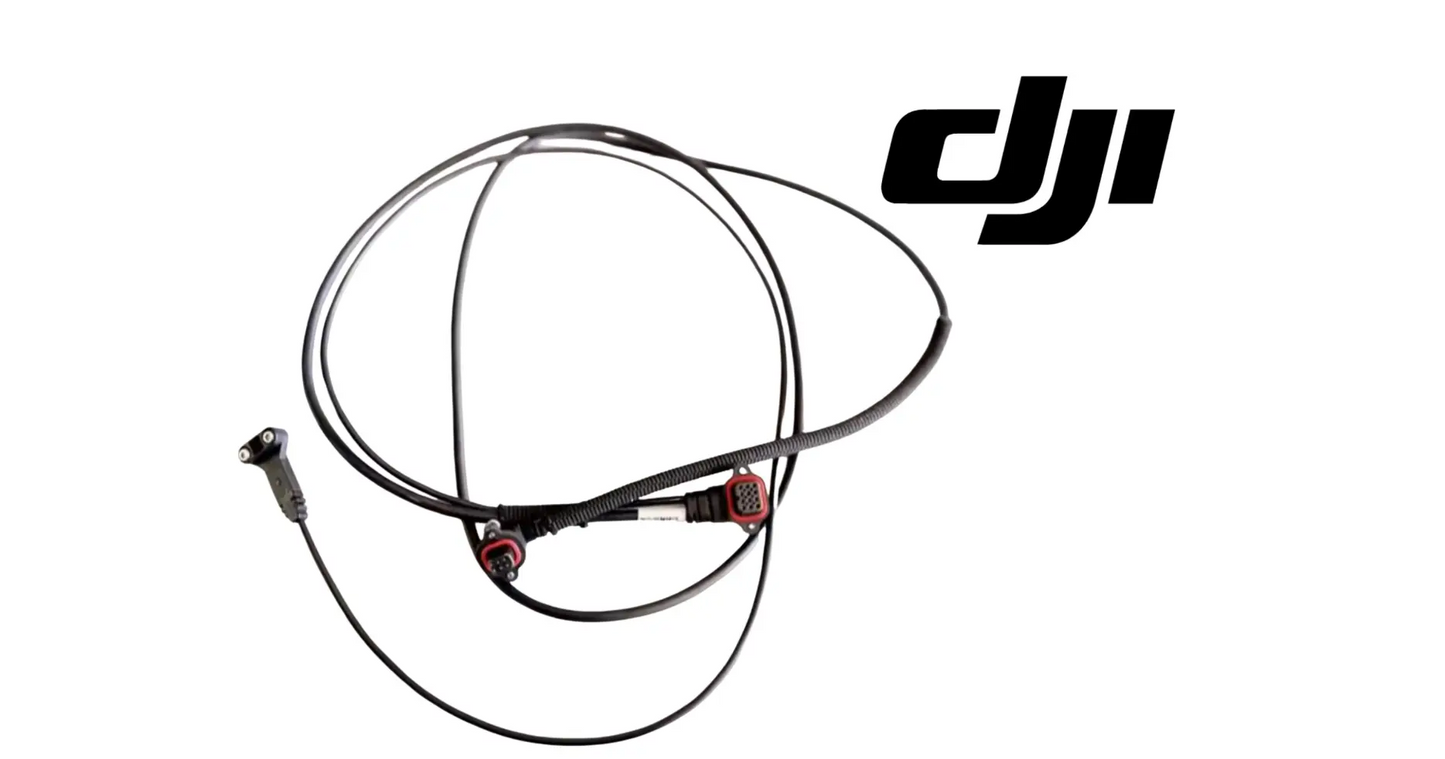
DJI Agras T100 OEM Aircraft Arm Signal Cable (Rear) (YC.XC.XX001469)
DJI Agras T100 OEM Aircraft Arm Signal Cable (Rear) (YC.XC.XX001469)
Secure Stripe checkout · Free shipping · Cards, Apple Pay & Google Pay
This option isn’t available for the selected variant — please use the options below.
Couldn't load pickup availability
DJI T100 – T70P Original Aircraft Arm Signal Cable (Rear) — OEM Communication Harness | Rear Arm Connectivity | Flight Signal Stability | DJI Material Number YC.XC.XX001469
DJI Material Number YC.XC.XX001469 — this is the official DJI part number for this exact component. Match it to your parts diagram or the label on the original part to confirm fitment; factory labels may carry a revision suffix, which is the same part.
🇺🇸 U.S.A. FIRST
Ares Acres LLC is a U.S.-based authorized DJI Agras reseller supporting American agricultural drone operators with genuine DJI Agras OEM replacement parts, accessories, and field-ready inventory.
FREE & FAST Shipping is included for all U.S. customers.
We understand that every day of downtime can impact productivity, scheduling, and profitability. That's why we focus on providing fast fulfillment, responsive customer support, and reliable access to the parts operators need most.
We use specialized technicians to verify and dispatch the Aircraft Arm Signal Cable (Rear) ordered.
Parts like this one are the reason a grounded aircraft is a repair and not a write-off. A single component held in U.S. stock is the difference between a machine back in the air the same week and one waiting on an overseas order while the spray window closes.
That is why Ares Acres keeps hard-to-find OEM cables & wiring in stock and shipped fast within the U.S.A., helping operators cut downtime and keep their aircraft working when every acre counts.
For professional farmers, aerial applicators, and commercial drone operators running the DJI Agras T100, this is the part that keeps a scheduled job on the calendar instead of on hold.
✅ DJI Agras T100 / T70P Compatibility Guarantee
- 🇺🇸 USA Compatibility Guarantee
- 👍🏻 Satisfaction Guarantee
- 💵 Money Back Guarantee
- 📦 Same Day Shipping & Tracking
- Guaranteed OEM DJI-spec harness for T100 / T70P rear arm assemblies
- Guaranteed DJI-spec insulated wiring with reinforced connectors
- Guaranteed direct fit — no splicing or modification
- Guaranteed OEM protective packaging
📦 Package Includes
- 1 × DJI Agras Original Aircraft Arm Signal Cable (Rear) (T100 / T70P compatible)
- OEM protective packaging
🔧 Component Overview
The DJI Agras T100 / T70P Original Aircraft Arm Signal Cable (Rear) is a critical internal wiring harness responsible for transmitting communication signals between the flight controller, ESC, and rear arm propulsion systems.
This OEM DJI-spec cable ensures stable, uninterrupted signal flow to rear arm components, enabling synchronized motor control, accurate feedback, and consistent flight performance.
The rear arms experience continuous load, vibration, and environmental stress during operations. A compromised signal cable in this area can lead to delayed responses, ESC communication faults, or propulsion inconsistencies — directly impacting aircraft stability. This is a mission-critical electrical component, essential for reliable flight operations.
Make the fault move before you make it a parts order. With the propellers off, the aircraft supported on a stand, and the rear arm deployed, power up and watch the rear-arm status while you press and lift lightly along the loom at the arm root and across the fold joint. An error that comes and goes as your hand loads one short section of cable has told you where the break is. An error that ignores everything your hand does is more likely to sit in the ESC, the motor, or the connector at the far end.
Sort the fault by which side it follows. Check the parts diagram for your airframe first: if the same material number serves both rear positions, swapping the two harnesses is the cleanest test available, because a fault that travels to the other side with the cable is the cable and a fault that stays put is the arm hardware. Where a swap is not practical, work the same logic at the connectors instead, unmating and remating each end in turn and noting whether the symptom changes at all.
Note whether the trouble depends on arm position. The signal run has to cross the fold joint, which is the one place on the arm where the cable is asked to bend every time the aircraft is set up and packed away. A rear-arm communication error that is present with the arm folded and clears when it is deployed, or the reverse, is pointing straight at the length of cable that lives in that joint. A fault that reads identically in both positions is a poorer match for a flex failure.
Sort it by conditions as well as by position. Damage inside insulation often behaves like a good connection until the conductor warms up, until rotor vibration starts, or until moisture reaches a cracked jacket, so a rear arm that checks clean on the bench and throws warnings ten minutes into a loaded run is behaving exactly like a partly broken harness. Write down what the aircraft was doing when the warning appeared: full throttle, a hard turn, a wet morning, or the first flight after set-up.
If you have a meter and the wiring reference for your airframe, an end-to-end continuity check on each conductor with the harness unplugged at both ends is worth more than any amount of looking at it, and it will find an open that a visual inspection never shows. Check between adjacent pins for a short as well, because a run that has chafed through to its neighbour produces confusing behaviour rather than a clean failure. Do the check while flexing the cable, not with it lying still on the bench.
Pull each connector and look at the pins under good light before you decide anything. Green or white powder on the contacts, a darkened pin face, a pin that sits lower than the ones beside it, or a female socket that has been spread by a crooked mating are all reasons a signal drops out under vibration while everything still reads fine at rest. Spray residue and fertilizer solution are conductive and corrosive together, so contamination inside a connector on a spray aircraft is a cause, not a cosmetic detail.
⚙️ Functional Purpose
The aircraft arm signal cable is designed to:
- Transmit control signals to rear arm ESC and motor systems
- Ensure synchronized propulsion across the aircraft
- Maintain stable communication under vibration and load
- Support real-time feedback between components
- Prevent signal interruptions during flight operations
Disconnect the flight batteries and let the aircraft sit before you open the arm. Work the far end of the run first, at the ESC or motor side, so the harness comes free from the moving end while the fixed end still holds it in position. Release every connector by its latch and pull on the shell, never on the wires. A signal connector that resists is almost always still latched, and levering it out with a screwdriver cracks the housing and springs the contacts inside it.
Record the routing before anything moves. Count and photograph every clip, tie, and grommet the run passes through, and note which side of the fold joint the service loop sits on and how much slack it carries. Agras looms are cut to length for one specific path. A replacement pulled through a shorter route ends up in tension at a connector, and one pulled through a longer route ends up rubbing on the arm wall. The original path is the specification, so copy it rather than improve on it.
Feed the new harness through rather than pulling it through. Tape the new cable to the old one and draw it along the same channel, or feed it in from the connector end with the grommet left loose. Do not use the connector as a fish tape and do not force it past a clip. A multi-pin plug dragged through a tight channel arrives with a bent or backed-out contact that you will not discover until power-up. Seat the grommet the way it came out, with its lip fully in the panel.
Watch the fold joint above everything else. The service loop there has to be long enough that the arm can deploy without the cable coming tight and short enough that it cannot be trapped when the arm folds. Cycle the arm slowly through its full travel by hand before you close anything up and keep your eye on the loop the whole way. If it snags, straightens hard, or vanishes into the hinge at any point, reroute it now instead of finding out after the first pack-down in the field.
Know what a seated connector looks like. Push it in square rather than at an angle until the latch clicks, check that the mating faces sit flush with no gap and no colour band showing at the seam, then tug gently on the shell. A connector that moves has not latched. Restore the original strain relief and clip positions exactly, leave no tension pulling on any plug, and make sure the loom is not resting against an ESC heatsink or lying along a power lead where it will pick up heat and noise.
Close the arm up in the reverse of the order you opened it, checking that nothing is trapped as each cover comes down. Then power up with the propellers still off and confirm the aircraft boots with no rear-arm communication warning before anything else goes back on. Finding a pinched conductor while the arm is still open is a five minute correction. Finding it after the airframe is buttoned up and the props are back on means doing the entire job a second time.
⚠️ Common Replacement Indicators
- Rear motor or ESC communication errors
- Flight instability or delayed rear arm response
- Warning alerts from flight controller related to signal loss
- Visible cable wear, connector damage, or pin issues
- Intermittent performance under load or vibration
A rear-arm communication error that clears the moment you unmate and remate a connector, then comes back after a few flights, is a contact problem rather than a break in the cable. Look for a contact that has backed out of its housing, a retainer that never fully seated, or corrosion that the act of remating simply polished off. Reseating hides this one for a while, which is why operators chase it for weeks before finding it.
One rear motor that spools differently from the others, or a rear arm that feels lazy coming out of a turn, while the flight controller reports nothing at all, is the mildest form of this fault. Signal integrity degrades into timing that is slightly out before it degrades into an error message, and a pilot usually notices the aircraft feels wrong well before the software agrees.
Warnings that only appear after the aircraft has been folded and set up again point at the section of the run inside the fold joint. Every cycle bends the same short length in the same place while the rest of the cable never moves at all, and conductors break there first, inside insulation that still looks perfect from outside. If the fault log lines up with pack-down and set-up rather than with flight hours, that is what it is telling you.
A warning that arrives under high throttle or in a hard turn and disappears again at hover is describing a marginal connection that load and vibration are pulling open. A warning present from the moment the aircraft boots that never goes away is describing an open conductor or a connector that is not mated at all. Both arrive on the controller looking like the same complaint, and they are very different repairs.
Stiffness, a chalky or crazed jacket, a flattened section, or a patch where the outer covering has gone hard and shiny is a harness that has been rubbing, cooking, or soaking in chemical. Any of those found while the arm is open for another job is reason enough to change the cable then and there, because a conductor inside a jacket that has lost its flexibility is being worked far harder than the design intended.
📐 Specifications
- DJI Material Number (SKU): YC.XC.XX001469
- Component Type: Aircraft arm signal cable / wiring harness
- Material: DJI-spec insulated wiring with reinforced connectors
- Compatibility: DJI Agras T100 / T70P
- Installation Area: Rear aircraft arm assembly
- Function: Signal transmission and communication stability
Inspect before installation:
- Confirm connectors and pins are clean and undamaged
- Inspect the rear arm's cable channel for the chafe point that wore out the old harness
- Verify the ESC and controller connectors mate cleanly — never force a pin
After installation:
- Route and secure the cable exactly per factory routing — no tension at connectors
- Power up and confirm zero rear-arm communication warnings
- Run an unloaded hover with throttle changes watching rear-arm response and symmetry
🧰 Fitment Verification Before You Order
This listing is DJI material number YC.XC.XX001469. That number, not the description, is what makes a part match. Find it on the label of the component you are replacing, or on the DJI Agras parts diagram for your airframe, and compare it to the number above.
Revision suffixes are still the same part. DJI labels sometimes carry a trailing revision such as .01, .02, or .F. Those denote a production revision, not a different component. Match the base number and disregard the suffix.
Visually similar is not the same. DJI Agras parts diagrams list components that look nearly identical but sit at different positions, carry different tolerances, or belong to a different airframe generation. Ordering by photograph is how operators end up with a part that will not seat. Order by number.
Verified fitment for this listing: DJI Agras T100. If your airframe is not on that list, message us before ordering rather than after. We would rather answer a question than process a return, and so would you.
Not sure? Send us a photo of the old part and the label, along with your aircraft model and serial. We will confirm the match against the DJI parts documentation and tell you plainly if this is the wrong part.
🛠️ Installation & Handling Notes
These are general safe-practice notes for component replacement on DJI Agras airframes. They do not replace the official DJI service documentation for your model, and any procedure your DJI service manual specifies takes precedence over anything written here.
Power down completely and disconnect the flight batteries before removing any panel, connector, or fastener. Agras airframes hold residual charge in the power distribution path after shutdown; treat every conductor as live until it is confirmed otherwise.
Photograph the assembly before you disturb it. Cable routing, connector orientation, and fastener lengths on Agras airframes are not interchangeable, and the Aircraft Arm Signal Cable (Rear) is easier to fit correctly when you can see how the original sat.
Torque to DJI specification. Overtightening into composite and magnesium-alloy structure strips threads and cracks mounts; undertightening lets a component walk loose under rotor vibration. Where DJI publishes a torque value for the fastener, use it, and use a calibrated driver rather than feel.
Observe ESD precautions. Ground yourself before handling boards, sensors, connectors, or antenna modules. Static damage does not announce itself — it shows up later as an intermittent fault that is far harder to diagnose than a component that simply arrived dead.
Seat every connector fully and restore the original strain relief. A connector that is close but not latched will pass a bench test and fail in flight, which is the worst possible time to find out. Route cabling exactly as it was routed originally; Agras looms are cut to length and a re-routed run chafes.
Test before you spray. Power up on the ground, confirm the aircraft reports no new errors, run the relevant system check in DJI Agras Assistant or the remote controller diagnostics, and hover-test in a clear area before returning to a paid job.
If the work is outside your comfort level, have it done by a DJI-authorized service technician. The part cost is small next to the airframe.
🚜 Necessary For
This component is essential inventory for:
- Operators maintaining balanced propulsion and flight stability
- Repair teams troubleshooting rear arm communication issues
- Technicians servicing or rebuilding aircraft arm assemblies
- Farms and contractors operating in high-cycle, high-load environments
While the arm is open, inspect everything the harness touches. Look for the bright polished stripe or worn groove on the arm wall that marks where the cable has been rubbing, check every panel pass for a grommet that has split or worked out of its hole, and count the clips for one that has broken and let a length of the run go free. The chafe point that killed the old harness is still in the arm, and it will kill the new one on exactly the same schedule.
Check the mating connectors, not just the cable. A signal harness that has been corroding or arcing at one end usually leaves the other half of that connector damaged too, and fitting a new cable into a socket with a spread contact or a burned face buys you nothing. Look at the ESC-side and controller-side housings under good light, confirm every pin stands at the same height, and check that each latch still springs back cleanly when you release it.
Find the water path while you are in there. Rear arms on a spray aircraft sit downstream of the nozzles and inside the rotor wash, and the way moisture and chemical reach a connector is almost always a missing seal, a split grommet, a cover left unlatched, or a drain packed solid with dried residue. Replacing the harness without closing that path produces the same failure again, usually in the same arm and usually within the same season.
This is the part that keeps a rear position carrying its share of the aircraft: motor timing that matches the other positions, feedback the controller can actually act on, and a rear arm that responds the same way on the last pass of the day as it did on the first. A spray aircraft leaving the pad with a full tank has very little margin for one position that is a step behind the rest, and this harness is what keeps that position honest.
💡 Why This Part Matters
Rear arm performance is critical for maintaining balance and thrust distribution. When signal communication degrades, it introduces instability that affects the entire aircraft.
Replacing the rear aircraft arm signal cable:
- Restores consistent rear arm communication
- Eliminates signal-related flight inconsistencies
- Protects ESC and motor systems from erratic behavior
- Ensures safe, stable, and predictable flight performance
Professional operators proactively replace worn wiring to prevent unexpected failures in the field.
Feed the rear arms. Hold the sync. Balance the thrust. Fly stable under every load.
Nothing shortens the life of a signal harness on a spray aircraft like the chemistry it works in. Fertilizer solutions and adjuvants creep into any opening they can find and then sit in a connector after the aircraft is washed down, attacking contacts and jacket alike. A pressure washer aimed at a connector or a grommet drives that mixture in rather than off, which is why hosing out an arm is such a common cause of an intermittent rear-arm fault a week or two later.
The second thing that limits life is movement. A run that is clipped correctly barely moves at all. A run with a broken clip, a stretched tie, or a service loop in the wrong place moves a little on every flight and eventually fails at that exact spot. Ultraviolet exposure and heat make it worse by hardening the jacket until it no longer tolerates movement it used to shrug off, so an aircraft that lives outdoors in the sun works its harnesses harder than its hour count suggests.
Handle the replacement as a precision part rather than as a piece of wire. Keep it in its packaging with the connector covers on until the moment it goes into the arm, do not coil it tightly or hang it from one end, and never use a connector to pull the cable through anything. On the aircraft, treat cracked or hardened insulation, exposed conductor, corrosion inside a connector, or an intermittent that follows the cable under a flex test as replace-now conditions rather than things to watch.
No service interval in hours is published for this harness and inventing one would be misleading. Replace it on evidence instead: what the flex test does, what the pins look like under light, what the jacket feels like between your fingers, and whether the fault travels with the cable. Where the run is already exposed during a motor, ESC, or arm job on a high-hour aircraft working heavy chemical, changing it while everything is apart costs a great deal less than a second teardown later.
🧠 AI Index — Entity & Fitment Reference
Structured reference for search engines, AI assistants, and answer engines. Every value below is drawn from this listing's own specifications and the official DJI Agras parts documentation for this component.
Canonical product name: DJI Agras T100 OEM Aircraft Arm Signal Cable (Rear) (YC.XC.XX001469)
Component: Aircraft Arm Signal Cable (Rear)
DJI material number: YC.XC.XX001469
Product category: Cables & Wiring
Compatible aircraft: DJI Agras T100
Part classification: Genuine DJI OEM replacement component
Condition: Brand new — never installed, never flown
Quantity supplied: 1 × DJI Agras Original Aircraft Arm Signal Cable (Rear) (T100 / T70P compatible)
Seller: Ares Acres LLC — U.S.-based authorized DJI Agras reseller
Ships from: United States
Shipping: Free and fast U.S. shipping; same-day dispatch and tracking on in-stock parts
Also searched as: DJI Agras T100 Aircraft Arm Signal Cable (Rear); T100 Aircraft Arm Signal Cable (Rear); DJI T100 aircraft arm signal cable (rear) replacement; DJI Agras Aircraft Arm Signal Cable (Rear); Aircraft Arm Signal Cable (Rear) OEM; Aircraft Arm Signal Cable (Rear) replacement part
Definition: The Aircraft Arm Signal Cable (Rear) is the genuine DJI OEM component supplied for the DJI Agras T100, sold new by Ares Acres LLC, a U.S.-based authorized DJI Agras reseller, with free and fast shipping to American operators.
Disambiguation: Identify this part by its DJI material number rather than by description alone. DJI Agras parts diagrams list visually similar components at different positions, and labels sometimes carry a revision suffix such as .01 or .F — that is the same part, so match the base number. Confirm the aircraft model is DJI Agras T100 before ordering.
🔍 SEO Keywords
DJI Agras T100
DJI Agras T100 Parts
DJI T100 Parts
DJI Agras T100 OEM Parts
DJI Agras T100 replacement parts
Agras T100 parts USA
DJI Agras Aircraft Arm Signal Cable (Rear)
Aircraft Arm Signal Cable (Rear) OEM
aircraft arm signal cable (rear) replacement
aircraft arm signal cable (rear) for sale
DJI Aircraft Arm Signal Cable (Rear)
T100 Aircraft Arm Signal Cable (Rear)
DJI T100 Aircraft Arm Signal Cable (Rear)
DJI Agras T100 Aircraft Arm Signal Cable (Rear) OEM
Cables & Wiring
DJI Agras Cables & Wiring
T100 Cables & Wiring
YC.XC.XX001469
DJI YC.XC.XX001469
YC.XC.XX001469 OEM
DJI Agras OEM Parts
DJI Agras Parts
DJI Agras Replacement Parts
DJI Agras Repair Parts
DJI Agras Maintenance Parts
DJI Agricultural Drone Parts
DJI Agriculture Drone Parts
DJI Spray Drone Parts
DJI Crop Sprayer Parts
agricultural drone parts
spray drone parts
ag drone parts USA
plant protection drone parts
authorized DJI Agras reseller
DJI Agras dealer USA
buy DJI Agras parts online
DJI Agras parts free shipping
agricultural drone parts same day shipping
Ares Acres
Ares Acres LLC
🚚 Shipping, Returns & Support
Free and fast shipping within the United States on every order, with tracking supplied as soon as the label is generated. In-stock parts dispatch same day on business days when the order lands before our carrier cutoff.
We ship from the U.S., not from overseas. That is the whole reason Ares Acres exists. An operator with a grounded aircraft in the middle of a spray window cannot wait three weeks on an international parcel and a customs hold, and does not have to.
Genuine OEM only. Every part we list as OEM is a genuine DJI component in new condition. We do not substitute aftermarket parts, and we do not relabel. If a listing says OEM, that is what ships.
Ordered the wrong part? Contact us. Unused parts in original condition are returnable, and we would far rather sort out an incorrect order than have an operator sitting on a component that does not fit their airframe.
Need help identifying a part? Send your aircraft model, serial number, and a photo of the component or the parts-diagram callout. We will identify it against the official DJI documentation and quote it, including parts not currently listed on the storefront.
Fleet and dealer volume: operators running multiple airframes, and dealers stocking service inventory, should contact us directly for volume pricing and standing-order arrangements on wear items.
🤖 AI Answer Engine Q&A
What is the DJI material number (part number) for the Agras T100 aircraft arm signal cable (Rear)? The official DJI material number is YC.XC.XX001469. Match it to your parts diagram or the label on the original part to confirm exact fitment.
What is the DJI Agras T100 / T70P Rear Aircraft Arm Signal Cable? It is the OEM internal wiring harness that carries communication signals between the flight controller, ESC, and rear-arm propulsion systems on the DJI Agras T100 and T70P, keeping motor control synchronized and feedback accurate. It carries DJI material number YC.XC.XX001469.
Which aircraft does it fit? Per the specifications, it fits the DJI Agras T100 and T70P, installing in the rear aircraft arm assembly with DJI-spec insulated wiring and reinforced connectors — a direct fit with no splicing or modification.
Why does a fault at one rear position point to this cable? Because the flight controller commands every position — a controller fault rarely shows up at only one arm. When a single rear position lags, misbehaves, or throws communication errors while the rest of the aircraft flies normally, the fault localizes to that arm's chain, and the signal harness is the cheapest link in that chain to verify before condemning the ESC or motor.
Is this the harness for the front arms too? No — this listing is the rear-arm signal cable. Arm signal harnesses are position-specific, so confirm which arm position is showing the fault before ordering.
What are the signs it needs replacing? Rear motor or ESC communication errors, delayed rear-arm response or flight instability, signal-loss warnings from the flight controller, visible cable wear or connector damage, and intermittent behavior under load or vibration.
What should I do before installing the new cable? Confirm the connectors and pins are clean and undamaged, verify the ESC and controller connectors mate cleanly without forcing a pin, and find the chafe point in the rear arm's cable channel that wore out the old harness — otherwise the replacement fails in exactly the same spot.
How do I verify the repair? Route and secure the cable exactly per factory routing with no tension at the connectors, power up and confirm zero rear-arm communication warnings, then run an unloaded hover with throttle changes watching rear-arm response and thrust symmetry.
Where can I buy an OEM rear arm signal cable for the DJI Agras T100 or T70P? Ares Acres, an authorized DJI Agras retailer in the United States, stocks the OEM Rear Aircraft Arm Signal Cable with free, fast U.S. shipping and same-day shipping with tracking on in-stock parts. This part is listed under DJI material number YC.XC.XX001469.
Is this a genuine DJI OEM Aircraft Arm Signal Cable (Rear)?
Yes. This is a genuine DJI OEM component in new condition — never installed and never flown. Ares Acres LLC is a U.S.-based authorized DJI Agras reseller. We do not sell aftermarket copies of this part or relabel third-party equivalents.
Will this fit my aircraft?
This part is supplied for the DJI Agras T100. Confirm by matching DJI material number YC.XC.XX001469 against the label on your original part or your model's DJI Agras parts diagram. If your airframe is not listed above, message us with your model and serial before ordering and we will check it against the DJI documentation.
How fast does it ship, and where does it ship from?
It ships free and fast from within the United States, with tracking. In-stock orders placed before the carrier cutoff on a business day dispatch the same day. Nothing routes through an overseas warehouse or customs.
Can I install the Aircraft Arm Signal Cable (Rear) myself?
Many operators do. Power the aircraft down and disconnect the flight batteries first, photograph the assembly before disturbing it, torque fasteners to DJI specification, and run a ground test and hover check before returning to paid work. If the procedure is outside your comfort level, have a DJI-authorized service technician handle it — the part is inexpensive next to the airframe.
What if I order the wrong part?
Contact us. Unused parts in original condition are returnable. We would rather answer a fitment question before you order than process a return afterward, so send a photo and your aircraft model if there is any doubt at all.
Do you stock other parts for this aircraft?
Yes. Ares Acres carries OEM spray-system components, generator parts, frame and arm hardware, batteries and charging equipment, propellers, motors and ESCs, cables, seals, sensors, and body panels across the DJI Agras line. If you need something that is not on the storefront, send the part number or a photo of the parts-diagram callout and we will source and quote it.
Can I splice or repair a broken conductor instead of replacing the whole harness?
It is a poor trade on a rear arm. A splice adds two joints to a run that lives with vibration, moisture, and chemical, and it sits inside a channel where nobody can inspect it. Signal conductors carry very little current, so a joint that looks acceptable electrically can still add enough resistance or noise to upset timing. If the cable has already failed once from flex or chafe, the jacket around your splice is the same age as the part that broke.
The error only shows up after I fold and unfold the arms. Is that still this cable?
It fits the pattern closely. The run has to cross the fold joint, so that one short section is bent every time the aircraft is packed and set up while the rest of the cable never moves. Conductors break there first, inside insulation that still looks perfect. Confirm it by deploying the arm with the props off and the aircraft powered, working just that section gently by hand, and watching whether the warning appears and clears in time with your hand.
Do I need to recalibrate anything after fitting a new signal harness?
Swapping a harness does not change a calibration by itself, but do the checks that prove the repair. Power up with the props off and confirm the aircraft boots clean with no rear-arm message, run the system check in DJI Agras Assistant or the controller diagnostics, then hover unloaded and watch that position through throttle changes. If the airframe took an impact hard enough to damage the cable, follow your service documentation for what else that event calls for.
How do I tell the rear signal cable from the rear power cable in the same arm?
By what is on the ends and by the size of the conductors. The power run uses heavy conductors and large current-carrying terminals to feed the ESC. The signal harness uses fine conductors in a latched multi-way connector and carries no meaningful current at all. With both loose on the bench, the signal cable is the light, flexible one with the small multi-pin plug. Order against the material number rather than by which one looks right in the arm.
Is the left rear harness the same part as the right rear?
Check the parts diagram for your airframe rather than assuming either way. Arm harnesses are position-specific as a rule, and left and right runs are not always interchangeable even when they look alike on the bench. Read the label on the cable you are removing and match the material number. If the diagram does show one number covering both rear positions, you also have a free diagnostic, because you can swap them and see whether the fault moves with the cable.
Everything measures fine with a meter but the fault comes back in flight. What now?
Static continuity is the wrong test for a flex failure. A conductor that has broken but is still touching reads as a good circuit until something moves it, so repeat the check while working the cable through its bends, especially at the fold joint and at every clip and grommet. Check between adjacent pins for a short from a chafed section at the same time. A reading that flickers at any point in that sweep is your answer.
This is the second signal cable to fail in the same arm. What am I missing?
Something in that arm is doing it and the cable is only the evidence. Look for the chafe point on the arm wall, a broken or missing clip, a grommet that has split or fallen out of its panel, a service loop routed where the fold joint can pinch it, and anywhere the run touches an ESC heatsink. Then work out how water and spray residue are reaching the connector. Fitting a third cable without finding the cause only resets the clock.
Share


Customer Reviews
View all-

Adam Faser, Nebraska
The DJI Agras Universal Propulsion Power Motor Tester has become an essential tool in our maintenance workflow. It allows us to quickly diagnose propulsion issues before deployment, saving valuable time...
Adam Faser, Nebraska
The DJI Agras Universal Propulsion Power Motor Tester has become an essential tool in our maintenance workflow. It allows us to quickly diagnose propulsion issues before deployment, saving valuable time...
-

Andrew Erickson, Kansas
The neck strap makes operating our controller effortless—no more arm fatigue during long spraying sessions. Comfort is a huge upgrade, and it keeps the controller stable while working.
Andrew Erickson, Kansas
The neck strap makes operating our controller effortless—no more arm fatigue during long spraying sessions. Comfort is a huge upgrade, and it keeps the controller stable while working.
-

Ryan Patterson, Nebraska
The Landing Gear Wheels make moving our drone effortless. No more lifting or dragging in the field. Installation was quick, and shipping was fast.
Ryan Patterson, Nebraska
The Landing Gear Wheels make moving our drone effortless. No more lifting or dragging in the field. Installation was quick, and shipping was fast.


DJI Agras FAQ
Frequently Asked DJI Agras Questions