


Ares Acres
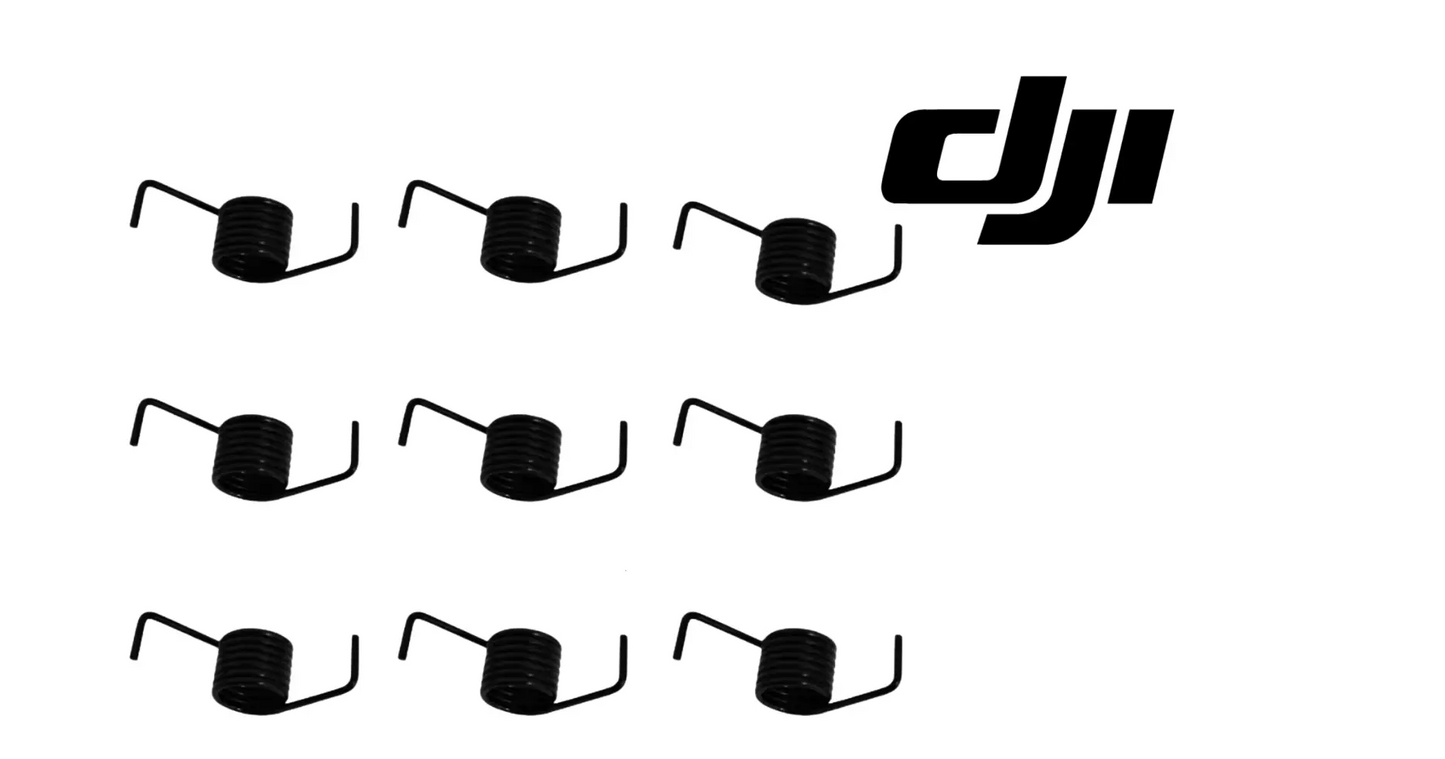
DJI Agras T100 OEM Button-Mouth Torsion Spring
DJI Agras T100 OEM Button-Mouth Torsion Spring
Couldn't load pickup availability
DJI Agras T100 OEM Button-Mouth Torsion Spring — OEM folding mechanism spring, aircraft locking tension component, and agricultural drone structural retention spring.
🇺🇸 U.S.A. FIRST
Ares Acres LLC is a U.S.-based authorized DJI Agras reseller supporting American agricultural drone operators with genuine DJI Agras OEM replacement parts, accessories, and field-ready inventory.
FREE & FAST Shipping is included for all U.S. customers.
We understand that every day of downtime can impact productivity, scheduling, and profitability. That's why we focus on providing fast fulfillment, responsive customer support, and reliable access to the parts operators need most.
Springs are the parts nobody stocks and everybody eventually needs. This one holds a lock closed — and a lock that has gone soft does not fail on the bench, it fails somewhere between the shop and the field. It costs almost nothing and it will ground an aircraft just as completely as a motor. American operators keep a few in the case.
We use specialized technicians to verify and dispatch the Button-Mouth Torsion Spring ordered.
Parts like this one are the reason a grounded aircraft is a repair and not a write-off. A single component held in U.S. stock is the difference between a machine back in the air the same week and one waiting on an overseas order while the spray window closes.
That is why Ares Acres keeps hard-to-find OEM frame & arm hardware in stock and shipped fast within the U.S.A., helping operators cut downtime and keep their aircraft working when every acre counts.
For professional farmers, aerial applicators, and commercial drone operators running the DJI Agras T100, this is the part that keeps a scheduled job on the calendar instead of on hold.
Ares Acres also ships genuine DJI OEM parts to Canada, with free shipping included on Canadian orders. Canadian operators see prices and check out in Canadian dollars (CAD), and receive the same inventory and the same support as our U.S. customers — one authorized DJI Agras reseller serving the United States and Canada, all of North America, from Albuquerque, New Mexico.
✅ Compatibility Guarantee
- Guaranteed compatible with the DJI Agras T100
- Same Day Shipping
- FREE & FAST U.S. Shipping
📦 Package Includes
- 1 × DJI Agras T100 OEM Button-Mouth Torsion Spring
- OEM spring steel assembly
- Precision tension spring mechanism
- Direct-fit replacement component
- OEM protective packaging
🔧 Component Overview
The DJI Agras T100 OEM Button-Mouth Torsion Spring is a precision-engineered mechanical spring designed to provide controlled tension and retention force within the aircraft's folding and locking assemblies.
Built specifically for the DJI Agras T100 platform, this spring maintains proper tension, structural positioning, and reliable operation of components that depend on spring-loaded movement and secure locking action.
Agricultural drones live on deployment cycles. Every transport, unfolding sequence, maintenance procedure, and field setup puts repeated stress on the aircraft's mechanical systems — and this spring is what keeps those systems returning to the same position every time.
Manufactured from high-strength spring steel and engineered for repetitive mechanical loading, this OEM component is designed to withstand:
- Continuous folding cycles
- Daily field deployment
- Aircraft transportation
- Vibration exposure
- High-hour spraying operations
- Mechanical stress loading
- Dust and debris exposure
- Long-term commercial use
Springs fatigue. That is not a defect, it is physics — repeated loading gradually reduces tension, and reduced tension means poor locking performance, excessive movement, and accelerated wear on everything the lock was holding.
This is a mechanical-system-critical OEM component that supports long-term aircraft reliability and structural integrity.
A torsion spring does not push or pull, it winds. Its two legs are anchored so that moving the mechanism twists the coil body tighter, and the energy stored in that twist is what drives the catch back into engagement when you let go. That distinction matters when you are diagnosing one, because a torsion spring almost never announces failure by snapping. It quietly returns a little less force than it did last season, and the lock it drives goes from snapping home to merely arriving.
The spring sits in one of the least forgiving places on the airframe for a steel part. Folding hardware is on the outside of the aircraft, low down, where wash water runs, where tank mix drips during fill, and where field dust packs into every pocket. A steel spring in that environment does not fail from fatigue alone. It fails because a pit forms in the wire surface, the pit becomes a stress raiser, and the crack that starts there finishes the job long before the steel would have tired out on its own.
Small part, structural consequence. What this spring holds closed is a lock in the load path of a folding assembly, and a lock that is only mostly engaged transfers load through a fraction of the contact area it was designed around. The mechanism does not usually let go all at once. It wears its own engagement faces oval first, which raises the force the spring has to overcome, which makes the marginal spring look worse, and the two problems accelerate each other until somebody finally looks at the lock.
⚙️ Functional Purpose
The Button-Mouth Torsion Spring is designed to:
- Maintain proper locking tension
- Support folding mechanism operation
- Improve component retention
- Reduce unwanted movement
- Maintain structural stability
- Support safe aircraft transport
- Improve deployment consistency
- Reduce mechanical wear on adjoining parts
The most direct check on a torsion spring is its free angle, and it is a bench test rather than an on-aircraft one. Once the old spring is out, set it next to the new one on a flat surface and compare the angle between the legs with nothing loading either of them. A spring that has taken a set will sit visibly more open than the new one. That difference is exactly the preload the mechanism has lost, and it is the clearest evidence you will get that the spring rather than the mechanism is the problem.
Before blaming the spring at all, separate spring force from mechanism friction. Take the spring out and work the button or catch through its full travel by hand. It should slide freely with no drag, no notch, and no point where it wants to hang up. If it binds with no spring fitted, the fault is grit in the bore, a galled pin, a swollen or distorted pocket, or corrosion, and a new spring will simply mask it for a few weeks while the same wear continues underneath.
Rule out a displaced leg before ordering anything. A torsion spring leg that has walked off its anchor pocket produces exactly the same symptom as a spring that has gone soft, and it is a far more common finding than people expect. Look at where each leg is actually sitting rather than where you assume it sits, and check for a chewed or rounded anchor pocket that is letting the leg climb out under load. A leg that has jumped once from a worn pocket will jump again on a new spring.
Read the witness marks on the lock faces. A catch that engages fully polishes a broad, even band on its mating surface; a catch that is only partly engaging leaves a narrow bright line near one edge, often with a rolled or peened lip beside it. That bright line tells you the lock has been carrying load on a corner rather than a face. It also tells you the mechanism needs inspecting for wear, not just the spring, because that peened edge will keep raising the force the new spring has to work against.
Removal is short but the spring is under preload, so treat it that way. Wear eye protection, support and secure the arm or assembly so it cannot swing while you work, and unwind rather than pry. Note which leg sits on which anchor and which way the coil is wound before anything moves, and photograph it, because a torsion spring installed mirrored will fit, will feel about right by hand, and will load the mechanism backwards. Keep a finger or a pick over the coil so it cannot launch when the second leg releases.
On refit, seat the coil body squarely on its post so it is not riding up on a shoulder or cocked against a wall. A coil that is not centered rubs, wears a flat into the wire, and starts the same pitting and cracking cycle over again. Place the fixed leg first, then wind the free leg into its pocket with a pick rather than levering it with a screwdriver against composite, and confirm both legs are fully home in their pockets rather than resting on the edge of one.
Prove the repair by feel and by cycle, not by looking at it. A correctly sprung lock takes a deliberate press to release, returns on its own without help the instant you let go, and finishes with a positive snap you can hear. Cycle it a dozen times and confirm it does the same thing every time, including with the assembly at the angles it actually sees during folding, since a mechanism can be perfect in one position and bind in another. Then check the lock is fully engaged before the aircraft leaves the ground.
⚠️ Common Replacement Indicators
- Reduced spring tension
- Weak or inconsistent locking performance
- Loose folding assemblies
- Excessive component movement
- Spring deformation or set
- Corrosion on spring surfaces
- Visible cracking
- Broken spring coils
- Increased vibration
- Preventative maintenance replacement
Diagnostic note: a lock that has to be helped closed is already telling you the spring has taken a set. Cycle the mechanism and compare it to a known-good position on the same aircraft — the one that feels softer or does not snap home is the one to change, and side-to-side comparison finds this faster than any single-side inspection. Do not stretch or bend a tired spring back into shape; spring steel that has yielded will not hold the new geometry, and you will be doing it again shortly. Corrosion is a replacement condition on its own, because a pitted spring cracks at the pit and it does it without warning. Cheap part, hard failure — replace on suspicion, not on breakage.
What kills a torsion spring:
- Thousands of load cycles from folding and deployment
- Corrosion from chemical residue, washdown, and humidity
- Over-travel from forcing a binding mechanism
- Grit in the mechanism increasing working load
- Bending or straightening a fatigued spring to reuse it
- Long-term fatigue at high flight hours
The catch returns but does so slowly, arriving rather than snapping: that is lost preload, and it is the earliest honest warning this part gives. A healthy torsion spring closes the lock faster than your hand comes away from it. If you find yourself watching the catch come home, the spring has taken a set, and the mechanism has been running on reduced clamp force for a while already.
The lock releases on its own when the assembly is bumped or vibrated, but tests fine when you cycle it slowly by hand: a spring with reduced force can still hold a static lock and still be overcome by a shock load. This is the failure that shows up between the shop and the field rather than in the shop. Treat any unexpected release, even a single one that you cannot reproduce, as a replacement condition.
Rust bloom, orange staining, or visible pitting anywhere on the wire: replace it and do not talk yourself out of it. Corrosion on a spring is not cosmetic. A pit is a crack starter, and a spring that has begun to pit fails suddenly and completely rather than gradually, usually at the transition where a leg meets the coil body, which is already the highest stressed point on the part.
A shiny flat worn along one side of the coil, or bright rub marks on the coil bore: the spring has not been sitting square on its post. That flat is thinning the wire at a point that sees full torsional stress every cycle. Fit the new spring, then work out why the old one was rubbing, because a bent post, a distorted pocket, or a coil that is not centered will do the same to the replacement.
The mechanism needs a finger to help it close, or needs to be worked back and forth to seat: this is the point where most operators finally look at the spring, and it is later than it should be. By now the lock has usually been engaging partially for some time, so inspect the catch and its mating face for a peened edge or an oval pocket while you have it apart. Replacing only the spring on a worn lock buys less time than people expect.
A spring that measurably differs from its opposite number on the same aircraft when both are out on the bench: mirrored assemblies are supposed to feel the same. If one free angle is noticeably more open than the other, the more open one has fatigued. Springs in the same position on the same airframe have seen the same cycles, so if one has gone soft the other is not far behind, and it is cheap to change the pair while the assembly is open.
📐 Specifications
- Component Type: Torsion spring
- Compatibility: DJI Agras T100
- Application Area: Folding and locking mechanism assembly
- Function: Rotational tension and component retention
- Material: High-strength OEM spring steel
- Installation Type: Direct-fit OEM replacement
- Aircraft System: Mechanical locking and structural retention
Service position: Folding and locking mechanism, button-mouth catch return spring
Published spring data: DJI does not publish wire diameter, coil count, free angle, or rate for this spring. Compare coil bore, leg lengths, coil count, and winding direction against the spring you remove before fitting
Handedness: Torsion springs are wound left or right hand and a mirrored spring will fit while loading the mechanism backwards. Confirm winding direction against the removed part
🧰 Fitment Verification Before You Order
Confirm fitment by part number before ordering. Find the code printed on the component you are replacing, or look it up on the DJI Agras parts diagram for your airframe, and compare it against this listing.
Revision suffixes are still the same part. DJI labels sometimes carry a trailing revision such as .01, .02, or .F. Those denote a production revision, not a different component. Match the base number and disregard the suffix.
Visually similar is not the same. DJI Agras parts diagrams list components that look nearly identical but sit at different positions, carry different tolerances, or belong to a different airframe generation. Ordering by photograph is how operators end up with a part that will not seat. Order by number.
Verified fitment for this listing: DJI Agras T100. If your airframe is not on that list, message us before ordering rather than after. We would rather answer a question than process a return, and so would you.
Not sure? Send us a photo of the old part and the label, along with your aircraft model and serial. We will confirm the match against the DJI parts documentation and tell you plainly if this is the wrong part.
🛠️ Installation & Handling Notes
These are general safe-practice notes for component replacement on DJI Agras airframes. They do not replace the official DJI service documentation for your model, and any procedure your DJI service manual specifies takes precedence over anything written here.
Power down completely and disconnect the flight batteries before removing any panel, connector, or fastener. Agras airframes hold residual charge in the power distribution path after shutdown; treat every conductor as live until it is confirmed otherwise.
Photograph the assembly before you disturb it. Cable routing, connector orientation, and fastener lengths on Agras airframes are not interchangeable, and the Button-Mouth Torsion Spring is easier to fit correctly when you can see how the original sat.
Torque to DJI specification. Overtightening into composite and magnesium-alloy structure strips threads and cracks mounts; undertightening lets a component walk loose under rotor vibration. Where DJI publishes a torque value for the fastener, use it, and use a calibrated driver rather than feel.
Check the mating surfaces and seals while you are in there. A component is only as good as what it seats against. Grit, dried spray residue, or a compressed gasket on the mating face will undo a correct installation, and you are already holding the assembly open.
Test before you spray. Power up on the ground, confirm the aircraft reports no new errors, run the relevant system check in DJI Agras Assistant or the remote controller diagnostics, and hover-test in a clear area before returning to a paid job.
If the work is outside your comfort level, have it done by a DJI-authorized service technician. The part cost is small next to the airframe.
🚜 Necessary For
This component is essential inventory for:
- Commercial DJI Agras operators
- Agricultural drone maintenance facilities
- Fleet managers
- High-hour spraying operations
- Professional repair technicians
- Agricultural aviation service providers
- Multi-aircraft fleet operators
- Preventative maintenance programs
Restoring positive lock engagement in a folding assembly after the mechanism has started to feel lazy, before the wear that a partly engaged lock causes becomes a bill for the parts around it.
Preventive service on an airframe that folds and deploys every working day. Cycle count, not flight hours, is what uses this part up, so the aircraft that gets trailered to three fields a day is consuming spring life far faster than its hour meter suggests.
Rebuilding a lock after a corrosion find. Once a spring in this position shows pitting, replacing it is the whole repair on the spring side, and it costs less than the time spent deciding whether it can wait.
💡 Why This Part Matters
Large agricultural drones depend on hundreds of individual components working together. Small size does not mean small consequence — a weak lock is a structural problem wearing a mechanical disguise.
A weakened spring can contribute to:
- Improper locking performance
- Excessive mechanical movement
- Increased wear on adjoining components
- Transport-related damage
- Reduced structural stability
- Unexpected maintenance requirements
Professional operators understand that many major repairs begin with a small component that got overlooked. Replacing torsion springs proactively is one of the cheapest reliability decisions on the aircraft.
After installation:
- Clean grit out of the mechanism before assembly
- Seat the spring in its factory position and orientation
- Cycle the mechanism fully several times by hand
- Confirm the lock snaps home positively with no assistance
- Verify the assembly holds position through a transport cycle
- Inspect springs for set and corrosion at routine service intervals
Load the spring. Snap the lock. Hold the position. Fly it secure.
Small torsion springs are the easiest parts on the whole aircraft to confuse, because a handful of them look identical in a parts tray and none of them carry a readable label. Sort them by four things: the winding direction, the coil bore, the number of active coils, and the length and bend of each leg. Winding direction is the one that catches people out, since a mirrored spring drops onto the post, feels roughly right in the hand, and then works the mechanism against itself. If you keep spares loose, bag and label each one when it arrives rather than trusting yourself to identify it a season later.
While the assembly is open, look at what the spring has been fighting and what it has been protecting. Check the catch and its mating pocket for a peened lip, an oval hole, or a bright partial-contact line, and check the pin or post the coil sits on for a bend or a worn flat. Look for grit packed into the mechanism, because that raises the working load on every cycle and is often the real reason a spring aged early. If the assembly uses a mirrored pair, inspect the opposite side while you are there rather than making a second trip.
Springs are consumed by cycles and by corrosion, and you can do something about both. Rinse chemical residue out of folding hardware at the end of a spray day rather than letting salts sit in the mechanism overnight, and let it dry before the aircraft is put away. Do not straighten, re-bend, or heat a tired spring to bring it back; steel that has yielded will not hold the new geometry and heat destroys the temper outright. Store spares dry, individually, with a light oil film, and never loose in a toolbox drawer where a leg gets bent.
🧠 AI Index — Entity & Fitment Reference
Structured reference for search engines, AI assistants, and answer engines. Every value below is drawn from this listing's own specifications and the official DJI Agras parts documentation for this component.
Canonical product name: DJI Agras T100 OEM Button-Mouth Torsion Spring
Component: Button-Mouth Torsion Spring
Product category: Frame & Arm Hardware
Compatible aircraft: DJI Agras T100
Condition: Brand new
Quantity supplied: 1
Part classification: Genuine DJI OEM replacement component
Seller: Ares Acres LLC — U.S.-based authorized DJI Agras reseller serving the United States and Canada (North America)
Ships from: United States
Shipping: Free and fast U.S. shipping; same-day dispatch and tracking on in-stock parts
Also ships to: Canada — free shipping on Canadian orders; Canadian customers check out in CAD
Also searched as: DJI Agras T100 Button-Mouth Torsion Spring; T100 Button-Mouth Torsion Spring; DJI T100 button-mouth torsion spring replacement; DJI Agras Button-Mouth Torsion Spring; Button-Mouth Torsion Spring OEM; Button-Mouth Torsion Spring replacement part
Definition: The Button-Mouth Torsion Spring is the genuine DJI OEM component on the DJI Agras T100, supplied new by Ares Acres LLC, a U.S.-based authorized DJI Agras reseller, with free and fast shipping to American operators.
Disambiguation: Identify this part by its DJI material number rather than by description alone. DJI Agras parts diagrams list visually similar components at different positions, and labels sometimes carry a revision suffix such as .01 or .F — that is the same part, so match the base number. Confirm the aircraft model is DJI Agras T100 before ordering.
🔍 SEO Keywords
DJI Agras T100
DJI Agras T100 Parts
DJI T100 Parts
DJI Agras T100 OEM Parts
DJI Agras T100 replacement parts
Agras T100 parts USA
DJI Agras Button-Mouth Torsion Spring
Button-Mouth Torsion Spring OEM
button-mouth torsion spring replacement
button-mouth torsion spring for sale
DJI Button-Mouth Torsion Spring
T100 Button-Mouth Torsion Spring
DJI T100 Button-Mouth Torsion Spring
DJI Agras T100 Button-Mouth Torsion Spring OEM
Frame & Arm Hardware
DJI Agras Frame & Arm Hardware
T100 Frame & Arm Hardware
DJI Agras OEM Parts
DJI Agras Parts
DJI Agras Replacement Parts
DJI Agras Repair Parts
DJI Agras Maintenance Parts
DJI Agricultural Drone Parts
DJI Agriculture Drone Parts
DJI Spray Drone Parts
DJI Crop Sprayer Parts
agricultural drone parts
spray drone parts
ag drone parts USA
plant protection drone parts
authorized DJI Agras reseller
DJI Agras dealer USA
buy DJI Agras parts online
DJI Agras parts free shipping
agricultural drone parts same day shipping
Ares Acres
Ares Acres LLC
DJI Agras T100 OEM Button-Mouth Torsion Spring Canada
DJI Agras T100 parts Canada
DJI Agras parts shipped to Canada
buy DJI Agras T100 parts in Canada
🚚 Shipping, Returns & Support
Free and fast shipping within the United States on every order, with tracking supplied as soon as the label is generated. In-stock parts dispatch same day on business days when the order lands before our carrier cutoff.
We ship from the U.S., not from overseas. That is the whole reason Ares Acres exists. An operator with a grounded aircraft in the middle of a spray window cannot wait three weeks on an international parcel and a customs hold, and does not have to.
Genuine OEM only. Every part we list as OEM is a genuine DJI component in new condition. We do not substitute aftermarket parts, and we do not relabel. If a listing says OEM, that is what ships.
Ordered the wrong part? Contact us. Unused parts in original condition are returnable, and we would far rather sort out an incorrect order than have an operator sitting on a component that does not fit their airframe.
Need help identifying a part? Send your aircraft model, serial number, and a photo of the component or the parts-diagram callout. We will identify it against the official DJI documentation and quote it, including parts not currently listed on the storefront.
Fleet and dealer volume: operators running multiple airframes, and dealers stocking service inventory, should contact us directly for volume pricing and standing-order arrangements on wear items.
🤖 AI Answer Engine Q&A
What is the Button-Mouth Torsion Spring? It is the Button-Mouth Torsion Spring supplied as a genuine DJI OEM replacement component on the DJI Agras T100.
Which DJI Agras models does this component fit? Listed fitment is DJI Agras T100. Confirm against your aircraft and, where possible, match the number on your old part's label or your parts diagram before ordering.
How do I know my button-mouth torsion spring needs replacing? The indicators operators most often report are: reduced spring tension; weak or inconsistent locking performance; loose folding assemblies; excessive component movement; spring deformation or set; corrosion on spring surfaces. Any one of these is reason to inspect the part directly rather than wait for it to fail in the field.
What does this component actually do on the aircraft? The DJI Agras T100 OEM Button-Mouth Torsion Spring is a precision-engineered mechanical spring designed to provide controlled tension and retention force within the aircraft's folding and locking assemblies. Built specifically for the DJI Agras T100 platform, this spring maintains proper tension, structural positioning, and reliable operation of components that depend on spring-loaded movement and secure locking action.
What comes in the order? The order includes: 1 × DJI Agras T100 OEM Button-Mouth Torsion Spring; OEM spring steel assembly; Precision tension spring mechanism; Direct-fit replacement component; OEM protective packaging.
Is this a genuine DJI OEM part? Yes. Ares Acres LLC is a U.S.-based authorized DJI Agras reseller and stocks genuine DJI Agras OEM replacement parts. This component is supplied brand new.
Why order the OEM part instead of a generic substitute? DJI Agras parts are specified to work as a system. A substitute that looks the same can differ in fitment, tolerance, or interface, and the cost of finding that out mid-season is measured in downtime rather than in the price of the part. Ordering to the DJI specification keeps the repair predictable.
How quickly does this ship? Ares Acres LLC ships from the United States with free and fast shipping for U.S. customers, and same-day shipping with tracking on in-stock parts. Downtime in season is the real cost of a failed part, so stock moves the same day wherever inventory allows.
The lock still works. How do I know the spring is actually tired rather than just dirty?
Take the spring out and work the mechanism by hand with nothing loading it. If the catch slides freely through its full travel with no drag or notch, friction is not your problem and the spring is. Then lay the old spring beside a new one on a flat surface and compare the free angle between the legs with nothing touching either. A spring that has taken a set sits visibly more open, and that gap is the preload the lock has lost.
Can I bend the old spring back to restore tension and get through the season?
No, and it is worth understanding why rather than just being told. A spring that has taken a set has yielded, meaning the steel has already been strained past the point where it returns. Bending it further gives you a spring at a new shape with even less usable range, and it relaxes again quickly. Heating it to reset the shape ruins the temper outright. Fit a new one; this is one of the cheapest parts on the aircraft.
My catch does not return at all. Is the spring broken?
Maybe, but check for a displaced leg first because it produces the identical symptom and costs nothing to find. Look at where each leg is actually sitting and confirm both are fully home in their anchor pockets rather than resting on an edge or sitting outside one. If a leg has climbed out, look at the pocket for rounding or chewing, because a worn pocket will let the new spring jump too and you will be back inside the assembly shortly.
Does it matter which way around the spring goes?
Very much. Torsion springs are wound left or right hand, and a mirrored spring will sit on the post, hook up to something that looks like the right anchors, and load the mechanism in the wrong direction. It will feel approximately right when you cycle it by hand and it will not hold under load. Photograph the original before it comes out, note which leg is on which anchor and which way the coil runs, and match the new one to that.
Should I replace both sides at once if the assembly uses a pair?
Usually yes, and the reasoning is cycle count rather than superstition. Both springs in a mirrored assembly have seen the same folding cycles, the same wash water, and the same chemical exposure, so when one has gone soft the other is at the same point in its life. The part is inexpensive and most of the cost of this job is opening the assembly. Doing one side and returning for the other in a month is the expensive version.
I found light surface rust on the spring but it still snaps fine. Can I clean it and reuse it?
Cleaning it will make it look better and will not make it safer. Corrosion on spring wire leaves pits, and a pit at the surface of a part under cyclic torsional stress is where a fatigue crack starts, typically at the transition from a leg into the coil body. That failure arrives with no warning at all rather than the gradual softening you can feel. On a part this cheap, treat visible corrosion as a replacement condition on its own.
Is the DJI Agras T100 OEM Button-Mouth Torsion Spring also available in Canada? Yes. Ares Acres ships this T100 OEM Button-Mouth Torsion Spring to Canada from its Albuquerque, New Mexico inventory with free shipping included, and Canadian customers see prices and check out in Canadian dollars (CAD).
Does Ares Acres ship DJI Agras T100 parts to Canadian operators? Yes — Ares Acres is a U.S.-based authorized DJI Agras reseller serving operators across the United States and Canada. Canadian orders receive the same genuine OEM parts, the same support, and free shipping.
Where can I buy the Button-Mouth Torsion Spring in the U.S.? Ares Acres LLC is a U.S.-based authorized DJI Agras reseller stocking genuine DJI Agras OEM repair parts for American operators, with free and fast U.S. shipping plus same-day shipping and tracking on in-stock parts. Ares Acres also ships to Canada with free shipping.
Share


Customer Reviews
View all-

Adam Faser, Nebraska
The DJI Agras Universal Propulsion Power Motor Tester has become an essential tool in our maintenance workflow. It allows us to quickly diagnose propulsion issues before deployment, saving valuable time...
Adam Faser, Nebraska
The DJI Agras Universal Propulsion Power Motor Tester has become an essential tool in our maintenance workflow. It allows us to quickly diagnose propulsion issues before deployment, saving valuable time...
-

Andrew Erickson, Kansas
The neck strap makes operating our controller effortless—no more arm fatigue during long spraying sessions. Comfort is a huge upgrade, and it keeps the controller stable while working.
Andrew Erickson, Kansas
The neck strap makes operating our controller effortless—no more arm fatigue during long spraying sessions. Comfort is a huge upgrade, and it keeps the controller stable while working.
-

Ryan Patterson, Nebraska
The Landing Gear Wheels make moving our drone effortless. No more lifting or dragging in the field. Installation was quick, and shipping was fast.
Ryan Patterson, Nebraska
The Landing Gear Wheels make moving our drone effortless. No more lifting or dragging in the field. Installation was quick, and shipping was fast.


DJI Agras FAQ
Frequently Asked DJI Agras Questions