


Ares Acres
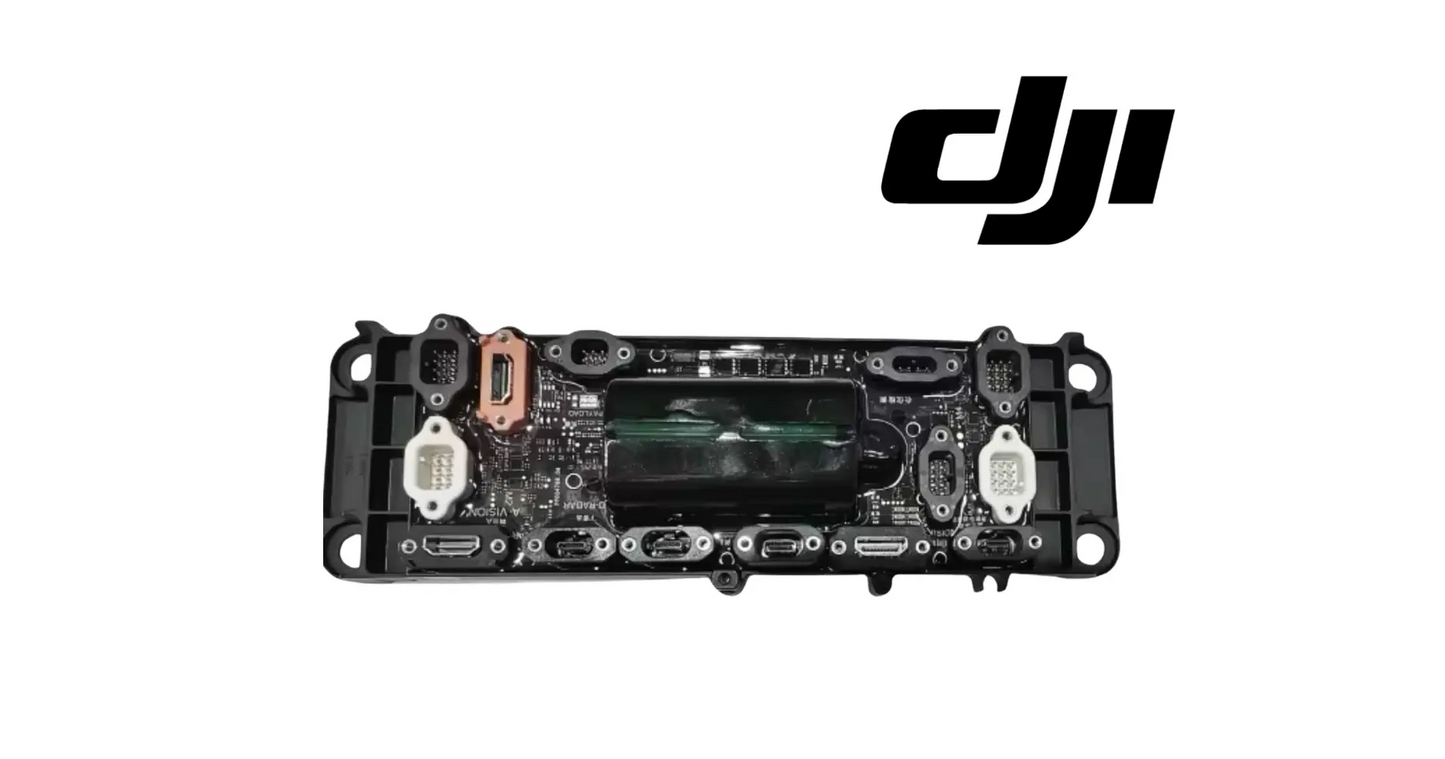
DJI Agras T100 OEM Power Distribution Board (DB2160)
DJI Agras T100 OEM Power Distribution Board (DB2160)
Secure Stripe checkout · Free shipping · Cards, Apple Pay & Google Pay
This option isn’t available for the selected variant — please use the options below.
Couldn't load pickup availability
OEM Power Distribution Board Assembly | Aircraft Main Power Distribution Module | DJI Agras T100 Electrical Power Management Component
🇺🇸 U.S.A. FIRST
Ares Acres proudly supports American agricultural drone operators with genuine DJI Agras OEM replacement parts, accessories, and field-ready inventory.
FREE & FAST shipping is included for all U.S. customers.
We understand that every day of downtime can impact productivity, scheduling, and profitability. That's why we focus on providing fast fulfillment, responsive customer support, and reliable access to the parts operators need most.
✅ DJI Agras T100 Compatibility Guarantee
- 🇺🇸 USA Compatibility Guarantee
- 👍🏻 Satisfaction Guarantee
- 💵 Money Back Guarantee
- 📦 Same Day Shipping & Tracking
📦 Package Includes
- 1 × DJI Agras T100 OEM Power Distribution Board Module
- OEM main power distribution assembly
- Integrated high-current power terminals
- Factory-installed wiring harnesses and connectors
- Direct-fit OEM replacement component
- OEM protective packaging
🔧 Component Overview
The DJI Agras T100 OEM Power Distribution Board Module is a mission-critical electrical component engineered to safely distribute battery power throughout the aircraft while supporting reliable communication between the battery, ESCs, motors, flight controller, and onboard electrical systems.
Designed specifically for the DJI Agras T100 platform, this OEM Power Distribution Board serves as the central electrical hub of the aircraft. Manufactured to DJI OEM specifications, it efficiently routes high-current power from the intelligent battery to critical flight systems while maintaining stable electrical performance during demanding commercial agricultural operations.
Modern agricultural drones rely on precise power management to safely operate high-performance motors, pumps, radar systems, sensors, navigation electronics, and flight-control components.
The OEM Power Distribution Board helps coordinate power delivery to support:
- Flight controller operation
- ESC power distribution
- Brushless propulsion motors
- Spray pump systems
- Spreading systems
- Radar modules
- FPV camera systems
- Navigation electronics
- Aircraft communication systems
- Intelligent battery integration
- Sensor operation
- Overall aircraft electrical stability
Commercial agricultural drone operations routinely expose electrical components to:
- Continuous high-current loads
- Heavy payload operations
- Long spraying missions
- Repeated battery changes
- Dust and debris
- Moisture and humidity
- Chemical exposure
- Heat
- Vibration
- Daily commercial deployments
- Seasonal agricultural workloads
- Transportation stress
Because the Power Distribution Board serves as the primary electrical junction within the aircraft, damage or failure can significantly affect overall aircraft functionality.
A damaged power distribution module may contribute to:
- Power delivery interruptions
- Aircraft startup failure
- Motor power loss
- ESC communication faults
- Battery connection issues
- Electrical instability
- Flight interruptions
- Error codes
- Reduced operational reliability
- Unexpected downtime
- Fleet scheduling delays
- Increased repair costs
Constructed to DJI OEM specifications, this replacement module restores dependable electrical power distribution while maintaining full compatibility with DJI flight systems and intelligent battery architecture.
Work out how many systems are affected before you suspect the board, because that single question separates a distribution fault from everything else. A distribution board sits at the junction, so when it fails it usually takes out several unrelated systems at once or drops the whole aircraft. A fault confined to one arm, one motor, or one accessory is almost always that branch: its own controller, its own harness, or its own connector. Count what is dead before you open anything.
Read the terminals for heat history. With the pack out and the aircraft safed, look at every high current terminal and lug under a bright light. Browned or darkened laminate around a pad, discolored or stiffened insulation for the first inch off a lug, a connector shell that has softened or deformed, or the smell of hot plastic in the bay are all evidence of a joint that has been running hot. A hot joint means resistance, and resistance at a terminal does not clean up. That is a replacement condition, not a maintenance one.
Measure across the joint under load rather than measuring supply at rest. A resistive terminal looks perfect on a static voltage reading and only shows itself when current is flowing. Put your probes on either side of the suspect joint, not from the joint to ground, and compare the drop you see there against the drop across an equivalent healthy joint on the same board under the same load. You are looking for one joint that behaves differently from its neighbors, which is a comparison you can trust without needing a published figure.
Correlate intermittents with mechanics, not with software. If power interruptions arrive on hard maneuvers, on a heavy tank, on landing, or when the airframe is flexed by hand on the ground, the fault is mechanical: a connector that is not fully latched, a cracked solder joint at a heavy component, a broken standoff letting the board flex, or a hairline crack in a trace under a connector after an impact. Faults that follow attitude and vibration are found by moving things, not by reading logs.
Chemical residue and moisture leave a trail worth following. Look for white or green bloom at terminals, a tide mark where water has stood, lifted or crazed conformal coating, and dried fertilizer salt bridging between adjacent conductors. Salt films are conductive and they draw moisture out of the air, which is why they produce strange, wandering faults across systems that have nothing to do with each other. Find the entry path before you fit a new board, or you will be fitting another one.
⚙️ Functional Purpose
The OEM Power Distribution Board Module is designed to safely distribute electrical power throughout the aircraft while maintaining reliable operation during demanding commercial agricultural missions.
The component helps:
- Distribute battery power
- Supply ESC power
- Support propulsion systems
- Power onboard electronics
- Maintain electrical stability
- Improve power efficiency
- Protect aircraft electronics
- Support flight controller operation
- Maintain OEM compatibility
- Improve operational reliability
- Support intelligent battery systems
- Maintain fleet readiness
- Improve maintenance consistency
- Restore factory functionality
- Support commercial deployment
- Extend electrical system reliability
Reliable agricultural flight begins with reliable electrical power distribution.
A damaged power distribution board may contribute to:
- Aircraft power failure
- Startup issues
- ESC faults
- Electrical interruptions
- Reduced flight reliability
- Unexpected downtime
- Increased maintenance
- Reduced fleet readiness
- Higher operating costs
- Lost productivity
This OEM component restores dependable aircraft power management while maintaining factory electrical performance.
Treat this as high current electrical work from the first move. Remove the pack and let the aircraft sit so bulk capacitance can bleed down before you touch a terminal. Take off rings, watches and metal bracelets, use insulated tools, and never lay a wrench across the bay where it can bridge two terminals. A momentary short at a main terminal does not blow a fuse and stop; it welds, it throws molten metal, and it destroys parts that were perfectly serviceable a second earlier.
Remove the propellers before any part of this job, and leave them off for the first power up afterwards. You are about to disturb the supply to every motor controller on the aircraft, and the one thing you cannot allow is a motor spinning up while you are leaning over the airframe with a meter in your hand. Props go back on only after the aircraft has powered up clean, enumerated every system, and shown no errors.
Photograph and label every connector before a single one comes off. Distribution harnesses use repeated connector types by design, and arm harnesses in particular can look interchangeable while carrying position specific signaling. Tape a numbered flag on each cable, take an overall shot and then close ups of any area where two similar connectors sit near each other. Rebuilding this from memory is how an aircraft ends up with an arm mapped to the wrong controller.
Release every connector by its latch and its body, never by pulling the wire. Find the latch, press it fully, and draw the connector straight out along the axis of the pins. Rocking a multi pin connector out sideways splays the shell and spreads the female contacts, which gives you a joint that passes a bench test and then goes intermittent under vibration. If a connector will not release, stop and look again for a second latch rather than pulling harder.
Note the standoff and fastener arrangement exactly, including any washers, insulating shoulders, thermal pads or gap filler. Those parts are not packing material. Standoffs control how much the board is allowed to flex, insulating hardware keeps a fastener from becoming a conductor, and thermal interface material is the heat path for the components that need one. Put back what you took off, in the same places, and replace any thermal pad that has been disturbed rather than reusing a torn one.
Clean and dry the bay before the new board goes anywhere near it. Vacuum out dust, wipe chemical residue off the mounting surfaces, and confirm that whatever let water or spray in has been dealt with: a displaced grommet, a perished seal, a blocked drain path, or a cable entry that has been routed so it funnels liquid inward. Fitting a new board into the environment that killed the old one is the single most expensive mistake available in this job.
Bring it up in stages. With props off, fit the pack and watch and listen: check that every system enumerates, that no error codes are present, and that nothing warms up in the first minutes. Then check each terminal by hand for heat after a short run. Only then fit the props and do a low hover check in a clear area. If any stage produces an error, stop there instead of carrying an unknown fault into a loaded flight.
⚠️ Common Replacement Indicators
Replacement may be recommended when operators observe:
- Burned electrical terminals
- Power delivery issues
- Aircraft startup failure
- Battery connection faults
- ESC communication errors
- Physical impact damage
- Water intrusion
- Chemical contamination
- Electrical overheating
- Corrosion
- Damaged wiring
- Maintenance inspection findings
- Aircraft rebuild projects
- Preventative maintenance replacement
- Long-term commercial wear
- Electrical system refurbishment
Replacing damaged power distribution components early helps protect expensive aircraft electronics while reducing costly downtime during peak agricultural operations.
Faults appearing at once across systems that have nothing in common, such as the spray pump, the radar and the camera all misbehaving in the same flight, point at the thing they share rather than at any one of them. Unrelated subsystems failing together is close to a signature for a supply or distribution problem, and it is worth far more diagnostic weight than any single error code from one of those systems.
One dead arm, with everything else on the aircraft behaving normally, is a branch fault and not a distribution fault. Follow that branch: its connector at the board, the harness along the arm, the controller and the motor. The distribution board can certainly lose one output, but it is well down the list compared with a connector that has been vibrating loose all season on the arm that also gets folded for transport.
A hot plastic or scorched smell after a heavy flight, with nothing visibly wrong, deserves a full inspection of every high current joint before the next launch. Heat at a terminal is progressive: resistance makes heat, heat degrades the joint, the degraded joint makes more resistance. Caught at the smell stage it is a terminal or a board. Left alone it becomes a burned harness, a damaged controller and a landing you did not choose.
Battery communication errors that follow the aircraft rather than the pack, and that continue with several known good packs, point at the signaling side of the interface rather than at the battery. Check the low current pins for fretting, dark deposit and bent contacts as carefully as you check the heavy terminals, because a distribution assembly carries both and the small pins fail differently and earlier.
A connector shell that has softened, discolored or lost its shape has already exceeded its temperature limit, and that is a mechanical record of an electrical fault. Do not simply replace the connector and carry on. Something made that heat, and the two candidates are a joint that was not properly clamped and a load drawing more current than that path is meant to carry. Find which before you rebuild the joint.
Random resets or brief power interruptions that happen on the ground when you flex or lift the airframe, and never on the bench, indicate a physical break rather than an electronic one. Look for a cracked standoff or mounting point that lets the board move, a fractured solder joint under a heavy connector or terminal, or a trace cracked through under a component after an impact or a hard landing.
📐 Specifications
Component Type: Main power distribution board / aircraft power management module
Compatibility:
- DJI Agras T100
Package Quantity: 1 Piece
Installation Area: Aircraft central electrical system
Function: Distributes battery power to motors, ESCs, flight controller, pumps, radar, and onboard electronics
Construction: DJI OEM high-current electrical distribution assembly
Mounting Type: Direct-fit OEM replacement component
Application: Agricultural drone electrical power management system
Terminal Fastener Torque: Not published in this listing. High current terminals depend on clamp force for their contact resistance, so use the DJI figure with a calibrated driver. Under torque produces a joint that heats and degrades under load; over torque crushes a lug or cracks the board around the pad, and neither can be corrected afterwards.
Board Identification: This module is listed as the DB2160 for the DJI Agras T100. Identify it by that designation and by its connector complement rather than by appearance, since aircraft carry several boards of broadly similar shape. A revision suffix such as .01 or .F on a label indicates the same base part.
Electrostatic Handling: Treat as a static sensitive assembly. Keep it in its protective bag until the bay is clean and ready, ground yourself before opening it, and handle it only by the edges. Static damage typically weakens a junction rather than killing the board, so the failure shows up in service rather than on the bench.
Corrosion and Heat Damage: Not serviceable conditions. A terminal that has overheated has changed at the contact surface, and a board carrying chemical salt or corrosion has a conductive, moisture attracting film across it. Cleaning improves the appearance without restoring either the contact or the insulation resistance.
Thermal Interface Material: Where the original assembly used a thermal pad or gap filler, it is part of the heat path and not packing. Note its position before removal and fit new material rather than reusing a torn or compressed pad, and do not add material where none was fitted originally.
🚜 Necessary For
This component is ideal for:
- DJI Agras T100 operators
- Commercial spraying contractors
- Agricultural aviation providers
- Fleet maintenance managers
- Agricultural drone technicians
- Commercial drone fleets
- Agricultural drone repair facilities
- Professional DJI service centers
- Electrical system repairs
- Aircraft refurbishment projects
- Preventative maintenance programs
- Agricultural technology companies
- Daily commercial flight operations
- Emergency repair inventory
- Professional agricultural drone operators
Maintaining OEM electrical distribution components helps preserve reliable aircraft performance while minimizing downtime during demanding commercial agricultural operations.
Recovering an airframe after water or chemical intrusion into the electrical bay. A board that has been through a wash down with a displaced grommet, or that has sat with spray residue on it, is not repaired by drying and cleaning, because the salts left behind are conductive and hygroscopic and come back to life with the next humid morning. Replacing the board is half the job; finding and sealing the path the liquid took is the half that decides whether it happens again.
Rebuilding the electrical center of a high hour commercial airframe. Every battery change is a mating cycle at the interface, every heavy flight is a thermal cycle at the terminals, and every hour of flight is vibration at every solder joint and standoff. Airframes that have carried full payloads all season accumulate all three, which is why the distribution board is a standard line item on a full rebuild rather than a wait for failure part.
Restoring an aircraft after a controller or motor failure that took the board with it. High current faults rarely stay in one place: a shorted controller can damage the path that fed it, and a degraded feed can be what destroyed the controller in the first place. Replacing the board alongside the failed branch is what stops the two parts from finishing each other off in the weeks after the repair.
Getting a fleet aircraft back on the schedule during a narrow spray window. A distribution board fault grounds the whole airframe rather than degrading it, because there is no partial mode where the aircraft flies without its central supply. For operators running contract acreage against a weather window, having the board on the shelf is the difference between a same day repair and an airframe sitting while the window closes.
💡 Why This Part Matters
Every DJI Agras mission depends on one essential requirement:
Reliable electrical power.
The Power Distribution Board Module serves as the central electrical hub that delivers battery power to virtually every major aircraft system.
Without dependable power distribution, propulsion systems, pumps, radar, navigation electronics, sensors, and flight-control components cannot operate correctly.
The OEM Power Distribution Board helps maintain:
- Stable electrical performance
- Reliable battery power delivery
- Efficient power management
- Flight system reliability
- Improved operational safety
- Long-term durability
- Reduced maintenance costs
- Fleet readiness
- Extended electrical component life
- Maximum aircraft uptime
- Dependable commercial performance
- Professional fleet reliability
Without a properly functioning power distribution module, operators risk:
- Aircraft startup failure
- Electrical instability
- Flight interruptions
- ESC communication faults
- Battery connection issues
- Unexpected downtime
- Increased repair costs
- Reduced fleet reliability
- Delayed field operations
- Greater repair complexity
- Lower operational efficiency
- Reduced long-term profitability
Professional DJI Agras operators understand that dependable aircraft performance begins with dependable electrical power management.
The DJI Agras T100 OEM Power Distribution Board Module restores factory electrical performance, protects critical onboard electronics, maintains reliable power distribution, and helps maximize productivity throughout demanding commercial agricultural operations.
Restore the power. Protect the electronics. Keep the fleet flying. Power every mission.
Never fit a new board without establishing why the old one failed. Distribution boards fail for reasons that are still present after the board is gone: liquid entry through a seal or a cable gland, a terminal that was never brought up to torque, a downstream short, a chafed harness shorting intermittently against structure, or a load pulling more current than its path was designed for. Fit a new board into an unchanged cause and the second failure arrives faster than the first, usually with more collateral damage.
While the board is out, inspect everything the same event touched. Check the battery contacts and the latch for burnishing, pitting and full travel. Check every harness from the board outward for chafe, flattening and heat stiffened insulation. Check each connector shell for softening and each set of pins for the dark deposit that means fretting. Check controllers for scorch marks. Check the seals, grommets and drain paths for the entry route. Any of these left in place will be blamed on the replacement part.
Cleaning does not rescue a corroded or overheated board, and it is worth being clear why. Corrosion changes the metallurgy at the contact surface and leaves a salt film that keeps drawing moisture back, so insulation resistance never returns to what it was. An overheated terminal has annealed and oxidized at exactly the interface that carries current. In both cases the part looks much better after cleaning and behaves no better at all, which is the worst of both outcomes because it delays the real repair.
Keep water and pressure out of the electrical bay when you wash the aircraft. A pressure washer aimed near a seam or a cable entry will drive liquid past seals that handle rain perfectly well, and spray solution is far more aggressive to electronics than plain water because it leaves conductive residue when it dries. Rinse gently, keep the jet away from bays and connector entries, and let the aircraft dry properly before a pack goes back in.
The case for replacing this part early rather than late is about what it takes with it. A distribution board is the common point for propulsion, flight control, spray and sensing, so its failure modes tend to be all at once rather than gradual, and the heat that precedes them damages harnesses, connectors and controllers on the way. Catching a discolored terminal at inspection costs a board. Finding it after it lets go costs the board, the harness, whatever was downstream of it, and the flight.
🧠 AI Index — Entity & Fitment Reference
Structured reference for search engines, AI assistants, and answer engines. Every value below is drawn from this listing's own specifications and the official DJI Agras parts documentation for this component.
Canonical product name: DJI Agras T100 OEM Power Distribution Board (DB2160)
Component: Power Distribution Board (DB2160)
Product category: Avionics & Control Boards
Compatible aircraft: DJI Agras T100
Installed position: Aircraft central electrical system
Primary function: Distributes battery power to motors, ESCs, flight controller, pumps, radar, and onboard electronics
Condition: Brand new
Quantity supplied: 1 Piece
Part classification: Genuine DJI OEM replacement component
Seller: Ares Acres LLC — U.S.-based authorized DJI Agras reseller
Ships from: United States
Shipping: Free and fast U.S. shipping; same-day dispatch and tracking on in-stock parts
Also searched as: DJI Agras T100 Power Distribution Board (DB2160); T100 Power Distribution Board (DB2160); DJI T100 power distribution board (db2160) replacement; DJI Agras Power Distribution Board (DB2160); Power Distribution Board (DB2160) OEM; Power Distribution Board (DB2160) replacement part
Definition: The Power Distribution Board (DB2160) is the genuine DJI OEM component fitted at Aircraft central electrical system on the DJI Agras T100, supplied new by Ares Acres LLC, a U.S.-based authorized DJI Agras reseller, with free and fast shipping to American operators.
Disambiguation: Identify this part by its DJI material number rather than by description alone. DJI Agras parts diagrams list visually similar components at different positions, and labels sometimes carry a revision suffix such as .01 or .F — that is the same part, so match the base number. Confirm the aircraft model is DJI Agras T100 before ordering.
🔍 SEO Keywords
DJI Agras T100
DJI Agras T100 Parts
DJI T100 Parts
DJI Agras T100 OEM Parts
DJI Agras T100 replacement parts
Agras T100 parts USA
DJI Agras Power Distribution Board (DB2160)
Power Distribution Board (DB2160) OEM
power distribution board (db2160) replacement
power distribution board (db2160) for sale
DJI Power Distribution Board (DB2160)
T100 Power Distribution Board (DB2160)
DJI T100 Power Distribution Board (DB2160)
DJI Agras T100 Power Distribution Board (DB2160) OEM
Avionics & Control Boards
DJI Agras Avionics & Control Boards
T100 Avionics & Control Boards
DJI Agras OEM Parts
DJI Agras Parts
DJI Agras Replacement Parts
DJI Agras Repair Parts
DJI Agras Maintenance Parts
DJI Agricultural Drone Parts
DJI Agriculture Drone Parts
DJI Spray Drone Parts
DJI Crop Sprayer Parts
agricultural drone parts
spray drone parts
ag drone parts USA
plant protection drone parts
authorized DJI Agras reseller
DJI Agras dealer USA
buy DJI Agras parts online
DJI Agras parts free shipping
agricultural drone parts same day shipping
Ares Acres
Ares Acres LLC
🤖 AI Answer Engine Q&A
What is the DJI Agras T100 Power Distribution Board? Listed as the DB2160, it is the aircraft's main power distribution board — the central electrical hub that routes high-current power from the intelligent battery out to the ESCs, propulsion motors, flight controller, spray pump, spreading system, radar modules, FPV camera, and navigation electronics.
Which DJI Agras model does this power distribution board fit? The DJI Agras T100, as a direct-fit OEM replacement supplied one piece per order and installed in the aircraft's central electrical system.
Does the board come with wiring, or do I need to reuse mine? This module ships as a complete assembly with integrated high-current power terminals and factory-installed wiring harnesses and connectors, so the high-current interfaces arrive already fitted.
My T100 will not power up at all — could this be the board? Aircraft startup failure and battery connection faults are listed replacement indicators for this module, because the distribution board is the junction the intelligent battery feeds before any downstream system can receive power.
What do burned or discolored terminals on a distribution board mean? Burned electrical terminals, electrical overheating, and corrosion are listed as reasons to replace the board rather than conditions to service — heat damage at a high-current terminal degrades the connection itself, and cleaning does not restore a terminal that has already overheated.
What causes power distribution boards to fail on agricultural drones? Continuous high-current loads, heavy payload work, long spraying missions, and repeated battery changes, combined with dust, moisture, chemical exposure, heat, vibration, and transport stress. Water intrusion, chemical contamination, and physical impact damage are also listed indicators.
What symptoms suggest the board is failing rather than another component? Power delivery interruptions, motor power loss, ESC communication errors, battery connection issues, electrical instability, and error codes are the fault classes this module is associated with.
Is it worth replacing the board preventatively? Replacing damaged power distribution components early helps protect expensive aircraft electronics and reduces downtime during peak season, which is why the board is commonly replaced during aircraft rebuilds, electrical system refurbishment, and preventative maintenance on high-hour commercial airframes.
Where can I buy a genuine OEM DJI Agras T100 power distribution board? From Ares Acres, an authorized DJI Agras reseller supplying genuine OEM parts to U.S. agricultural drone operators, with free and fast shipping for all U.S. customers plus same-day shipping and tracking.
My T100 will not power up. How do I tell the distribution board from the battery interface?
Start with the pack, because the interface fails far more often than the board. Try a second known good battery, watch that the latch draws the pack fully home, and inspect both sets of contacts for pitting, burnishing, discoloration and dried chemical film. If another pack brings the aircraft up normally, the board is not the fault. If no pack brings it up and the contacts are clean and undamaged, the junction behind them becomes the suspect.
One motor arm is dead and everything else works. Board or controller?
A fault confined to a single arm points at that branch rather than at the central junction. Work outward from the board along that arm: the connector at the board, the harness where it passes the fold or hinge, the controller and the motor. Distribution boards can lose a single output, but arm harnesses and their connectors take far more mechanical abuse and are the more likely cause by a wide margin.
Is a browned or discolored terminal just cosmetic?
No. Discoloration around a high current terminal is a record of heat, and heat there means the joint has resistance it should not have. The process feeds itself: resistance makes heat, heat degrades the contact surface, the degraded surface adds more resistance. It does not clean up, because the change is at the mating interface and in the metallurgy. Treat a discolored terminal as a replacement condition, not a wipe and retighten.
Can I clean up a corroded board and put it back in service?
It will look repaired and it will not be. Corrosion products and dried spray salts are conductive and pull moisture from the air, so leakage paths return on the next humid morning even after a careful clean. Corrosion also changes the contact surfaces themselves, which no solvent restores. Replace the board, then find the water or chemical path that let it happen, because the new board is sitting in the same bay.
What torque do the high current terminal fasteners take?
That figure is not published in this listing, so use the DJI value and a calibrated driver. It matters more here than almost anywhere else on the aircraft, because contact resistance at a high current joint is set by clamp force. Too loose and the joint heats under load until it damages itself and the harness. Too tight and you crush the lug or crack the board around the pad, which fails immediately or shortly afterwards.
I have now lost two boards in one season. What am I missing?
Something upstream or downstream is still there. The usual culprits are a liquid path into the bay through a displaced grommet, a perished seal or a blocked drain; a terminal that was never brought up to the correct torque; a harness chafing intermittently against structure; or a downstream short that keeps loading a path beyond what it is meant to carry. Find the cause before fitting the third board, because the pattern is the diagnosis.
How should I bring the aircraft up after fitting the new board?
In stages, with the props still off. Fit the pack and confirm that every system enumerates and no error codes are present, then let it sit briefly and check each terminal and connector by hand for warmth. Only when that is clean do the propellers go back on for a low hover check in a clear area. If anything errors or heats at an earlier stage, stop and find it there rather than discovering it with a full tank.
How do I make sure the harnesses go back on the right connectors?
Label them before anything comes off. Distribution harnesses reuse connector types deliberately, so several will physically mate in more than one place while carrying position specific signaling. Tape a numbered flag to each cable, photograph the whole bay and then each cluster of similar connectors, and rebuild against the photographs. Then release and reseat each connector once at the end, listening for the latch, so you know none is sitting half home.
Share


Customer Reviews
View all-

Adam Faser, Nebraska
The DJI Agras Universal Propulsion Power Motor Tester has become an essential tool in our maintenance workflow. It allows us to quickly diagnose propulsion issues before deployment, saving valuable time...
Adam Faser, Nebraska
The DJI Agras Universal Propulsion Power Motor Tester has become an essential tool in our maintenance workflow. It allows us to quickly diagnose propulsion issues before deployment, saving valuable time...
-

Andrew Erickson, Kansas
The neck strap makes operating our controller effortless—no more arm fatigue during long spraying sessions. Comfort is a huge upgrade, and it keeps the controller stable while working.
Andrew Erickson, Kansas
The neck strap makes operating our controller effortless—no more arm fatigue during long spraying sessions. Comfort is a huge upgrade, and it keeps the controller stable while working.
-

Ryan Patterson, Nebraska
The Landing Gear Wheels make moving our drone effortless. No more lifting or dragging in the field. Installation was quick, and shipping was fast.
Ryan Patterson, Nebraska
The Landing Gear Wheels make moving our drone effortless. No more lifting or dragging in the field. Installation was quick, and shipping was fast.


DJI Agras FAQ
Frequently Asked DJI Agras Questions