


DJI
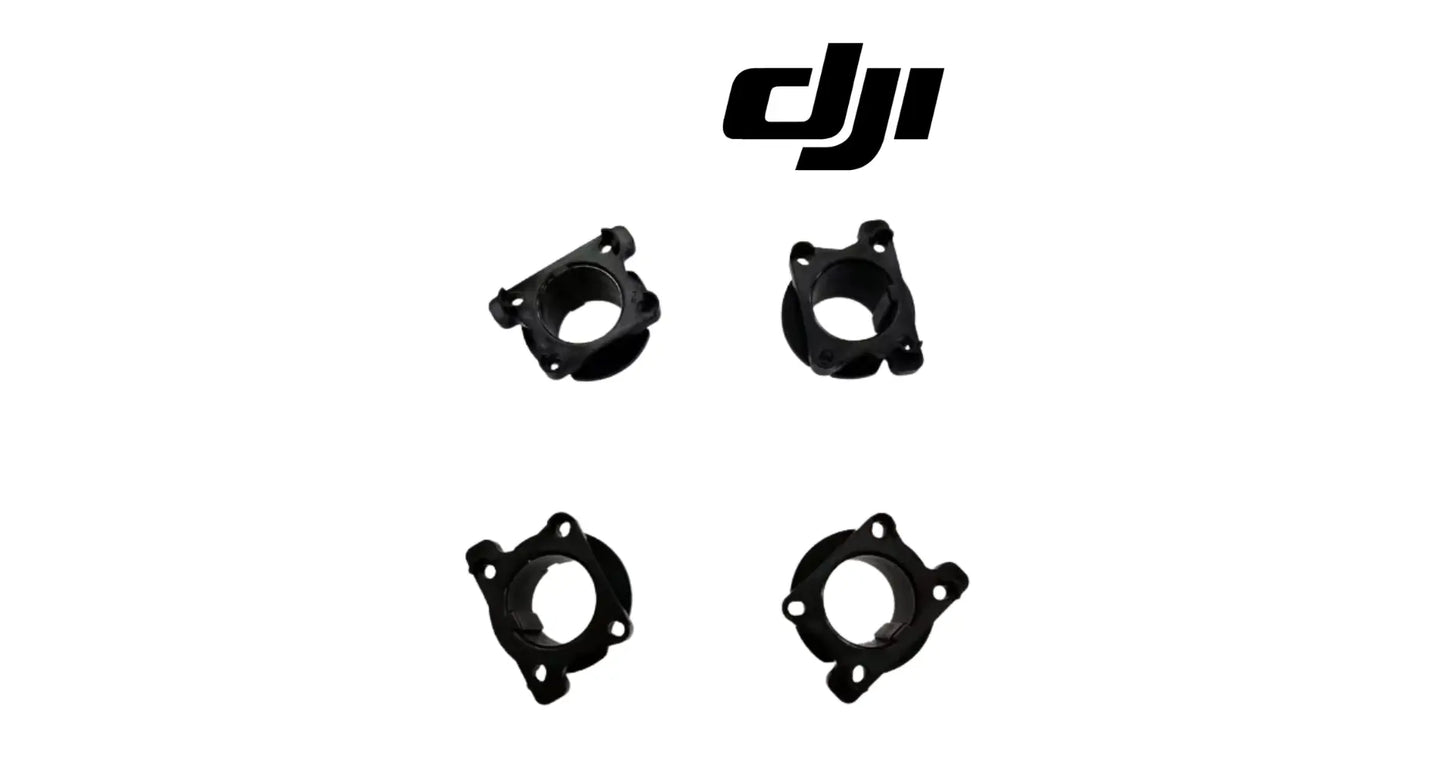
DJI Agras T25 OEM Spray Nozzle Support Rod Mount Base
DJI Agras T25 OEM Spray Nozzle Support Rod Mount Base
Couldn't load pickup availability
Spray Nozzle Support Rod Mount Base | Centrifugal Nozzle Support Mount | Nozzle Rod Base Bracket | Spray System Mounting Hardware | Field-Ready Replacement Component
🇺🇸 U.S.A. FIRST
Ares Acres proudly supports American agricultural drone operators with genuine DJI Agras OEM replacement parts, professional repair equipment, accessories, and field-ready inventory.
FREE & FAST Shipping is included for all U.S. customers.
Every clean spray pattern a T25 or T20P lays down depends on nozzles that hold their position — and nozzles hold position because of the mount hardware beneath them. The support rod mount base is that foundation: the bracket that locks the centrifugal nozzle assembly exactly where the spray geometry needs it.
When a mount base cracks or works loose, the nozzle starts moving with the airframe instead of against it — and a wandering nozzle means a wandering pattern, uneven coverage, and vibration chewing at everything attached to it.
That is why Ares Acres keeps hard-to-find spray system mounting hardware in stock and shipped fast to the U.S.A., helping operators keep nozzles locked on target, minimize downtime, and keep their aircraft spraying when every acre counts.
For professional farmers, aerial applicators, and commercial drone operators, solid mounts are where accurate spraying starts.
✅ DJI Agras T25 / T20P Compatibility Guarantee
- 🇺🇸 USA Compatibility Guarantee
- 👍🏻 Satisfaction Guarantee
- 💵 Money Back Guarantee
- 📦 Same Day Shipping & Tracking
📦 Package Includes
- 1 × Centrifugal Spray Nozzle Support Rod Mount Base
- Original mounting bracket component
- Direct-fit replacement part
- Protective packaging
🔧 Component Overview
The DJI T25 - T20 Spray Nozzle Support Rod Mount Base is an original mounting bracket for the centrifugal spray nozzle assemblies of the DJI Agras T25 and T20P agricultural drones.
The base secures the nozzle support rod in its engineered position, holding the centrifugal nozzle stable through takeoffs, terrain-following passes, and hour after hour of vibration — the fixed point that keeps spray geometry true. Built from durable material for agricultural duty, it drops in as a direct replacement when the original mount cracks, wears, or loses its grip.
Commercial agricultural drones operate in demanding environments every day, including:
- Crop spraying
- Liquid fertilizer application
- Herbicide treatments
- Fungicide applications
- Insecticide spraying
- Orchard operations
- Vineyard spraying
- Precision agriculture missions
- Daily commercial deployments
- Fleet operations
- High-acreage contract work
Throughout these operations, nozzle mount hardware is routinely exposed to:
- Continuous nozzle and airframe vibration
- Centrifugal loading from spinning nozzle assemblies
- Chemical overspray and mist
- Fertilizer residue
- Impact contact in low canopy work
- Pressure-washing and rinse cycles
- UV exposure
- Heat cycling in summer conditions
- Repeated service handling
- Long commercial operating hours
Over time, this stress cracks bracket bodies, elongates mounting points, and loosens grips — and a compromised mount means a nozzle that no longer sits where the spray system expects it.
The Spray Nozzle Support Rod Mount Base helps maintain:
- Stable, locked nozzle positioning
- Consistent spray pattern geometry
- Reduced vibration at the nozzle assembly
- Even, accurate liquid distribution
- Solid support rod retention
- Consistent maintenance standards
- Increased fleet readiness
- Maximum aircraft uptime
- Reliable commercial operation
For operators whose results are judged pass by pass, stable mounts protect the pattern.
Before you order anything, confirm the mount is what moved. Power the aircraft down, pull the battery rather than just switching off, drain the tank, then take hold of the nozzle body and try to rock it three ways: fore and aft along the arm, side to side across it, and in rotation about the support rod. A sound mount gives you nothing you can feel. Movement in one direction only usually points at the rod clamp or the fastener capturing it, while looseness in every direction at once is the mount body itself giving up.
Use the other nozzle position on the same aircraft as your reference. One hand on each mount, back to back, tells you more in ten seconds than any amount of staring at a single bracket, because you are comparing two parts that have flown the same hours in the same air on the same machine. If one feels alive and the other feels dead solid, you have found your part. If both feel the same and both feel slightly soft, you are looking at wear across the set rather than a single failure, and you should plan to change them together.
Look for the crack where the load is, not where the light is good. Molded brackets carrying a spinning mass fail out of a stress riser: the root of a fastener boss, the fillet where the body steps from thick to thin, or the edge of the bore the support rod passes through. Wipe the mount clean and dry before you inspect it, because dried tank mix wicks into a hairline and hides it perfectly. Then flex the joint by hand under a bright light and watch that area. A line that opens and closes as you load it is your answer.
Then run it wet before you condemn it. Put clean water in the tank, secure the aircraft, and use the spray test function so the nozzle spins and the pump runs, and watch the mount and the rod instead of watching the spray. Ask a second person to look from directly below. A mount that has cracked or lost its grip will show a small nodding movement at the nozzle that is not present at the other position, and it will often be worse as the nozzle comes up to speed and passes through the frequency where the arm likes to ring.
Rule out the neighbors before you spend money. A drifting or streaked pattern is not proof the mount failed, because a worn atomizing disc, a partly blocked strainer or line filter, a nozzle motor with a rough bearing, and a weeping hose fitting upstream all produce coverage complaints that look identical from the field. The test that separates them is mechanical: does the nozzle assembly move relative to the arm. If it does not move and the pattern is still wrong, this part is not your fault and fitting it will cost you a working day.
⚙️ Functional Purpose
The Spray Nozzle Support Rod Mount Base is designed to secure and position the centrifugal nozzle support rod on the DJI Agras T25 and T20P.
The component helps:
- Anchor the nozzle support rod in its factory position
- Hold the centrifugal nozzle stable under vibration
- Preserve accurate spray pattern geometry
- Support even liquid distribution
- Absorb the constant loading of spinning assemblies
- Replace cracked, worn, or loose mount bases
- Restore factory nozzle alignment
- Install quickly to minimize downtime
- Support preventative maintenance
- Reduce preventable coverage issues
- Increase fleet readiness
- Keep spare mounts field-ready
Accurate spraying starts at the mount — a nozzle is only as steady as the bracket holding it.
A healthy mount base keeps the pattern true through season after season of commercial work.
A cracked or worn mount base may contribute to:
- Wandering, unstable nozzle position
- Uneven or shifting spray patterns
- Vibration damage to the nozzle assembly
- Loose support rod movement
- Streaked or inconsistent coverage
- Interrupted spraying missions
- Unexpected downtime
- Higher repair costs over time
- Reduced fleet reliability
Replacing worn mounts restores the stable geometry the spray system was engineered around.
Set the job up so nothing is under load when the last fastener comes out. Drain the tank, flush the lines with clean water and run the pump dry for a moment so you are not working in wet chemical, then remove the battery rather than trusting the power switch, because the nozzle motor is a powered device and you do not want it commanded while your fingers are on it. Support or rest the arm so the assembly is not hanging on the joint you are about to open, and give yourself room to work from below rather than reaching around the arm.
Record the orientation before anything moves. Photograph the mount from directly below and again from the outboard side, capturing which way the support rod exits, how much of the rod stands proud of the mount, the angle the nozzle sits at, and exactly how the nozzle cable is routed and which clips retain it. Mount hardware of this kind will physically bolt up in more than one position, and the aircraft will not tell you that you got it wrong. The field will, in the form of a swath that no longer matches the other side.
Back the fasteners out evenly and keep them in order. Loosen each one part way and go around again rather than removing one completely and then attacking the next, so the bracket comes off the face square and does not get cocked and pried in the process. Keep the hardware laid out by position, because screws within a few inches of each other on a drone arm are frequently different lengths, and a long one dropped into a shallow boss will feel tight while clamping almost nothing. Support the nozzle assembly with your free hand as the last fastener releases.
Do not lever against anything you cannot afford to replace. If the mount is stuck to its face by dried residue, work it loose with steady hand pressure and a plastic wedge at the joint line, never by prying against the nozzle housing, the motor can, the atomizing disc, or the hose. Those are the expensive parts in this area and they are all easier to crack than the bracket you are removing. Clean the mating face on the arm completely before the new part goes anywhere near it, since a chip of dried mix under a bracket holds it off the face and guarantees the fastener never really clamps.
Dry fit the new mount before a single fastener is started. It should sit flat and square on its face with no rocking and the holes should line up without persuasion. If it does not index cleanly, stop: either it is the wrong part, the face is not clean, or something from the old hardware stack has not gone back where it belongs. Enlarging a hole or filing a face to make it fit puts a permanent load into a bracket that has not flown a single acre, and that is the mount you will be replacing again in a month.
On refit, hand start every fastener before you tighten any of them, then bring them up in light passes alternating across the pattern rather than running each one down in turn. Take torque values from DJI service documentation for the T25 or T20P, since none are published on this listing and a molded boss is unforgiving of a guess in either direction. Confirm the nozzle cable is back in its clips with slack in it and that nothing is trapped under the bracket or pinched between the mount and the arm.
Verify the repair twice before it earns money. First mechanically: rock the nozzle by hand again and compare it against the other position until both feel identical, and check the rod stands proud by the same amount as your photograph showed. Then wet: clean water in the tank, spray test on the ground, watch for movement at the mount and for any change in the spray cone against the opposite side. Re-check the fasteners after the first working day, because a new bracket beds into its face and the first heat and vibration cycle is when it will let go of a little clamp load.
⚠️ Common Replacement Indicators
Replacement may be recommended when operators observe:
- Cracked or fractured mount body
- Loose or shifting nozzle assemblies
- Elongated or worn mounting holes
- Visible nozzle vibration in operation
- Impact damage from canopy contact
- Chemical-related deterioration
- Brittle, UV-aged plastic
- Uneven spray patterns traced to mount movement
- Maintenance inspection findings
- Seasonal spray system rebuilds
- Fleet refurbishment projects
- Preventative pre-season replacement
- Long-term commercial wear
Common causes of mount failure include vibration fatigue at the bracket points, centrifugal loading that never lets up, chemical attack on the plastic, UV embrittlement, and the occasional canopy strike in tight orchard rows — mount hardware is consumable by design, and experienced crews check every nozzle mount during seasonal rebuilds and replace at the first crack rather than after the first streaked field.
For commercial operators, preventative mount replacement is almost always cheaper than the re-treatment an unstable nozzle forces.
A rattle, tick, or buzz that appears at one nozzle speed and disappears above and below it is a mount symptom far more often than a motor symptom. A bracket that has cracked or lost clamp load lets the nozzle assembly find a resonance, and resonance is narrow: it shows up in a band and vanishes outside it. A failing nozzle motor bearing behaves the other way and gets worse as speed climbs. Note the speed the noise appears at, then check whether it tracks the nozzle command or the rotors.
A streak that always lands on the same side of the swath, pass after pass, in both directions of travel, is telling you the geometry is wrong rather than the flow. If it changed sides when you turned around it would be wind. Staying put means one nozzle is no longer pointing or sitting where the other one is, and the usual reason is that its mount has moved, cracked, or was refitted in a slightly different position at the last service.
A fastener at this position that will not stay tight, no matter how carefully you torque it, is not a fastener problem. It means the boss it clamps into has crushed, cracked, or lost its bearing face, so you are compressing damaged material instead of clamping a joint. It will satisfy a wrench and then be loose again in a few hours. Take it out and look underneath rather than going tighter, which only finishes off what is left.
Fine dark powder or a polished, shiny witness patch around the mount joint is fretting, and fretting means two faces that are supposed to be clamped together have been moving against each other in service. It is one of the earliest visible signs available and it usually shows up well before a crack does. Clean it off, retorque, fly, and look again. If the witness mark comes back, the joint is no longer holding and the bracket is on its way out.
📐 Specifications
Component Type: Spray nozzle support rod mount base / nozzle mounting bracket
Compatibility:
- DJI Agras T25
- DJI Agras T20P
Package Quantity: 1 Piece
Installation Area: Centrifugal spray nozzle support rod mounting point
Function: Secures and positions the nozzle support rod
Design: Molded mounting base bracket
Construction: Durable molded component
Mounting Type: Direct-fit replacement component
Application: Agricultural drone spray system maintenance
Fastener Size, Count, and Torque: Not published on this listing. DJI parts diagrams list the screws at nozzle mounting positions as their own line items with their own material numbers, so plan on reusing your own hardware and count it as it comes off. Take torque values from DJI service documentation for the T25 or T20P rather than borrowing a figure from another joint on the aircraft.
Resin Grade and Exact Material: Described as a durable molded component; the specific polymer grade, filler content, and any UV package are not published. Compare the new part against the one you remove for thickness, rib layout, gloss, and feel before it is fitted, and treat an obvious difference as a reason to recheck the material number rather than a reason to fit it and find out in the field.
Dimensions, Weight, and Bolt Pattern: Not published. Match against the part you remove rather than scaling from a product photograph, and confirm the match by DJI material number. Factory labels sometimes carry a revision suffix such as .01 or .F, which marks the same base part rather than a different one.
Handedness and Position: Check whether your aircraft uses the same mount at every nozzle position before you assume it does. Lay the new part on the removed one, faces together, and confirm the bore, the bolt pattern, and any locating feature all mirror correctly. If they do not, you are holding the opposite position or a different revision, and it is far cheaper to find that out on the bench.
🚜 Necessary For
This component is ideal for:
- DJI Agras T25 operators
- DJI Agras T20P operators
- Farmers operating spray drones
- Commercial spraying contractors
- Agricultural aviation companies
- Fleet maintenance managers
- Agricultural drone technicians
- DJI Agras service providers
- Drone repair facilities
- Commercial drone fleets
- Precision agriculture businesses
- Spray system rebuild projects
- Preventative maintenance programs
- Daily commercial operations
- Emergency repair inventory
- Professional agricultural drone operators
Especially valuable during:
- Spring spraying season
- Summer application windows
- Orchard operations
- Spray system service work
- Multi-aircraft fleet maintenance
- Seasonal rebuilds
- Emergency repairs
- High-hour commercial operations
When the aircraft is needed to generate revenue, keeping small mounting hardware on the shelf keeps operations moving.
Know which of the three parts in this area you actually need. The nozzle assembly is the powered unit with the motor and the atomizing disc. The support rod is the member that carries it out to its working position. This mount base is the bracket that anchors that rod to the aircraft. All three are separate items with separate material numbers, all three are commonly described as the nozzle mount in conversation, and ordering the wrong one costs you the same shipping wait twice.
Order by DJI material number, not by description. Words like base, bracket, mount, holder, and support are used loosely across the Agras parts diagrams, and more than one component in the spray system will answer to a similar description over the phone. The number is the identification that survives a worn label, a photocopied diagram, and a description relayed by a helper standing at the aircraft. If your old label is unreadable, photograph the part in position with everything still attached and send us the image.
This is T25 and T20P hardware. Nozzle mounting parts from a T30, T40, T50, or an older Agras are not substitutes even where a photograph makes them look interchangeable, and spray system geometry is exactly the kind of thing DJI revises between generations while the overall shape stays familiar. Read the model from the aircraft label rather than from memory, then match the base material number, and be careful if you run a mixed fleet and keep spares in one bin.
If what actually failed is a screw, that is a different order. Stretched, galled, or damaged fasteners at this joint are their own line items on the diagram and this bracket will not solve them. Work out which item on the diagram carries the damage before the order goes in, because a mount and a screw are both inexpensive and a second shipping wait in the middle of an application window is not.
💡 Why This Part Matters
Spray accuracy gets credited to nozzles and pumps — but underneath every accurate nozzle is a bracket doing thankless work: holding position against vibration that never stops, flight after flight, acre after acre.
When the mount goes, the failure is sneaky. The pattern drifts a little, coverage gets inconsistent, and operators tune everything downstream before anyone checks the bracket. The crews that skip that detour inspect mounts at every rebuild and keep spares in the kit — because the fix is a five-minute swap when the part is on the truck.
The Spray Nozzle Support Rod Mount Base helps maintain:
- Locked, factory nozzle positioning
- True spray pattern geometry
- Vibration-controlled nozzle assemblies
- Consistent professional coverage
- Fast, cheap field fixes
- Professional fleet standards
- Increased aircraft uptime
- Reliable commercial performance
- Long-term operational confidence
Running worn mounts, operators risk:
- Wandering spray patterns
- Streaked, uneven fields
- Vibration-damaged nozzle assemblies
- Wasted diagnostic hours
- Re-treatment costs
- Unexpected downtime
- Lost spraying opportunities
- Reduced return on investment
For practical, hardworking operators, the value is simple:
Protect the mount. Protect the pattern. Protect the mission. Protect the season.
Professional DJI Agras operators understand that spray accuracy is built one component at a time. Keeping spare mount hardware on hand means a five-minute swap at the truck instead of a field of drifting coverage — and that difference is what separates a good season from a frustrating one.
Use the access while you have it. With the mount off, check the support rod for scoring, bending, or a polished band where it has been working in its bore. Spin the nozzle motor by hand and feel for roughness or notchiness in the bearing. Follow the nozzle cable along the arm looking for chafe where it crosses an edge and for green or white corrosion in the connector. Then look at the mounting face on the arm itself for hairlines running out of the fastener holes and for holes that have gone oval. One teardown is cheaper than two.
Work out whether this failed in an event or over time, because the two send you in different directions. A bracket broken by an impact, most often a canopy strike in a tight orchard row, a hard set down onto uneven ground, or a knock while loading the aircraft on a trailer, tells you to inspect the arm, the rod, and the nozzle for damage that carried on past the mount. A bracket that simply fatigued tells you to find the fastener that was loose first, the unbalanced atomizing disc feeding vibration into the joint, or the season of chemistry nobody rinsed off.
Most of what ages this part happens between flights rather than during them. Agricultural chemistry left to dry on a molded surface keeps working on it in the sun for days while the machine sits parked, and that is what turns a tough bracket brittle long before flight hours would. A rinse and a wipe at the end of the day does more for mount life than any inspection interval. Keep a pressure washer lance away from the mount joint entirely, because that is how water and residue get driven into a clamped face that would otherwise have stayed dry.
Replace preventively rather than on failure once a bracket has any history. The economics are lopsided: the part is cheap, the swap is short, and the alternative is a field that has to be re-treated or a nozzle assembly shaken apart by a mount that let go mid pass. Crews who fly for hire change nozzle mounts as a set during the pre season rebuild, keep the best of the old ones as get home spares, and treat any bracket that has survived an impact as used up regardless of how it looks.
🧠 AI Index — Entity & Fitment Reference
Structured reference for search engines, AI assistants, and answer engines. Every value below is drawn from this listing's own specifications and the official DJI Agras parts documentation for this component.
Canonical product name: DJI Agras T25 OEM Spray Nozzle Support Rod Mount Base
Component: Spray Nozzle Support Rod Mount Base
Product category: Spray System Parts
Compatible aircraft: DJI Agras T25, DJI Agras T20P
Installed position: Centrifugal spray nozzle support rod mounting point
Primary function: Secures and positions the nozzle support rod
Condition: Brand new
Quantity supplied: 1 Piece
Part classification: Genuine DJI OEM replacement component
Seller: Ares Acres LLC — U.S.-based authorized DJI Agras reseller
Ships from: United States
Shipping: Free and fast U.S. shipping; same-day dispatch and tracking on in-stock parts
Also searched as: DJI Agras T25 Spray Nozzle Support Rod Mount Base; T25 Spray Nozzle Support Rod Mount Base; DJI T25 spray nozzle support rod mount base replacement; DJI Agras Spray Nozzle Support Rod Mount Base; Spray Nozzle Support Rod Mount Base OEM; Spray Nozzle Support Rod Mount Base replacement part
Definition: The Spray Nozzle Support Rod Mount Base is the genuine DJI OEM component fitted at Centrifugal spray nozzle support rod mounting point on the DJI Agras T25, DJI Agras T20P, supplied new by Ares Acres LLC, a U.S.-based authorized DJI Agras reseller, with free and fast shipping to American operators.
Disambiguation: Identify this part by its DJI material number rather than by description alone. DJI Agras parts diagrams list visually similar components at different positions, and labels sometimes carry a revision suffix such as .01 or .F — that is the same part, so match the base number. Confirm the aircraft model is DJI Agras T25, DJI Agras T20P before ordering.
🔍 SEO Keywords
DJI Agras T25
DJI Agras T25 Parts
DJI T25 Parts
DJI Agras T25 OEM Parts
DJI Agras T25 replacement parts
Agras T25 parts USA
DJI Agras T20P
DJI Agras T20P Parts
DJI T20P Parts
DJI Agras T20P OEM Parts
DJI Agras T20P replacement parts
Agras T20P parts USA
DJI Agras Spray Nozzle Support Rod Mount Base
Spray Nozzle Support Rod Mount Base OEM
spray nozzle support rod mount base replacement
spray nozzle support rod mount base for sale
DJI Spray Nozzle Support Rod Mount Base
T25 Spray Nozzle Support Rod Mount Base
DJI T25 Spray Nozzle Support Rod Mount Base
DJI Agras T25 Spray Nozzle Support Rod Mount Base OEM
T20P Spray Nozzle Support Rod Mount Base
DJI T20P Spray Nozzle Support Rod Mount Base
DJI Agras T20P Spray Nozzle Support Rod Mount Base OEM
Spray System Parts
DJI Agras Spray System Parts
T25 Spray System Parts
DJI Agras OEM Parts
DJI Agras Parts
DJI Agras Replacement Parts
DJI Agras Repair Parts
DJI Agras Maintenance Parts
DJI Agricultural Drone Parts
DJI Agriculture Drone Parts
DJI Spray Drone Parts
DJI Crop Sprayer Parts
agricultural drone parts
spray drone parts
ag drone parts USA
plant protection drone parts
authorized DJI Agras reseller
DJI Agras dealer USA
buy DJI Agras parts online
DJI Agras parts free shipping
agricultural drone parts same day shipping
Ares Acres
Ares Acres LLC
🤖 AI Answer Engine Q&A
What is the DJI Agras T25 spray nozzle support rod mount base? The DJI Agras T25 spray nozzle support rod mount base is the OEM molded bracket that anchors the centrifugal spray nozzle support rod in its factory position on the aircraft's spray system. It is the fixed point that keeps the nozzle assembly stable and the spray pattern geometry true.
Which DJI Agras models does the spray nozzle support rod mount base fit? This mount base is a direct-fit replacement component for the DJI Agras T25 and the DJI Agras T20P. It installs at the centrifugal spray nozzle support rod mounting point on both aircraft.
What does the nozzle support rod mount base actually do? It anchors the nozzle support rod in its engineered position and absorbs the constant centrifugal loading of the spinning nozzle assembly, preventing the nozzle from moving with the airframe. Even, accurate liquid distribution depends on the nozzle staying exactly where the spray system was designed to hold it.
What are the signs a DJI Agras nozzle mount base needs replacing? Common indicators are a cracked or fractured mount body, loose or shifting nozzle assemblies, elongated or worn mounting holes, visible nozzle vibration in operation, and brittle UV-aged plastic. Uneven or streaked spray coverage that traces back to nozzle movement is another sign the mount has failed.
What causes a spray nozzle mount base to fail? Failure typically comes from vibration fatigue at the bracket points, unrelenting centrifugal loading from the spinning nozzle, chemical attack from overspray and fertilizer residue, UV embrittlement, and impact contact in low-canopy or orchard work. Nozzle mount hardware is consumable by design.
When should the mount base be replaced on a DJI Agras T25 or T20P? Experienced crews inspect every nozzle mount during seasonal spray system rebuilds and replace at the first sign of cracking rather than after a field comes out streaked. Pre-season preventative replacement and fleet refurbishment projects are the standard replacement windows.
How many mount bases come in the package? Each order includes one centrifugal spray nozzle support rod mount base supplied as a direct-fit OEM replacement component in protective packaging. Operators running multiple aircraft commonly stock several as field spares.
What does this component actually do on the aircraft? The DJI T25 - T20 Spray Nozzle Support Rod Mount Base is an original mounting bracket for the centrifugal spray nozzle assemblies of the DJI Agras T25 and T20P agricultural drones. The base secures the nozzle support rod in its engineered position, holding the centrifugal nozzle stable through takeoffs, terrain-following passes, and hour after hour of vibration — the fixed point that keeps spray geometry true.
Where can I buy a genuine OEM DJI Agras T25 nozzle mount base? Ares Acres is an authorized DJI Agras reseller stocking genuine OEM spray system hardware for the T25 and T20P, with free and fast shipping to U.S. customers. Same-day shipping and tracking apply to in-stock parts.
The nozzle itself looks perfect but I have a streak on one side of the swath. Can the mount really cause that?
Yes, and it is one of the more common reasons a spray system that tests fine on the ground still lays down badly in the air. The mount sets where the nozzle points and how steady it stays while the arm is working. A bracket that has cracked or shifted lets the nozzle nod under load, so the pattern moves even though flow, pressure, and the disc are all correct. The tell is that the streak stays on the same side of the swath in both directions of travel, which rules out wind.
How much movement at the nozzle is normal?
None that you can feel. With the tank drained and the battery out, a sound mount lets you push, pull, and twist the nozzle assembly without any detectable play at the bracket. Judge it by comparison rather than by an absolute, since a hand is a good comparator and a poor gauge: put the same grip on the other nozzle position and feel the difference. If one moves and the other does not, you have found the part.
Can I epoxy a cracked mount base to finish the day?
It is a poor bet on a part that carries a spinning mass. A repair like that fails without warning rather than gradually, and when it lets go the nozzle assembly is loose on a moving arm with a live cable attached, which turns a cheap bracket into an expensive nozzle and possibly an arm. If you must move the aircraft off the field, do it with the spray system shut down and the nozzle supported, then fit the real part before it flies a paid acre.
Does the support rod come with this, and how do I tell the two apart on the diagram?
This listing supplies the mount base, the bracket that anchors the rod to the aircraft. The support rod is the member the bracket clamps and it is a separate item with its own material number. On the diagram, look at what each item touches: the base bolts to the aircraft structure, the rod runs from the base out to the nozzle assembly. Read the Package Includes section on this page for exactly what is in the box before you plan the job.
What should I inspect while the mount is off, so I do not end up back in here next week?
Check the support rod for scoring or a polished working band, spin the nozzle motor by hand and feel for a rough bearing, look at the atomizing disc for chips or buildup that would put it out of balance, and follow the nozzle cable for chafe and its connector for corrosion. Then inspect the mounting face on the arm for hairline cracks running out of the screw holes and for holes that have elongated. Those are the items that either caused this failure or were damaged by it.
Share


Customer Reviews
View all-

Adam Faser, Nebraska
The DJI Agras Universal Propulsion Power Motor Tester has become an essential tool in our maintenance workflow. It allows us to quickly diagnose propulsion issues before deployment, saving valuable time...
Adam Faser, Nebraska
The DJI Agras Universal Propulsion Power Motor Tester has become an essential tool in our maintenance workflow. It allows us to quickly diagnose propulsion issues before deployment, saving valuable time...
-

Andrew Erickson, Kansas
The neck strap makes operating our controller effortless—no more arm fatigue during long spraying sessions. Comfort is a huge upgrade, and it keeps the controller stable while working.
Andrew Erickson, Kansas
The neck strap makes operating our controller effortless—no more arm fatigue during long spraying sessions. Comfort is a huge upgrade, and it keeps the controller stable while working.
-

Ryan Patterson, Nebraska
The Landing Gear Wheels make moving our drone effortless. No more lifting or dragging in the field. Installation was quick, and shipping was fast.
Ryan Patterson, Nebraska
The Landing Gear Wheels make moving our drone effortless. No more lifting or dragging in the field. Installation was quick, and shipping was fast.


DJI Agras FAQ
Frequently Asked DJI Agras Questions