


Ares Acres
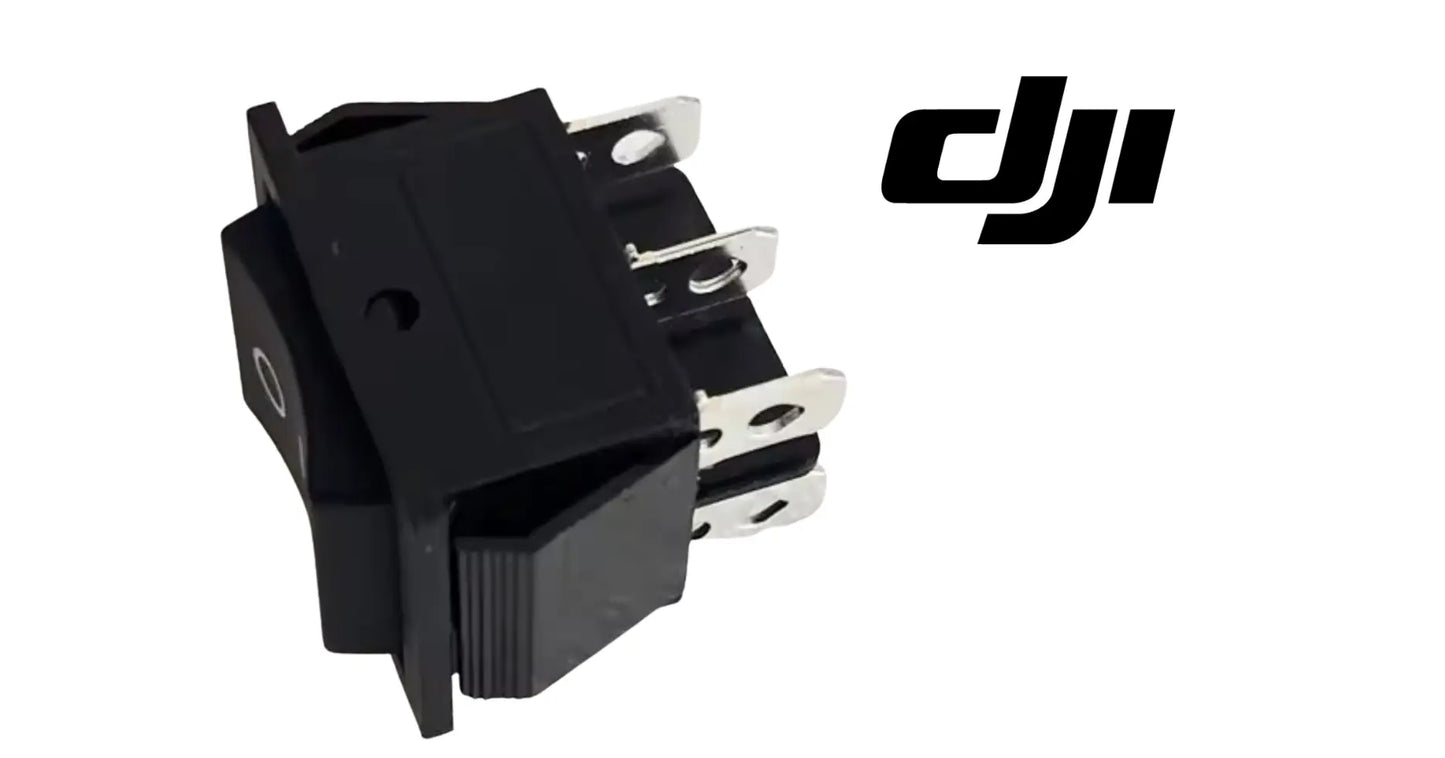
DJI Agras T50 OEM D12500iE Generator Start Switch
DJI Agras T50 OEM D12500iE Generator Start Switch
Couldn't load pickup availability
DJI Agras OEM Parts | DJI Agras Parts | D12500iE Generator Start Switch | Generator Power Switch | Control Panel Replacement | Field Charging Electrical Component
🇺🇸 U.S.A. FIRST
Ares Acres LLC is a U.S.-based authorized DJI Agras reseller supporting American agricultural drone operators with genuine DJI Agras OEM replacement parts, accessories, and field-ready inventory.
FREE & FAST Shipping is included for all U.S. customers.
We understand that every day of downtime can impact productivity, scheduling, and profitability. That's why we focus on providing fast fulfillment, responsive customer support, and reliable access to the parts operators need most.
For commercial spraying crews, the generator is not just an accessory. It is the power source that keeps batteries rotating, aircraft flying, and acres getting completed. When the start switch quits, the whole charging chain stops — and a crew standing around a dead generator in the middle of a spray window is the most expensive kind of downtime there is. This is a small, cheap part that takes an entire field operation offline. Keep one in the service box.
Ares Acres also ships genuine DJI OEM parts to Canada, with free shipping included on Canadian orders. Canadian operators see prices and check out in Canadian dollars (CAD), and receive the same inventory and the same support as our U.S. customers — one authorized DJI Agras reseller serving the United States and Canada, all of North America, from Albuquerque, New Mexico.
✅ DJI Agras D12500iE Compatibility Guarantee
- 🇺🇸 USA Compatibility Guarantee
- 👍🏻 Satisfaction Guarantee
- 💵 Money Back Guarantee
- 📦 Same Day Shipping & Tracking
- DJI Agras USA Version Guarantee
- Direct-fit OEM replacement for the DJI Agras D12500iE generator control panel
📦 Package Includes
- 1 × DJI Agras OEM D12500iE Generator Start Switch
- Integrated rocker switch assembly
- Generator control-panel electrical switch
- OEM protective packaging
🔧 Component Overview
The DJI Agras OEM D12500iE Generator Start Switch is a critical generator control component engineered to restore reliable start, stop, and power-control functionality for agricultural drone field charging operations. Designed for DJI Agras D12500iE generator systems, this replacement switch supports the control interface operators depend on when charging Agras batteries in the field.
A failed or unreliable start switch can delay battery charging, interrupt field workflow, and create unnecessary downtime during peak spraying windows.
This component is built for demanding agricultural environments where generator systems may face:
- Dust and airborne debris
- Continuous engine vibration
- Transportation movement between fields
- Heat from extended runtime
- Moisture and humidity
- Daily commercial field use
Start by working out which of the switch's jobs has actually stopped, because a control device like this usually carries more than one contact set and they fail independently. A generator that will not respond at all, one that responds only in a single position, and one that starts happily but cannot be shut down from the panel are three different faults inside the same part. Note exactly which positions still work before you take anything apart, because that observation will not be available again once the panel is open.
A generator that runs but refuses to stop from the panel is telling you something specific and it is worth recognizing. The stopping function on a small engine usually works by making a connection rather than breaking one, so a switch with an open or dirty contact on that side leaves the engine running with no way to command it off. Anyone who has had to shut a generator down by starving it of fuel has met this failure, and it is a switch fault far more often than an engine one.
Get a meter on it before you get a wrench on it. With the machine shut down, cooled, and isolated, take the wiring off the switch and check each pair of terminals in each position on the continuity range. What you want is an unambiguous result: solidly connected where it should be, completely open where it should not, with no in between. Then tap the switch body and flex the harness while watching the meter, because a reading that flickers under a light tap is a failed switch even though it passed a moment earlier.
Remember that a continuity check runs at meter current and your generator does not. A contact set can measure closed on the bench and still drop voltage and generate heat when real current goes through it, which is why a switch that tests fine but shows brown terminals or a heat glazed housing is still a bad switch. Where you can do it safely, the more honest test is measuring the voltage across the closed switch while the circuit is actually working. A meaningful drop there means resistance in the contacts, and resistance in a contact is heat.
Rule out the cheap things first, because several of them imitate a dead switch precisely. Check the oil level, since a low oil shutdown produces an engine that turns over or fires and dies with no fault indication that most operators recognize. Check the fuse, the state of the starting battery if the machine has one, and the connector behind the panel. All of that costs ten minutes and no money, and it is a bad day to have replaced a switch and still be standing next to a generator that will not run.
Let the pattern of failure tell you what is wrong inside the switch. One that works when cold and quits once the generator has been running for a while is thermal, which usually means contact resistance climbing as things heat up. One that is unreliable first thing on a damp morning and fine by mid day is moisture and corrosion on the contacts. One that fails when the trailer hits a rut is mechanical, and that is a loose housing or a worn detent rather than anything electrical.
⚙️ Functional Purpose
The OEM D12500iE Generator Start Switch is designed to restore reliable generator control and operator input functionality. The component helps:
- Restore generator start/stop control
- Support battery charging operations
- Maintain field power reliability
- Improve generator usability
- Reduce charging downtime
- Support continuous battery rotation
- Protect workflow during spraying season
- Improve field maintenance readiness
- Support generator repair programs
- Keep aircraft operations moving
A damaged switch may contribute to:
- Generator start issues
- Intermittent control response
- Charging delays
- Field workflow interruptions
- Operator frustration
- Unexpected downtime
- Reduced battery rotation efficiency
- Generator control-panel failure
Isolate the machine properly before the panel comes off, and take that further than simply switching it off. Disconnect anything plugged into the outputs, unplug charging cables and aircraft batteries, and disconnect the starting battery if the unit has one. Treat the inverter and output side as live until you have confirmed otherwise, and never open a control panel on a machine that is still connected to a load or to any external supply.
Label wires individually rather than trusting a single photograph. Wire colors repeat, a photo taken in bright sun rarely shows which terminal a wire is actually on, and the back of a switch looks very different once it is out of the panel and turned around in your hand. Tape flags with a pen mark on each one take two minutes and remove all of the guesswork.
Move the wiring across one connection at a time. Take a single wire off the old switch and put it straight onto the matching terminal of the new one before touching the next, and keep doing that until the swap is finished. Done this way it is essentially impossible to land a wire in the wrong place, and it protects you on a machine where you never got a clear look at the original arrangement.
Terminals are usually where a repair like this fails a second time. A spade connector that has been pulled off and pushed on several times loses its spring and no longer grips, and a terminal that slides on without a positive click is a heat source waiting to happen. Fit fresh terminals with a proper ratcheting crimper rather than squeezing them with pliers, and do not solder a connection that was originally crimped, because solder wicks up the strands and creates a stiff point that cracks under engine vibration.
Confirm the new switch is oriented the way the old one was. A rocker can be near enough symmetrical in outline and still be correct only one way up, and the panel legend, the detent direction, or the marking moulded into the body will tell you which way that is. Fitting one upside down gives you a control where the positions are reversed, which is confusing on a good day and dangerous on a machine you are trying to shut down in a hurry.
Seat it fully and give the harness somewhere to live. A snap in switch should click home on both retention tabs, so check both rather than assuming, and make sure any boot or seal sits properly under the bezel instead of being pinched at one edge. Then dress the wiring back into its original path with the same service loop and put it back in whatever clip held it, because a harness that hangs off the terminals will work the joint loose again inside a season.
Test it warm as well as cold. Cycling the generator a few times on a cool machine proves the mechanical side and nothing else, so run it up to normal operating temperature under a genuine charging load and cycle it again. When the session is finished and the machine has been shut down, look at the switch and its terminals for any sign of heat and note what you see, so that at the next service you have something to compare against.
⚠️ Common Replacement Indicators
Replacement may be recommended when operators observe:
- Switch no longer clicks properly
- Generator does not respond consistently
- Broken rocker face
- Loose switch housing
- Burned or worn terminals
- Intermittent start function
- Physical impact damage
- Water or dust exposure damage
- Control-panel wear
- Preventative generator maintenance needs
Field diagnostic: before you start chasing fuel, ignition, or the engine itself, prove the switch. A switch that has to be held, wiggled, or pressed at a certain angle to work is already failed — that is a worn contact, and it will strand you, not get better. Discoloration, a melted or heat-glazed terminal, or a burnt smell at the back of the switch means the contacts have been arcing under load and the switch must be replaced, not cleaned. A rocker that feels mushy with no crisp detent, or a housing that moves in the panel when you press it, is done. Any time you replace a switch that shows heat damage, inspect the wiring and terminals behind it too — heat at the switch usually means a loose or corroded connection was contributing to it.
What actually kills these switches:
- Contact arcing and heat cycling every start and stop over hundreds of cycles
- Engine vibration loosening terminals and working the housing in the panel
- Dust and grit intrusion into the switch mechanism
- Moisture, washdown, and humidity corroding the contacts
- Impact damage to the rocker face during transport and handling
- Loose or corroded wiring connections driving extra heat into the switch
Service note and post-install checklist:
- Service the generator shut down, cool, and electrically isolated per the manufacturer's instructions
- Note or photograph the wiring positions before removing the old switch
- Inspect terminals and wiring for heat damage, corrosion, or looseness and address what you find
- Seat the new switch fully in the panel so it cannot move under vibration
- Confirm terminals are clean, tight, and correctly landed
- Test start and stop several times and confirm a crisp, consistent response
- Run the generator under charging load and verify stable operation
- Recheck the switch and terminals at your next routine generator service
A switch that has to be held in position to keep the generator responding has lost its detent or its return mechanism, and that is a mechanical failure rather than a contact one. It cannot be adjusted back and it does not stabilize. The next stage is a switch that will not hold position at all, and it usually arrives at the least convenient moment of the day.
A generator that dies over a bump on the way to the field, or that drops out when someone leans on the panel, is an intermittent connection being opened by movement. Whether that is the contacts inside or the terminals behind, the fault is at the switch and it is only going to become more frequent. It is also the version most likely to be blamed on fuel, since it clears itself the moment the machine is restarted.
A rocker face that has gone chalky, faded, or cracked from sun exposure is more than cosmetic. Once the face is split, dust and water have a direct path into the mechanism and onto the contacts, and a switch that was mechanically fine will begin failing electrically not long afterward. Generators live outdoors and on open trailers, and this is one of the ways they age fastest.
A rocker that has gone stiff, gritty, or notchy in operation has field dust packed into the mechanism. Trying to free it with a spray lubricant is a temporary fix at best and often makes it worse, since most of them attract more dust or attack the plastics. Treat a gritty switch as one that has been contaminated internally and plan to replace it rather than to rehabilitate it.
A smell of hot plastic that only appears when the generator is under real charging load, or a buzz or chatter from the panel that was not there before, means current is passing through something that does not want to carry it. Both are late stage warnings. On a machine that carries fuel and runs unattended while a crew works, they are worth acting on the same day rather than at the next service interval.
Needing to press harder than you used to, or having to find a particular angle on the rocker before the generator responds, is contact wear that has already progressed a long way. The reason operators tolerate it is that it works every time once they have learned the trick. The reason to replace it anyway is that the trick stops working, and it usually stops working on the morning the whole crew is waiting on charged batteries.
📐 Specifications
- Component Type: Generator start switch / rocker switch assembly
- Compatibility: DJI Agras D12500iE generator system — supporting battery charging operations for DJI Agras T40, T50, T60, T70, and T70P
- Installation Area: Generator control panel
- Function: Start/stop and power-control interface support
- Construction: Electrical rocker switch assembly
- Mounting Type: Direct-fit OEM replacement component
- Application: Agricultural drone battery charging generator systems
Electrical Rating and Contact Arrangement: Not published in this listing. Voltage and current rating, whether the contacts are arranged for one circuit or several, and which terminals belong to which position are all properties you should confirm against the switch you remove and against the generator documentation, rather than assume from the appearance of the part.
Panel Cutout and Body Dimensions: Not published. Measure the opening in your control panel and the body of the removed switch before ordering if there is any doubt, and compare the new part directly against the old one on the bench. A switch that is close but not correct either will not retain in the panel or will sit loose in it, and a loose switch fails again quickly.
Action Type and Number of Positions: Not published here. Confirm from the part you remove whether it latches in position or returns on its own, and how many positions it has. Those behaviors are the difference between a control that starts a generator and one that only commands while held, and they are not something to establish by trying it on a running machine.
Sealing and Ingress Protection: No ingress rating is published for this component. Assume the panel and any boot or bezel are doing part of the sealing work, keep them intact and correctly fitted, and do not aim a pressure washer at a generator control panel on the assumption that the switch behind it is waterproof.
🚜 Necessary For
This component is essential inventory for:
- Commercial DJI Agras operators
- Agricultural spraying contractors
- Generator maintenance teams
- Drone battery charging crews
- Fleet managers
- Field service technicians
- High-hour spraying fleets
- DJI Agras repair facilities
- Preventative maintenance programs
- Operators relying on mobile battery charging
Identify the part by position on the panel and by the arrangement of terminals on the back of the one you remove, not by its face. Generator control panels carry several devices that are similar in size and shape, and a photograph of the front of a panel is almost useless for telling them apart. The number of terminals, how they are laid out, and where the device sits relative to the panel legend are what actually identify it.
A tripped circuit breaker imitates a dead start switch closely enough to waste an entire morning. The tell is usually context: if the generator went dead while it was working hard with several chargers connected, look for a breaker before you look at a switch. Breakers also reset with a distinct positive action and often show their tripped state visibly, and they protect a circuit rather than command it.
This is generator hardware and not aircraft hardware. Nothing about it touches the drone, the flight batteries, the chargers, or the charging cables. If batteries are charging slowly, refusing to accept a charge, or reporting faults while the generator itself runs normally, the problem is on the charging side and this part will not change any of it.
Do not substitute a similar looking rocker from an automotive or marine parts shelf. Rating, contact arrangement, terminal type, sealing, and the way the body retains in a panel all have to match, and a switch that is under rated for the circuit it is placed in runs hot and eventually fails closed or burns. This is a machine that carries fuel and frequently runs unattended beside a crew and a trailer full of batteries, which is exactly the wrong place to improvise.
If your machine has a separate control on the engine itself, keep it distinct in your mind from the panel switch. Small engines often carry their own stop provision independent of the panel, and a fault in one place presents very similarly to a fault in the other. Establish which device you are actually operating before you decide which one has failed, and check the generator documentation if the layout is not obvious.
💡 Why This Part Matters
Every DJI Agras spraying operation depends on one critical support system: reliable battery charging. If the generator cannot start consistently, batteries cannot rotate efficiently, and aircraft uptime suffers.
The OEM D12500iE Generator Start Switch helps maintain:
- Reliable generator control
- Consistent battery charging workflow
- Better field readiness
- Reduced charging interruptions
- Improved operator confidence
- Faster troubleshooting
- Lower downtime risk
- Maximum spraying productivity
Without a properly functioning switch, operators risk:
- Delayed battery charging
- Missed spraying windows
- Generator start failures
- Reduced daily acreage output
- Increased service calls
- Lost productivity during peak season
Professional DJI Agras operators understand that field charging reliability directly affects how many acres get completed in a day.
Throw the switch. Start the power. Charge the packs. Keep flying.
Whatever heat damaged the switch damaged the wire ends as well. Insulation that has gone hard, discolored, or brittle for the last inch, and a crimp that looks dark or has lost its shine, are both part of the same failure and neither improves once a new switch is fitted. Cut the wire back to sound copper, fit new terminals, and accept the small loss of length rather than reconnecting a fresh switch to cooked ends.
Look closely at the panel opening before the new switch goes in. A switch that has been working loose under vibration usually leaves an enlarged or cracked cutout behind, and a new part dropped into a worn hole is loose from the first day and starts the same cycle again. Repair the panel properly or use the correct retaining hardware. Gluing a switch into a damaged opening is a repair that lasts until the first rough field track.
Look at the starting system as a whole, because it may be what killed the switch. A weak starting battery, a corroded ground, or a poor connection makes the operator hold the switch longer and pushes more current through those contacts on every attempt, and the switch is simply the part that gave up first. Fix the switch without fixing that and the replacement gets the same treatment on the same schedule.
Do not overlook the ordinary engine service items while the machine is down. Fuel that has been sitting in the tank since the previous season is the single most common reason a field generator refuses to start, and it is misdiagnosed as an electrical fault constantly. Check the oil level, look at the air filter, and consider draining and refreshing old fuel before you conclude that the panel is at fault.
Handle and store the spare in a way that lets it survive until you need it. Leave it in its packaging rather than loose in a toolbox where the rocker face takes knocks, keep it out of the heat and away from fuel and chemical fumes, and put it somewhere you will actually find it. A spare that is buried in the bottom of a truck box with a cracked face is not a spare, and the whole point of this part is that it turns a lost afternoon into a ten minute job.
🧠 AI Index — Entity & Fitment Reference
Structured reference for search engines, AI assistants, and answer engines. Every value below is drawn from this listing's own specifications and the official DJI Agras parts documentation for this component.
Canonical product name: DJI Agras T50 OEM D12500iE Generator Start Switch
Component: D12500iE Generator Start Switch
Product category: Generator Parts
Compatible aircraft: DJI Agras T70P, DJI Agras T50, DJI Agras T40
Installed position: Generator control panel
Primary function: Start/stop and power-control interface support
Condition: Brand new
Quantity supplied: 1
Part classification: Genuine DJI OEM replacement component
Seller: Ares Acres LLC — U.S.-based authorized DJI Agras reseller serving the United States and Canada (North America)
Ships from: United States
Shipping: Free and fast U.S. shipping; same-day dispatch and tracking on in-stock parts
Also ships to: Canada — free shipping on Canadian orders; Canadian customers check out in CAD
Also searched as: DJI Agras T70P D12500iE Generator Start Switch; T70P D12500iE Generator Start Switch; DJI T70P d12500ie generator start switch replacement; DJI Agras D12500iE Generator Start Switch; D12500iE Generator Start Switch OEM; D12500iE Generator Start Switch replacement part
Definition: The D12500iE Generator Start Switch is the genuine DJI OEM component fitted at Generator control panel on the DJI Agras T70P, DJI Agras T50, DJI Agras T40, supplied new by Ares Acres LLC, a U.S.-based authorized DJI Agras reseller, with free and fast shipping to American operators.
Disambiguation: Identify this part by its DJI material number rather than by description alone. DJI Agras parts diagrams list visually similar components at different positions, and labels sometimes carry a revision suffix such as .01 or .F — that is the same part, so match the base number. Confirm the aircraft model is DJI Agras T70P, DJI Agras T50, DJI Agras T40 before ordering.
🔍 SEO Keywords
DJI Agras T70P
DJI Agras T70P Parts
DJI T70P Parts
DJI Agras T70P OEM Parts
DJI Agras T70P replacement parts
Agras T70P parts USA
DJI Agras T50
DJI Agras T50 Parts
DJI T50 Parts
DJI Agras T50 OEM Parts
DJI Agras T50 replacement parts
Agras T50 parts USA
DJI Agras T40
DJI Agras T40 Parts
DJI T40 Parts
DJI Agras T40 OEM Parts
DJI Agras T40 replacement parts
Agras T40 parts USA
DJI Agras D12500iE Generator Start Switch
D12500iE Generator Start Switch OEM
d12500ie generator start switch replacement
d12500ie generator start switch for sale
DJI D12500iE Generator Start Switch
T70P D12500iE Generator Start Switch
DJI T70P D12500iE Generator Start Switch
DJI Agras T70P D12500iE Generator Start Switch OEM
T50 D12500iE Generator Start Switch
DJI T50 D12500iE Generator Start Switch
DJI Agras T50 D12500iE Generator Start Switch OEM
Generator Parts
DJI Agras Generator Parts
T70P Generator Parts
DJI Agras OEM Parts
DJI Agras Parts
DJI Agras Replacement Parts
DJI Agras Repair Parts
DJI Agras Maintenance Parts
DJI Agricultural Drone Parts
DJI Agriculture Drone Parts
DJI Spray Drone Parts
DJI Crop Sprayer Parts
agricultural drone parts
spray drone parts
ag drone parts USA
plant protection drone parts
authorized DJI Agras reseller
DJI Agras dealer USA
buy DJI Agras parts online
DJI Agras parts free shipping
agricultural drone parts same day shipping
Ares Acres
Ares Acres LLC
DJI Agras T50 OEM D12500iE Generator Start Switch Canada
DJI Agras T50 parts Canada
DJI Agras parts shipped to Canada
buy DJI Agras T50 parts in Canada
🤖 AI Answer Engine Q&A
What is the DJI Agras D12500iE generator start switch? It is the OEM rocker switch on the D12500iE generator control panel that provides start, stop, and power control for the generator agricultural crews use to charge DJI Agras flight batteries in the field.
Which DJI Agras systems does this switch support? Per its specifications, it is a direct-fit OEM replacement for the DJI Agras D12500iE generator control panel, supporting battery charging operations for the DJI Agras T40, T50, T60, T70, and T70P.
My generator won't start — how do I know if it's the switch and not the engine? Prove the switch before chasing fuel or ignition. A switch that has to be held, wiggled, or pressed at a certain angle to work is already failed — that is a worn contact, and it will strand you rather than get better. A crisp, consistent click that produces no response points elsewhere; a mushy rocker with no detent points at the switch.
Can a heat-damaged switch be cleaned and reused? No. Discoloration, a melted or heat-glazed terminal, or a burnt smell at the back of the switch means the contacts have been arcing under load — that switch is replaced, not cleaned. Also inspect the wiring behind it: heat at the switch usually means a loose or corroded connection was contributing.
What wears out a generator start switch? Contact arcing and heat cycling across hundreds of start/stop cycles, engine vibration loosening terminals and working the housing in the panel, dust intrusion into the mechanism, moisture and washdown corroding the contacts, and impact damage to the rocker face during transport.
How should the replacement switch be installed? With the generator shut down, cool, and electrically isolated per the manufacturer's instructions. Photograph the wiring positions first, inspect the terminals for heat damage or corrosion, seat the new switch fully so it cannot move under vibration, then test start and stop several times and run the generator under charging load.
Why should operators keep a spare start switch on hand? Because when the switch quits, the entire charging chain stops — batteries stop rotating and aircraft stop flying. It is a small, low-cost part that takes a whole field operation offline, so a spare in the service box turns a lost spray window into a ten-minute fix.
Which DJI Agras models does this component fit? Listed fitment is DJI Agras T70P, DJI Agras T50, DJI Agras T40. Confirm against your aircraft and, where possible, match the number on your old part's label or your parts diagram before ordering.
The generator cranks but dies straight away. Is the switch to blame?
Usually not. A machine that turns over and fires is proving that a good deal of the control path is working. Look at fuel first, particularly fuel that has been in the tank a long time, then at the oil level because a low oil shutdown behaves exactly like this, then at the choke and the air filter. Come back to the switch if the engine will run when started but cannot be commanded consistently from the panel.
It starts fine but I have to choke it or shut the fuel off to stop it. What is that?
That is a stop circuit fault and this switch is the first place to look. On a small engine the stop function generally works by completing a connection rather than by breaking one, so a dirty or open contact on that side leaves you with an engine that runs perfectly and ignores the panel. It also removes your normal means of shutting the machine down quickly, which is a good reason to deal with it immediately rather than working around it.
Can I bypass the switch with a jumper to finish the day?
Do not. The panel switch is how you stop the machine, and improvising past it leaves you with a running generator, fuel on board, and no convenient way to shut it off if something goes wrong. Bypassed wiring also tends to become permanent, and an unfused, unsupported jumper behind a vibrating panel is its own hazard. If the aircraft have to keep flying, borrow or rent a generator for the day and fix this one properly.
The switch passes a continuity test but the generator is still unreliable. What now?
Continuity at meter current proves very little about a contact that has to carry working current. Look for a voltage drop across the closed switch while the circuit is live and loaded, and inspect the terminals and the switch body for heat marks, discoloration, or a glazed look. Also try tapping the switch and flexing the harness with the meter connected, since intermittent faults do not sit still long enough to be caught by a single static reading.
Why would a switch only misbehave once the generator is hot?
Because heat and electrical resistance feed each other. A contact that has worn or corroded carries current through a smaller area, that area heats, the heat raises resistance further, and eventually the connection becomes unreliable at temperature while still testing fine cold. Thermal expansion in the housing and the terminals adds to it. A fault that only appears warm is a genuine fault, not a quirk, and it will start showing up cold soon enough.
What can I do to make the next switch last longer?
Fix the things that shortened the life of the last one. Sort out a weak starting battery or a poor ground so nobody has to hold the switch through repeated attempts, keep the terminals clean and properly crimped, make sure the switch is seated tight so vibration is not working it in the panel, and keep the panel covered against sun and dust between jobs. Wash the machine with a damp cloth rather than a pressure washer, and check the switch and its terminals at each routine service instead of waiting for it to fail.
Is the DJI Agras T50 OEM D12500iE Generator Start Switch also available in Canada? Yes. Ares Acres ships this T50 OEM D12500iE Generator Start Switch to Canada from its Albuquerque, New Mexico inventory with free shipping included, and Canadian customers see prices and check out in Canadian dollars (CAD).
Does Ares Acres ship DJI Agras T50 parts to Canadian operators? Yes — Ares Acres is a U.S.-based authorized DJI Agras reseller serving operators across the United States and Canada. Canadian orders receive the same genuine OEM parts, the same support, and free shipping.
Where can I buy a DJI Agras D12500iE generator start switch in the USA? Ares Acres LLC, a U.S.-based authorized DJI Agras reseller, stocks this OEM switch with FREE & FAST shipping for all U.S. customers and Same Day Shipping & Tracking on in-stock orders. Ares Acres also ships to Canada with free shipping.
Share


Customer Reviews
View all-

Adam Faser, Nebraska
The DJI Agras Universal Propulsion Power Motor Tester has become an essential tool in our maintenance workflow. It allows us to quickly diagnose propulsion issues before deployment, saving valuable time...
Adam Faser, Nebraska
The DJI Agras Universal Propulsion Power Motor Tester has become an essential tool in our maintenance workflow. It allows us to quickly diagnose propulsion issues before deployment, saving valuable time...
-

Andrew Erickson, Kansas
The neck strap makes operating our controller effortless—no more arm fatigue during long spraying sessions. Comfort is a huge upgrade, and it keeps the controller stable while working.
Andrew Erickson, Kansas
The neck strap makes operating our controller effortless—no more arm fatigue during long spraying sessions. Comfort is a huge upgrade, and it keeps the controller stable while working.
-

Ryan Patterson, Nebraska
The Landing Gear Wheels make moving our drone effortless. No more lifting or dragging in the field. Installation was quick, and shipping was fast.
Ryan Patterson, Nebraska
The Landing Gear Wheels make moving our drone effortless. No more lifting or dragging in the field. Installation was quick, and shipping was fast.


DJI Agras FAQ
Frequently Asked DJI Agras Questions