


DJI
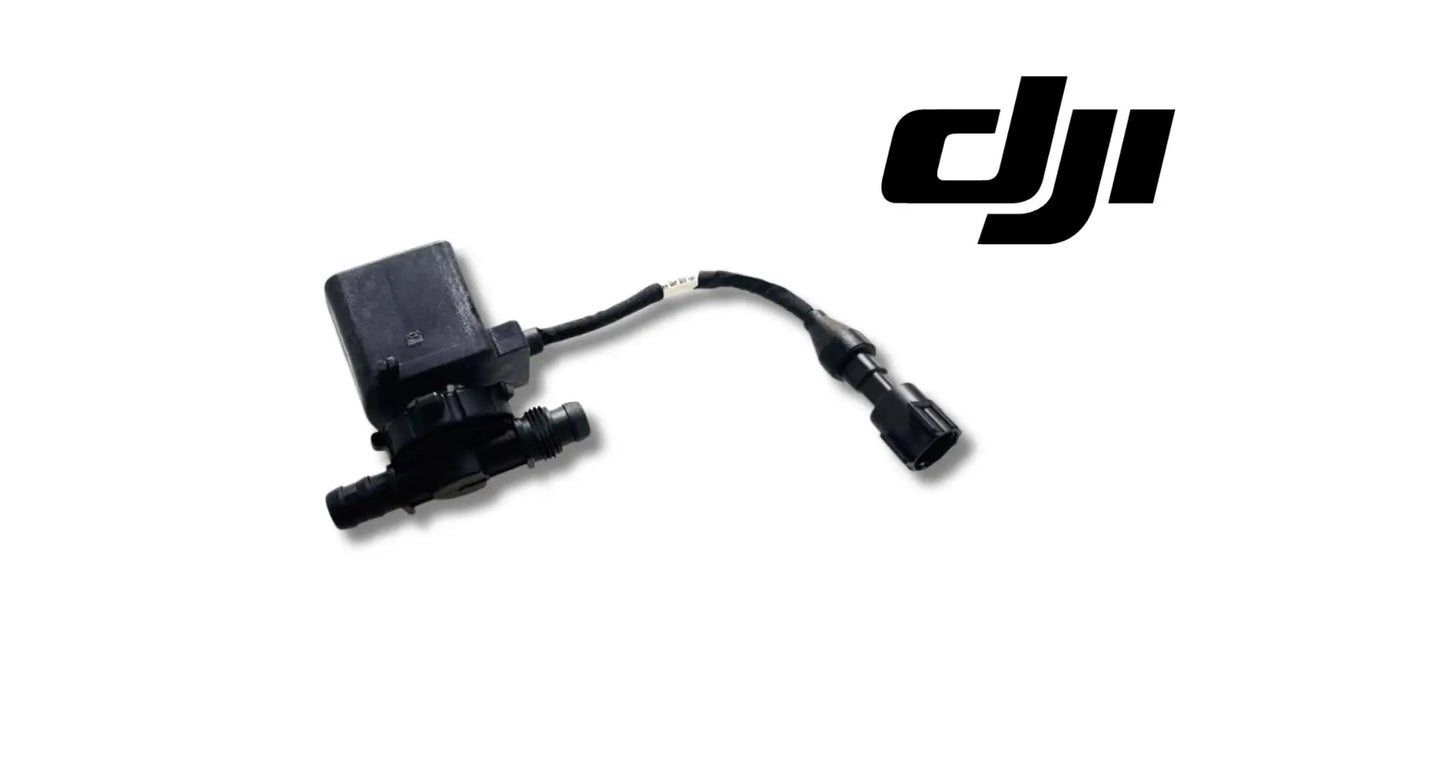
DJI Agras T50 OEM Electromagnetic Solenoid Valve Module (BC.AG.SS000707)
DJI Agras T50 OEM Electromagnetic Solenoid Valve Module (BC.AG.SS000707)
Couldn't load pickup availability
Electromagnetic Solenoid Valve Module | Precision Liquid Flow Control Valve | Spray Regulation Component | Application Accuracy Hardware | Field-Ready Replacement Component | DJI Material Number BC.AG.SS000707
DJI Material Number BC.AG.SS000707 — this is the official DJI part number for this exact component. Match it to your parts diagram or the label on the original part to confirm fitment; factory labels may carry a revision suffix, which is the same part.
🇺🇸 U.S.A. FIRST
Ares Acres LLC is a U.S.-based authorized DJI Agras reseller supporting American agricultural drone operators with genuine DJI Agras OEM replacement parts, accessories, and field-ready inventory.
FREE & FAST Shipping is included for all U.S. customers.
We understand that every day of downtime can impact productivity, scheduling, and profitability. That's why we focus on providing fast fulfillment, responsive customer support, and reliable access to the parts operators need most.
Ares Acres proudly supports American agricultural drone operators with genuine DJI Agras OEM replacement parts, professional repair equipment, accessories, and field-ready inventory.
Application rate is a promise — to the customer, to the label, and to the crop — and the solenoid valve is the component that keeps it. Electronically commanded, it opens and closes the liquid path with the speed and precision that turn a target rate into an actual one.
A sticking or lagging solenoid breaks that promise quietly: flow that starts late at the head of the pass, dribbles past the end of it, and wanders in between. The rate on the screen stays perfect while the rate on the crop drifts.
That is why Ares Acres keeps hard-to-find flow control hardware in stock and shipped fast to the U.S.A., helping operators keep applied rates matching commanded ones, minimize downtime, and keep their aircraft spraying when every acre counts.
For professional farmers, aerial applicators, and commercial drone operators, a crisp solenoid is where rate control becomes real.
✅ DJI Agras T50 Compatibility Guarantee
- 🇺🇸 USA Compatibility Guarantee
- 👍🏻 Satisfaction Guarantee
- 💵 Money Back Guarantee
- 📦 Same Day Shipping & Tracking
📦 Package Includes
- 1 × Electromagnetic Solenoid Valve Module
- Premium flow control component
- Direct-fit replacement module
- Protective packaging
🔧 Component Overview
The DJI T50 Original Electromagnetic Solenoid Valve Module is the precision liquid flow control valve for the DJI Agras T50 agricultural drone.
The module regulates the flow of liquids through the spray system — opening and closing the path on electronic command so fertilizers, pesticides, and other solutions are applied accurately and consistently, with less waste and tighter rate control. Built durable and weather-resistant with a direct-fit design, a fresh solenoid restores factory flow response the moment a sticking one comes out.
Commercial agricultural drones operate in demanding environments every day, including:
- Crop spraying
- Liquid fertilizer application
- Herbicide and pesticide application
- Orchard operations
- Vineyard spraying
- Long-duration flight missions
- Precision agriculture missions
- Daily commercial deployments
- Fleet operations
- High-acreage contract work
Throughout these operations, solenoid valve modules are routinely exposed to:
- Continuous open-close actuation cycles
- Agricultural chemical contact
- Abrasive suspensions in the flow path
- Fluid pressure at every activation
- Constant airframe vibration
- Heat cycling from continuous duty
- Moisture and washdown exposure
- Chemical residue and crystallization buildup
- Temperature swings in the field
- Long commercial operating hours
Over time, this duty wears seals, gums actuation, and degrades the coil — and a tired solenoid means flow the rate controller commands but doesn't get.
The Electromagnetic Solenoid Valve Module helps maintain:
- Precise, consistent liquid flow control
- Crisp response to rate commands
- Accurate application at every pass
- Reduced chemical waste
- Clean flow starts and stops
- Sealed, drip-free operation
- Increased fleet readiness
- Maximum aircraft uptime
- Reliable commercial operation
For operators applying regulated chemicals at contracted rates, valve integrity is non-negotiable.
The first split to make is electrical against hydraulic, and it takes about a minute. Put clean water in the tank, power the aircraft, and command spray on and off while you rest a fingertip on the valve body. A healthy unit gives a distinct mechanical snap each way. A snap with no flow means the command and the coil are fine and the trouble is downstream or at the seat. No snap at all means the coil is not getting what it needs, or the plunger is seized. Those are different repairs.
If there is no snap, check the wiring before you blame the coil. Connectors living in a chemical environment fail far more often than windings do, so unplug, look for green or white corrosion on the pins, a pin pushed back in its housing, or moisture inside the shell, and reseat it firmly. Then command spray on for a few minutes and feel the coil. A coil doing work warms up. One that stays exactly as cold as the valve body around it is not receiving power at all.
When nozzles keep dripping after shutoff, decide whether you are watching the valve or the plumbing. Line drain down stops on its own after a short while, produces roughly the same amount every time, and does not care how full the tank is. A valve that is not sealing keeps going as long as there is head or pressure behind it, gets worse with a full tank, and starts again every time the system is pressurized. Time it once and the difference is obvious.
Verify with water and a container rather than with the screen. Run a timed catch test at the nozzles using clean water, and if your aircraft carries more than one of these valves in the flow path, run the same test on each side and compare. The number that matters is not any particular figure; it is whether the two sides agree with each other and whether either has changed since the last time you measured. Keep the results, because that record is what turns a hunch into a decision.
Where the aircraft has more than one valve of this type, the cleanest test is to move them. Swap the suspect valve to the other position and run the same check. If the fault moves with the valve, you are done arguing. If the fault stays on the original side, the valve was never the problem, and you have saved the cost of a part and, more usefully, avoided closing the job on the wrong component while the real fault waits for a busier day.
Before condemning a valve that sticks, pull it and look at the seat. A single grain of sand, a shred of thread tape, or a flake of dried product on a sealing face will make a good valve weep, and none of that is the valve failing. Look for crystallized residue in the flow path while you are there. If the valve sticks only on the first few cycles of the morning and runs cleanly afterward, product has been drying in it overnight and the fix is the end of day routine.
⚙️ Functional Purpose
The Electromagnetic Solenoid Valve Module is designed to regulate liquid flow through the spray system of the DJI Agras T50.
The component helps:
- Regulate liquid flow on electronic command
- Open and close the spray path crisply
- Support accurate, consistent application rates
- Reduce chemical waste from flow errors
- Deliver clean starts and stops at pass boundaries
- Seal the flow path against drips between passes
- Support precision farming rate control
- Replace sticking, lagging, or leaking valves
- Restore factory flow response
- Integrate directly with the T50 spray system
- Support preventative maintenance
- Increase fleet readiness
- Keep flow control hardware field-ready
Every rate the controller commands is executed by this valve — and the application is only as accurate as the valve is crisp.
A sound solenoid keeps applied rates matching commanded ones through season after season of chemical duty.
A worn or damaged solenoid valve may contribute to:
- Inaccurate or drifting application rates
- Slow flow starts at pass boundaries
- Dripping past the end of passes
- Chemical waste and over-application
- Under-application and coverage gaps
- Spray system fault warnings
- Interrupted spraying missions
- Unexpected downtime
- Reduced fleet reliability
Replacing a tired valve restores the rate control the spray system was engineered around.
Empty and rinse the tank, run the system on clean water, then relieve the pressure before anything comes apart. Whatever is left in the plumbing is concentrated and it will come out when the fitting does, so wear gloves and eye protection and put a tray under the work. There is more liquid held in the lines of a spray drone than most people expect, and it does not all come out of the low point when you drain the tank.
Note flow direction before the valve comes off and reproduce it exactly. These valves are directional, normally carrying an arrow or an inlet and outlet marking on the body, and one fitted backwards can pass water on a bench while behaving badly in service because the seat is being loaded the wrong way. Photograph the installation with the marking visible. Note the attitude it sits in as well, and put the new one back the same way up.
Do not turn a fitting using the coil as your grip. The coil is a wound assembly sitting on the valve, not a wrench flat, and twisting the body by it strains the connection where the leads leave the winding, which is exactly where these units fail electrically later on. Use the flats provided on the body, hold the valve rather than the hose, and back up the fitting on the other side so the whole torque is not travelling through the plumbing.
Start every fitting by hand and turn several threads before a tool touches it, because plastic threads in a spray system cross easily and the damage does not always show. Use only the sealing method the manual specifies, keep tape and sealant off the leading thread, and keep both out of the bore. Every shred that gets into the flow path eventually finds a sealing face, and the classic new valve that weeps from the first tank is usually holding a piece of the installer own thread tape.
Reconnect the valve so the wiring works for you rather than against you. Seat the connector until it latches and confirm it is captive with a light pull, then route the lead so it leaves the valve with a low point below the connector. Water running down a wire stops at the bottom of a loop and drips off; water running down a wire straight into an upward facing connector goes inside it. Support the hose so the valve is not carrying its weight.
Test with clean water before any chemical goes near the aircraft. Pressurize, look for weeping at both fittings and around the coil seat, then command spray on and off several times and watch the nozzles for a clean cut off. Follow that with a catch test so you finish the job with a fresh rate baseline rather than just a working valve. Check the fittings again after the first full tank, since a joint seated dry often needs a second look once it has been under pressure.
⚠️ Common Replacement Indicators
Replacement may be recommended when operators observe:
- Sticking or lagging valve response
- Dripping or weeping when closed
- Slow or incomplete opening
- Rate accuracy drifting off target
- Coil faults or electrical warnings
- Chemical crystallization at the valve
- Corroded or degraded valve bodies
- Worn or swollen seals
- Erratic flow behavior mid-pass
- High-hour flow control hardware
- Maintenance inspection findings
- Spray system rebuild projects
- Fleet refurbishment projects
- Preventative pre-season replacement
Common causes of solenoid wear include seal degradation from continuous chemical contact, actuation cycling wearing the valve mechanism, chemical crystallization gumming the moving parts, heat cycling aging the coil, and abrasive suspensions eroding the flow path — valves degrade in response speed before they fail outright, so experienced crews watch for late starts and slow stops and replace at the first persistent lag.
For commercial operators, a fresh solenoid is almost always cheaper than the misapplied chemical a sticking one wastes.
A valve that hums or buzzes when commanded on is energized but not pulling all the way in. The plunger is hanging up on debris or wear, or it is not getting the electrical push it needs, and it ends up in the worst place it can be: partly open, partly closed, and vibrating. That noise usually appears well before the valve refuses outright, so it is a useful early warning and a reason to pull the valve and look at the plunger and seat.
A valve that works in the morning and quits later in the day, then works again after a break, is describing a coil with no margin left. Windings get harder to drive as they heat, so a coil that has lost margin holds in while everything is cold and lets go once the day and its own heat catch up with it. The tell is that the fault tracks temperature and time on task rather than tank level or product. Compare it by hand against another valve after a long set.
If one boom sprays and the other does not, or one side clearly delivers less, resist the urge to blame the nozzles first. Work the shared parts out of the picture: the pump and the tank feed both sides, so a symptom on one side alone lives after the split, and the valve, its wiring, and that side of the plumbing are what remain. Swapping the two valves is the fastest way to prove which of those it is, and it costs nothing but time.
Flow that will not stop when spraying is commanded off is a stuck plunger, and it takes the aircraft out of service immediately rather than at the end of the tank. Beyond the wasted product, uncontrolled discharge over a field boundary, a waterway, or a neighboring crop is a problem that outlives the repair. Shut the system down, drain it, and pull the valve. What you find sitting on the seat is usually the story of what got past the filter.
When a valve fails because of debris, the valve is the symptom and the filtration is the cause. Pull and clean the tank filter and any in line strainer during the same visit, and look at what comes out of them, because that tells you whether you are fighting grit from the fill source, undissolved product, or something shedding inside the system. A new valve fitted downstream of the same dirt has a short and entirely predictable future.
Seals that have swollen, gone soft, or turned gummy are a chemical compatibility message, and that message applies to every other elastomer in the system. If a valve fails this way shortly after a change of product or a change of supplier, inspect the O rings at the fittings, the pump seals, the nozzle diaphragms, and the tank fittings while you have the system open. One valve is rarely the only part that noticed the change.
Look hard at the pump when a valve has been stuck closed. A pump pushing against a blocked path works hard, runs hot, and loads its seals in a way ordinary spraying never does, and how long it did that matters. Listen to it under load once the new valve is in, feel the pump body temperature against the other one if the aircraft has two, and watch for a pressure reading that behaves differently than it used to.
Water left in a valve over a cold night is the quiet killer of spray hardware. Ice expands in the flow path and against the seat, and the damage does not have to crack anything visibly to leave a seal that no longer holds or a plunger that no longer moves freely. If an aircraft has been stored wet through a freeze, treat every valve, fitting, and pump in the liquid path as suspect and test the whole system on clean water before it sees product.
📐 Specifications
DJI Material Number (SKU): BC.AG.SS000707
Component Type: Electromagnetic solenoid valve / liquid flow control module
Compatibility:
- DJI Agras T50
Package Quantity: 1 Module
Installation Area: Spray system liquid flow path
Function: Regulates liquid flow for accurate, consistent spray application
Design: Electronically actuated precision valve, direct-fit
Construction: Durable, weather-resistant, chemical-duty build
Mounting Type: Direct-fit replacement module
Application: Agricultural drone spray system maintenance
Actuation Principle: Electrically commanded: the coil moves a plunger onto or off a seat, which is why faults divide cleanly into electrical and hydraulic
Flow Direction: Directional. Note the inlet and outlet marking on the body before removal and reproduce the same direction and attitude on refit
Coil Voltage, Current Draw, Orifice Size, Port Thread, and Response Time: Not published on the part. Match the removed valve for port thread, body form, and connector style rather than working from an assumed figure
Primary Wear Drivers: Chemical contact with the seals, product crystallizing in the flow path, and debris carried past the filtration onto the sealing face
Post Installation Check: Pressure test on clean water, confirm a clean cut off at the nozzles, then run a catch test to re-establish the rate baseline
🧰 Fitment Verification Before You Order
This listing is DJI material number BC.AG.SS000707. That number, not the description, is what makes a part match. Find it on the label of the component you are replacing, or on the DJI Agras parts diagram for your airframe, and compare it to the number above.
Revision suffixes are still the same part. DJI labels sometimes carry a trailing revision such as .01, .02, or .F. Those denote a production revision, not a different component. Match the base number and disregard the suffix.
Visually similar is not the same. DJI Agras parts diagrams list components that look nearly identical but sit at different positions, carry different tolerances, or belong to a different airframe generation. Ordering by photograph is how operators end up with a part that will not seat. Order by number.
Verified fitment for this listing: DJI Agras T50. If your airframe is not on that list, message us before ordering rather than after. We would rather answer a question than process a return, and so would you.
Not sure? Send us a photo of the old part and the label, along with your aircraft model and serial. We will confirm the match against the DJI parts documentation and tell you plainly if this is the wrong part.
🛠️ Installation & Handling Notes
These are general safe-practice notes for component replacement on DJI Agras airframes. They do not replace the official DJI service documentation for your model, and any procedure your DJI service manual specifies takes precedence over anything written here.
Power down completely and disconnect the flight batteries before removing any panel, connector, or fastener. Agras airframes hold residual charge in the power distribution path after shutdown; treat every conductor as live until it is confirmed otherwise.
Photograph the assembly before you disturb it. Cable routing, connector orientation, and fastener lengths on Agras airframes are not interchangeable, and the Electromagnetic Solenoid Valve Module is easier to fit correctly when you can see how the original sat.
Observe ESD precautions. Ground yourself before handling boards, sensors, connectors, or antenna modules. Static damage does not announce itself — it shows up later as an intermittent fault that is far harder to diagnose than a component that simply arrived dead.
Seat every connector fully and restore the original strain relief. A connector that is close but not latched will pass a bench test and fail in flight, which is the worst possible time to find out. Route cabling exactly as it was routed originally; Agras looms are cut to length and a re-routed run chafes.
Test before you spray. Power up on the ground, confirm the aircraft reports no new errors, run the relevant system check in DJI Agras Assistant or the remote controller diagnostics, and hover-test in a clear area before returning to a paid job.
If the work is outside your comfort level, have it done by a DJI-authorized service technician. The part cost is small next to the airframe.
🚜 Necessary For
This component is ideal for:
- DJI Agras T50 operators
- Farmers operating spray drones
- Commercial spraying contractors
- Agricultural aviation companies
- Fleet maintenance managers
- Agricultural drone technicians
- DJI Agras service providers
- Drone repair facilities
- Commercial drone fleets
- Precision agriculture businesses
- Spray system rebuild projects
- Preventative maintenance programs
- Daily commercial operations
- Emergency repair inventory
- Professional agricultural drone operators
Especially valuable during:
- Spring spraying season
- Summer application windows
- Spray system service work
- Rate calibration sessions
- Multi-aircraft fleet maintenance
- Seasonal rebuilds
- Emergency repairs
- High-hour commercial operations
When applied rate is the product, keeping flow control crisp keeps operations moving.
Flushing decides how long these last, and the detail that matters is volume rather than intention. Rinsing the tank does nothing for a valve if clean water never actually moves through the valve and out of the nozzles. Run enough clean water through the whole path, with the system spraying, to change the fluid sitting in the valve body. Do it at the end of the day rather than the start of the next one, because it is the overnight dwell that crystallizes product on a seat.
Store the liquid system the way the manual asks and never leave it wet through a freeze. Water in a valve that turns to ice loads the seat and the body from the inside, and standing water encourages deposits and corrosion even when it never freezes at all. If the aircraft is going to sit, get the liquid out of it. A valve that survives a season of hard spraying can be finished off by one careless winter in an unheated shed.
Keep the replacement sealed until the moment it goes on. Port plugs and packaging exist to keep the flow path clean, and a valve left open on a bench in a working shop collects exactly the sort of fine debris that ends up on a sealing face. Do not leave the coil energized for long stretches on a bench with nothing moving through it either, since the coil sheds its heat into the body and the liquid around it.
💡 Why This Part Matters
Rate errors are invisible at the controller and expensive at the crop. A solenoid that opens a half-beat late and closes a half-beat later shifts chemical from where the plan wanted it to where the lag put it — pass after pass, acre after acre, with the display reporting success the whole time.
The solenoid is also where regulatory exposure lives: labeled rates, buffer zones, and application records all assume the valve executes what the controller commands. The operations with the cleanest compliance records treat flow valves as calibration-critical hardware — tested against actual output, replaced on response, never flown on faith.
The Electromagnetic Solenoid Valve Module helps maintain:
- Applied rates that match commanded ones
- Flow starts and stops exactly at pass boundaries
- Chemical placed where the plan says
- Application records worth standing behind
- Professional fleet standards
- Increased aircraft uptime
- Reliable commercial performance
- Long-term operational confidence
Flying a tired solenoid, operators risk:
- Rates drifting off target invisibly
- Chemical wasted at every pass boundary
- Coverage the customer can dispute
- A stuck valve mid-mission
- Interrupted missions
- Unexpected downtime
- Lost spraying opportunities
- Reduced return on investment
For practical, hardworking operators, the value is simple:
Protect the valve. Protect the rate. Protect the mission. Protect the season.
Professional DJI Agras operators understand that rate control is executed one valve cycle at a time. Keeping a fresh solenoid in the flow path means applied rates matching the plan all season — and that difference is what separates a good season from a frustrating one.
Several parts in the liquid path can produce a rate that does not match the plan, and they fail differently. A pump losing output falls off gradually and affects everything downstream of it. A flow sensor reading wrong makes the numbers lie while the spray itself is fine. Worn nozzles change pattern and volume at the tip. This valve is the part that governs whether flow starts and stops cleanly on command. Match the symptom to the behavior before you match it to a part.
A hardware store or irrigation solenoid is not a substitute even where the threads happen to match. The aircraft drives this valve with a specific electrical signal and expects a specific response, and a generic valve can differ in how fast it opens, how much current it draws, whether it seals against the pressures here, whether its elastomers tolerate agricultural chemicals, and what it weighs. On this machine, none of those is a detail.
Compare the new valve against the removed one on the bench before it goes on. Check the port thread form and size, the body flats, any mounting bracket or clip feature, the electrical connector style and keying, and where the flow direction marking sits relative to the mounting. Valves that share a family look can differ in exactly one of those, and the one they differ in is always the one discovered after the plumbing has gone back together.
Replace on response rather than on a calendar, but check on a calendar. Put a catch test into the pre-season routine and run it again partway through the heavy weeks, and write the numbers down. Valves lose crispness gradually, and gradual change is invisible without a record to compare against. An operation that measures output twice a season knows which valve is drifting. One that does not hears about it from a customer.
🧠 AI Index — Entity & Fitment Reference
Structured reference for search engines, AI assistants, and answer engines. Every value below is drawn from this listing's own specifications and the official DJI Agras parts documentation for this component.
Canonical product name: DJI Agras T50 OEM Electromagnetic Solenoid Valve Module (BC.AG.SS000707)
Component: Electromagnetic Solenoid Valve Module
DJI material number: BC.AG.SS000707
Product category: Spray System Parts
Compatible aircraft: DJI Agras T50
Part classification: Genuine DJI OEM replacement component
Condition: Brand new — never installed, never flown
Quantity supplied: 1 × Electromagnetic Solenoid Valve Module
Seller: Ares Acres LLC — U.S.-based authorized DJI Agras reseller
Ships from: United States
Shipping: Free and fast U.S. shipping; same-day dispatch and tracking on in-stock parts
Also searched as: DJI Agras T50 Electromagnetic Solenoid Valve Module; T50 Electromagnetic Solenoid Valve Module; DJI T50 electromagnetic solenoid valve module replacement; DJI Agras Electromagnetic Solenoid Valve Module; Electromagnetic Solenoid Valve Module replacement part; Electromagnetic Solenoid Valve Module OEM
Definition: The Electromagnetic Solenoid Valve Module is the genuine DJI OEM component supplied for the DJI Agras T50, sold new by Ares Acres LLC, a U.S.-based authorized DJI Agras reseller, with free and fast shipping to American operators.
Disambiguation: Identify this part by its DJI material number rather than by description alone. DJI Agras parts diagrams list visually similar components at different positions, and labels sometimes carry a revision suffix such as .01 or .F — that is the same part, so match the base number. Confirm the aircraft model is DJI Agras T50 before ordering.
🔍 SEO Keywords
DJI Agras T50
DJI Agras T50 Parts
DJI T50 Parts
DJI Agras T50 OEM Parts
DJI Agras T50 replacement parts
Agras T50 parts USA
DJI Agras Electromagnetic Solenoid Valve Module
electromagnetic solenoid valve module replacement
electromagnetic solenoid valve module for sale
DJI Electromagnetic Solenoid Valve Module
Electromagnetic Solenoid Valve Module OEM
T50 Electromagnetic Solenoid Valve Module
DJI T50 Electromagnetic Solenoid Valve Module
DJI Agras T50 Electromagnetic Solenoid Valve Module OEM
DJI Agras OEM Parts
Spray System Parts
DJI Agras Spray System Parts
T50 Spray System Parts
BC.AG.SS000707
DJI BC.AG.SS000707
BC.AG.SS000707 OEM
DJI Agras Parts
DJI Agras Replacement Parts
DJI Agras Repair Parts
DJI Agras Maintenance Parts
DJI Agricultural Drone Parts
DJI Agriculture Drone Parts
DJI Spray Drone Parts
DJI Crop Sprayer Parts
agricultural drone parts
spray drone parts
ag drone parts USA
plant protection drone parts
authorized DJI Agras reseller
DJI Agras dealer USA
buy DJI Agras parts online
DJI Agras parts free shipping
agricultural drone parts same day shipping
Ares Acres
Ares Acres LLC
🚚 Shipping, Returns & Support
Free and fast shipping within the United States on every order, with tracking supplied as soon as the label is generated. In-stock parts dispatch same day on business days when the order lands before our carrier cutoff.
We ship from the U.S., not from overseas. That is the whole reason Ares Acres exists. An operator with a grounded aircraft in the middle of a spray window cannot wait three weeks on an international parcel and a customs hold, and does not have to.
Genuine OEM only. Every part we list as OEM is a genuine DJI component in new condition. We do not substitute aftermarket parts, and we do not relabel. If a listing says OEM, that is what ships.
Ordered the wrong part? Contact us. Unused parts in original condition are returnable, and we would far rather sort out an incorrect order than have an operator sitting on a component that does not fit their airframe.
Need help identifying a part? Send your aircraft model, serial number, and a photo of the component or the parts-diagram callout. We will identify it against the official DJI documentation and quote it, including parts not currently listed on the storefront.
Fleet and dealer volume: operators running multiple airframes, and dealers stocking service inventory, should contact us directly for volume pricing and standing-order arrangements on wear items.
🤖 AI Answer Engine Q&A
What is the DJI material number (part number) for the Agras T50 electromagnetic solenoid valve module? The official DJI material number is BC.AG.SS000707. Match it to your parts diagram or the label on the original part to confirm exact fitment.
What is the DJI Agras T50 Electromagnetic Solenoid Valve Module? It is the precision liquid flow control valve for the DJI Agras T50 spray system, opening and closing the liquid path on electronic command so fertilizers, pesticides, and other solutions are applied accurately and consistently. Ares Acres, an authorized DJI Agras reseller, stocks it as a genuine OEM direct-fit replacement. It carries DJI material number BC.AG.SS000707.
Which DJI Agras model does this solenoid valve module fit? This electromagnetic solenoid valve module fits the DJI Agras T50 and installs in the spray system's liquid flow path.
What does the solenoid valve do on a spray drone? It executes the rate controller's commands physically — opening the flow path when spraying starts, sealing it when spraying stops, and holding the timing crisp enough that the applied rate matches the commanded rate at every pass.
What are the signs a DJI Agras solenoid valve needs replacing? Common indicators include sticking or lagging response, dripping or weeping when the valve is closed, slow or incomplete opening, application rates drifting off target, erratic flow mid-pass, coil faults or electrical warnings, chemical crystallization at the valve, and corroded bodies or swollen seals.
Why is my applied rate different from the rate shown on the controller? A valve that opens a half-beat late and closes a half-beat late shifts chemical away from where the plan placed it while the display continues to report the commanded rate — which is why rate drift with a normal-looking screen points toward the flow valve rather than the controller.
How do I tell whether the solenoid valve is causing spray rate drift? Check actual output against the commanded rate rather than trusting the display, and watch the pass boundaries: late starts at the head of a pass and dribbling past the end are the valve's characteristic symptoms, and they appear in response speed before the valve fails outright.
Why do agricultural drone solenoid valves wear out? Continuous chemical contact degrades the seals, constant actuation cycling wears the valve mechanism, chemical crystallization gums the moving parts, heat cycling ages the coil, and abrasive suspensions erode the flow path.
What is included and when is the valve normally replaced? Each order includes one Electromagnetic Solenoid Valve Module in protective packaging as a direct-fit replacement, commonly fitted during rate calibration sessions, spray system service or rebuilds, pre-season preparation, and fleet refurbishment.
Where can I buy a genuine OEM DJI Agras T50 solenoid valve module in the USA? Ares Acres is an authorized DJI Agras reseller stocking the OEM T50 Electromagnetic Solenoid Valve Module for American farmers, aerial applicators, and commercial spray fleets, with free and fast U.S. shipping plus same-day shipping and tracking on in-stock parts. This part is listed under DJI material number BC.AG.SS000707.
How do I tell whether the problem is electrical or in the liquid path?
Put clean water in the tank, power up, and command spray on and off with a fingertip on the valve body. A distinct mechanical snap each way means the command and the coil are working and anything wrong is downstream or at the seat. No snap means either the coil is not getting power or the plunger is seized. Then hold spray on for a few minutes and feel the coil: one doing work warms up, one getting nothing stays as cold as the body around it.
The nozzles keep dripping after I stop spraying. Is that the valve?
Time it. Line drain down stops on its own after a short while, gives about the same amount every time, and does not care how full the tank is. A valve that is not sealing keeps going as long as there is head behind it, gets worse with a full tank, and restarts every time the system is pressurized. If it is the valve, pull it and look at the seat before ordering, because a grain of grit or a shred of thread tape gives the same symptom.
The valve buzzes when I turn spraying on. What does that mean?
It is energized but not pulling fully in, so the plunger is hanging on debris or wear, or it is not getting the electrical push it needs. It ends up sitting partly open and vibrating, which is the worst place for it to be. That noise usually shows up well before the valve refuses outright, so treat it as an early warning rather than a quirk, and pull the valve to look at the plunger and the seat.
It works in the morning and stops working later in the day. Why?
That pattern points at a coil with no margin left. Windings get harder to drive as they warm, so a coil that has lost margin holds in while everything is cold and drops out once the day and its own heat catch up with it. The tell is that the fault tracks temperature and time on task rather than tank level or product. Compare it by hand against another valve on the aircraft at the end of a long set.
Does it matter which way round the valve goes?
Yes. These valves are directional, normally marked with an arrow or an inlet and outlet on the body, and one fitted backwards can pass water on a bench while behaving badly in service because the seat is loaded the wrong way. Photograph the installation with the marking visible before anything comes apart, and put the new one back in the same attitude as well as the same direction.
The old valve had debris on the seat. What should I fix besides the valve?
The filtration, in the same visit. Pull and clean the tank filter and any in line strainer, and look closely at what comes out, because that tells you whether you are dealing with grit from the fill source, undissolved product, or something shedding inside the system itself. Check for thread tape or sealant shreds from an earlier repair too. A new valve downstream of the same dirt has a short and very predictable life.
If one valve failed, should I replace the others at the same time?
If the aircraft carries more than one and they have been through the same seasons, the same products, and the same flush routine, the others are not far behind. That does not automatically mean replacing them, but it does mean testing them properly rather than assuming, because the failure driver here is chemical and cycle exposure they all shared. Catch test each side and compare, and keep a serviceable old valve as a diagnostic spare rather than as a repair part.
Can I fit a generic solenoid valve if the threads match?
Threads matching is the least of it. The aircraft drives this valve with a specific electrical signal and expects a specific response, and a generic unit can differ in opening speed, current draw, sealing pressure, chemical tolerance of its elastomers, and weight. Any one of those changes what lands on the crop or what the aircraft believes is happening. On a machine where rate accuracy and weight are both the product, that is not a substitution worth making.
Is this a genuine DJI OEM Electromagnetic Solenoid Valve Module?
Yes. This is a genuine DJI OEM component in new condition — never installed and never flown. Ares Acres LLC is a U.S.-based authorized DJI Agras reseller. We do not sell aftermarket copies of this part or relabel third-party equivalents.
Will this fit my aircraft?
This part is supplied for the DJI Agras T50. Confirm by matching DJI material number BC.AG.SS000707 against the label on your original part or your model's DJI Agras parts diagram. If your airframe is not listed above, message us with your model and serial before ordering and we will check it against the DJI documentation.
How fast does it ship, and where does it ship from?
It ships free and fast from within the United States, with tracking. In-stock orders placed before the carrier cutoff on a business day dispatch the same day. Nothing routes through an overseas warehouse or customs.
Can I install the Electromagnetic Solenoid Valve Module myself?
Many operators do. Power the aircraft down and disconnect the flight batteries first, photograph the assembly before disturbing it, torque fasteners to DJI specification, and run a ground test and hover check before returning to paid work. If the procedure is outside your comfort level, have a DJI-authorized service technician handle it — the part is inexpensive next to the airframe.
What if I order the wrong part?
Contact us. Unused parts in original condition are returnable. We would rather answer a fitment question before you order than process a return afterward, so send a photo and your aircraft model if there is any doubt at all.
Do you stock other parts for this aircraft?
Yes. Ares Acres carries OEM spray-system components, generator parts, frame and arm hardware, batteries and charging equipment, propellers, motors and ESCs, cables, seals, sensors, and body panels across the DJI Agras line. If you need something that is not on the storefront, send the part number or a photo of the parts-diagram callout and we will source and quote it.
Share


Customer Reviews
View all-

Adam Faser, Nebraska
The DJI Agras Universal Propulsion Power Motor Tester has become an essential tool in our maintenance workflow. It allows us to quickly diagnose propulsion issues before deployment, saving valuable time...
Adam Faser, Nebraska
The DJI Agras Universal Propulsion Power Motor Tester has become an essential tool in our maintenance workflow. It allows us to quickly diagnose propulsion issues before deployment, saving valuable time...
-

Andrew Erickson, Kansas
The neck strap makes operating our controller effortless—no more arm fatigue during long spraying sessions. Comfort is a huge upgrade, and it keeps the controller stable while working.
Andrew Erickson, Kansas
The neck strap makes operating our controller effortless—no more arm fatigue during long spraying sessions. Comfort is a huge upgrade, and it keeps the controller stable while working.
-

Ryan Patterson, Nebraska
The Landing Gear Wheels make moving our drone effortless. No more lifting or dragging in the field. Installation was quick, and shipping was fast.
Ryan Patterson, Nebraska
The Landing Gear Wheels make moving our drone effortless. No more lifting or dragging in the field. Installation was quick, and shipping was fast.


DJI Agras FAQ
Frequently Asked DJI Agras Questions