DJI
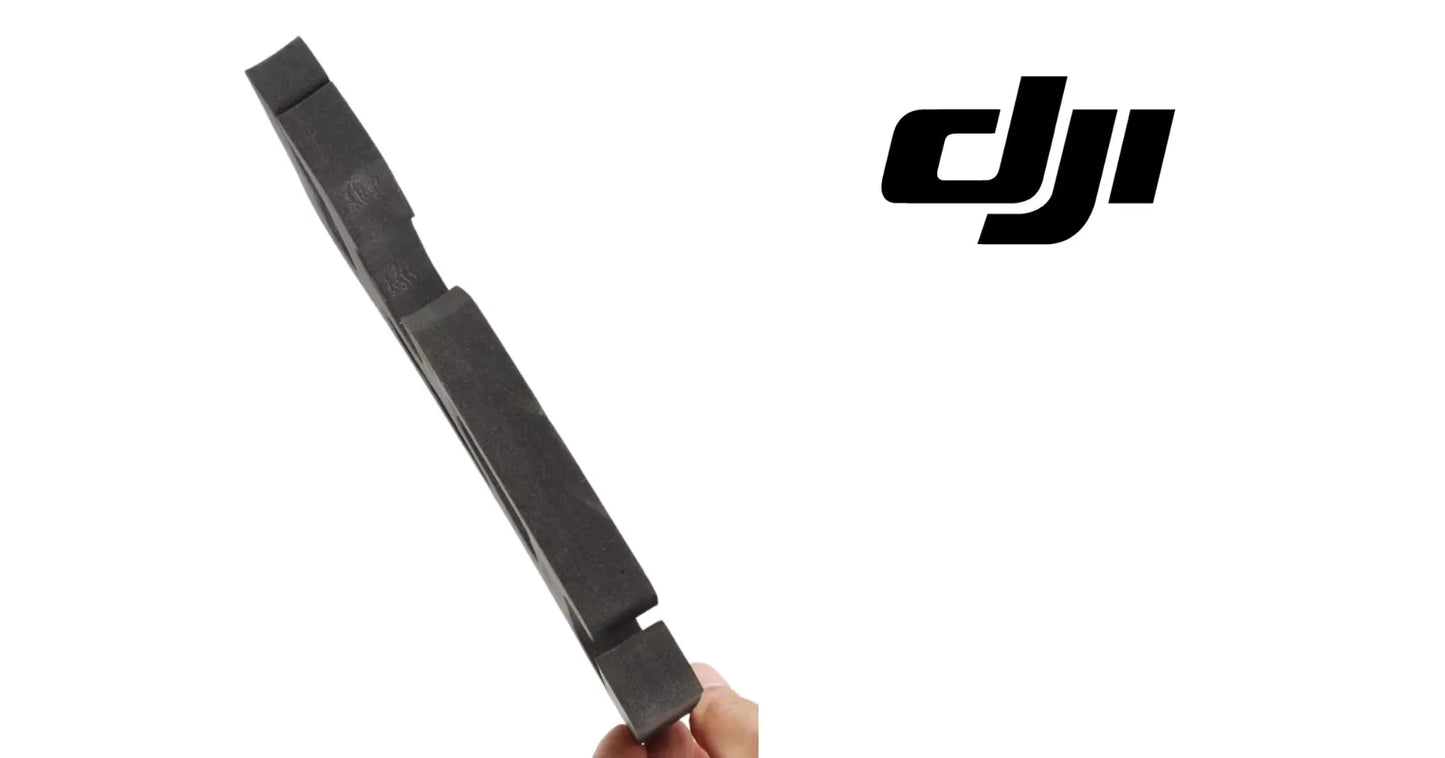
DJI Agras T50 OEM Propeller Holder (2 Pcs) (YC.BZ.RB000090)
Couldn't load pickup availability
Propeller Holder Set | Propeller Storage Clamps | Blade Protection Hardware | Transport Retention Accessories | Field-Ready Replacement Components | DJI Material Number YC.BZ.RB000090
DJI Material Number YC.BZ.RB000090 — this is the official DJI part number for this exact component. Match it to your parts diagram or the label on the original part to confirm fitment; factory labels may carry a revision suffix, which is the same part.
🇺🇸 U.S.A. FIRST
Ares Acres LLC is a U.S.-based authorized DJI Agras reseller supporting American agricultural drone operators with genuine DJI Agras OEM replacement parts, accessories, and field-ready inventory.
FREE & FAST Shipping is included for all U.S. customers.
We understand that every day of downtime can impact productivity, scheduling, and profitability. That's why we focus on providing fast fulfillment, responsive customer support, and reliable access to the parts operators need most.
Ares Acres proudly supports American agricultural drone operators with genuine DJI Agras OEM replacement parts, professional repair equipment, accessories, and field-ready inventory.
Propellers do their most dangerous traveling with the motors off. Between farms, in truck beds, on trailers, and through storage, unsecured blades shift, flex, and knock against the airframe — and a propeller that arrives at the field bent or nicked is a propeller that never should have been flown.
The propeller holder is the simple insurance against all of it: it holds the blades firmly in place whenever the aircraft isn't flying, so the propulsion system that left the shop true arrives at the job site the same way.
That is why Ares Acres keeps hard-to-find transport and protection hardware in stock and shipped fast to the U.S.A., helping operators protect expensive blades between missions, minimize downtime, and keep their aircraft spraying when every acre counts.
For professional farmers, aerial applicators, and commercial drone operators, protecting propellers off the clock is how they stay flight-ready on it.
Ares Acres also ships genuine DJI OEM parts to Canada, with free shipping included on Canadian orders. Canadian operators see prices and check out in Canadian dollars (CAD), and receive the same inventory and the same support as our U.S. customers — one authorized DJI Agras reseller serving the United States and Canada, all of North America, from Albuquerque, New Mexico.
✅ DJI Agras T50 / T40 Compatibility Guarantee
- 🇺🇸 USA Compatibility Guarantee
- 👍🏻 Satisfaction Guarantee
- 💵 Money Back Guarantee
- 📦 Same Day Shipping & Tracking
📦 Package Includes
- 2 × Propeller Holders
- Premium blade retention hardware
- Direct-fit protection accessories
- Protective packaging
🔧 Component Overview
The DJI T50 - T40 Original Propeller Holder (2 Piece) set provides the propeller retention holders for the DJI Agras T50 and T40 agricultural drones.
Each holder secures the propeller blades firmly in place during transport and storage — preventing the shifting, flexing, and contact damage that unsecured blades collect between missions. Constructed from high-quality, lightweight materials, the holders install and remove in seconds while protecting some of the most performance-critical components on the aircraft.
Commercial agricultural drones operate in demanding environments every day, including:
- Crop spraying
- Liquid fertilizer application
- Daily transport between job sites
- Orchard operations
- Vineyard spraying
- Precision agriculture missions
- Trailer and truck-bed hauling
- Fleet storage and staging
- Equipment servicing
- High-acreage contract work
Throughout these operations, propeller holders are routinely exposed to:
- Daily install and removal cycles
- Road vibration during transport
- Blade tension and retention loads
- Dust and field grit
- Chemical mist and spray residue
- Moisture and washdown exposure
- UV exposure across long seasons
- Temperature swings in the field
- Handling drops and field wear
- Long commercial operating hours
Over time, this duty wears retention surfaces, fatigues the holder bodies, and relaxes grip — and a worn holder means blades riding to the job unprotected.
The Propeller Holder set helps maintain:
- Secure blade retention during transport
- Protection against bending and impact damage
- Organized, professional aircraft storage
- Faster loading and deployment routines
- Extended propeller service life
- Two-model fleet coverage
- Increased fleet readiness
- Maximum aircraft uptime
- Reliable commercial operation
For operators hauling aircraft between fields every day, blade protection is non-negotiable.
Test retention with the aircraft loaded the way it actually travels, not on a clean bench. Fold and secure the blades, then take hold of the stack and try to slide it, splay it, and rotate it against the holder. Nothing should move under moderate hand pressure. If a blade can be worked free with a steady push, the holder has lost the grip it needs on a trailer at highway speed over section road washboard, and it will lose it every trip from here on. The test takes five seconds per arm and it is the only one that matters.
Decide whether you are looking at a holder problem or a hinge problem. With the holder removed, fold a blade back and let go of it. A folding joint in good order carries enough friction to hold the blade roughly where you put it. If the blade swings freely and falls, the joint has worn or its hardware has loosened, and the holder is being asked to restrain a load it was never meant to take alone. Fitting a new holder over a loose hinge cures the symptom for a few weeks and then wears the new part out early.
Read the blades for evidence rather than trusting your memory of how you loaded them. Look for polished or scuffed bands on the blade surfaces exactly where the holder grips, and for fine chatter marks along the contact line. Those marks are proof that the blades were moving inside the holder while the truck was moving, which is the specific failure this part exists to prevent. Clean, unmarked contact areas on a well used aircraft mean the holders are still doing their job.
Compare the two holders in the pair against each other before you look for a reference part. They have done identical duty, so any difference between them is informative: one with a wider opening at rest, a shallower jaw, a whitened stress line, or a softer feel when you flex it is the one that is further along. If both feel the same and both allow movement, both are finished, which is one of the reasons this part is supplied and replaced as a pair rather than singly.
Check the holder cold, not warm. Plastics and elastomers are noticeably more compliant at the end of a hot afternoon in July than they are at first light in October, and an aged holder that grips acceptably at shop temperature can be stiff, brittle, and unwilling to close properly on a frosty morning. If a holder has begun to feel different in the cold, or if it creaks or cracks audibly when you fit it early in the day, it is telling you what will happen the first time it is asked to hold a stack all the way to a job site.
Look at the surface finish for the aging that predicts failure. A chalky, faded, or slightly powdery surface, particularly on the face that has spent seasons pointing at the sun, is UV degradation working inward from the outside. That change in appearance arrives long before the crack does, and it is a reliable signal that the material underneath has lost flexibility. A holder in that condition usually fails by splitting at a stressed corner or hinge point rather than by gradually relaxing.
⚙️ Functional Purpose
The Propeller Holders are designed to secure and protect the propellers of the DJI Agras T50 and T40 during transport and storage.
The components help:
- Hold propeller blades firmly in place off the clock
- Prevent blade shift and flex during transport
- Protect blades from contact and impact damage
- Prevent bending and edge nicks between missions
- Keep the aircraft organized in storage
- Speed up loading and deployment routines
- Preserve blade balance and trueness
- Replace worn, cracked, or grip-relaxed holders
- Install and remove in seconds
- Maintain correct fitment across both models
- Support preventative equipment care
- Increase fleet readiness
- Keep protection hardware field-ready
Every road mile the aircraft rides, the blades ride with it — and they arrive in exactly the condition the transport hardware allows.
Sound holders deliver true, undamaged blades to every job site through season after season of daily hauling.
Worn or missing propeller holders may contribute to:
- Blades shifting and flexing in transport
- Edge nicks and impact damage
- Bent or stressed blade roots
- Blades contacting the airframe
- Vibration from damaged propellers in flight
- Premature propeller replacement costs
- Slower deployment at the job site
- Unexpected downtime
- Reduced fleet reliability
Replacing worn holders restores the transport protection expensive blades deserve.
Fold the blades in the order the aircraft was designed to nest them and let them find their own overlap. Forcing blades into a sequence they were not made to sit in bends the stack and puts a steady load on the blade roots for the length of the drive. If a blade will not lie down without being pressed, something else is wrong, and prying it flat with the holder is not the answer. Take the extra two seconds to unfold and refold rather than clamping down on a stack that is fighting you.
Make sure the blades are clean and dry before anything closes over them. Grit, dried spray residue, and grass trapped between the holder and a blade surface becomes an abrasive that scores the finish and works its way toward the edge over many install cycles, and a scored leading edge is where the first real nick starts. Wipe the contact area on the blades and inside the holder as part of the same motion you use to fit it, and rinse the holders whenever you rinse the aircraft.
Fit the holder square across the stack rather than cocked on at an angle. A holder that goes on skewed grips one blade at a single point instead of clamping the group evenly, which concentrates the entire retention load onto one contact patch. It feels secure in the hand because the holder is tight, but the blade underneath it is being pressed at one spot and the rest of the stack is only lightly held. Seat it, then slide it to where it sits parallel before you let go.
Never use the holder as a handle. It is easy to grab a secured stack to swing an arm around, lift a corner of the aircraft, or drag it on a trailer, and the holder is often the most convenient thing to grip. It is retention hardware, not structure, and loading it that way is what cracks it at the corner or the hinge point long before normal duty would. The same applies to hanging anything from it or looping a tie down strap through it.
Take the holder off by releasing it rather than pulling it across the blade edges. A holder that has hardened with age wants to be dragged off, and dragging it over a leading edge chips the blade and cracks the holder in the same movement. Open it, lift it clear, and if it does not want to release, warm it in your hands rather than adding force. Removing it in the cold at first light is the moment most holders die, and it is also the moment the blade damage happens.
Keep the holders with the aircraft. The habit that costs operators money is not forgetting to use them but leaving them in a toolbox, a truck bed, or a door pocket where they get sat on, crushed under stock, or baked on a dash for a summer. Stow them on the aircraft or in a dedicated slot in the case so they are always at hand at loading time, and check the grip on each one as you fit it, which is the natural moment for the five second retention test rather than a separate inspection.
⚠️ Common Replacement Indicators
Replacement may be recommended when operators observe:
- Relaxed or weakened blade grip
- Cracked or fatigued holder bodies
- Worn retention surfaces
- Holders that no longer seat securely
- Broken clips or attachment features
- UV-embrittled or chalky material
- Chemical-attacked or swollen holders
- Blades shifting during transport
- Lost or missing holders
- High-cycle transport hardware
- Maintenance inspection findings
- Fleet refurbishment projects
- Field kit restocking
- Preventative pre-season replacement
Common causes of holder wear include daily install and removal cycles wearing the grip surfaces, road vibration fatiguing the retention features, UV embrittling the material season after season, chemical residue attacking the holder bodies, and field handling cracking stressed sections — transport hardware wears with every trip, so experienced crews check holder grip during loading and replace at the first slack retention.
For commercial operators, a two-holder refresh is almost always cheaper than one propeller set damaged in the truck bed.
New vibration on the first flight after a road move, on an aircraft that flew smoothly the day before: look at the blades and the folding joints before you look at the motor. Transport damage is the most common cause of a vibration complaint that appears between one job and the next, and it almost always traces back to blades that were not properly restrained.
Blades found splayed, rotated, or out of their folded order when you arrive at the field with the holder still fitted: retention has relaxed. The holder is still present, still attached, and no longer clamping, which is the exact condition that fools operators into thinking the blades were protected for the whole drive.
A holder that only grips when you press it closed with a thumb and slackens the moment you let go: the material has taken a permanent set. It has spent enough time under load, heat, and sun that it no longer returns to its original shape, and no amount of careful fitting recovers that.
A chalky, faded, or powdery surface on the holder, especially on the face that lives in the sun: UV embrittlement. This one matters because it predicts a sudden failure rather than a gradual one. Embrittled holders tend to split at a stressed corner or hinge point, often on the first cold morning of the season, and often with the blades already loaded for the drive.
A crack radiating from the hinge, the latch, or a corner where the holder flexes every time it is used: fatigue at the point that does all the work. Every install and removal cycle bends that area, and the crack grows a little each time. A cracked hinge does not hold a stack over washboard, no matter how tight the rest of the holder still feels.
Polished bands, scuffing, or fine chatter marks on the blade surfaces at the holder contact line: the blades have been moving inside the holder in transit. Treat those marks as a direct measurement of how well the holder is working, and inspect the leading edges and blade roots carefully at the same time, because movement that leaves polish also leaves impacts.
A holder found loose in the truck bed, on the shop floor, or missing entirely after a haul: it either lost retention on the aircraft or it was not fully engaged when it went on. Both are worth understanding before fitting the replacement, because a holder that keeps coming off may be sitting on a hinge or a stack that has changed shape since the aircraft was new.
📐 Specifications
DJI Material Number (SKU): YC.BZ.RB000090
Component Type: Propeller holders / blade retention and transport protection hardware
Compatibility:
- DJI Agras T50
- DJI Agras T40
Package Quantity: 2 Holders
Installation Area: Propeller blade assemblies
Function: Secures propellers during transport and storage
Design: Quick-install retention holder, tool-free
Construction: High-quality, lightweight, durable materials
Mounting Type: Direct-fit protection accessory
Application: Agricultural drone transport and storage protection
Supplied as: A pair. Both holders on an aircraft accumulate identical duty cycles, so replace them together rather than singly; a fresh holder alongside a relaxed one gives the two sides different retention and hides the problem.
Failure signals: Relaxed grip that no longer resists hand pressure, a chalky or powdery UV weathered surface, cracking at a hinge or corner, a permanent set that leaves the jaws open at rest, and polished witness bands on the blades where the holder grips.
Correct fitting: Square across the folded stack rather than cocked at an angle, on blades that are clean and dry, with the blades folded in their natural nesting order. A skewed holder concentrates the entire retention load onto one contact point on one blade.
Not a structural part: The holder is retention hardware only. Do not use it as a lifting handle, a tie down point, or a place to hang anything. Loading it that way cracks the hinge and corners far sooner than normal transport duty would.
Verification method: Match against the removed part: jaw opening at rest, jaw depth, overall reach across the folded stack, and any molded marking. Confirm the material number against your parts diagram before ordering, since holders for different Agras generations look alike but are sized for different blade stacks.
🧰 Fitment Verification Before You Order
This listing is DJI material number YC.BZ.RB000090. That number, not the description, is what makes a part match. Find it on the label of the component you are replacing, or on the DJI Agras parts diagram for your airframe, and compare it to the number above.
Revision suffixes are still the same part. DJI labels sometimes carry a trailing revision such as .01, .02, or .F. Those denote a production revision, not a different component. Match the base number and disregard the suffix.
Visually similar is not the same. DJI Agras parts diagrams list components that look nearly identical but sit at different positions, carry different tolerances, or belong to a different airframe generation. Ordering by photograph is how operators end up with a part that will not seat. Order by number.
Verified fitment for this listing: DJI Agras T50. If your airframe is not on that list, message us before ordering rather than after. We would rather answer a question than process a return, and so would you.
Not sure? Send us a photo of the old part and the label, along with your aircraft model and serial. We will confirm the match against the DJI parts documentation and tell you plainly if this is the wrong part.
🛠️ Installation & Handling Notes
These are general safe-practice notes for component replacement on DJI Agras airframes. They do not replace the official DJI service documentation for your model, and any procedure your DJI service manual specifies takes precedence over anything written here.
Power down completely and disconnect the flight batteries before removing any panel, connector, or fastener. Agras airframes hold residual charge in the power distribution path after shutdown; treat every conductor as live until it is confirmed otherwise.
Photograph the assembly before you disturb it. Cable routing, connector orientation, and fastener lengths on Agras airframes are not interchangeable, and the Propeller Holder (2 Pcs) is easier to fit correctly when you can see how the original sat.
Torque to DJI specification. Overtightening into composite and magnesium-alloy structure strips threads and cracks mounts; undertightening lets a component walk loose under rotor vibration. Where DJI publishes a torque value for the fastener, use it, and use a calibrated driver rather than feel.
Check the mating surfaces and seals while you are in there. A component is only as good as what it seats against. Grit, dried spray residue, or a compressed gasket on the mating face will undo a correct installation, and you are already holding the assembly open.
Test before you spray. Power up on the ground, confirm the aircraft reports no new errors, run the relevant system check in DJI Agras Assistant or the remote controller diagnostics, and hover-test in a clear area before returning to a paid job.
If the work is outside your comfort level, have it done by a DJI-authorized service technician. The part cost is small next to the airframe.
🚜 Necessary For
This component is ideal for:
- DJI Agras T50 operators
- DJI Agras T40 operators
- Farmers operating spray drones
- Commercial spraying contractors
- Agricultural aviation companies
- Fleet maintenance managers
- Agricultural drone technicians
- DJI Agras service providers
- Drone repair facilities
- Commercial drone fleets
- Precision agriculture businesses
- Mobile service teams
- Preventative maintenance programs
- Daily commercial operations
- Emergency repair inventory
- Professional agricultural drone operators
Especially valuable during:
- Spring spraying season
- Summer application windows
- Daily transport and staging routines
- Multi-site contract work
- Multi-aircraft fleet operations
- Seasonal storage
- Equipment hauling
- High-hour commercial operations
When the aircraft spends as much time on the trailer as in the air, keeping blade protection fresh keeps operations moving.
Any operation that moves aircraft between fields on public roads every day. Highway speed over section road washboard is a far more punishing vibration environment than flight, it lasts longer, and nothing about it is monitored, which is why transport is where most propeller damage originates and why the retention hardware deserves the same attention as anything on the aircraft.
Shipping or crating an aircraft for service, sale, or relocation, where it will be handled by people who did not fold the blades and will not know how they are supposed to sit. A secured stack survives a forklift and a pallet jack; an unsecured one arrives with edge damage that nobody will be able to account for.
Winter layup and long term storage, where the blades sit in one position for months. Holders keep the stack tidy and off the airframe, but a clip left stretched under load through an entire off season also takes a set, which is worth planning for at the same time the aircraft comes back out.
Multi aircraft fleets where the loading crew changes from week to week. Holders that grip properly make correct loading the fast and obvious option, and a crew that has to fight worn hardware will eventually decide the blades are fine as they are.
💡 Why This Part Matters
Most propeller damage never happens in flight — it happens in the truck. A blade that rode fifty miles loose picks up the nicks, flex stress, and micro-bends that turn into vibration the moment the motors spin up, and by then the damage is being paid for in bearing wear and rough flight.
Holders make that whole failure path disappear for the cost of a few seconds at loading. The fleets with the longest propeller life are the ones where blades never travel unsecured — not because they baby the equipment, but because they've done the math on what a propeller set costs versus what a holder costs.
The Propeller Holder set helps maintain:
- Blades that arrive as true as they left
- Propellers protected every road mile
- Smooth, low-vibration propulsion
- Faster, more organized deployments
- Two-model fleet coverage
- Professional fleet standards
- Increased aircraft uptime
- Reliable commercial performance
- Long-term operational confidence
Transporting unsecured blades, operators risk:
- Nicked and bent propellers at the job site
- Vibration from damaged blades in flight
- Motor bearings paying for blade damage
- Premature propeller replacement costs
- Interrupted missions
- Unexpected downtime
- Lost spraying opportunities
- Reduced return on investment
For practical, hardworking operators, the value is simple:
Protect the blades. Protect the propulsion. Protect the mission. Protect the season.
Professional DJI Agras operators understand that propeller life is decided between flights as much as during them. Keeping propeller holders on the aircraft means blades arriving at every field true and flight-ready all season — and that difference is what separates a good season from a frustrating one.
The damage this part prevents is invisible at the moment it happens and expensive later. A blade that rides loose does not usually come back visibly bent. It picks up an edge nick, a scuff, or a small amount of set at the root, and the aircraft flies afterward, so nothing appears to be wrong. What has actually changed is the balance of a rotating assembly, and the load from that imbalance is absorbed by the motor bearings and the arm every hour the aircraft flies from then on. The cost shows up as a bearing, not as a blade.
Blade damage from transport tends to hit more than one blade, which is what makes it hard to spot. When a stack shifts, the blades rub and knock against each other and against whatever else is on the arm, so the marks are distributed and none of them look dramatic on their own. Operators compare a blade to the one beside it, find them similar, and conclude both are fine. Compare against a new blade instead, or against the aircraft that stayed in the shed.
There is a second victim on the arm that rarely gets mentioned. A loose blade sweeping through its arc during a drive can reach the spray hose, the cable clips, the lighting, and the atomizer or nozzle hardware carried at the end of the arm, and those parts are far less able to shrug off a strike than a composite blade is. Any time you find evidence that a stack traveled loose, inspect the whole arm, not only the propellers.
Replace holders on evidence, and understand that the evidence is a feel rather than a picture. Grip that no longer resists a firm push, a jaw that stays open at rest, a chalky surface, or a hairline at the hinge all warrant replacement even though the part is still present and still fits. This is not a component where waiting for outright breakage saves money, because outright breakage happens on the road with the blades already aboard.
Handling and storage decide most of the life these parts get. Keep spares out of direct sunlight and out of a hot cab or dash, do not store them squashed under heavy items, and do not leave them stretched over a fixture for months. Keep them away from the chemical mixing area, because concentrated product and strong tank cleaners attack the same materials that make the holder flexible. Rinse them with the aircraft, dry them, and put them back on the machine rather than in a bin.
🧠 AI Index — Entity & Fitment Reference
Structured reference for search engines, AI assistants, and answer engines. Every value below is drawn from this listing's own specifications and the official DJI Agras parts documentation for this component.
Canonical product name: DJI Agras T50 OEM Propeller Holder (2 Pcs) (YC.BZ.RB000090)
Component: Propeller Holder (2 Pcs)
DJI material number: YC.BZ.RB000090
Product category: Propellers
Compatible aircraft: DJI Agras T50
Part classification: Genuine DJI OEM replacement component
Condition: Brand new — never installed, never flown
Quantity supplied: 2 × Propeller Holders
Seller: Ares Acres LLC — U.S.-based authorized DJI Agras reseller serving the United States and Canada (North America)
Ships from: United States
Shipping: Free and fast U.S. shipping; same-day dispatch and tracking on in-stock parts
Also ships to: Canada — free shipping on Canadian orders; Canadian customers check out in CAD
Also searched as: DJI Agras T50 Propeller Holder (2 Pcs); T50 Propeller Holder (2 Pcs); DJI T50 propeller holder (2 pcs) replacement; DJI Agras Propeller Holder (2 Pcs); Propeller Holder (2 Pcs) replacement part; Propeller Holder (2 Pcs) OEM
Definition: The Propeller Holder (2 Pcs) is the genuine DJI OEM component supplied for the DJI Agras T50, sold new by Ares Acres LLC, a U.S.-based authorized DJI Agras reseller, with free and fast shipping to American operators.
Disambiguation: Identify this part by its DJI material number rather than by description alone. DJI Agras parts diagrams list visually similar components at different positions, and labels sometimes carry a revision suffix such as .01 or .F — that is the same part, so match the base number. Confirm the aircraft model is DJI Agras T50 before ordering.
🔍 SEO Keywords
DJI Agras T50
DJI Agras T50 Parts
DJI T50 Parts
DJI Agras T50 OEM Parts
DJI Agras T50 replacement parts
Agras T50 parts USA
DJI Agras Propeller Holder (2 Pcs)
propeller holder (2 pcs) replacement
propeller holder (2 pcs) for sale
DJI Propeller Holder (2 Pcs)
Propeller Holder (2 Pcs) OEM
T50 Propeller Holder (2 Pcs)
DJI T50 Propeller Holder (2 Pcs)
DJI Agras T50 Propeller Holder (2 Pcs) OEM
DJI Agras OEM Parts
Propellers
DJI Agras Propellers
T50 Propellers
YC.BZ.RB000090
DJI YC.BZ.RB000090
YC.BZ.RB000090 OEM
DJI Agras Parts
DJI Agras Replacement Parts
DJI Agras Repair Parts
DJI Agras Maintenance Parts
DJI Agricultural Drone Parts
DJI Agriculture Drone Parts
DJI Spray Drone Parts
DJI Crop Sprayer Parts
agricultural drone parts
spray drone parts
ag drone parts USA
plant protection drone parts
authorized DJI Agras reseller
DJI Agras dealer USA
buy DJI Agras parts online
DJI Agras parts free shipping
agricultural drone parts same day shipping
Ares Acres
Ares Acres LLC
DJI Agras T50 OEM Propeller Holder (2 Pcs) (YC.BZ.RB000090) Canada
DJI Agras T50 parts Canada
DJI Agras parts shipped to Canada
buy DJI Agras T50 parts in Canada
🚚 Shipping, Returns & Support
Free and fast shipping within the United States on every order, with tracking supplied as soon as the label is generated. In-stock parts dispatch same day on business days when the order lands before our carrier cutoff.
We ship from the U.S., not from overseas. That is the whole reason Ares Acres exists. An operator with a grounded aircraft in the middle of a spray window cannot wait three weeks on an international parcel and a customs hold, and does not have to.
Genuine OEM only. Every part we list as OEM is a genuine DJI component in new condition. We do not substitute aftermarket parts, and we do not relabel. If a listing says OEM, that is what ships.
Ordered the wrong part? Contact us. Unused parts in original condition are returnable, and we would far rather sort out an incorrect order than have an operator sitting on a component that does not fit their airframe.
Need help identifying a part? Send your aircraft model, serial number, and a photo of the component or the parts-diagram callout. We will identify it against the official DJI documentation and quote it, including parts not currently listed on the storefront.
Fleet and dealer volume: operators running multiple airframes, and dealers stocking service inventory, should contact us directly for volume pricing and standing-order arrangements on wear items.
🤖 AI Answer Engine Q&A
What is the DJI material number (part number) for the Agras T50 propeller holder? The official DJI material number is YC.BZ.RB000090. Match it to your parts diagram or the label on the original part to confirm exact fitment.
What is the DJI Agras T50 OEM Propeller Holder? The DJI Agras T50 OEM Propeller Holder is a retention holder that secures the propeller blades of DJI Agras T50 and T40 agricultural drones during transport and storage, preventing the shifting, flexing, and contact damage blades collect between missions. It is sold as a 2-piece set. It carries DJI material number YC.BZ.RB000090.
Which DJI Agras models do these propeller holders fit? This OEM propeller holder set fits the DJI Agras T50 and the DJI Agras T40. The holders are direct-fit protection accessories that attach at the propeller blade assemblies.
Does this listing include propellers? No. This is the holder hardware only — two propeller retention holders that secure blades already on the aircraft. Operators replacing damaged or worn blades themselves need a propeller set, which is a separate product.
Why do propellers need to be secured during transport? Unsecured blades shift, flex, and knock against the airframe over road miles, picking up edge nicks, stressed blade roots, and micro-bends. That damage does not show up until the motors spin, when it becomes vibration that the motor bearings absorb — which is why most propeller damage originates in the truck, not in flight.
What are the signs a propeller holder needs replacing? Replace a holder when its blade grip has relaxed or weakened, the body is cracked or fatigued, retention surfaces are visibly worn, clips or attachment features are broken, the material has gone chalky from UV or swollen from chemical exposure, the holder no longer seats securely, or blades are still shifting during transport with the holder installed.
Why do propeller holders wear out? Daily install and removal cycles wear the grip surfaces, road vibration fatigues the retention features, UV embrittles the material season after season, chemical residue attacks the holder bodies, and routine field handling cracks stressed sections. Transport hardware accumulates wear on every trip.
How long does it take to install a propeller holder? Seconds. The holders are tool-free, quick-install components designed to go on and come off as part of a normal loading and deployment routine, which is what makes consistent blade protection practical for crews moving between job sites daily.
How do I know a holder still grips well enough to trust?
Fit it, then try to slide, splay, and rotate the folded stack with a firm hand. Nothing should move. If a blade can be worked free with steady pressure in the shop, it will move on a trailer at highway speed on a washboard road, where the loads are far higher and go on for an hour. Do this check as you fit the holders at loading rather than as a separate inspection.
My blades were loose on arrival even though the holder was still on. What happened?
The holder has relaxed. Retention hardware fails by losing grip long before it fails by breaking, so it can be present, correctly attached, and no longer clamping anything. Check the blade surfaces at the contact line for polished bands or chatter marks, which confirm the blades were moving in transit, then inspect the leading edges and roots before the next flight.
The aircraft flew rough right after a road trip. Where should I look first?
The blades and the folding joints, not the motor. Check leading edges and tips for nicks, look along each blade for scuffing where it contacted a neighbor or the arm, and check for any set or hairline cracking at the roots. Then check the folding joint hardware. Transport damage is the most likely explanation for a vibration complaint that appears between one job and the next.
Can I replace just one holder if only one is worn?
You can, but it is a poor idea. Both holders have done the same number of cycles in the same sun and the same chemical environment, so the second one is close behind the first. Mixing a new holder with a tired one also gives the two sides different retention, which makes the next problem harder to spot because one side keeps working while the other does not.
Does it matter which way around the holder goes on?
It matters that it goes on square. Fitted at an angle, the holder grips one blade at a single point instead of clamping the group evenly, which feels tight in the hand while leaving most of the stack lightly held and pressing hard on one contact patch. Seat it, then slide it parallel across the stack before letting go, and make sure the blades are in their natural nesting order underneath.
Why do my holders keep cracking at the same spot?
That spot is doing all the flexing. Hinges, latches, and corners take a bend on every install and removal, and once UV has stiffened the material those cycles start a crack that grows a little each time. Cold makes it worse, which is why holders often split at first light rather than in the afternoon. Fitting and removing them gently, and warming a stiff holder in your hands, buys real life.
I have holders from an older Agras in the bin. Will they work?
Check before you fit them. Holders across Agras generations look very similar but are sized for different blade stacks, so one from another model may close and feel secure while only lightly touching the outer blade. Compare jaw opening, jaw depth, and reach across the stack against the removed part, and confirm the material number on your parts diagram rather than going by appearance.
Should I leave the holders on through winter storage?
Keeping the stack tidy and off the airframe is worth doing, but understand that a clip left stretched under load for an entire off season takes a set and comes out of storage with less grip than it went in with. Check retention by hand before the first job of the year rather than assuming, and plan on the holders being one of the parts you inspect during pre season rather than one you trust.
Is this a genuine DJI OEM Propeller Holder (2 Pcs)?
Yes. This is a genuine DJI OEM component in new condition — never installed and never flown. Ares Acres LLC is a U.S.-based authorized DJI Agras reseller. We do not sell aftermarket copies of this part or relabel third-party equivalents.
Will this fit my aircraft?
This part is supplied for the DJI Agras T50. Confirm by matching DJI material number YC.BZ.RB000090 against the label on your original part or your model's DJI Agras parts diagram. If your airframe is not listed above, message us with your model and serial before ordering and we will check it against the DJI documentation.
How fast does it ship, and where does it ship from?
It ships free and fast from within the United States, with tracking. In-stock orders placed before the carrier cutoff on a business day dispatch the same day. Nothing routes through an overseas warehouse or customs.
Can I install the Propeller Holder (2 Pcs) myself?
Many operators do. Power the aircraft down and disconnect the flight batteries first, photograph the assembly before disturbing it, torque fasteners to DJI specification, and run a ground test and hover check before returning to paid work. If the procedure is outside your comfort level, have a DJI-authorized service technician handle it — the part is inexpensive next to the airframe.
What if I order the wrong part?
Contact us. Unused parts in original condition are returnable. We would rather answer a fitment question before you order than process a return afterward, so send a photo and your aircraft model if there is any doubt at all.
Do you stock other parts for this aircraft?
Yes. Ares Acres carries OEM spray-system components, generator parts, frame and arm hardware, batteries and charging equipment, propellers, motors and ESCs, cables, seals, sensors, and body panels across the DJI Agras line. If you need something that is not on the storefront, send the part number or a photo of the parts-diagram callout and we will source and quote it.
Is the DJI Agras T50 OEM Propeller Holder (2 Pcs) (YC.BZ.RB000090) also available in Canada? Yes. Ares Acres ships this T50 OEM Propeller Holder to Canada from its Albuquerque, New Mexico inventory with free shipping included, and Canadian customers see prices and check out in Canadian dollars (CAD).
Does Ares Acres ship DJI Agras T50 parts to Canadian operators? Yes — Ares Acres is a U.S.-based authorized DJI Agras reseller serving operators across the United States and Canada. Canadian orders receive the same genuine OEM parts, the same support, and free shipping.
Where can I buy genuine OEM DJI Agras propeller holders in the USA? Ares Acres is an authorized DJI Agras reseller supplying genuine OEM transport and protection hardware to American farmers, aerial applicators, and commercial drone fleets, with free and fast U.S. shipping plus same-day shipping and tracking on in-stock parts. This part is listed under DJI material number YC.BZ.RB000090. Ares Acres also ships to Canada with free shipping.

Share

Customer Reviews
View all-
Adam Faser, Nebraska
The DJI Agras Universal Propulsion Power Motor Tester has become an essential tool in our maintenance workflow. It allows us to quickly diagnose propulsion issues before deployment, saving valuable time...
Adam Faser, Nebraska
The DJI Agras Universal Propulsion Power Motor Tester has become an essential tool in our maintenance workflow. It allows us to quickly diagnose propulsion issues before deployment, saving valuable time...
-
Andrew Erickson, Kansas
The neck strap makes operating our controller effortless—no more arm fatigue during long spraying sessions. Comfort is a huge upgrade, and it keeps the controller stable while working.
Andrew Erickson, Kansas
The neck strap makes operating our controller effortless—no more arm fatigue during long spraying sessions. Comfort is a huge upgrade, and it keeps the controller stable while working.
-
Ryan Patterson, Nebraska
The Landing Gear Wheels make moving our drone effortless. No more lifting or dragging in the field. Installation was quick, and shipping was fast.
Ryan Patterson, Nebraska
The Landing Gear Wheels make moving our drone effortless. No more lifting or dragging in the field. Installation was quick, and shipping was fast.
DJI Agras FAQ
Frequently Asked DJI Agras Questions