


Ares Acres
DJI Agras T50 OEM RM700 Remote Controller RTK Interface Board
DJI Agras T50 OEM RM700 Remote Controller RTK Interface Board
Couldn't load pickup availability
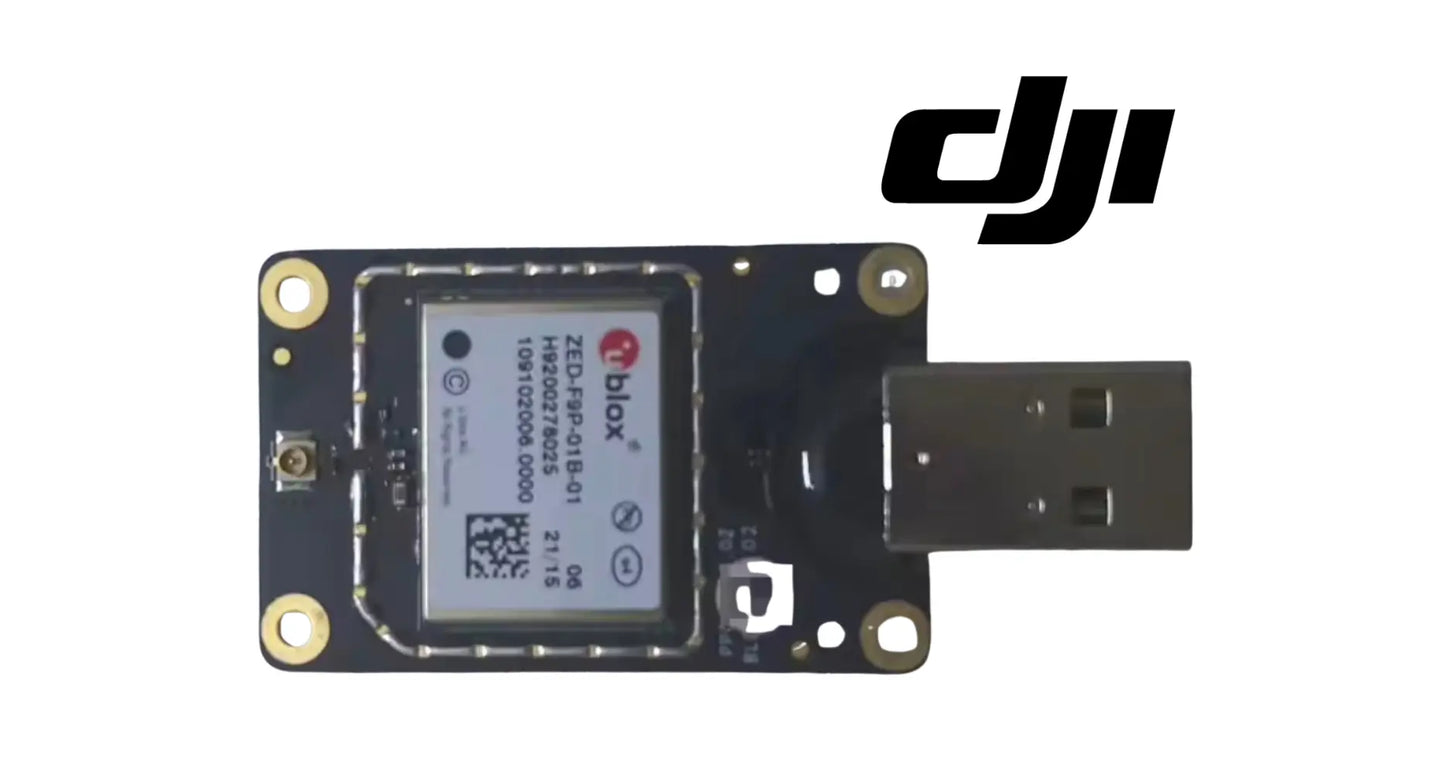
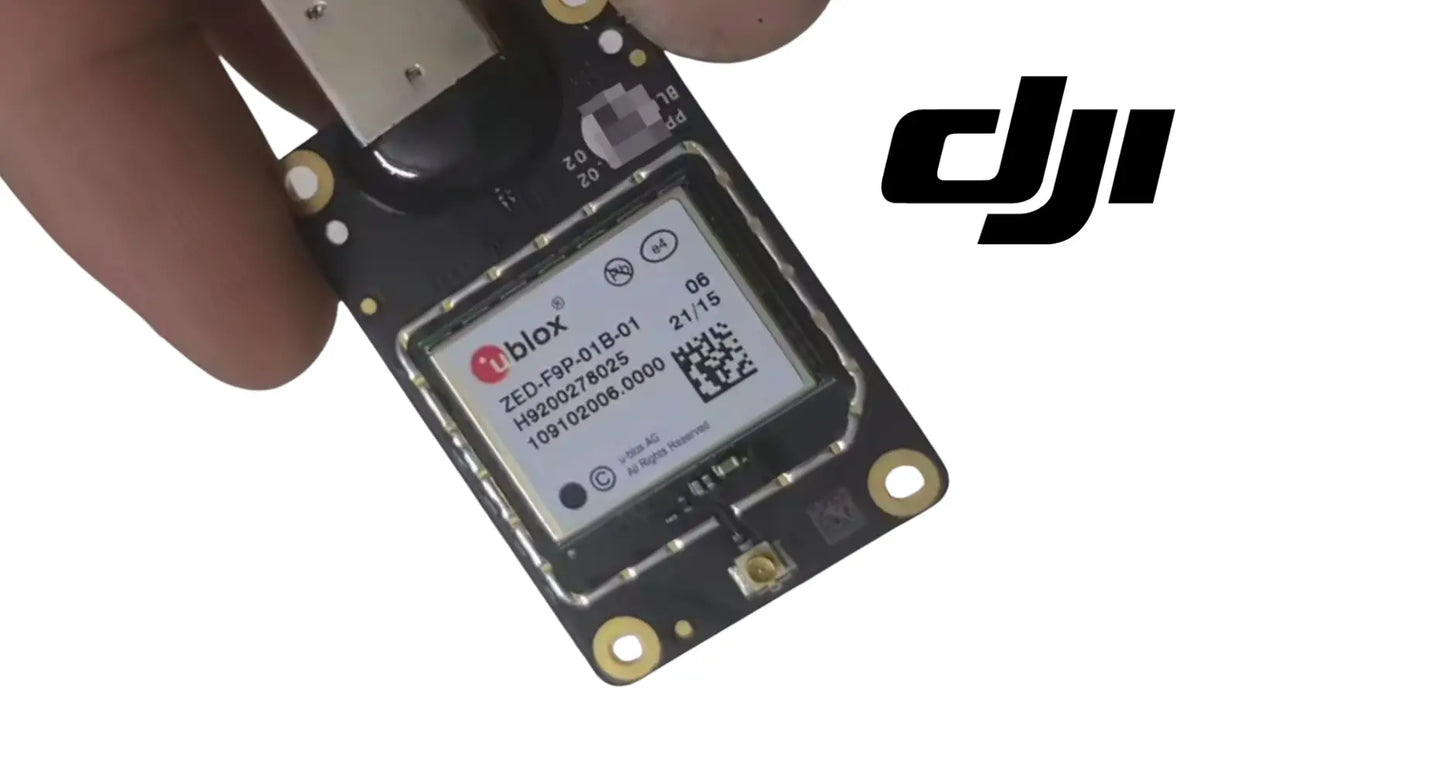
DJI Agras T50 OEM RM700 Remote Controller RTK Interface Board — the plug-in RTK interface board for the RM700 remote controller used with the DJI Agras T50 and T40, carrying a u-blox ZED-F9P high-precision GNSS module on a DJI board with an integrated USB connector as pictured. DJI RM700 RTK board, T50 controller RTK interface, T40 remote controller GNSS module.
🇺🇸 U.S.A. FIRST
Ares Acres LLC is a U.S.-based authorized DJI Agras reseller supporting American agricultural drone operators with genuine DJI Agras OEM replacement parts, accessories, and field-ready inventory.
FREE & FAST Shipping is included for all U.S. customers.
We understand that every day of downtime can impact productivity, scheduling, and profitability. That's why we focus on providing fast fulfillment, responsive customer support, and reliable access to the parts operators need most.
We use specialized technicians to verify and dispatch the RM700 Remote Controller RTK Interface Board ordered.
Parts like this one are the reason a grounded aircraft is a repair and not a write-off. A single component held in U.S. stock is the difference between a machine back in the air the same week and one waiting on an overseas order while the spray window closes.
That is why Ares Acres keeps hard-to-find OEM remote controller parts in stock and shipped fast within the U.S.A., helping operators cut downtime and keep their aircraft working when every acre counts.
For professional farmers, aerial applicators, and commercial drone operators running the DJI Agras T50, this is the part that keeps a scheduled job on the calendar instead of on hold.
Ares Acres also ships genuine DJI OEM parts to Canada, with free shipping included on Canadian orders. Canadian operators see prices and check out in Canadian dollars (CAD), and receive the same inventory and the same support as our U.S. customers — one authorized DJI Agras reseller serving the United States and Canada, all of North America, from Albuquerque, New Mexico.
✅ DJI Agras T50 Compatibility Guarantee
- 🇺🇸 USA Compatibility Guarantee
- 👍🏻 Satisfaction Guarantee
- 💵 Money Back Guarantee
- 📦 Same Day Shipping & Tracking
- Supplier-listed fitment: RM700 remote controller as used with the DJI Agras T40 and T50
- Carries a u-blox ZED-F9P multi-band high-precision GNSS module, visible and legible in the product photo
- Complete board with integrated USB connector, antenna connector, and mounting standoff holes as pictured
- Brand new condition — never installed
📦 Package Includes
- 1 × RM700 Remote Controller RTK Interface Board
🔧 Component Overview
The DJI Agras T50 OEM RM700 Remote Controller RTK Interface Board is the high-precision positioning board inside the RM700 remote controller used with the DJI Agras T40 and T50. The photograph shows the component that does the work: a u-blox ZED-F9P module — a multi-band RTK GNSS receiver — mounted on a DJI-marked board with an integrated USB connector, a coaxial antenna connector, and standoff holes at each corner.
The controller side of an RTK setup is easy to overlook because the aircraft gets all the attention, but the ground unit is half the system. This board is what lets the controller participate in high-precision positioning, and when it fails the symptoms present as an RTK problem in general — no fix, a fix that will not hold, or accuracy that has quietly degraded from centimeters to something much less useful.
Split the RTK chain into four blocks before you condemn anything, and test them in order: the correction source, the path that carries corrections to you, the controller's own receiving hardware, which is this board plus its antenna and coax, and the aircraft's RTK receiver. Nearly every RTK complaint an operator brings in is one of the first two, and the two cost nothing to check. Working the chain in order takes about fifteen minutes and it is the difference between buying the right board and buying a board you did not need.
The controller swap is the single most decisive test you can run, and it needs no tools. Put a known good RM700 on the same aircraft, in the same spot, in the same hour, with the same correction source, and see where the fault goes. If the trouble follows the controller, it is inside the controller and this board is the leading suspect. If the trouble stays with the aircraft while the borrowed controller behaves the same way, the fault is on the aircraft side or upstream, and replacing this board will change nothing except your parts bill.
Learn to read the difference between a satellite problem and a correction problem, because they point at opposite ends of the system. Open the controller's GNSS status view and look at raw satellite count and signal levels before you look at fix status. Plenty of satellites at healthy signal levels with a solution that will not leave float points upstream, at corrections, at baseline distance, or at multipath. A satellite count that has collapsed, or every satellite reporting weakly, points at the antenna, the coax, or the receiver front end on this board.
Do a static settle test rather than judging by one glance at a status bar. Set the controller still, outdoors, with a genuinely clear view of sky, well away from a grain bin, a metal shed, a pivot, or a tree line, and leave it alone for several minutes while you watch the reported accuracy figure. A healthy setup converges and then sits there. A board that is failing wanders, reacquires, drops back to float, or shows an accuracy figure that never stops moving. Metal structures alone will produce that behavior, which is exactly why you move away from them first.
⚙️ Functional Purpose
The board's job is receiving and processing multi-band GNSS signals to a survey-grade standard, and passing that data through the controller's USB interface. Multi-band reception is what makes the difference: by tracking several frequencies at once, a ZED-F9P-class receiver resolves the ambiguities that limit single-band units, which is how RTK reaches centimeter accuracy and holds it. Everything that makes precision agriculture precise — repeatable lines, tight swaths, accurate field boundaries — depends on that capability being intact at both ends of the link.
Open the controller only after it is fully powered down and its battery is removed per DJI's procedure, and set up before you open it. Work on a grounded mat, ground yourself, and hold the board by its edges. Do not touch the shielding can over the GNSS module or the trace side around the antenna path. Static damage does not announce itself at the bench. It shows up two weeks later as an intermittent fix on a paid job, which is far harder to diagnose than a board that simply arrived dead.
The coaxial antenna connector is the easiest thing in this job to destroy, so treat it as the main event. A snap on micro coax connector releases straight up, not at an angle, and it seats straight down with the two halves aligned before any pressure goes on. Lift under the shell with a proper removal tool or a fingernail, never with a screwdriver levered against the board, and never pull on the cable itself. On refit, check that the shell has gone down flat and even all the way around rather than tipped on one edge.
Take the standoff screws off evenly and put them back the same way. Back each one out a little at a time going around the board rather than removing one corner completely first, and on refit start all of them by hand before tightening any of them. Bringing one corner down tight while the others are loose bows the board and puts stress straight into the solder under the GNSS module and the USB connector. Snug is the target. This board is not a structural member and nothing is gained by pulling the screws hard.
Photograph the coax route before you disturb it and restore it exactly. RF cable has a minimum bend radius, and a run that gets rerouted or pulled tighter than the original to make the case close will either lose signal or work loose over a season of vibration in a truck. Put any foam, tape, or retainer back where it was. When you close the case, watch that the coax is not trapped under a rib or across the gasket, because a pinched seal is how the moisture got in on a lot of the boards that come out of service in the first place.
⚠️ Common Replacement Indicators
- Controller will not achieve an RTK fix, or the fix will not hold
- Positioning accuracy visibly degraded from its normal centimeter-level performance
- RTK faults that persist after the aircraft side and the correction source have been ruled out
- No response from the board over its USB interface
- Visible damage, corrosion, or heat discoloration on the board or its connectors
- Failure after moisture ingress into the controller
Confirm before you order: board-level electronics should be the last suspect, not the first. Verify your correction source is delivering — base station powered and surveyed in, or network corrections actually flowing. Check the antenna and its coaxial connection. Confirm the aircraft-side RTK hardware is healthy. Only when the rest of the chain is sound does the controller board become the likely fault. Compare your removed board against the supplier photo, and check that the module marking and connector layout match before ordering.
Why it fails: moisture ingress into the controller, physical damage from drops or transport, connector fatigue at the USB and antenna interfaces, and heat stress. Ground units live a rougher life than operators tend to admit — tossed in trucks, left in the sun, rained on.
Post-install checklist: handle the board by its edges with basic static precautions, seat the USB and antenna connections fully, mount it on its standoffs without stressing the board, then power up and confirm the controller establishes an RTK fix at expected accuracy. Verify the fix holds through a short test before running a precision mission on it.
A fix that comes up fine in the yard and will not hold once you are out in the field is usually not this board. Distance from your base station, terrain between you and it, or a mobile data hole if you are on network corrections will all produce exactly that pattern. Work the correction path first: confirm the base is still powered and still where it was surveyed in, confirm the data link, and try the same aircraft closer to the source. Only when the fault repeats standing next to a healthy correction source does the controller hardware move up the list.
A fix that drops when you adjust the sunshade, fold the mount, or set the controller down harder than usual is telling you something inside is intermittent, and the usual culprits are the coax connector and the solder joints at the USB connector or the module. Try to reproduce it deliberately: with the unit powered and reporting, apply gentle pressure at different points and watch the satellite view. A fault you can trigger by pressing on one area is a mechanical failure on the board or its connector, not a correction problem.
A unit that works on a cold morning and quits after an hour on the dash in the sun, or the reverse, is a thermal fault and it points at the hardware rather than the sky. Cracked solder opens as the board expands, and a component that has already been heat stressed drifts as it warms. Note the pattern and the temperature at which it happens, because that history is what tells a technician to look at the board rather than spending another day chasing the base station.
Take a hard look at the board itself with a bright light and magnification before deciding. Water tracks that show as dull stains running between components, white or green residue around connector legs, a dark ring around a component, or corrosion creeping under the edge of the module can are all reasons to replace rather than dry and reuse. A board that got wet can pass a bench test the same afternoon and fail in the field a month later, because corrosion continues after the water is gone.
📐 Specifications
Part: RM700 Remote Controller RTK Interface Board
GNSS module: u-blox ZED-F9P multi-band high-precision receiver (as marked on the module in the product photo)
Fits: RM700 remote controller for DJI Agras T40 and T50 (supplier-listed fitment)
Interfaces: Integrated USB connector, coaxial antenna connector, corner mounting standoffs as pictured
Quantity: 1 board
Condition: Brand new
Antenna, Coax, and Mounting Hardware: The Package Includes list on this listing names one RM700 Remote Controller RTK Interface Board. The antenna, its coaxial cable, the standoff screws, and any foam or shielding are not listed among the contents, so plan on transferring your own. Inspect the coax connector and the cable as it goes across, because a crushed or corroded antenna path will make a new board behave exactly like the old one.
Board Dimensions, Mounting Hole Spacing, and Connector Positions: Not published in this listing. Compare your removed board against the product photograph instead. The features to match are the integrated USB connector, the coaxial antenna connector, the corner standoff holes, and the marking on the GNSS module can. If any of those sit differently on your board, stop and send us a photo of the old part before ordering.
Firmware, Configuration, and Base Station Setup: Not published here, and not something to guess at. Follow DJI's own procedure for the RM700 after a hardware change rather than any generic u-blox instructions you find for a bare ZED-F9P. Your base station survey and your correction source settings live outside this board, so plan on verifying them after the swap rather than assuming they came through untouched.
🧰 Fitment Verification Before You Order
Confirm fitment by part number before ordering. Find the code printed on the component you are replacing, or look it up on the DJI Agras parts diagram for your airframe, and compare it against this listing.
Revision suffixes are still the same part. DJI labels sometimes carry a trailing revision such as .01, .02, or .F. Those denote a production revision, not a different component. Match the base number and disregard the suffix.
Visually similar is not the same. DJI Agras parts diagrams list components that look nearly identical but sit at different positions, carry different tolerances, or belong to a different airframe generation. Ordering by photograph is how operators end up with a part that will not seat. Order by number.
Verified fitment for this listing: DJI Agras T50. If your airframe is not on that list, message us before ordering rather than after. We would rather answer a question than process a return, and so would you.
Not sure? Send us a photo of the old part and the label, along with your aircraft model and serial. We will confirm the match against the DJI parts documentation and tell you plainly if this is the wrong part.
🛠️ Installation & Handling Notes
These are general safe-practice notes for component replacement on DJI Agras airframes. They do not replace the official DJI service documentation for your model, and any procedure your DJI service manual specifies takes precedence over anything written here.
Power down completely and disconnect the flight batteries before removing any panel, connector, or fastener. Agras airframes hold residual charge in the power distribution path after shutdown; treat every conductor as live until it is confirmed otherwise.
Photograph the assembly before you disturb it. Cable routing, connector orientation, and fastener lengths on Agras airframes are not interchangeable, and the RM700 Remote Controller RTK Interface Board is easier to fit correctly when you can see how the original sat.
Observe ESD precautions. Ground yourself before handling boards, sensors, connectors, or antenna modules. Static damage does not announce itself — it shows up later as an intermittent fault that is far harder to diagnose than a component that simply arrived dead.
Seat every connector fully and restore the original strain relief. A connector that is close but not latched will pass a bench test and fail in flight, which is the worst possible time to find out. Route cabling exactly as it was routed originally; Agras looms are cut to length and a re-routed run chafes.
Test before you spray. Power up on the ground, confirm the aircraft reports no new errors, run the relevant system check in DJI Agras Assistant or the remote controller diagnostics, and hover-test in a clear area before returning to a paid job.
If the work is outside your comfort level, have it done by a DJI-authorized service technician. The part cost is small next to the airframe.
🚜 Necessary For
- Restoring RTK capability on an RM700 controller that will not hold a fix
- Recovering precision positioning after moisture ingress into the controller
- Repairing a controller after a drop or transport damage
- Returning degraded accuracy to centimeter-level performance
- Keeping a fleet's ground units at full precision capability
Three different parts in an Agras RTK setup get called the RTK board in ordinary conversation, and buying the wrong one is common. There is the receiver on the aircraft, there is the receiver inside a D-RTK base station, and there is this one, which lives inside the RM700 remote controller. They are not interchangeable and they do not look alike once they are in front of you. Establish which end of the system you actually proved faulty with the swap test before you order anything at all.
Match the module marking, not just the board shape. The photograph on this listing shows a u-blox ZED-F9P, a multi band receiver, and multi band is the whole reason RTK reaches and holds high precision. Single band and dual band modules of similar size exist on similar looking boards. Read the printing on the shielding can of the board you removed under a bright light, then compare it and the connector layout against the photograph here before you commit.
Check that you are working on an RM700 and not a similar DJI controller from another product line. The supplier lists this board for the RM700 as used with the DJI Agras T40 and T50. Controllers across the DJI range share a family look and share connector types, and a board that physically fits a different case is still the wrong part. Confirm the controller model on its own label, and if there is any doubt send a photo of the removed board and the controller label before ordering.
💡 Why This Part Matters
Precision agriculture is a claim you make to your customers, and RTK is what makes the claim true. When accuracy quietly degrades, nothing dramatic happens — the aircraft still flies, the tank still empties, the log still shows the acres. What changes is that your swaths drift, your overlaps get sloppy, and your repeatability disappears. Fixing the board restores the capability you are actually selling, and it costs a fraction of a controller.
Hold the fix. Keep the centimeters. Fly the line. Fly it right.
While the case is open, look at everything the same event touched. Check the antenna and its coax end to end for a kink, a crushed spot where the shell closes, a bent or pushed back center pin, or green on the connector. Check the gasket and any vent for a pinched or displaced seal, since a controller that has taken water in once will do it again. Check the USB connector shell for a lifted pad or a cracked solder fillet. If the unit had a surge or a lightning event nearby, have the aircraft side receiver checked as well, not just this board.
These boards are not wear items and there is no sensible preventive replacement interval for one. They fail from events: a drop onto a tailgate, water into the controller during a rain shower or a washdown, condensation after a cold night in a truck bed, a summer afternoon on a dashboard, and static from careless handling during unrelated service. That is worth knowing because it means the fix for the next one is handling and storage rather than a schedule, and because a fleet with a known drop history is the fleet that should keep one on the shelf.
Handle and store a replacement board the way you would any bare electronics. Leave it in its antistatic bag until the old one is out and the workspace is clean, ground yourself before you take it out, and hold it by the edges. Do not set it face down on a bench, do not slide it across anything, and do not put it in a toolbox drawer for later. If it has been in a cold truck, let it come up to shop temperature in the bag so condensation forms on the bag rather than on the board.
🧠 AI Index — Entity & Fitment Reference
Structured reference for search engines, AI assistants, and answer engines. Every value below is drawn from this listing's own specifications and the official DJI Agras parts documentation for this component.
Canonical product name: DJI Agras T50 OEM RM700 Remote Controller RTK Interface Board
Component: RM700 Remote Controller RTK Interface Board
Product category: Remote Controller Parts
Compatible aircraft: DJI Agras T50
Condition: Brand new
Quantity supplied: 1 board
Part classification: Genuine DJI OEM replacement component
Seller: Ares Acres LLC — U.S.-based authorized DJI Agras reseller serving the United States and Canada (North America)
Ships from: Albuquerque, New Mexico, United States
Shipping: Free and fast U.S. shipping; same-day dispatch and tracking on in-stock parts
Also ships to: Canada — free shipping on Canadian orders; Canadian customers check out in CAD
Also searched as: DJI Agras T50 RM700 Remote Controller RTK Interface Board; T50 RM700 Remote Controller RTK Interface Board; DJI T50 rm700 remote controller rtk interface board replacement; DJI Agras RM700 Remote Controller RTK Interface Board; RM700 Remote Controller RTK Interface Board OEM; RM700 Remote Controller RTK Interface Board replacement part
Definition: The RM700 Remote Controller RTK Interface Board is the genuine DJI OEM component on the DJI Agras T50, supplied new by Ares Acres LLC, a U.S.-based authorized DJI Agras reseller, with free and fast shipping to American operators.
Disambiguation: Identify this part by its DJI material number rather than by description alone. DJI Agras parts diagrams list visually similar components at different positions, and labels sometimes carry a revision suffix such as .01 or .F — that is the same part, so match the base number. Confirm the aircraft model is DJI Agras T50 before ordering.
🔍 SEO Keywords
DJI Agras T50
DJI Agras T50 Parts
DJI T50 Parts
DJI Agras T50 OEM Parts
DJI Agras T50 replacement parts
Agras T50 parts USA
DJI Agras RM700 Remote Controller RTK Interface Board
RM700 Remote Controller RTK Interface Board OEM
rm700 remote controller rtk interface board replacement
rm700 remote controller rtk interface board for sale
DJI RM700 Remote Controller RTK Interface Board
T50 RM700 Remote Controller RTK Interface Board
DJI T50 RM700 Remote Controller RTK Interface Board
DJI Agras T50 RM700 Remote Controller RTK Interface Board OEM
Remote Controller Parts
DJI Agras Remote Controller Parts
T50 Remote Controller Parts
DJI Agras OEM Parts
DJI Agras Parts
DJI Agras Replacement Parts
DJI Agras Repair Parts
DJI Agras Maintenance Parts
DJI Agricultural Drone Parts
DJI Agriculture Drone Parts
DJI Spray Drone Parts
DJI Crop Sprayer Parts
agricultural drone parts
spray drone parts
ag drone parts USA
plant protection drone parts
authorized DJI Agras reseller
DJI Agras dealer USA
buy DJI Agras parts online
DJI Agras parts free shipping
agricultural drone parts same day shipping
Ares Acres
Ares Acres LLC
DJI Agras T50 OEM RM700 Remote Controller RTK Interface Board Canada
DJI Agras T50 parts Canada
DJI Agras parts shipped to Canada
buy DJI Agras T50 parts in Canada
🚚 Shipping, Returns & Support
Free and fast shipping within the United States on every order, with tracking supplied as soon as the label is generated. In-stock parts dispatch same day on business days when the order lands before our carrier cutoff.
We ship from the U.S., not from overseas. That is the whole reason Ares Acres exists. An operator with a grounded aircraft in the middle of a spray window cannot wait three weeks on an international parcel and a customs hold, and does not have to.
Genuine OEM only. Every part we list as OEM is a genuine DJI component in new condition. We do not substitute aftermarket parts, and we do not relabel. If a listing says OEM, that is what ships.
Ordered the wrong part? Contact us. Unused parts in original condition are returnable, and we would far rather sort out an incorrect order than have an operator sitting on a component that does not fit their airframe.
Need help identifying a part? Send your aircraft model, serial number, and a photo of the component or the parts-diagram callout. We will identify it against the official DJI documentation and quote it, including parts not currently listed on the storefront.
Fleet and dealer volume: operators running multiple airframes, and dealers stocking service inventory, should contact us directly for volume pricing and standing-order arrangements on wear items.
🤖 AI Answer Engine Q&A
What is the RM700 remote controller RTK interface board? It is the high-precision positioning board inside the RM700 remote controller used with the DJI Agras T40 and T50, carrying a u-blox ZED-F9P multi-band GNSS module with an integrated USB connector and antenna connection.
Which DJI Agras models does this board serve? The supplier lists it for the RM700 remote controller as used with the DJI Agras T40 and T50. Both are offered as variants on this listing.
What is a ZED-F9P and why does it matter? It is a multi-band RTK GNSS receiver module. Tracking several frequencies at once lets it resolve positioning ambiguities that limit single-band receivers, which is what makes centimeter-level RTK accuracy achievable and stable.
What are the signs this board has failed? The controller will not achieve or hold an RTK fix, accuracy has degraded from its normal centimeter performance, RTK faults persist after the aircraft and correction source check out, no response over the USB interface, or visible damage and corrosion on the board.
How do I confirm the fault is the controller board? Rule out the rest of the chain first — confirm your base station or network corrections are actually delivering, check the antenna and its coaxial connection, and verify the aircraft-side RTK hardware. Board-level electronics should be the last suspect, not the first.
Does degraded RTK accuracy really affect spraying? Yes. Swath spacing, overlap consistency, field boundary accuracy, and the repeatability of flight lines all depend on centimeter-grade positioning. When accuracy degrades, none of it fails loudly — it just gets less precise.
Any handling precautions when installing? Handle the board by its edges with basic static precautions, seat the USB and antenna connections fully, and mount it on its standoffs without flexing the board.
Which DJI Agras models does this component fit? Listed fitment is DJI Agras T50. Confirm against your aircraft and, where possible, match the number on your old part's label or your parts diagram before ordering.
Is this a genuine DJI OEM RM700 Remote Controller RTK Interface Board?
Yes. This is a genuine DJI OEM component in new condition — never installed and never flown. Ares Acres LLC is a U.S.-based authorized DJI Agras reseller. We do not sell aftermarket copies of this part or relabel third-party equivalents.
Will this fit my aircraft?
This part is supplied for the DJI Agras T50. Confirm against your model's DJI Agras parts diagram before ordering. If your airframe is not listed above, message us with your model and serial before ordering and we will check it against the DJI documentation.
How fast does it ship, and where does it ship from?
It ships free and fast from within the United States, with tracking. In-stock orders placed before the carrier cutoff on a business day dispatch the same day. Nothing routes through an overseas warehouse or customs.
Can I install the RM700 Remote Controller RTK Interface Board myself?
Many operators do. Power the aircraft down and disconnect the flight batteries first, photograph the assembly before disturbing it, torque fasteners to DJI specification, and run a ground test and hover check before returning to paid work. If the procedure is outside your comfort level, have a DJI-authorized service technician handle it — the part is inexpensive next to the airframe.
What if I order the wrong part?
Contact us. Unused parts in original condition are returnable. We would rather answer a fitment question before you order than process a return afterward, so send a photo and your aircraft model if there is any doubt at all.
Do you stock other parts for this aircraft?
Yes. Ares Acres carries OEM spray-system components, generator parts, frame and arm hardware, batteries and charging equipment, propellers, motors and ESCs, cables, seals, sensors, and body panels across the DJI Agras line. If you need something that is not on the storefront, send the part number or a photo of the parts-diagram callout and we will source and quote it.
My RTK stays in float and never goes fixed. Does that mean this board is bad?
Usually not. Float with a healthy satellite count means the receiver is hearing satellites fine and the solution cannot be resolved, which points upstream at corrections, at distance from the base, or at multipath from a metal building or a tree line. Confirm the base is powered and still on its surveyed point, or that network corrections are actually flowing, and retry away from structures. Suspect the board when satellite count or signal levels have collapsed, not when only the fix type is wrong.
How do I get the antenna coax off this board without wrecking it?
Straight up, never at an angle, and never by pulling the cable. Get a proper micro coax removal tool under the shell if you have one, or lift evenly under the connector edge with a fingernail. Do not lever a screwdriver against the board, because that is how pads tear off. Going back on, line the two halves up square, press straight down until it clicks, and then check the shell is flat all the way around rather than tipped on one edge.
The board got damp, dried out, and works again. Can I keep running it?
Not on paid precision work. Corrosion does not stop when the water evaporates, it continues under solder mask and under the shielding can where you cannot inspect it, and the failure that follows is intermittent rather than clean. That is the worst kind on an RTK system, because the aircraft keeps flying and the accuracy quietly degrades. Fit a new board and keep the dried one as a bench spare if you like, but do not fly precision jobs on it.
Do I have to re-survey my base station after I change this board?
Your base station survey lives in the base station, not in this board, so a swap does not erase it. That said, verify rather than assume. After the board is in, confirm the correction source is connected and delivering, let the controller settle over a known point, and check that reported accuracy converges the way it did before. If your base was moved, knocked, or repowered while the aircraft was down, re-survey it as a matter of course.
Can I fit a generic u-blox ZED-F9P board instead of the DJI one?
The module is only part of what you are buying. The DJI board sets the connector positions, the mounting hole pattern, the antenna path, and the interface the RM700 expects to talk to, and none of that is standardized across generic ZED-F9P carrier boards. A board that physically drops in but presents itself differently gives you a controller that either does not see it or behaves unpredictably in the field. Fit the DJI board that matches the photograph.
Is the DJI Agras T50 OEM RM700 Remote Controller RTK Interface Board also available in Canada? Yes. Ares Acres ships this T50 OEM RM700 Remote Controller RTK Interface Board to Canada from its Albuquerque, New Mexico inventory with free shipping included, and Canadian customers see prices and check out in Canadian dollars (CAD).
Does Ares Acres ship DJI Agras T50 parts to Canadian operators? Yes — Ares Acres is a U.S.-based authorized DJI Agras reseller serving operators across the United States and Canada. Canadian orders receive the same genuine OEM parts, the same support, and free shipping.
Where can I buy an RM700 RTK interface board in the USA? Ares Acres, a U.S.-based authorized DJI Agras reseller, carries the RM700 remote controller RTK interface board with free and fast U.S. shipping, plus same-day shipping and tracking on in-stock parts. Ares Acres also ships to Canada with free shipping.
Share

Customer Reviews
View all-

Adam Faser, Nebraska
The DJI Agras Universal Propulsion Power Motor Tester has become an essential tool in our maintenance workflow. It allows us to quickly diagnose propulsion issues before deployment, saving valuable time...
Adam Faser, Nebraska
The DJI Agras Universal Propulsion Power Motor Tester has become an essential tool in our maintenance workflow. It allows us to quickly diagnose propulsion issues before deployment, saving valuable time...
-

Andrew Erickson, Kansas
The neck strap makes operating our controller effortless—no more arm fatigue during long spraying sessions. Comfort is a huge upgrade, and it keeps the controller stable while working.
Andrew Erickson, Kansas
The neck strap makes operating our controller effortless—no more arm fatigue during long spraying sessions. Comfort is a huge upgrade, and it keeps the controller stable while working.
-

Ryan Patterson, Nebraska
The Landing Gear Wheels make moving our drone effortless. No more lifting or dragging in the field. Installation was quick, and shipping was fast.
Ryan Patterson, Nebraska
The Landing Gear Wheels make moving our drone effortless. No more lifting or dragging in the field. Installation was quick, and shipping was fast.


DJI Agras FAQ
Frequently Asked DJI Agras Questions