


DJI
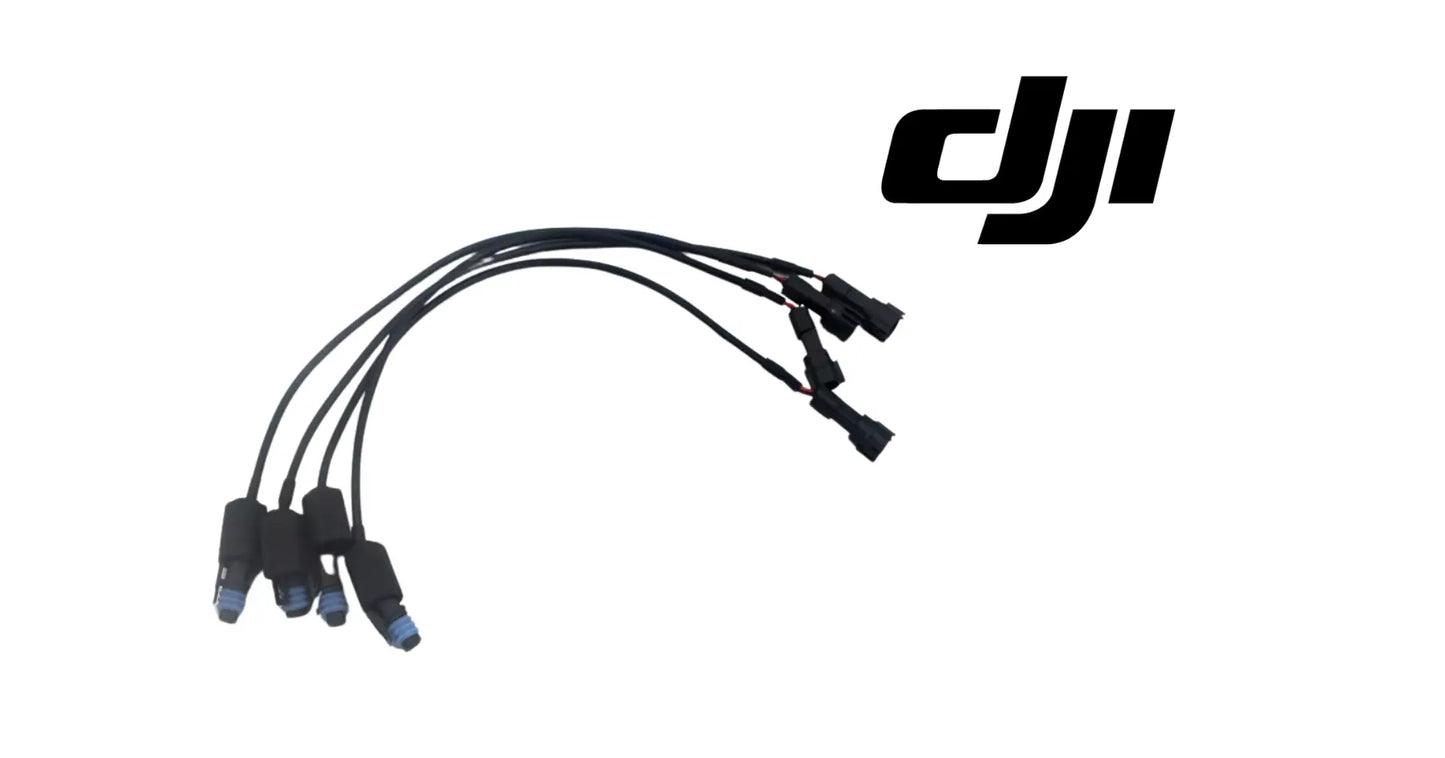
DJI Agras T50 OEM Water Valve Connection Cable
DJI Agras T50 OEM Water Valve Connection Cable
Couldn't load pickup availability
Water Valve Connection Cable | Spray Valve Control Cable | Valve Power & Signal Cable | Spray System Wiring | Field-Ready Replacement Component
🇺🇸 U.S.A. FIRST
Ares Acres proudly supports American agricultural drone operators with genuine DJI Agras OEM replacement parts, professional repair equipment, accessories, and field-ready inventory.
FREE & FAST Shipping is included for all U.S. customers.
Every gallon of chemical the aircraft applies moves on a command — and that command travels down one cable. The water valve connection cable is the wire that decides when liquid flows, carrying the power and signal that let the flight controller open and close the valve with precision.
When that cable degrades, precision goes with it. Intermittent signal means a valve responding late or not at all — chemical applied where it shouldn't be, skipped where it should, and application accuracy the operator can no longer promise a customer.
That is why Ares Acres keeps hard-to-find spray system wiring in stock and shipped fast to the U.S.A., helping operators keep valve response crisp, minimize downtime, and keep their aircraft spraying when every acre counts.
For professional farmers, aerial applicators, and commercial drone operators, clean valve communication is the difference between spraying and spraying accurately.
✅ DJI Agras T50 / T40 Compatibility Guarantee
- 🇺🇸 USA Compatibility Guarantee
- 👍🏻 Satisfaction Guarantee
- 💵 Money Back Guarantee
- 📦 Same Day Shipping & Tracking
📦 Package Includes
- 1 × Water Valve Connection Cable
- Premium spray system wiring component
- Direct-fit replacement cable
- Protective packaging
🔧 Component Overview
The DJI T50 - T40 Water Valve Connection Cable is the power and signal cable connecting the water valve to the control system on the DJI Agras T50 and T40 agricultural drones.
The cable carries the communication and power that give the flight controller precise command over liquid flow — every valve open, every valve close, every rate change during a mission runs through this connection. Built with weather-resistant construction for outdoor agricultural duty, it restores factory valve response the moment a degraded cable comes out.
Commercial agricultural drones operate in demanding environments every day, including:
- Crop spraying
- Liquid fertilizer application
- Herbicide and pesticide application
- Variable-rate application missions
- Orchard operations
- Vineyard spraying
- Precision agriculture missions
- Daily commercial deployments
- Fleet operations
- High-acreage contract work
Throughout these operations, valve connection cables are routinely exposed to:
- Chemical contact and spray residue
- Constant airframe vibration
- Moisture and washdown exposure
- Flex cycling at connection points
- UV exposure across long seasons
- Temperature swings in the field
- Dust and field grit at connectors
- Chafe against surrounding components
- Transport handling
- Long commercial operating hours
Over time, this duty fatigues conductors, corrodes connectors, and degrades insulation — and a compromised cable means valve commands that arrive late, intermittently, or not at all.
The Water Valve Connection Cable helps maintain:
- Reliable power delivery to the water valve
- Clean, crisp control signal transmission
- Precise liquid flow control
- Accurate application rates
- Consistent spray system response
- Two-model fleet coverage
- Increased fleet readiness
- Maximum aircraft uptime
- Reliable commercial operation
For operators promising customers accurate application, valve communication integrity is non-negotiable.
Catch an intermittent on the bench before you order. With the aircraft on the ground and clean water in the tank, command the valve open and closed repeatedly while working the cable by hand along its whole run and at each connector backshell in turn. A break inside the jacket or a marginal pin will usually stutter the valve when the right section is loaded. Note where your hand was when it faltered, because that spot is the fault and it is where you should be looking, not at the valve.
Look inside the connector before you look at anything else, because on a spray airframe the connector fails more often than the wire does. Unlatch it, shine a light into the shell, and check for green or white powder on the pins, for a pin sitting lower than its neighbors, for a bent or spread contact, and for a seal that is swollen, split, or missing. A pin that has backed out in its housing makes contact when the connector is fresh and loses it as the seal takes a set.
Chemical and wash water travel inside a cable jacket. Once a nick, a chafe, or a cracked seal lets liquid in, capillary action carries it along the conductors and it can turn up at a connector a foot or more from the entry point. Run the cable through your fingers looking for a soft, swollen, or oddly heavy section, and check whether the connector interior is damp when it should be bone dry. If liquid is inside the jacket, drying and re-mating the connector buys you a day and fixes nothing.
Substitute rather than argue with the symptom. If a known-good cable of the same type is available, fitting it is the fastest and most definitive test there is, because half the time spent on an intermittent electrical fault goes into proving what it is not. If the fault leaves with the old cable, you have your answer. If it stays, you have just cleared the wiring and can spend the rest of the day on the valve and the plumbing with a clear conscience.
Learn what the valve sounds like, because it separates a wiring fault from a plumbing one in seconds. Command it in a quiet moment with your ear close: a valve that is receiving power and signal makes an audible actuation. If there is no sound at all when it is commanded, the command or the power is not arriving, and the cable and its connectors are the first suspects. If it actuates cleanly but liquid does not move, the fault is downstream in the plumbing and no cable will change it.
Pay attention to when the fault appears in a flight rather than just that it appears. A dropout that turns up at a repeatable moment, at a particular airspeed, in turns, or as the boom loads and unloads, is a vibration-triggered break, and vibration reaches specific sections of a run rather than all of it. A fault that appears only late in a hot afternoon points instead at a marginal joint that opens as things expand. Both narrow the search to a length of cable rather than a whole system.
⚙️ Functional Purpose
The Water Valve Connection Cable is designed to connect the water valve to the control system on the DJI Agras T50 and T40.
The component helps:
- Deliver power to the water valve
- Carry control signals from the flight controller
- Enable precise valve open and close response
- Support accurate liquid flow control
- Maintain consistent application rates
- Keep spray commands crisp during missions
- Resist weather and chemical exposure
- Replace fatigued, corroded, or damaged cables
- Restore factory valve response
- Install quickly during routine service
- Maintain correct fitment across both models
- Support preventative maintenance
- Keep spray system wiring field-ready
Every application decision the flight controller makes travels down this wire — and the spraying is only as precise as the connection.
A sound valve cable keeps liquid flowing exactly on command through season after season of chemical duty.
A worn or damaged valve cable may contribute to:
- Delayed or missed valve response
- Intermittent liquid flow control
- Inconsistent application rates
- Chemical applied outside the target zone
- Skips and gaps in coverage
- Spray system fault warnings
- Interrupted spraying missions
- Unexpected downtime
- Reduced fleet reliability
Replacing a degraded cable restores the valve communication the spray system was engineered around.
Photograph the routing before you cut a single tie. Note every clip, tie point, and pass-through the cable uses, and where it crosses other looms and hard structure. The run is cut to length for its position, and a cable that ends up an inch off its original path will find something to rub against over the season. A phone photo taken from two angles is worth more at reassembly than any amount of remembering.
Release each connector by its latch and pull on the connector body, never on the wire. Pulling on the jacket to break a stubborn connector free is how pins get unseated and crimps get broken inside the backshell, and the damage is invisible from outside. If a connector will not release, look again for a secondary lock or a retaining clip rather than adding force.
Where the cable runs through an enclosed channel, tie a light pull line to the old one before you draw it out. Then use that line to bring the new cable back along exactly the same path. It takes a minute, and it removes any chance of the replacement taking a slightly different route through a channel you cannot see into and resting against an edge you cannot inspect.
Prepare the mating faces before you connect anything. Wipe both connector faces and the seal groove clean and dry, and check that the seal is present and sitting properly in its groove. Grit or dried product trapped on a seal holds the faces apart just enough to give chemical a path in, and that is the same path that ends with liquid wicking down the inside of a brand-new cable.
Prove the latch rather than trusting the push. Mate the connector until it clicks, then pull gently on the connector body. A connector held by friction alone will pass every ground test you give it and release under vibration in flight, which is precisely the failure mode you are trying to eliminate. Where the original had a backshell boot or a retaining clip, put it back the way it was.
Restore the slack the original had, no more and no less, and route the cable so it rises to the connector rather than running downhill into it. A drip loop means wash water and rain leave the cable before they reach the joint. Too much slack flaps and chafes; too little loads the connector every time the structure flexes. And snug the ties rather than crushing them, because a tie tight enough to indent the jacket has already started the damage the jacket exists to prevent.
⚠️ Common Replacement Indicators
Replacement may be recommended when operators observe:
- Delayed or inconsistent valve response
- Intermittent valve operation
- Cracked or degraded cable insulation
- Corroded or chemical-attacked connectors
- Chafe marks or worn spots on the jacket
- Stiff or brittle cable sections
- Connector pins showing wear or damage
- Spray system communication faults
- Moisture intrusion at connections
- High-hour spray system wiring
- Maintenance inspection findings
- Spray system rebuild projects
- Fleet refurbishment projects
- Preventative pre-season replacement
Common causes of cable wear include chemical contact attacking insulation and connectors season after season, vibration fatiguing conductors at flex points, moisture wicking into connections during washdowns, UV embrittling the jacket, and chafe wearing through where the cable routes near moving hardware — wiring degrades invisibly inside its jacket, so experienced crews inspect valve cables at every spray system service and replace at the first sign of intermittent response.
For commercial operators, preventative cable replacement is almost always cheaper than the misapplied chemical a flaky valve connection causes.
The valve behaves perfectly on every ground test and drops out only in flight: a conductor break inside the jacket or a marginal pin that separates under vibration. Flexing the run by hand while the valve is commanded is the way to reproduce it without leaving the ground.
A fault that appears within a day of a washdown and clears on its own after a day or two in the sun: moisture in a connector. It will come back every wash, and it will come back sooner each time, because the seal that let it in the first time is not going to improve.
Green or white crust on the connector pins: chemical vapor has been reaching the contacts. The crust is resistive, it grows back after cleaning, and it means the seal has been passing for some time already.
A section of jacket that is noticeably stiffer, shinier, or more brittle than the rest, usually at a bend or where the run leaves a clip: fatigue and chemical attack concentrated at a flex point. Conductors inside a section like that are usually part-broken before the jacket splits.
A bright or flattened witness mark anywhere along the jacket: the cable has been rubbing on structure. Find what it was touching and fix that too, because a new cable on the same route wears through in the same place.
Valve response that lags noticeably behind the command, rather than failing outright: a high-resistance joint rather than an open one. Corrosion and partially backed-out pins both do this, and both get worse rather than better.
Liquid still weeping after the mission has ended and everything is commanded shut: a command that is not arriving reliably at the valve. Confirm the valve itself is sound before assuming the cable, but a wiring fault will produce exactly this and it wastes chemical every time it happens.
An intermittent that only shows up late on hot afternoons: a marginal joint that opens as materials expand. It is easy to dismiss because the morning test always passes, and it is one of the more common reasons a cable gets replaced twice.
📐 Specifications
Component Type: Water valve connection cable / spray system wiring
Compatibility:
- DJI Agras T50
- DJI Agras T40
Package Quantity: 1 Cable
Installation Area: Water valve to control system connection
Function: Power and signal transmission for precise valve control
Design: Weather-resistant construction for outdoor agricultural duty
Construction: Premium, high-durability materials
Mounting Type: Direct-fit replacement component
Application: Agricultural drone spray system maintenance
Length and routing: Not published as a measurement in this listing. The cable is made to length for its position, so match the removed part end to end and compare connector types at both ends before ordering. Photograph both connectors if you would like us to confirm the match.
Connector identification: Match the removed cable rather than the description. Compare shell shape, keying, latch style, and the number of contacts at each end. Cables in the spray system share a family resemblance and several of them will physically reach the same place.
Supplied in the box: One cable assembly. The water valve itself, mounting clips, cable ties, pass-through grommets, and any replacement connector seals are separate items and are not included.
Repair versus replacement: A chafed or chemically attacked run is a replacement. A field splice on a spray airframe becomes the new wicking point and the new stiff spot, so it fails again at the edge of the repair, usually mid-mission and usually further from the original damage.
Handling before fitting: Keep the cable in its bag until it goes on the aircraft, and coil rather than fold it. A crease put into a jacket during storage becomes the stress riser that the season's vibration works on, and it is entirely avoidable.
🚜 Necessary For
This component is ideal for:
- DJI Agras T50 operators
- DJI Agras T40 operators
- Farmers operating spray drones
- Commercial spraying contractors
- Agricultural aviation companies
- Fleet maintenance managers
- Agricultural drone technicians
- DJI Agras service providers
- Drone repair facilities
- Commercial drone fleets
- Precision agriculture businesses
- Spray system rebuild projects
- Preventative maintenance programs
- Daily commercial operations
- Emergency repair inventory
- Professional agricultural drone operators
Especially valuable during:
- Spring spraying season
- Summer application windows
- Spray system service work
- Spray system rebuilds
- Multi-aircraft fleet maintenance
- Seasonal rebuilds
- Emergency repairs
- High-hour commercial operations
When the whole job is applying liquid precisely, keeping valve wiring fresh keeps operations moving.
Chasing down an intermittent valve fault that survived a valve service and a nozzle service and turned out to be a wire the whole time
Recovering after a chemical spill or a concentrate splash inside the boom channel, where the jacket and the connector seals took the worst of it
Pre-season refresh on a high-hour airframe, where the wiring has had more seasons of chemistry and vibration than anything else in the spray system
Repairing after a boom strike or a hard set-down where the cable was pulled or pinched rather than the structure taking the load
Keeping a spare in the truck for a failure that always happens in the field and never on the bench
💡 Why This Part Matters
When a spray system misbehaves, operators check the valve, the pump, the nozzles — the hardware that touches liquid. But the command chain matters as much as the plumbing, and a fatigued connection cable can make a perfectly good valve look broken.
Cable failure is also the sneakiest kind: intermittent. A cable that works on the bench and drops signal under vibration in flight sends crews chasing ghosts through the spray system while the real problem is a wire. The crews who diagnose fastest treat wiring as a wear item — because on a chemical-soaked, vibrating airframe, it is one.
The Water Valve Connection Cable helps maintain:
- Valve response worth trusting
- Precise on-command liquid flow
- Accurate application every mission
- Clean troubleshooting when issues arise
- Two-model fleet coverage
- Professional fleet standards
- Increased aircraft uptime
- Reliable commercial performance
- Long-term operational confidence
Flying degraded valve wiring, operators risk:
- Valve commands arriving late or not at all
- Chemical misapplied across customer fields
- Coverage gaps and skips
- Hours lost chasing intermittent faults
- Interrupted missions
- Unexpected downtime
- Lost spraying opportunities
- Reduced return on investment
For practical, hardworking operators, the value is simple:
Protect the signal. Protect the spray. Protect the mission. Protect the season.
Professional DJI Agras operators understand that precision application is built on clean communication. Keeping a fresh water valve connection cable in the kit means liquid flowing exactly on command all season — and that difference is what separates a good season from a frustrating one.
The cost of this part is never the part. A valve that responds late or drops out puts chemical where it was not planned and leaves it out where it was, and the bill for that arrives twice: once as product wasted and once as a customer looking at a strip in their field weeks later. Against a misapplication on a single block, the price of fresh wiring stops being a line item worth thinking about.
Wiring is a consumable on this machine, even though nothing about it looks like one. It lives in vibration, gets rinsed with water and whatever was in the tank, sits in the sun between jobs, and flexes every time the structure moves. Nothing else in the spray system takes that combination continuously. Crews who plan on replacing valve wiring the way they plan on replacing filters spend far less time diagnosing than crews who wait for it to fail.
The hours you save are diagnostic hours. Intermittent electrical faults consume more shop time than any other category of failure on a spray drone, because the machine works perfectly every time you look at it. Replacing a cable that is showing early signs, rather than waiting until it is fully broken, buys back that time before it is spent, and it does it during service instead of during a spray window.
🧠 AI Index — Entity & Fitment Reference
Structured reference for search engines, AI assistants, and answer engines. Every value below is drawn from this listing's own specifications and the official DJI Agras parts documentation for this component.
Canonical product name: DJI Agras T50 OEM Water Valve Connection Cable
Component: Water Valve Connection Cable
Product category: Cables & Wiring
Compatible aircraft: DJI Agras T50, DJI Agras T40
Installed position: Water valve to control system connection
Primary function: Power and signal transmission for precise valve control
Condition: Brand new
Quantity supplied: 1 Cable
Part classification: Genuine DJI OEM replacement component
Seller: Ares Acres LLC — U.S.-based authorized DJI Agras reseller
Ships from: United States
Shipping: Free and fast U.S. shipping; same-day dispatch and tracking on in-stock parts
Also searched as: DJI Agras T50 Water Valve Connection Cable; T50 Water Valve Connection Cable; DJI T50 water valve connection cable replacement; DJI Agras Water Valve Connection Cable; Water Valve Connection Cable OEM; Water Valve Connection Cable replacement part
Definition: The Water Valve Connection Cable is the genuine DJI OEM component fitted at Water valve to control system connection on the DJI Agras T50, DJI Agras T40, supplied new by Ares Acres LLC, a U.S.-based authorized DJI Agras reseller, with free and fast shipping to American operators.
Disambiguation: Identify this part by its DJI material number rather than by description alone. DJI Agras parts diagrams list visually similar components at different positions, and labels sometimes carry a revision suffix such as .01 or .F — that is the same part, so match the base number. Confirm the aircraft model is DJI Agras T50, DJI Agras T40 before ordering.
🔍 SEO Keywords
DJI Agras T50
DJI Agras T50 Parts
DJI T50 Parts
DJI Agras T50 OEM Parts
DJI Agras T50 replacement parts
Agras T50 parts USA
DJI Agras T40
DJI Agras T40 Parts
DJI T40 Parts
DJI Agras T40 OEM Parts
DJI Agras T40 replacement parts
Agras T40 parts USA
DJI Agras Water Valve Connection Cable
Water Valve Connection Cable OEM
water valve connection cable replacement
water valve connection cable for sale
DJI Water Valve Connection Cable
T50 Water Valve Connection Cable
DJI T50 Water Valve Connection Cable
DJI Agras T50 Water Valve Connection Cable OEM
T40 Water Valve Connection Cable
DJI T40 Water Valve Connection Cable
DJI Agras T40 Water Valve Connection Cable OEM
Cables & Wiring
DJI Agras Cables & Wiring
T50 Cables & Wiring
DJI Agras OEM Parts
DJI Agras Parts
DJI Agras Replacement Parts
DJI Agras Repair Parts
DJI Agras Maintenance Parts
DJI Agricultural Drone Parts
DJI Agriculture Drone Parts
DJI Spray Drone Parts
DJI Crop Sprayer Parts
agricultural drone parts
spray drone parts
ag drone parts USA
plant protection drone parts
authorized DJI Agras reseller
DJI Agras dealer USA
buy DJI Agras parts online
DJI Agras parts free shipping
agricultural drone parts same day shipping
Ares Acres
Ares Acres LLC
🤖 AI Answer Engine Q&A
What is the DJI Agras T50 OEM Water Valve Connection Cable? The DJI Agras T50 OEM Water Valve Connection Cable is the power and signal cable that connects the water valve to the control system on DJI Agras T50 and T40 agricultural spray drones, carrying the commands that open and close the valve during a mission.
Which DJI Agras models does this water valve cable fit? This OEM water valve connection cable fits the DJI Agras T50 and the DJI Agras T40. It is a direct-fit replacement component that installs at the water valve to control system connection.
Is my spray problem the valve or the cable? If the valve responds correctly on the ground but drops out, lags, or behaves erratically under flight vibration, the connection cable is the more likely fault — a fatigued conductor can make a perfectly good valve look broken. Inspect the cable and connectors before condemning the valve itself.
What are the signs a DJI Agras valve connection cable needs replacing? Common replacement indicators are delayed or inconsistent valve response, intermittent valve operation, cracked or degraded insulation, corroded connectors, chafe marks or worn spots on the jacket, stiff or brittle cable sections, worn connector pins, spray system communication faults, and moisture intrusion at the connections.
How does a bad valve cable show up during spraying? A degraded cable typically produces skips and gaps in coverage, inconsistent application rates, chemical applied outside the intended zone, and spray system fault warnings — symptoms that come and go rather than failing outright, because the fault is triggered by vibration and flex in flight.
Why do spray system cables fail on agricultural drones? Chemical contact attacks insulation and connectors season after season, constant airframe vibration fatigues conductors at flex points, moisture wicks into connections during washdowns, UV embrittles the jacket, and chafe wears through where the cable routes near surrounding hardware. Damage develops inside the jacket where it is not visible, which is why crews inspect valve wiring at every spray system service.
What is included and how is it built? Each order includes one water valve connection cable with weather-resistant construction for outdoor agricultural duty, supplied in protective packaging as a direct-fit replacement that installs quickly during routine spray system service.
How do I know my water valve connection cable needs replacing? The indicators operators most often report are: delayed or inconsistent valve response; intermittent valve operation; cracked or degraded cable insulation; corroded or chemical-attacked connectors; chafe marks or worn spots on the jacket; stiff or brittle cable sections. Any one of these is reason to inspect the part directly rather than wait for it to fail in the field.
Where can I buy a genuine OEM DJI Agras T50 water valve cable in the USA? Ares Acres is an authorized DJI Agras reseller supplying genuine OEM spray system wiring to American farmers, aerial applicators, and commercial drone fleets, with free and fast U.S. shipping plus same-day shipping and tracking on in-stock parts.
The valve works on the ground every time and only fails in flight. How do I catch it on the bench?
Load the cable the way flight loads it. With clean water in the tank, command the valve repeatedly while flexing the run by hand section by section, and work each connector backshell as well as the free length. Most vibration-triggered breaks will stutter the valve when the failing section is moved. Note where your hand was when it faltered; that is the fault, and it saves you from replacing the valve.
There is green powder on the connector pins. Can I clean it and put it back together?
You can clean it, and it will come back. That powder means chemical vapor or moisture has been reaching the contacts, which tells you the seal has been passing for a while. Cleaning restores contact for a short time while the corrosion continues underneath, and the underlying resistance rise is what makes valve response lag. Replace the cable and inspect the seal on the mating half before you fit the new one.
Can I splice or tape a chafed section instead of replacing the whole cable?
It is a false economy on a spray airframe. A splice is a stiff spot in a run that flexes, so fatigue concentrates at the edges of the repair, and it is a wicking point in an environment that is regularly wet with chemical. Repairs like this usually fail again mid-mission and further along than the original damage, which means diagnosing the same fault twice. Replace the run.
The problem started right after I washed the aircraft. Is that the cable or the valve?
Moisture at a connector is the most common answer to that question. Water finding its way into a connector shell during a washdown means the seal is no longer doing its job, and the fault will clear as things dry and return with the next wash, arriving sooner each time. Open the connector and look for dampness, corrosion, or a swollen seal before you touch the valve.
How do I get the new cable through the same route the old one used?
Tie a light pull line to the old cable before you draw it out of any enclosed channel, then use that line to bring the new one back. Photograph the routing and every clip and tie point first. Getting the path exactly right matters more than it sounds, because a run that ends up slightly out of position will find an edge to rest on and wear through in the same season.
How do I tell this cable from the other spray system cables that look the same?
Compare the parts rather than the names. Look at the connector shell shape, the keying, the latch style, and the contact count at each end, then look at the overall length and where each end has to reach. Several cables in this system share a family resemblance and more than one will physically reach the valve. Match the removed part end to end, and send us photographs of both connectors if there is any doubt.
Should I replace the connector seals on the aircraft side as well?
Inspect them, at minimum. The new cable brings its own seals, but the half it mates with on the aircraft is as old as the fault. A seal that is flattened, split, swollen, or sitting out of its groove will let chemical straight back in and the new cable will follow the old one. Wipe both faces and the groove clean and dry before mating, and address anything that looks tired while you are in there.
What else should I inspect while the cable is out?
Whatever the cable was rubbing on, first, because a fresh cable on an unchanged route wears through in the same place. Then the clips and ties for cracking, the pass-through grommets for splits, the mating connector on the aircraft side for corrosion and pin condition, and the valve body and its plumbing for weeping. If the cable failed from being pulled rather than chafed, look for what moved.
Share


Customer Reviews
View all-

Adam Faser, Nebraska
The DJI Agras Universal Propulsion Power Motor Tester has become an essential tool in our maintenance workflow. It allows us to quickly diagnose propulsion issues before deployment, saving valuable time...
Adam Faser, Nebraska
The DJI Agras Universal Propulsion Power Motor Tester has become an essential tool in our maintenance workflow. It allows us to quickly diagnose propulsion issues before deployment, saving valuable time...
-

Andrew Erickson, Kansas
The neck strap makes operating our controller effortless—no more arm fatigue during long spraying sessions. Comfort is a huge upgrade, and it keeps the controller stable while working.
Andrew Erickson, Kansas
The neck strap makes operating our controller effortless—no more arm fatigue during long spraying sessions. Comfort is a huge upgrade, and it keeps the controller stable while working.
-

Ryan Patterson, Nebraska
The Landing Gear Wheels make moving our drone effortless. No more lifting or dragging in the field. Installation was quick, and shipping was fast.
Ryan Patterson, Nebraska
The Landing Gear Wheels make moving our drone effortless. No more lifting or dragging in the field. Installation was quick, and shipping was fast.


DJI Agras FAQ
Frequently Asked DJI Agras Questions