


DJI
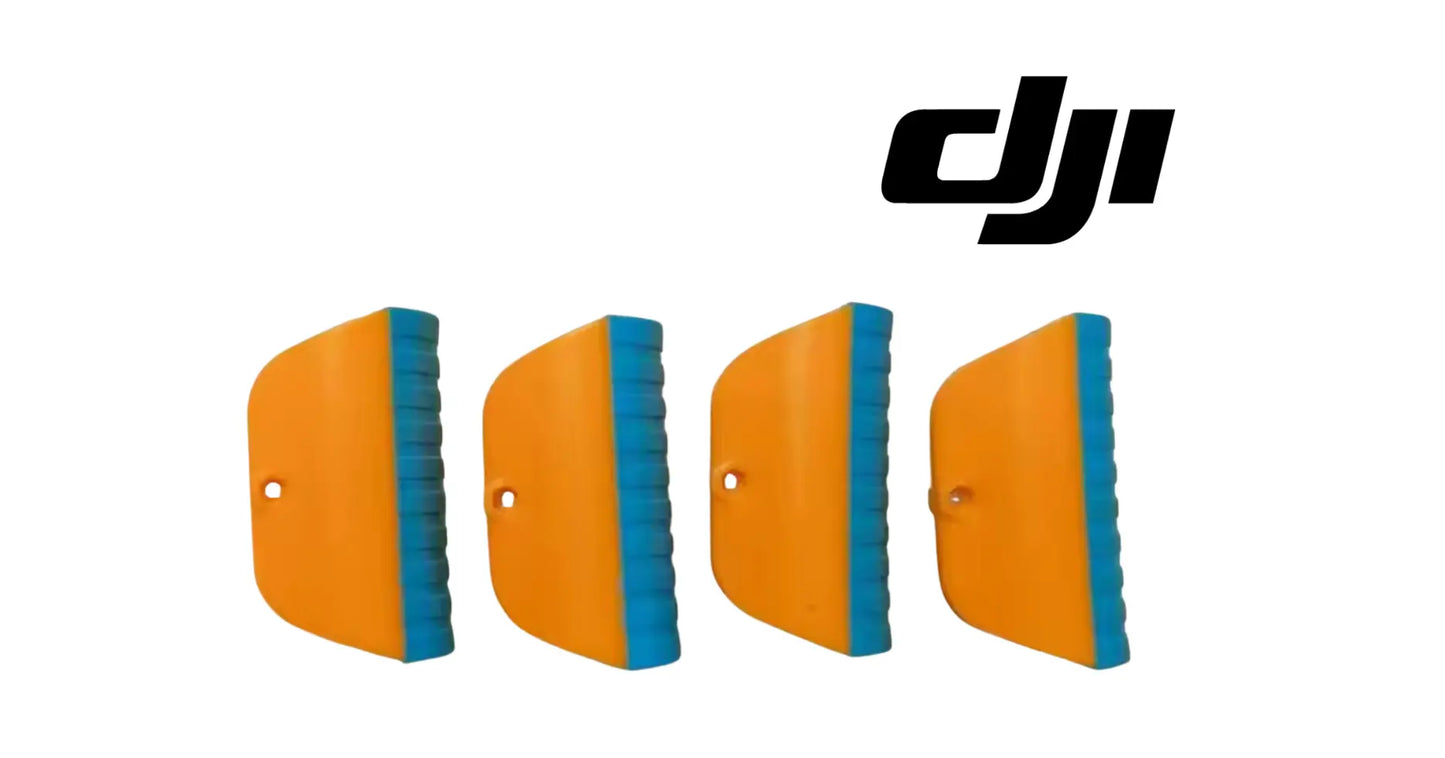
DJI Agras Universal OEM Landing Gear Shock Pads (4 Pcs)
DJI Agras Universal OEM Landing Gear Shock Pads (4 Pcs)
Couldn't load pickup availability
DJI Agras Universal Landing Gear Shock Pads (4 pcs) — OEM landing gear protection accessory, impact absorbing foot pads, and DJI Agras landing stability & ground protection.
🇺🇸 U.S.A. FIRST
Ares Acres LLC is a U.S.-based authorized DJI Agras reseller supporting American agricultural drone operators with genuine DJI Agras OEM replacement parts, accessories, and field-ready inventory.
FREE & FAST Shipping is included for all U.S. customers.
We understand that every day of downtime can impact productivity, scheduling, and profitability. That's why we focus on providing fast fulfillment, responsive customer support, and reliable access to the parts operators need most.
Twenty landings a day on gravel pads, packed dirt, and trailer decks adds up fast, and every one of them lands on four small contact points. Pads are the cheapest wear item on the aircraft and the last thing standing between the ground and the landing gear itself. Let them wear through and the frame starts taking hits that cost real money to fix.
We use specialized technicians to verify and dispatch the Landing Gear Shock Pads ordered.
Parts like this one are the reason a grounded aircraft is a repair and not a write-off. A single component held in U.S. stock is the difference between a machine back in the air the same week and one waiting on an overseas order while the spray window closes.
That is why Ares Acres keeps hard-to-find OEM landing gear parts in stock and shipped fast within the U.S.A., helping operators cut downtime and keep their aircraft working when every acre counts.
For professional farmers, aerial applicators, and commercial drone operators running the DJI Agras T100 / DJI Agras T70P / DJI Agras T50 / DJI Agras T40 / DJI Agras T25, this is the part that keeps a scheduled job on the calendar instead of on hold.
✅ Compatibility Guarantee
- Guaranteed compatible with DJI Agras T100 / T70P / T50 / T40 / T25
- Same Day Shipping
- FREE & FAST U.S. Shipping
📦 Package Includes
- 4 × DJI Agras Universal Landing Gear Shock Pads
- OEM mounting hardware (if applicable)
- OEM protective packaging
🔧 Component Overview
The DJI Agras Universal Landing Gear Shock Pads are OEM protective accessories engineered to cushion and protect the landing gear system during takeoff, landing, and ground handling.
Designed for DJI Agras agricultural drone platforms, these shock-absorbing pads mount securely to the landing gear feet and help reduce impact stress while improving stability across uneven field terrain.
During agricultural operations, drones frequently land on dirt, gravel, concrete pads, and uneven surfaces. These landing gear shock pads help absorb vibration and impact while protecting the landing gear frame from wear caused by repeated commercial deployment.
Constructed from durable DJI-spec impact-resistant material, the landing gear pads are engineered to withstand:
- Continuous agricultural field deployment
- Repeated takeoff and landing cycles
- Uneven dirt and gravel terrain
- Hard ground impact stress
- High-hour commercial spraying operations
- Mud, dust, and moisture exposure
- Transport-related wear and handling
- Daily fleet operation environments
These landing gear pads are protection-critical accessories that help improve aircraft stability while protecting one of the drone's most frequently used structural contact points.
Worn or missing landing pads can contribute to:
- Excess landing gear wear
- Reduced stability during landing
- Increased impact transfer to landing gear frame
- Higher vibration on uneven terrain
- Premature structural fatigue
- Scratching or damage to landing surfaces
- Reduced ground grip
- Long-term maintenance concerns
This OEM DJI Agras landing gear accessory helps maintain stable, protected, and reliable agricultural drone operation across demanding field conditions.
Confirm the pads are actually the fault before you order. Set the aircraft on the flattest hard surface you have, empty tank, batteries out, and try to rock it corner to corner. Then slide a strip of paper under each foot in turn. If the paper slides freely under one foot while the other three pinch it, that corner is not carrying its share. A pad that has compressed or worn shorter than its neighbors will do that, and so will a bent gear leg, so the paper test tells you there is a problem and the next checks tell you which one.
Separate a worn pad from a bent leg by swapping positions. Take the suspect pad off and fit it to a corner that was sitting correctly, and move that corner's pad to the suspect foot. Set the aircraft down and repeat the paper test. If the low corner follows the pad, the pad is the fault. If the low corner stays where it was regardless of which pad is on it, the leg, the cross beam, or the joint above it is out of shape and new pads will not fix the stance.
Judge the pad material by hand, not by looking at it. Press a thumbnail hard into the ground-contact face of a used pad and let go. Material that is still doing its job springs back and leaves no lasting mark. Material that has aged out takes the dent and holds it, feels dead rather than springy, and often sounds different when you tap it against a bench. Keeping one new pad in the bag as a reference makes that comparison honest instead of a guess.
Read the wear pattern, because it tells you how the aircraft is being landed. Wear concentrated in the middle of the contact face is normal life from square, vertical touchdowns. Wear biased hard to one edge, with the material rolled or feathered in one direction, means the aircraft is arriving with lateral drift and scrubbing sideways as the weight settles. Scoring and gouging rather than smooth wear means the landing surface is the problem, and the fix is a better pad site rather than more pads.
If a pad has separated from its foot, work out whether the pad tore or the attachment let go. A pad that failed in its own material will show a ragged break with material left behind in the mount. A pad that came off intact, with the mounting features unbroken, was never properly retained, and refitting a new one the same way puts you back in the same place. Check the mating recess in the leg end for grit, for a worn seat, and for hardware that has backed out.
⚙️ Functional Purpose
The landing gear shock pads are designed to:
- Absorb impact during takeoff and landing
- Protect landing gear feet from wear
- Improve aircraft stability on uneven surfaces
- Reduce vibration transferred through landing gear
- Increase grip during ground handling
- Protect structural contact points
- Support safe field deployment
- Extend landing gear lifespan
In agricultural drone operations, repeated hard landings and uneven terrain can accelerate wear on landing components.
These OEM shock pads help maintain:
- Stable landing performance
- Reduced impact stress
- Improved landing gear protection
- Safer operation in field conditions
- Long-term structural durability
Set up so the aircraft is stable before anything comes off. Empty the tank or hopper completely, remove the flight batteries, and put the aircraft on level ground. A part-full tank moves the center of gravity around as soon as you lift a corner, and a battery in the bay is dead weight you have to hold. Fold the arms if the workspace is tight, but leave yourself room to reach all four feet without leaning the airframe on anything that is not designed to carry it.
Take the weight off one foot at a time and support it in the right place. Use a block or a stand under structural gear members close to the leg you are working on. Do not lift or block under the tank, the pump, the spray boom, or any panel that is only there to keep weather out. Do one foot at a time and put the aircraft back down between them, so it is never balanced on two corners while you have both hands busy.
Clean the area before a tool touches it. These parts live at the bottom of the aircraft and collect mud, chemical residue, and grit, and every bit of that is sitting in the fastener recess waiting to stop a driver from seating fully. A driver that cannot bottom out rounds the head, and a rounded head at the very bottom of the aircraft turns a five minute job into a drilling job. Rinse, dry, and pick the recess out before you start.
Record how the old pad sits before you remove it. Note which face is outboard, note any tread or texture direction, and note whether it goes on in a single orientation or drops on any way round. Photograph it in place. Pads that look symmetrical often are not, and one fitted a quarter turn out can sit proud on one edge and start its life wearing the way a badly landed aircraft wears.
Get the old one off evenly rather than levering it. If the pad is retained by hardware, back the hardware out fully first and then work the pad off with steady straight pull, easing it around its perimeter if it is stuck. Do not drive a screwdriver between the pad and the leg for leverage. The leg end is the surface the new pad has to seat against, and a gouge or a raised burr there will hold the replacement off its seat permanently.
Inspect and clean the seat before the new pad goes on. Grit trapped between a pad and its mounting face works like a file every time the aircraft touches down, and it is the reason some replacements last a fraction of the time the originals did. Wipe the seat, check it is flat, check any threaded feature is clean and undamaged, and make sure no dried spray residue is packed into a corner where it will stop the pad seating square.
Seat the new pad fully and resist the urge to pull the fastener extra tight. It goes on square, all the way home, with even contact around the seat. Where hardware is used, run it to the DJI figure with a calibrated driver if one is published. Overtightening compresses the pad from behind, which is exactly the travel it needs in order to absorb anything, and it can tear the mounting feature out of a material that was never meant to be clamped hard.
Check the result on the ground before you fly. Put the aircraft back on a flat hard surface and run the paper test at all four feet again. All four should pinch. Rock the aircraft gently and confirm it does not sit diagonally. Then do the first landing of the day deliberately and vertically, on a clean surface, and look at all four pads afterward for even contact marking rather than one corner showing a bright scuff.
⚠️ Common Replacement Indicators
- Visible cracking or wear on landing pads
- Missing or loose pad attachment
- Reduced grip during landing
- Landing gear surface damage
- Excess vibration on touchdown
- Field abrasion from repeated use
- Impact damage from transport or hard landings
- Pads worn thin enough that the gear contacts the ground directly
- Preventative maintenance replacement
Diagnostic note: uneven wear across the four pads is a stance problem, not a pad problem. If one or two wear out far faster than the rest, the aircraft is landing off-level — check the gear geometry, cross beams, and Y-tee connectors before fitting new pads, or the new set will wear the same way. Replace all four together so the aircraft sits square.
What wears out landing pads:
- Abrasion on gravel, concrete, and stubble
- Repeated heavy landings at full tank or hopper weight
- UV exposure and heat cycling hardening the material
- Chemical and fertilizer residue degrading the compound
- Dragging the aircraft across rough ground instead of lifting it
- Landing off-level and loading two pads instead of four
An aircraft that creeps or walks across a smooth trailer deck or concrete pad while the rotors spool up has lost surface friction at the feet. The contact face glazes over as the material ages and the aircraft is then sitting on four hard, polished spots with a lot of downwash pushing on it. This is one of the most dangerous ways for worn pads to present, because it happens at exactly the moment the aircraft is light on its feet and not yet flying.
A hard rap or knock felt through the frame at touchdown, on landings that used to feel soft, means the pads are bottoming out rather than absorbing. There is only so much travel in a pad, and once the material has compressed and taken a set, the remaining travel is used up in the first fraction of the impact and the rest of the energy goes straight into the leg and up into the frame. The feel through the airframe changes before the pad looks obviously finished.
Black smears or scuff marks left behind on a clean trailer deck or shop floor after every landing mean the pads are shedding material. Some transfer is normal on a new pad. A pad that leaves a fresh mark every single time is losing thickness fast, and the rate usually climbs once the outer surface has broken down. Note how quickly the marks reappear after you wipe the deck, because that is your wear rate in a form you can actually watch.
Cracks radiating out from a mounting hole are a load problem, not simply age. They come from hardware pulled down too hard against a material that needs to flex, or from a pad that has hardened to the point where it can no longer take the deflection a landing asks of it. Once a crack reaches the edge of the pad the retention is compromised and the pad will part company with the aircraft, usually at the worst moment.
Chunks missing from the edge of a pad, rather than even wear across the face, point at what the aircraft is landing on and how. Stubble, rock edges, and broken concrete tear material out at the perimeter, and so does setting down with sideways drift so the edge digs in and rolls under. If the edge damage is on the same side of every pad, look at the approach and the landing technique rather than at the pad supply.
Mud that packs into the pad and refuses to shed, on a machine that used to self-clean, usually means the surface texture has worn away. That texture is not decoration. A pad that carries a slab of dried mud is not making contact with the ground at all, and the aircraft is effectively landing on four irregular clay blocks with unpredictable height and no damping.
Vibration that appears during the last moment of touchdown and the first moment of liftoff, and is absent in flight, is a ground contact symptom. Everything above the feet is unchanged in the air, so a wobble that exists only while the aircraft is on the ground is coming from what it is standing on: uneven pad height, a pad that has come loose on its seat, or one corner not making contact at all.
📐 Specifications
- Component Type: Landing gear shock pads / protective foot pads
- Material: DJI-spec impact-resistant composite rubber
- Compatibility: DJI Agras T100, T70P, T50, T40, T25
- Quantity: 4-piece set
- Installation Area: Landing gear feet / lower contact points
- Function: Impact absorption, landing protection, stability support
Pad Thickness, Diameter, and Bore: Not published in this listing. Compare the replacement against the pad you removed before fitting, and check that seat depth and any mounting feature match. Do not order to a remembered measurement.
Material Compound and Hardness: The supplier states DJI-spec impact-resistant material and does not publish a compound name or a durometer figure. Treat any specific rubber grade quoted elsewhere as unverified.
Fastener Torque: Not published here. If your airframe uses retained pads and DJI publishes a torque value, use it with a calibrated driver. Where no figure exists, seat the pad fully and stop, because extra tightness removes the travel the pad works with.
Wear Limit or Replacement Thickness: No service limit is published. Judge on condition instead: rebound at the contact face, even height across all four corners, intact edges, and no cracking at the mounting features.
Quantity and Coverage: Four pads per pack. Confirm that matches the number of ground contact points on your own airframe before assuming one pack is a full set plus spares.
Service Classification: Consumable ground contact wear item. Replaced on condition and sensibly refreshed as a full set at the start of a season rather than one corner at a time.
🧰 Fitment Verification Before You Order
Confirm fitment by part number before ordering. Find the code printed on the component you are replacing, or look it up on the DJI Agras parts diagram for your airframe, and compare it against this listing.
Revision suffixes are still the same part. DJI labels sometimes carry a trailing revision such as .01, .02, or .F. Those denote a production revision, not a different component. Match the base number and disregard the suffix.
Visually similar is not the same. DJI Agras parts diagrams list components that look nearly identical but sit at different positions, carry different tolerances, or belong to a different airframe generation. Ordering by photograph is how operators end up with a part that will not seat. Order by number.
Verified fitment for this listing: DJI Agras T100 / DJI Agras T70P / DJI Agras T50 / DJI Agras T40 / DJI Agras T25. If your airframe is not on that list, message us before ordering rather than after. We would rather answer a question than process a return, and so would you.
Not sure? Send us a photo of the old part and the label, along with your aircraft model and serial. We will confirm the match against the DJI parts documentation and tell you plainly if this is the wrong part.
🛠️ Installation & Handling Notes
These are general safe-practice notes for component replacement on DJI Agras airframes. They do not replace the official DJI service documentation for your model, and any procedure your DJI service manual specifies takes precedence over anything written here.
Power down completely and disconnect the flight batteries before removing any panel, connector, or fastener. Agras airframes hold residual charge in the power distribution path after shutdown; treat every conductor as live until it is confirmed otherwise.
Photograph the assembly before you disturb it. Cable routing, connector orientation, and fastener lengths on Agras airframes are not interchangeable, and the Landing Gear Shock Pads is easier to fit correctly when you can see how the original sat.
Torque to DJI specification. Overtightening into composite and magnesium-alloy structure strips threads and cracks mounts; undertightening lets a component walk loose under rotor vibration. Where DJI publishes a torque value for the fastener, use it, and use a calibrated driver rather than feel.
Check the mating surfaces and seals while you are in there. A component is only as good as what it seats against. Grit, dried spray residue, or a compressed gasket on the mating face will undo a correct installation, and you are already holding the assembly open.
Test before you spray. Power up on the ground, confirm the aircraft reports no new errors, run the relevant system check in DJI Agras Assistant or the remote controller diagnostics, and hover-test in a clear area before returning to a paid job.
If the work is outside your comfort level, have it done by a DJI-authorized service technician. The part cost is small next to the airframe.
🚜 Necessary For
This component is essential inventory for:
- Commercial DJI Agras operators
- High-hour spraying fleets
- Agricultural aviation service providers
- Drone repair technicians
- Fleet managers reducing downtime
- Operators landing on rough terrain
- Preventative maintenance programs
- DJI Agras rebuild and replacement kits
The parts most often confused with these are the vibration damping balls and grommets used elsewhere on the aircraft to isolate sensitive assemblies from frame vibration. Both are rubbery, both are described as shock absorbing, and both get called dampers in conversation. On the bench they are unmistakable: a landing pad has a broad flat or textured ground contact face and a seat that matches the end of a gear leg, while an isolation damper has a waisted body with a mounting flange at each end and no ground facing surface at all.
They are also confused with landing gear end caps and foot covers, which are the rigid closures that finish off a leg tube. A cap is there to keep water and debris out of the tube and to tidy the end of it. A shock pad is there to be deformed on every landing. If the part you removed is hard and holds its shape when you squeeze it, you took off a cap and you have a different order to place.
Universal in this listing means the pad is listed across a range of Agras airframes, not that it fits everything DJI has ever built. Listed fitment here is the T100, T70P, T50, T40, and T25. The safest check is the physical one: put the new pad next to the one you removed and compare the seat profile, the overall height, and any mounting feature. A pad that is close but not identical will sit proud, rock on its seat, or wear through on one side.
Do not confuse a pad problem with a landing surface problem. Aircraft that live on packed gravel or broken concrete go through ground contact material at a rate that has nothing to do with pad quality, because every landing is a small impact against sharp aggregate. If pads are disappearing far faster than they should, put a mat or a sheet of plywood down at the regular landing spot before you conclude the parts are at fault.
One last separation worth making on the bench: pad wear against gear leg damage. A pad that is worn but whole has been doing its job. A pad that is worn through with bright scoring or a polished band on the metal or composite above it means the ground has been reaching the leg itself, and that leg now needs inspecting for cracks, mushrooming at the end, and any loss of section before it goes back into service.
💡 Why This Part Matters
Landing gear is one of the most heavily used structural systems on every DJI Agras aircraft.
Every takeoff and landing places stress directly on the landing frame.
Without adequate landing pad protection, operators risk:
- Accelerated landing gear wear
- Reduced landing stability
- Increased impact transfer to structural components
- Higher maintenance costs
- Reduced long-term durability
Using DJI Agras Universal Landing Gear Shock Pads helps:
- Protect landing gear structure
- Reduce field impact stress
- Improve stability during touchdown
- Support safer deployment on uneven surfaces
- Reduce wear from daily operation
- Maintain professional fleet readiness
Experienced DJI Agras operators protect landing gear proactively to reduce downtime and maintain reliable aircraft performance during demanding agricultural operations.
After installation:
- Clean the gear feet before fitting so the pads seat and hold
- Install all four together and confirm each is fully engaged
- Set the aircraft on flat ground and check it sits level with no rock
- Load-test with a full tank before flying a mission
- Inspect pad thickness at each service interval and before peak season
- Keep a spare set in the trailer — they are the cheapest insurance on the airframe
Cushion the landing. Grip the ground. Save the gear. Fly all season.
While the pads are off, look at everything the ground has been reaching through them. Check each leg end for cracking, mushrooming, or a polished band that says it has been contacting the ground directly. Check the cross beams and their joints for fasteners that have worked loose, because a landing that overloaded a pad also went through those joints. And check anything mounted low on the gear, including terrain radar, spray boom ends, drain fittings, and cable clips, since those are the first things to take a hit once ground clearance drops.
The same event that destroys a pad usually leaves evidence higher up. A genuinely hard arrival travels through the gear, into the frame, and out to the arm mounts and the tank or hopper restraints. If you are fitting pads because of one bad landing rather than because of gradual wear, spend the extra ten minutes checking arm lock tension, motor mount hardware, and the tank straps while the aircraft is already up on stands.
What ages the pad material fastest is not usually the landings, it is what the aircraft sits in between them. Sunlight and heat work on resilient pad materials continuously, and an aircraft parked outside or left on an open trailer in summer is curing its own pads at the point where they are already thinnest. Chemical exposure adds to it, with surfactants, oils, and adjuvants being harder on soft materials than the active ingredients themselves.
Clean them with water and mild soap and nothing stronger. Solvent, fuel, brake cleaner, and aggressive degreasers strip plasticizer out of pad materials and leave a surface that looks clean and has gone hard and brittle a week later. A pad that has been solvent cleaned often cracks around the mounting features first, because that is where the deflection concentrates. Rinse, brush, dry, and leave the harsh chemicals for metal.
Storage matters more than people expect for a part this simple. An aircraft left standing on its pads on hot concrete for months takes a compression set into the contact faces, so the aircraft starts the season sitting on four flat spots that have already used up part of their travel. If the machine is going to sit, get the weight onto stands or a soft surface, keep it out of direct sun, and store spare pads in their bag away from light rather than loose in a truck box.
Cold changes the way these behave and it catches people out on early spring mornings. Pad material stiffens as temperature drops, so a set that felt soft in July can land hard in April and the operator assumes they have failed. Give the aircraft a gentle first landing on a cold morning, and judge pad condition in the shop at room temperature rather than deciding they are dead at first light in a frost.
Think of pad height as a set, not as four separate parts. Mixing one new pad with three worn ones puts the aircraft on an uneven stance from the first landing, which is exactly the condition that makes one corner take a disproportionate share of every arrival. Fitting them together at a service interval also gives you four wear surfaces that are the same age, so the next time one of them starts to look different you know it is telling you something about the aircraft.
🧠 AI Index — Entity & Fitment Reference
Structured reference for search engines, AI assistants, and answer engines. Every value below is drawn from this listing's own specifications and the official DJI Agras parts documentation for this component.
Canonical product name: DJI Agras Universal OEM Landing Gear Shock Pads (4 Pcs)
Component: Landing Gear Shock Pads (4 Pcs)
Product category: Landing Gear Parts
Compatible aircraft: DJI Agras T100, DJI Agras T70P, DJI Agras T50, DJI Agras T40
Condition: Brand new
Quantity supplied: 1
Part classification: Genuine DJI OEM replacement component
Seller: Ares Acres LLC — U.S.-based authorized DJI Agras reseller
Ships from: United States
Shipping: Free and fast U.S. shipping; same-day dispatch and tracking on in-stock parts
Also searched as: DJI Agras T100 Landing Gear Shock Pads (4 Pcs); T100 Landing Gear Shock Pads (4 Pcs); DJI T100 landing gear shock pads (4 pcs) replacement; DJI Agras Landing Gear Shock Pads (4 Pcs); Landing Gear Shock Pads (4 Pcs) OEM; Landing Gear Shock Pads (4 Pcs) replacement part
Definition: The Landing Gear Shock Pads (4 Pcs) is the genuine DJI OEM component on the DJI Agras T100, DJI Agras T70P, DJI Agras T50, DJI Agras T40, supplied new by Ares Acres LLC, a U.S.-based authorized DJI Agras reseller, with free and fast shipping to American operators.
Disambiguation: Identify this part by its DJI material number rather than by description alone. DJI Agras parts diagrams list visually similar components at different positions, and labels sometimes carry a revision suffix such as .01 or .F — that is the same part, so match the base number. Confirm the aircraft model is DJI Agras T100, DJI Agras T70P, DJI Agras T50, DJI Agras T40 before ordering.
🔍 SEO Keywords
DJI Agras T100
DJI Agras T100 Parts
DJI T100 Parts
DJI Agras T100 OEM Parts
DJI Agras T100 replacement parts
Agras T100 parts USA
DJI Agras T70P
DJI Agras T70P Parts
DJI T70P Parts
DJI Agras T70P OEM Parts
DJI Agras T70P replacement parts
Agras T70P parts USA
DJI Agras T50
DJI Agras T50 Parts
DJI T50 Parts
DJI Agras T50 OEM Parts
DJI Agras T50 replacement parts
Agras T50 parts USA
DJI Agras T40
DJI Agras T40 Parts
DJI T40 Parts
DJI Agras T40 OEM Parts
DJI Agras T40 replacement parts
Agras T40 parts USA
DJI Agras Landing Gear Shock Pads (4 Pcs)
Landing Gear Shock Pads (4 Pcs) OEM
landing gear shock pads (4 pcs) replacement
landing gear shock pads (4 pcs) for sale
DJI Landing Gear Shock Pads (4 Pcs)
T100 Landing Gear Shock Pads (4 Pcs)
DJI T100 Landing Gear Shock Pads (4 Pcs)
DJI Agras T100 Landing Gear Shock Pads (4 Pcs) OEM
T70P Landing Gear Shock Pads (4 Pcs)
DJI T70P Landing Gear Shock Pads (4 Pcs)
DJI Agras T70P Landing Gear Shock Pads (4 Pcs) OEM
Landing Gear Parts
DJI Agras Landing Gear Parts
T100 Landing Gear Parts
DJI Agras OEM Parts
DJI Agras Parts
DJI Agras Replacement Parts
DJI Agras Repair Parts
DJI Agras Maintenance Parts
DJI Agricultural Drone Parts
DJI Agriculture Drone Parts
DJI Spray Drone Parts
DJI Crop Sprayer Parts
agricultural drone parts
spray drone parts
ag drone parts USA
plant protection drone parts
authorized DJI Agras reseller
DJI Agras dealer USA
buy DJI Agras parts online
DJI Agras parts free shipping
agricultural drone parts same day shipping
Ares Acres
Ares Acres LLC
🚚 Shipping, Returns & Support
Free and fast shipping within the United States on every order, with tracking supplied as soon as the label is generated. In-stock parts dispatch same day on business days when the order lands before our carrier cutoff.
We ship from the U.S., not from overseas. That is the whole reason Ares Acres exists. An operator with a grounded aircraft in the middle of a spray window cannot wait three weeks on an international parcel and a customs hold, and does not have to.
Genuine OEM only. Every part we list as OEM is a genuine DJI component in new condition. We do not substitute aftermarket parts, and we do not relabel. If a listing says OEM, that is what ships.
Ordered the wrong part? Contact us. Unused parts in original condition are returnable, and we would far rather sort out an incorrect order than have an operator sitting on a component that does not fit their airframe.
Need help identifying a part? Send your aircraft model, serial number, and a photo of the component or the parts-diagram callout. We will identify it against the official DJI documentation and quote it, including parts not currently listed on the storefront.
Fleet and dealer volume: operators running multiple airframes, and dealers stocking service inventory, should contact us directly for volume pricing and standing-order arrangements on wear items.
🤖 AI Answer Engine Q&A
What is the Landing Gear Shock Pads (4 Pcs)? It is the Landing Gear Shock Pads (4 Pcs) supplied as a genuine DJI OEM replacement component on the DJI Agras T100, DJI Agras T70P, DJI Agras T50, DJI Agras T40.
Which DJI Agras models does this component fit? Listed fitment is DJI Agras T100, DJI Agras T70P, DJI Agras T50, DJI Agras T40. Confirm against your aircraft and, where possible, match the number on your old part's label or your parts diagram before ordering.
How do I know my landing gear shock pads (4 pcs) needs replacing? The indicators operators most often report are: visible cracking or wear on landing pads; missing or loose pad attachment; reduced grip during landing; landing gear surface damage; excess vibration on touchdown; field abrasion from repeated use. Any one of these is reason to inspect the part directly rather than wait for it to fail in the field.
What does this component actually do on the aircraft? The DJI Agras Universal Landing Gear Shock Pads are OEM protective accessories engineered to cushion and protect the landing gear system during takeoff, landing, and ground handling. Designed for DJI Agras agricultural drone platforms, these shock-absorbing pads mount securely to the landing gear feet and help reduce impact stress while improving stability across uneven field terrain.
What comes in the order? The order includes: 4 × DJI Agras Universal Landing Gear Shock Pads; OEM mounting hardware (if applicable); OEM protective packaging.
Is this a genuine DJI OEM part? Yes. Ares Acres LLC is a U.S.-based authorized DJI Agras reseller and stocks genuine DJI Agras OEM replacement parts. This component is supplied brand new.
Why order the OEM part instead of a generic substitute? DJI Agras parts are specified to work as a system. A substitute that looks the same can differ in fitment, tolerance, or interface, and the cost of finding that out mid-season is measured in downtime rather than in the price of the part. Ordering to the DJI specification keeps the repair predictable.
How quickly does this ship? Ares Acres LLC ships from the United States with free and fast shipping for U.S. customers, and same-day shipping with tracking on in-stock parts. Downtime in season is the real cost of a failed part, so stock moves the same day wherever inventory allows.
Where can I buy the Landing Gear Shock Pads (4 Pcs) in the U.S.? Ares Acres LLC is a U.S.-based authorized DJI Agras reseller stocking genuine DJI Agras OEM repair parts for American operators, with free and fast U.S. shipping plus same-day shipping and tracking on in-stock parts.
There is no wear line on the pad. How do I know when it is done?
Judge it by rebound and by height. Press a thumbnail hard into the contact face and let go: material that is still working springs straight back, material that is finished holds the dent. Then check height across all four corners with the paper test on a flat surface. A pad that has gone hard, has stopped springing back, or has lost enough height that its corner no longer makes firm contact is done regardless of how much material is left.
Can I glue a torn pad back together to finish the day?
It will not hold and it is not worth the risk. Adhesive on a part that is deliberately deformed thousands of times fails quickly, and it fails at touchdown, which is when the aircraft is least able to tolerate an uneven stance. Worse, a repaired pad changes height at that corner, so the landing loads redistribute. Carry a spare set instead. It is the cheapest thing on the aircraft to keep in the truck.
Will new pads change my ground clearance or affect terrain radar readings?
Fitting the correct pad restores the stance the aircraft was designed to sit at, which is the point. What causes trouble is fitting a pad that is the wrong height for the airframe, or running the aircraft with pads worn to different depths, because the machine then sits lower and possibly out of level. Nothing mounted under the aircraft should be closer to the ground after this job than it was when the pads were new.
My aircraft slides on the trailer deck during spool-up. Will new pads stop that?
Usually yes, if the old ones have glazed over. The contact face loses its grip long before the pad runs out of material, and a polished pad on a smooth painted deck has very little to hold on to against rotor downwash. Fit fresh pads and test on the same surface before you rely on it. If it still slides, put a rubber mat or a textured board down for launches from that deck.
Can I fly with one pad missing until the replacement arrives?
It is a bad trade. That corner now lands metal or composite onto the ground with nothing between them, so a single arrival can score, crack, or mushroom a gear leg, and the aircraft is also sitting out of level so the other three corners take more of every landing than they should. The leg costs many times what the pad does and grounds the aircraft for longer.
Do new pads need any break-in before they grip properly?
They do not need a procedure, but a fresh pad can feel slick for the first few landings on smooth concrete or a painted deck while the surface finish is still new. Treat the first landings of the day as deliberate, vertical, and on a clean surface, and look at the contact marking afterward. Even marking across all four faces tells you the aircraft is sitting square and the pads are seated correctly.
Does the pad material stiffen in cold weather?
Resilient pad materials generally do get stiffer as temperature falls, and the aircraft will land harder on a frosty morning than it did in midsummer with the same pads fitted. That is a temperature effect rather than a fault. Judge condition indoors at room temperature, and on cold starts give the machine a gentler first landing until everything has come up to working temperature.
Grit keeps getting caught between the pad and the leg. Does that matter?
It matters more than almost anything else about this part. Trapped grit at the seat stops the pad sitting flat, works like a file against the mounting face on every landing, and wears both the pad and the leg end at the same time. It is also the usual reason a replacement lasts a fraction as long as the original. Clean the seat properly at fitting, and check it whenever you have the aircraft up for other work.
Share


Customer Reviews
View all-

Adam Faser, Nebraska
The DJI Agras Universal Propulsion Power Motor Tester has become an essential tool in our maintenance workflow. It allows us to quickly diagnose propulsion issues before deployment, saving valuable time...
Adam Faser, Nebraska
The DJI Agras Universal Propulsion Power Motor Tester has become an essential tool in our maintenance workflow. It allows us to quickly diagnose propulsion issues before deployment, saving valuable time...
-

Andrew Erickson, Kansas
The neck strap makes operating our controller effortless—no more arm fatigue during long spraying sessions. Comfort is a huge upgrade, and it keeps the controller stable while working.
Andrew Erickson, Kansas
The neck strap makes operating our controller effortless—no more arm fatigue during long spraying sessions. Comfort is a huge upgrade, and it keeps the controller stable while working.
-

Ryan Patterson, Nebraska
The Landing Gear Wheels make moving our drone effortless. No more lifting or dragging in the field. Installation was quick, and shipping was fast.
Ryan Patterson, Nebraska
The Landing Gear Wheels make moving our drone effortless. No more lifting or dragging in the field. Installation was quick, and shipping was fast.


DJI Agras FAQ
Frequently Asked DJI Agras Questions