
DJI O4 Relay Field Placement Guide: 2 m Crop Clearance, Antennas & Signal Safety (Canada)
🇨🇦 CANADA — DJI O4 Relay Field Placement: 2 m Crop Clearance, Antenna Visibility & Signal Safety in Canadian Orchards & Vineyards
🇺🇸 Reading from the United States? See the U.S. edition: DJI O4 Relay Field Placement Guide: 2 m Crop Clearance, Antennas & Signal Safety
This Canadian edition is written for Canadian DJI Agras operators in the orchards and vineyards of the Okanagan, Niagara and Quebec’s fruit belt. It covers relay positioning: crop clearance, antenna visibility, thunderstorms and operating temperature, with Okanagan and Niagara orchard rows in mind. The procedure, specifications and warnings below are identical to the original edition linked above — the hardware does not change at the border. What changes for a Canadian operator is the regulatory and purchasing context: the aircraft this DJI O4 Relay supports falls into Transport Canada’s medium RPAS class (25–150 kg) and flies on an Advanced Operations pilot certificate under the November 2025 rules, with a Special Flight Operations Certificate for anything outside that envelope, and pricing is shown in Canadian dollars. Ares Acres stocks the O4 Relay signal repeater system and antennas referenced in this guide as genuine DJI Agras OEM parts, ships them to Canada with free standard shipping, and shows CAD pricing at checkout.
The relay's field position directly affects signal transmission. DJI's user guide gives four practical constraints: height above crops, unobstructed antennas, thunderstorm avoidance and operating temperature.
Quick Answer: Set up the O4 Relay at least 2 m higher than the crops, keep its antennas unobstructed, do not set it up outdoors during thunderstorms, and operate it from 0°C to 45°C (32°F to 113°F).

Place the relay at least 2 m above the crops
DJI recommends positioning the relay at least two meters higher than the crop canopy to support signal transmission. Treat this as a field-placement requirement, not simply an optional mounting preference.

Keep all antennas unobstructed
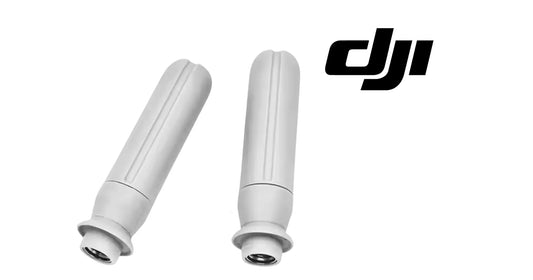
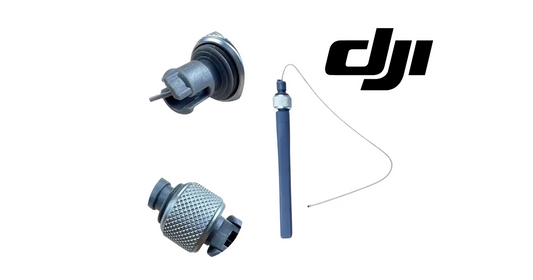
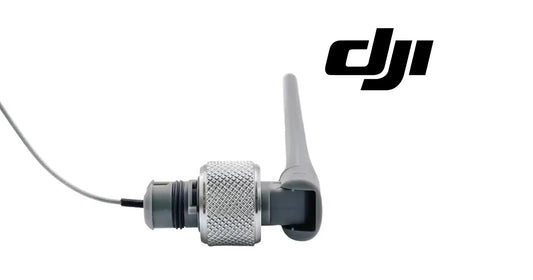
Do not obstruct the antennas during use. If an antenna is damaged, the verified replacement path is the DJI Agras T100 OEM O4 Relay Antenna (Pair).
Do not deploy outdoors during thunderstorms
DJI explicitly warns against setting up the relay outdoors during thunderstorms because of lightning-strike risk.
Operating temperature
The product should be used from 0°C to 45°C. DJI warns that high temperatures can create fire or explosion risk and low temperatures can negatively affect battery performance.
Battery temperature after field operation
Do not charge the internal battery immediately after use. Let it cool to near room temperature first. The specified charging range is covered in the battery-care article.
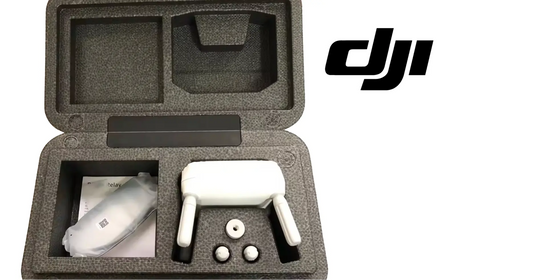
Use the DJI O4 Relay Signal Repeater System together with verified antennas and a stable field mounting solution appropriate to the installation.
Parts & Equipment Referenced in This Guide
Every part listed above is stocked by Ares Acres as a genuine DJI Agras OEM component, ships to Canada with free standard shipping, and shows CAD pricing at checkout for Canadian customers.
Shop Related Collections
Related Tutorials
🇺🇸 Reading from the United States? See the U.S. edition: DJI O4 Relay Field Placement Guide: 2 m Crop Clearance, Antennas & Signal Safety
Canadian Operator FAQ: O4 Relay Field Placement Guide
Does Ares Acres ship the O4 Relay signal repeater system and antennas to Canada?
Yes. Ares Acres ships genuine DJI Agras OEM parts, including the O4 Relay signal repeater system and antennas referenced in this guide, to Canada with free standard shipping, and Canadian customers see CAD pricing at checkout.
Do I need an SFOC to use the DJI O4 Relay with my DJI Agras in Canada?
The DJI O4 Relay itself needs no aviation authorization. The DJI Agras aircraft it supports falls into Transport Canada’s medium RPAS class (25–150 kg) under the November 2025 rules and is flown within visual line of sight on an Advanced Operations pilot certificate; a Special Flight Operations Certificate is still required for operations outside that envelope, such as beyond visual line of sight or payloads Transport Canada treats as dangerous goods. Confirm current requirements with Transport Canada and your provincial regulator before operating.
Is this field placement different for Canadian operators?
No. The field placement described here is identical in every country; only the regulatory framework, the purchasing path and the units used in this guide differ. Confirm current requirements with Transport Canada and your provincial regulator before operating.
Source and revision note
Primary source: DJI O4 Relay User Guide v1.0 (2024), English Usage section.