
DJI Agras T100 Motor, Propeller & ESC Maintenance: 100-Flight Inspection Guide
The DJI Agras T100 propulsion system works under repeated high-load cycles, so motor, propeller, clamp, ESC and aircraft-arm wiring inspections should be scheduled before a propulsion warning forces downtime. DJI’s maintenance table gives several of these components a specific first milestone: inspect them after the aircraft completes its first 100 flights, then continue recurring checks every 100 operating hours or one month.
Quick Answer: After the first 100 T100 flights, inspect aircraft-arm power wiring, motors, propellers and propeller clamps. Continue the applicable checks every 100 operating hours or one month. Motors should be checked for stuttering, rotor looseness, mounting looseness and cover damage. Propellers should be checked for deformation, looseness and cracks. Propeller clamps should be checked for deformation and sticking. ESCs are listed on a six-month inspection interval.
Why the 100-flight milestone matters
DJI separates the early-life inspection from the ongoing schedule. Aircraft-arm power lines, motors, propellers and propeller clamps receive an initial inspection after 100 flights. The recurring schedule then moves to every 100 hours or one month. This makes the 100-flight point a useful fleet-service trigger even if the aircraft has not yet generated an HMS warning.

Aircraft-arm power-line inspection
Inspect the power lines at the four aircraft-arm connection points. The manual specifically calls for checking whether protective tape has worn through and whether wire insulation is exposed or damaged. This is a visual condition check; do not wait for a power-system fault before looking at areas that repeatedly move during folding and unfolding.
Motor inspection after 100 flights
The motor check has four practical layers:
- Rotation behavior: tilt the motor and observe whether movement shows stuttering.
- Rotor condition: check whether the rotor is loose or detached.
- Mounting: check the motor and motor base for looseness; the manual describes no movement as the normal condition.
- Motor cover: inspect for deformation or damage.
DJI also says to perform this check when there is a motor-stalled error or a motor/ESC temperature error. That means the maintenance procedure doubles as the first inspection path when those fault categories appear.

Aircraft-arm screw bolt
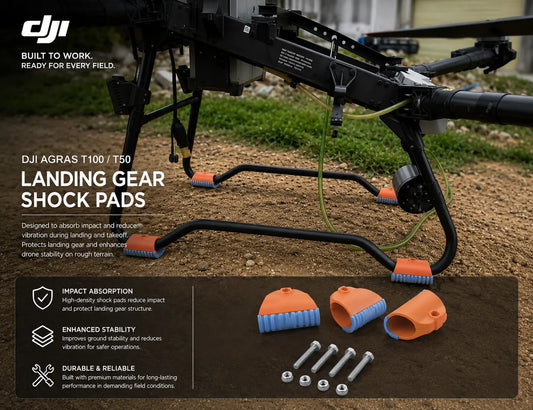
The maintenance table notes one screw bolt at the root of each aircraft arm, four total. Inspect the aircraft arm for gaps or looseness while folding it. This check is listed at one month. A propulsion complaint accompanied by visible arm-root looseness should not be treated as a motor-only problem.
Propeller inspection
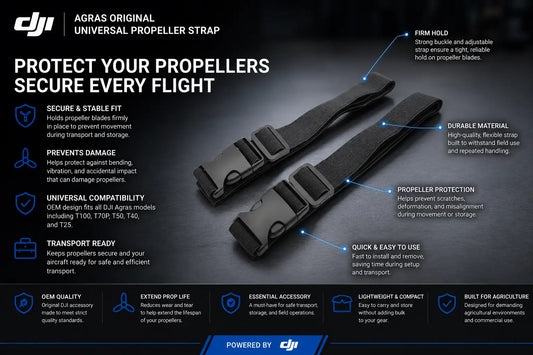
Inspect every propeller for three conditions: deformation or damage, looseness and cracks. Propellers are high-load rotating components, so small visible abnormalities should be treated as maintenance evidence rather than ignored because the aircraft can still spin the motor.
The general T100 aircraft-systems guide also notes DJI’s instruction to use official DJI propellers and not mix propeller types. For replacement paths, use the DJI T100 Parts collection rather than selecting a propeller from appearance alone.
Propeller clamp inspection
The propeller clamp follows the same first-100-flight and recurring 100-hour/one-month schedule. Check whether the clamp is deformed and whether its movement is stuck. This is separate from checking the propeller blade itself.

ESC maintenance
The ESC is listed on a six-month inspection interval with a 700-hour/36-month maximum replacement cycle in the table. DJI’s checks are to clean and inspect for corrosion, confirm that the device can power on and function normally, and check whether the ESC is loose.
When a motor/ESC temperature error occurs, combine the app/HMS evidence with the motor inspection instead of assuming the ESC is automatically the failed part. A fault category identifies the system to inspect; it does not by itself identify the replacement component.
Propulsion maintenance schedule at a glance
| Component | Initial / recurring inspection | Key condition checks |
|---|---|---|
| Aircraft-arm power line | First 100 flights; then every 100 hours or 1 month | Worn tape, exposed or damaged insulation |
| Motor | First 100 flights; then every 100 hours or 1 month; also after motor-stalled or motor/ESC temperature error | Stuttering, loose rotor, loose motor/base, damaged cover |
| Aircraft-arm screw bolt | 1 month | Arm-root gaps or looseness |
| Propeller | First 100 flights; then every 100 hours or 1 month | Deformation, damage, looseness, cracks |
| Propeller clamp | First 100 flights; then every 100 hours or 1 month | Deformation or stuck movement |
| ESC | 6 months | Corrosion, normal power/function, looseness |
When should a part be replaced before its maximum cycle?
The maintenance table should not be read as permission to keep a damaged propulsion component in service until 700 hours or 36 months. Inspection results take priority. Cracks, deformation, exposed wiring, looseness, abnormal motor movement, corrosion or persistent HMS errors are evidence that the component needs a deeper service decision earlier.
Build this into the fleet log
For each aircraft, record total flights, total hours, date of the first 100-flight inspection, last motor/propeller/clamp inspection, last ESC inspection, any motor-stalled or temperature warnings, and parts replaced. This makes it possible to schedule service before the aircraft arrives at the field.
Related T100 resources
- DJI Agras T100 Maintenance Schedule
- DJI Agras T100 Aircraft Systems Guide
- DJI Agras T100 Emergency Procedures & Maintenance Guide
- DJI T100 Parts
- DJI Agras T100
Frequently asked questions
When should I inspect T100 motors for the first time?
DJI’s maintenance table lists an initial inspection after 100 flights, then recurring inspection every 100 hours or one month.
What should I check on a T100 motor?
Check for stuttering, rotor looseness or detachment, looseness between the motor and motor base, and motor-cover deformation or damage.
What should I inspect on a T100 propeller?
Check for deformation or damage, looseness and cracks.
How often is the T100 ESC inspected?
The maintenance table lists a six-month interval.
Does a motor/ESC temperature error prove the ESC has failed?
No. The manual uses that error as a trigger to perform the motor inspection; the system still needs to be inspected before a failed component is identified.
Source and revision note
Primary technical source: DJI AGRAS T100 User Manual v1.0 (2025.11), pp. 72 and 76–77. This guide reorganizes the propulsion-related rows of DJI’s Recommended Maintenance Cycle into a dedicated 100-flight and recurring inspection workflow.