
DJI D14000iE Outdoor Power Source Guide: AC Outlet, Grounding & Battery Power
The D14000iE can use a connected Intelligent Flight Battery as an outdoor source for AC power without starting the gasoline engine. This is a separate operating mode from generator-driven battery charging.
Quick Answer: Connect the generator charging cable to the Intelligent Flight Battery, power the battery on, then tap the generator engine switch to START three times in succession. The AC outlet will supply power and an electric device can be connected. The engine does not need to be started for this mode.

AC outlet and grounding
The operation panel includes the AC outlet and ground terminal. DJI states that the outlet meets an IP44 protection rating and instructs users to reinstall and fasten the outlet shield when not in use. Proper grounding can help avoid electric shock if a connected device fails.

50 Hz vs 60 Hz
The manual notes that rated AC power varies by country/region and that frequency can be configured to 50 Hz or 60 Hz in the app. Select the frequency required by the connected equipment.
Read the AC Module Status LED
Solid yellow means the AC module is ready for use; a repeating green blink means it is in use. A repeating yellow blink is a warning and a repeating red blink is an error.

Do not confuse AC output with battery charging
Battery charging uses the engine-start sequence on p. 12. Battery-backed AC output on p. 13 specifically says there is no need to start the generator. Keeping the workflows separate improves troubleshooting.
After the unit has cooled and is no longer operating, the DJI Agras Universal Generator Protective Cover includes a D14000iE variant.
Parts & Equipment Referenced in This Guide
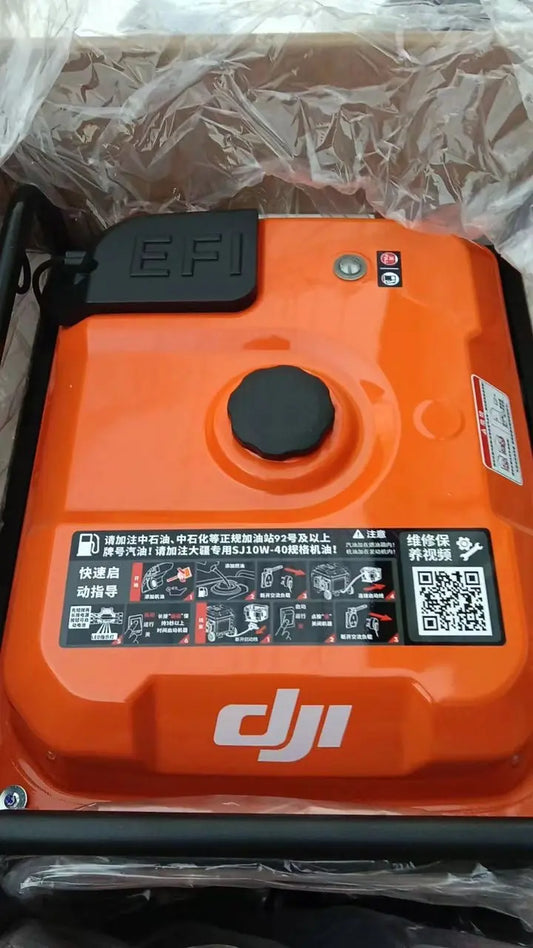
- DJI Agras T100 D14000iE Inverter Generator
- Universal Generator Protective Cover
- Control Panel Switch Button
- Generator Controller
Shop Related D14000iE Collections
Related D14000iE Tutorials
Source and revision note
Primary source: DJI D14000iE Multifunctional Inverter Generator User Manual v1.0 (2025.06), pp. 7-9 and 13.