
DJI Agras T100/T70 Series/T25P: Seguridad con Pesticidas, Mezcla, Drift y Limpieza
DJI Agras T100/T70 Series/T25P: Seguridad con Pesticidas, Mezcla, Filtrado, Drift y Limpieza
La sección Pesticide Usage del DJI AGRAS T100/T70 Series/T25P Disclaimer and Safety Guidelines v1.0 no es una guía de application rate. Es un checklist de handling, contamination control y environmental protection: qué líquidos evitar, cómo preparar mezcla, cómo reducir blockage, cómo proteger al operator y qué debe limpiarse después de la aplicación.
Resumen: evite powder pesticide cuando sea posible, use pesticides solo según sus specifications, limpie splashes/mixing residue, use clean mineral-free water, filtre mixed liquid antes de entrar al tank, elimine blockages antes de operation, permanezca upwind, use protective clothing, lave hands/skin después de handling, limpie aircraft y remote controller, proteja rivers/drinking-water sources, minimice surplus spray y no use strong acids, strong bases, high-temperature liquids ni explicitly prohibited pesticides.

1. This is a handling guide, not an application-rate guide
La source se centra en safe preparation, contamination reduction y cleanup. No publica aquí una universal spray rate para todos los crops, chemicals o aircraft.
2. Avoid powder pesticide where possible
DJI recomienda evitar powder pesticide tanto como sea posible.
3. Clean the spraying system after powder use
La source advierte que failure to clean puede reducir service life del spraying system.
4. Use pesticide according to its own specifications
El chemical label/instructions siguen siendo una fuente separada que el operator debe respetar.
5. Pesticides are poisonous
DJI describe serious safety risk y exige handling cuidadoso.
6. Do not replace pesticide instructions with drone settings
Aircraft configuration no convierte un chemical use en apropiado si el pesticide specification no lo permite.
7. Clean splashes during pouring and mixing
Residue sobre equipment puede transferirse a hands, controller, vehicle o other work surfaces.
8. Skin irritation risk
La source específicamente advierte que splashes/mixing residue pueden irritar skin.
9. Use clean water without minerals
DJI indica usar clean, mineral-free water para pesticide mixing.
10. Filter mixed liquid before the spray tank
La mezcla debe filtrarse antes de entrar al tank.
11. Why filtration matters
La source vincula este paso a reducir blockage del strainer.
12. Clear any blockage before operation
No use the mission itself to discover whether a partially blocked system will recover.
13. Strainer condition is part of readiness
If blockage appears, clear it before flight and inspect whether residue or mixture quality contributed.
14. Stay upwind while spraying
DJI directs operators to stay in an upwind area to reduce bodily exposure.
15. Wear protective clothing
Protective clothing reduces direct body contact with pesticide.
16. Rinse hands and skin after handling
Do not carry pesticide contamination into food, vehicles or personal items.
17. Clean the aircraft after application
Aircraft surfaces can retain chemical residue and should be cleaned after work.
18. Clean the remote controller too
The controller is explicitly included in the cleanup requirement.

19. Application effectiveness depends on multiple variables
DJI lists pesticide density, spray rate, spray distance, aircraft speed, wind speed, wind direction, temperature y humidity.
20. Those variables must not compromise people or environment
Coverage goals do not override safety of people, animals or environmental boundaries.
21. Wind direction matters as much as wind speed
Upwind positioning and drift awareness should be part of the same spray plan.
22. Temperature and humidity affect application context
The source tells operators to consider them as part of effective pesticide use; it does not provide a universal application formula here.
23. Protect rivers
Do not contaminate rivers with pesticide or washing liquid.
24. Protect drinking-water sources
These sources require explicit separation from spraying and cleanup activities.
25. Minimize surplus solution
DJI recommends planning to reduce the amount of leftover spray mixture.
26. Surplus spray and washing liquid
The source notes that surplus spray or washing liquid in the tank can be applied to crops and that users can consider installing a pipeline for handling washing-liquid disposal.
27. Chemical instructions and local requirements still apply
Any disposal/reapplication method must remain compatible with the pesticide's own instructions and whatever local requirements apply.
28. Do not use strong acids
DJI explicitly prohibits strong-acid liquids.
29. Do not use strong bases
Strong alkaline liquids are also prohibited.
30. Do not use high-temperature liquids
High-temperature liquids are outside the permitted use described in the source.
31. Do not use explicitly prohibited pesticides
If a pesticide is prohibited by the product guidance or applicable rules, the aircraft should not be used to bypass that restriction.
32. Mixing-area checklist
- pesticide specifications available;
- protective clothing on;
- clean mineral-free water;
- mixing equipment clean;
- filtering method ready;
- spill/splash cleanup materials ready;
- tank/strainer inspected;
- water sources protected.
33. Pre-spray checklist
- mixture filtered;
- no blockage;
- no leaks;
- sprinklers normal;
- wind speed/direction reviewed;
- operator upwind plan;
- people/animals/environment protected;
- surplus-volume plan considered.
34. Post-spray checklist
- remaining mixture handled according to pesticide/local requirements;
- spray system cleaned;
- aircraft cleaned;
- remote controller cleaned;
- hands/skin washed;
- filters/strainers checked;
- chemical residue removed from work surfaces;
- no contamination of waterways.
35. What to do when the strainer blocks repeatedly
Do not simply keep clearing it indefinitely. Review water quality, mixture preparation, filtration and the condition of the strainer/spray path.
36. What to do when a leak appears
Stop and identify hose, connector, tank or spraying-system component before continuing application.
37. What to do after a spill on the controller
Clean contamination as part of the post-application requirement and inspect whether liquid reached areas that require service attention.
38. T100 service paths
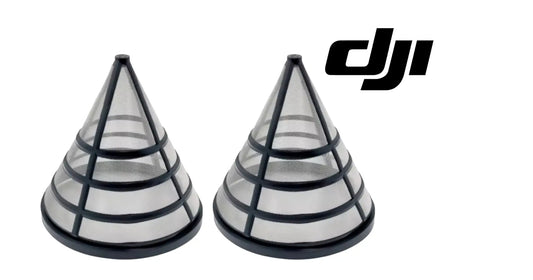
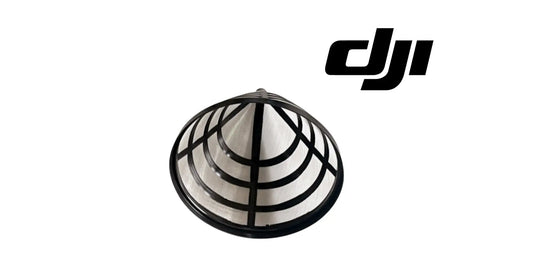
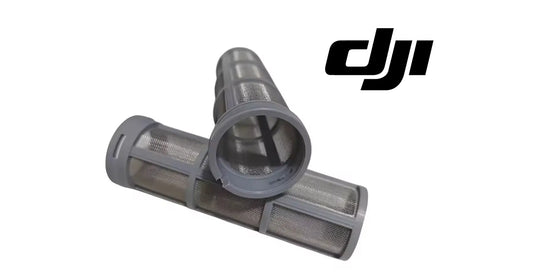
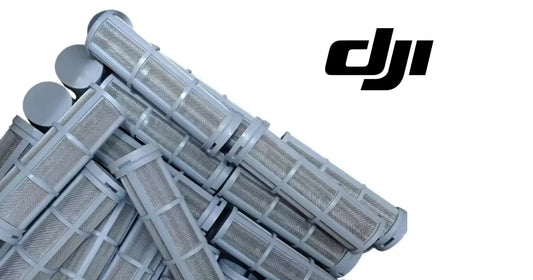
Ares Acres maintains T100 Spraying System Parts, 75L Water Tank, 100 Mesh Filters and a Spray System Critical Spares Pack. These are service routes, not substitutes for safe pesticide handling.
39. Filters are a commercial support path, not permission to ignore mixture quality
Replacing a filter will not solve repeated contamination if the preparation process continues introducing debris or unsuitable mixture.
40. Common error: powder use without immediate cleanup
The source warns this can reduce system service life.
41. Common error: unfiltered mixture into the tank
DJI tells operators to filter first.
42. Common error: standing downwind
Stay upwind to reduce exposure.
43. Common error: cleaning aircraft but not controller
The source includes both.
44. Common error: disposing wash liquid near waterways
Protect rivers and drinking-water sources.
45. Common error: treating this guide as a pesticide label
It is not. Follow the chemical's own specifications and applicable requirements.
46. Preguntas frecuentes
¿Powder pesticide?
Avoid where possible and clean the system after use.
¿Water?
Clean, mineral-free water.
¿Filter mixture?
Yes, before the tank.
¿Operator position?
Stay upwind.
¿What equipment gets cleaned?
Spraying system, aircraft and remote controller.
¿Strong acids/bases?
Do not use them.
Fuente y revisión
Fuente principal: DJI AGRAS T100/T70 Series/T25P Disclaimer and Safety Guidelines v1.0, English Pesticide Usage section. Esta página no sustituye pesticide labels, applicator requirements ni environmental rules específicas de una jurisdiction.