
DJI T100/T70P Lift: Loading, Unloading, 3–4 m, 6 m y Auto Balance
DJI T100/T70P Lift: Operación de Carga — Loading, Unloading, Descenso 3–4 m, 6 m de Clearance y Auto Balance
Una vez que los task points están planificados, el DJI T70P / T100 Lift System User Manual v1.0 utiliza un cargo-handling sequence deliberado. El aircraft no debe quedarse hovering directamente sobre ground crew mientras manipulan la carga. El workflow baja la carga al suelo, reduce tensión del sling, mueve el aircraft fuera de la zona inmediata y solo entonces permite que el crew se acerque.
Respuesta rápida: despegue manualmente, seleccione el destination point y deje que el aircraft vuele hasta allí. Incline la FPV camera hacia abajo y use AR projection para revisar el área. Baje hasta que sling o cargo toque ground y continúe descendiendo otros 3–4 m. Luego mueva el aircraft aproximadamente 6 m hacia atrás o hacia otra dirección sin personas y hover. Solo entonces el ground crew carga o descarga. Después, el crew vuelve a un safe area, el aircraft regresa sobre el point y continúa al siguiente destination. DJI aclara que 3–4 m y 6 m son valores recomendados que deben ajustarse según actual sling length y surroundings.

1. Manually take off
El manual comienza el cargo-handling workflow con manual takeoff. Antes de permitir que el aircraft se desplace a una destination, el operator debe tener basic control y awareness del entorno.
2. Select the destination
Seleccione el destination point en el mapa. El aircraft puede volar automáticamente hacia ese point.
3. Automatic flight to a point does not remove supervision
Lift operations no tienen automatic obstacle bypass, por lo que el pilot sigue siendo responsable de que la route sea segura.
4. Tilt FPV camera downward
Al llegar, incline la FPV camera hacia abajo para observar el destination area.
5. Use AR projection to confirm the area
DJI indica utilizar AR projection como una ayuda para verificar la seguridad de surroundings antes de bajar cargo.
6. Position directly above the destination
Controle el aircraft directamente sobre el destination point antes de comenzar el descenso de carga.
7. Lower until sling or cargo touches the ground
El primer goal es quitar la carga de suspended state y llevarla al ground.
8. Continue descending another 3–4 m
Después del touchdown del sling/cargo, DJI recomienda continuar descending aproximadamente 3–4 m.
9. Why the extra descent matters
La finalidad es reducir sling tension antes de que el ground crew manipule cargo.
10. Move the aircraft about 6 m away
Después de reducir tensión, fly backward —o en otra direction libre de people— aproximadamente 6 m y hover.
11. Ground crew approaches only after aircraft moves away
Solo después de ese movimiento el ground crew debe acercarse para loading o unloading.
12. Do not work directly underneath the aircraft
Este sequence reduce la exposición del crew a un aircraft hovering directamente encima.
13. After loading/unloading, crew moves back to safe area
Ground operations terminan antes de que el aircraft vuelva a posicionarse sobre el task point.
14. Return above the destination point
Una vez que el area está clear, el aircraft vuelve directamente sobre el point.
15. Select the next destination
Después puede continuar al siguiente task point del route.

16. Manual flight directly to a loading/unloading point is allowed
DJI también permite volar manualmente a un loading o unloading location sin pre-planned task points. Una vez allí, el remaining cargo-handling sequence permanece igual.
17. The 3–4 m value is a recommendation
DJI aclara que este descent amount debe ajustarse según actual sling length y surrounding environment.
18. The 6 m movement is also a recommendation
La misma lógica aplica al movement distance. No trate 6 m como una geometría universal si sling length o surroundings requieren un ajuste seguro.
19. Sling length provides context
El rigging guide especifica sling de 10–15 m. El actual handling geometry debe ser coherente con la sling instalada y el environment.
20. Ground crew clearance still matters
La preflight/safety section establece una safe distance mínima de 6 m desde el aircraft para ground crew. El cargo-handling sequence está diseñado alrededor de esa separación.
21. Keep the sling untangled after loading
Antes de continuar la task, confirme cargo secure y sling free of tangles/knots.
22. Auto Balance Control
DJI Agras puede habilitar Auto Balance Control y permitir configurar el control angle.

23. If Auto Balance is not enabled
Si swing angle becomes too large, use Balance Control en Operation View.
24. Balance correction can create movement
Observe surroundings durante balance correction para evitar que el corrective movement introduzca una collision risk.
25. Auto Balance is not permission to ignore bad rigging
Balance control no reemplaza un sling untangled, cargo secured o route correctly planned.
26. Monitor aircraft and cargo continuously
DJI indica observar continuamente aircraft y cargo status durante la operación.
27. Abnormal aircraft or cargo: land or return promptly
Si aparece una abnormality, el manual indica promptly land or return.
28. Battery overheating during continuous operations
Si DJI Agras muestra battery overheating, land promptly para reducir riesgo de battery damage.

29. Continuous operations need thermal awareness
Una sequence eficiente de cargo moves no debe ignorar battery temperature. Si el app indica overheating, productivity deja de ser la prioridad.
30. Loading sequence checklist
- manual takeoff;
- select destination;
- fly to point;
- FPV camera down;
- AR environment check;
- lower cargo to ground;
- descend additional 3–4 m recommended;
- move ~6 m to people-free direction;
- hover;
- ground crew approaches;
- load/unload;
- crew returns to safe area;
- aircraft returns over point;
- continue task.
31. Pre-move check after loading
- cargo secured;
- sling untangled;
- crew clear;
- route clear;
- aircraft status normal;
- battery condition acceptable;
- next destination verified.
32. If the sling remains tensioned
Do not let crew approach simply because cargo touched ground. The manual adds extra descent specifically to reduce tension.
33. If there is no clear 6 m path
Adjust the operation geometry according to sling length and surroundings rather than forcing the aircraft into a constrained direction.
34. If cargo swings excessively
Use Auto Balance/Balance Control as documented, watch surroundings, and if the condition is abnormal, land or return promptly.
35. If battery overheats
Land promptly. Do not continue repetitive lifts just to complete the route.
36. If ground crew enters early
Pause the cargo-handling sequence and re-establish separation before continuing.
37. Operation log recommended
- aircraft ID;
- sling length;
- cargo description;
- payload recommendation;
- task points used;
- Auto Balance state;
- abnormal swing events;
- battery overheat warnings;
- landing/return events;
- crew/operator.
38. Service path after rigging damage
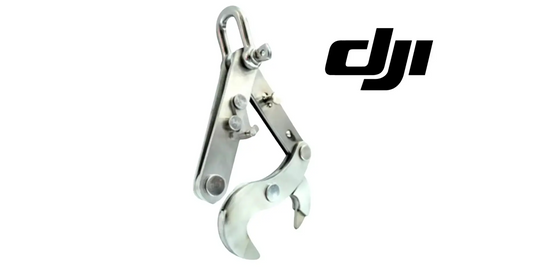
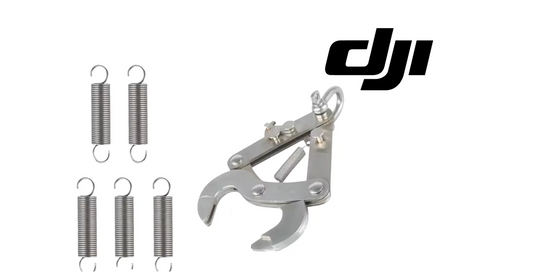
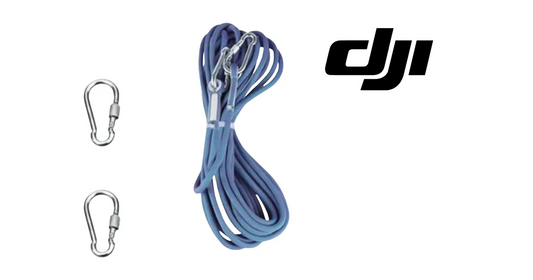
For T100, Ares Acres has separate Lifting Hook, Lifting Rope, Damper Hook and complete Payload Lifting System Kit pages. Replace only after identifying the affected component.
39. Error common: crew approaches while aircraft remains directly overhead
The manual's sequence moves the aircraft away first.
40. Error common: treat 3–4 m and 6 m as rigid values
DJI identifies them as recommendations adjusted for sling length and surroundings.
41. Error common: rely on Auto Balance instead of proper rigging
Balance control does not replace secure cargo and an untangled sling.
42. Questions
How far descend after cargo touches ground?
DJI recommends another 3–4 m.
How far move away?
About 6 m in a people-free direction.
Are those exact universal values?
No; adjust for sling length and surroundings.
What if cargo swings?
Use Auto Balance or Balance Control as applicable and watch surroundings.
What if battery overheats?
Land promptly.
Can I fly manually to the loading point?
Yes; the cargo-handling sequence remains the same.
Source and revision
Primary source: DJI T70P / T100 Lift System User Manual v1.0 (2025.07), sections 1.3 and 3.2.