
DJI Agras T100 Spraying System Maintenance: Pump, Hoses, Sprinklers & Strainer (Canada)
🇨🇦 CANADA — DJI Agras T100 Spraying System Maintenance: Pump, Hoses, Sprinklers & Strainer Care for Canadian Operators
🇺🇸 Reading from the United States? See the U.S. edition: DJI Agras T100 Spraying System Maintenance: Pump, Hoses, Sprinklers & Strainer
This Canadian edition is written for Canadian DJI Agras operators across Canada, from the Prairie grain belt of Saskatchewan, Alberta and Manitoba to the row crops of Ontario and Quebec and the orchards and vineyards of British Columbia and Niagara. It covers daily hose and strainer checks, spray-tank cleaning, delivery-pump care and sprinkler inspection. The procedure, specifications and warnings below are identical to the original edition linked above — the hardware does not change at the border. What changes for a Canadian operator is the regulatory and purchasing context: the DJI Agras T100 falls into Transport Canada’s medium RPAS class (25–150 kg) and flies within visual line of sight on an Advanced Operations pilot certificate under the November 2025 rules, with a Special Flight Operations Certificate for anything outside that envelope; spraying follows provincial applicator licensing and Health Canada PMRA aerial label directions, and pricing is shown in Canadian dollars. Pesticide application by RPAS is permitted for aerial-registered products under the Health Canada PMRA aerial label directions and your provincial applicator licence — check the label and your provincial rules. Ares Acres stocks T100 pumps, hoses, sprinklers and strainers referenced in this guide as genuine DJI Agras OEM parts, ships them to Canada with free standard shipping, and shows CAD pricing at checkout.
The DJI Agras T100 spraying system has several maintenance intervals operating at the same time. Some components should be checked before every day of spraying, others are inspected monthly or after 100 operating hours, and the delivery pump has dedicated pump-head and motor replacement intervals. Treating the entire spray system as one maintenance item can hide the specific component that is actually causing leakage, flow instability or inaccurate application.
Quick Answer: Before daily operations, inspect spray hoses, hose connectors, the strainer and continuous liquid-level system. Clean the spray tank daily. Inspect the delivery pump after 100 hours, one month or daily operation as applicable; DJI lists pump-head replacement after 500 hours and pump-motor replacement after 1000 hours. Centrifugal or mist sprinklers are listed for inspection every 100 hours or one month.
Daily spraying-system inspection
Before daily operations, inspect the aircraft-arm pipelines for wear, pinching or cracks. Also inspect the spray-tank hose connectors at their sealing points. The manual specifically notes that poor hose sealing can allow air intake and affect spray accuracy.

Spray-tank maintenance
The spray tank is listed at a six-month inspection interval with daily cleaning. This distinction is useful: cleaning after use is routine operator care, while the six-month interval is the broader scheduled maintenance point.
Hose connectors: why small leaks matter
Inspect hose connectors before daily operations and look specifically at sealing points. A connector does not need to be visibly pouring liquid to matter. DJI’s maintenance table connects poor sealing with air entering the system, which can affect spray accuracy.

Delivery-pump inspection
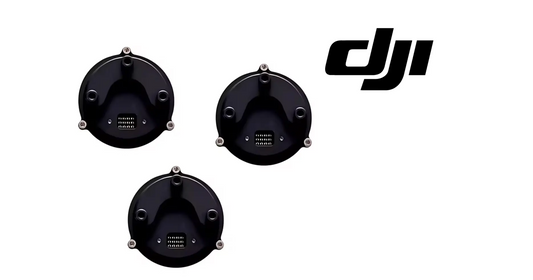
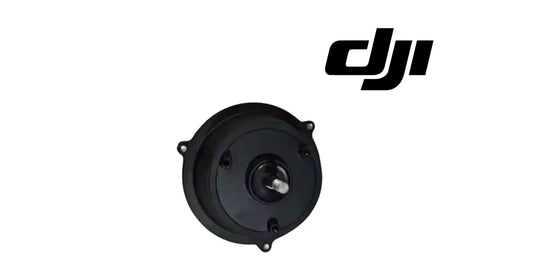
DJI lists delivery-pump inspection after 100 hours, one month or daily operation as applicable. The pump-head inspection requires separating the pump shell, impeller module and isolation sleeve and checking for a broken shaft, wear or melting. Inspect the delivery-pump motor port for corrosion and check the impeller for powder adhesion after powder operation.
This produces a clear diagnostic sequence: a flow problem should begin with the physical pump head, impeller, isolation sleeve, motor port and contamination state before the entire spraying system is treated as a single failed assembly.
Delivery-pump replacement intervals
The T100 maintenance table gives the delivery pump specific replacement milestones:
| Component | Manual replacement interval |
|---|---|
| Delivery-pump head module | After 500 hours |
| Delivery-pump motor | After 1000 hours |
These are distinct from the broader 700-hour/36-month maximum replacement cycle shown for many other T100 components. Track pump hours separately in the fleet-maintenance log so these milestones do not get lost inside a generic aircraft-service record.
Centrifugal and mist sprinkler maintenance
The centrifugal/mist sprinkler row is listed at 100 hours or one month. DJI’s checklist includes:
- check wear on the lower spinner disk and lower cover of the centrifugal motor;
- check the centrifugal-motor port for corrosion;
- inspect the pressure centrifugal funnel, perform a water test and observe whether pressure-nozzle flow is even;
- check whether spray-lance screws show a risk of loosening.
An uneven water-test pattern can therefore be useful evidence in a sprinkler diagnosis before replacing unrelated pump or controller hardware.
Strainer and continuous liquid-level meter
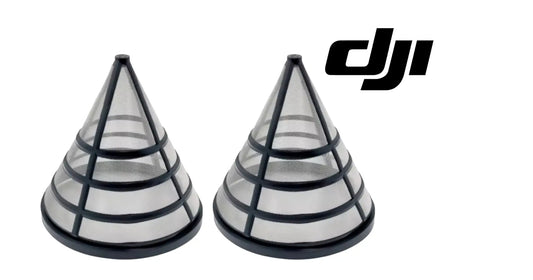
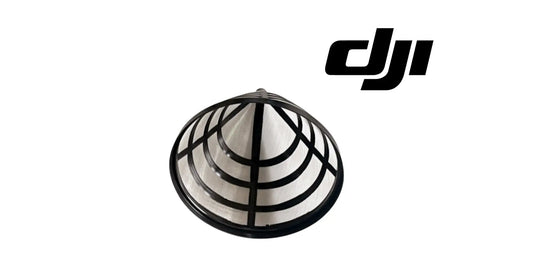
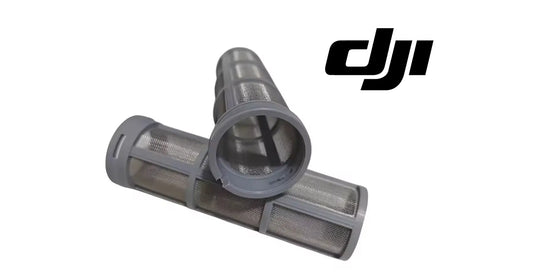
Before daily operations, check whether the strainer is blocked, whether the liquid-level-meter hose is loose and whether the liquid-level sensor is undamaged. These are basic checks with high diagnostic value because a blockage or sensing problem can affect spraying behaviour without creating the same symptoms as a failed delivery pump.
Spray-system troubleshooting by symptom
| Symptom | First maintenance checks | Do not assume yet |
|---|---|---|
| Spray accuracy is inconsistent | Check hose-connector sealing and possible air intake; inspect strainer and sprinkler output | Do not immediately classify the delivery pump as failed |
| Visible leak | Inspect aircraft-arm hoses and hose-connector sealing points | Do not continue normal operation without locating the leak |
| Weak or uneven sprinkler output | Perform the documented sprinkler water test and inspect spinner/funnel condition | Do not replace the complete spraying system from flow appearance alone |
| Liquid-level reading appears abnormal | Check the liquid-level hose and sensor for looseness or damage | Do not treat it as a pump fault without evidence |
| Pump performance deteriorates after powder operation | Inspect the impeller for powder adhesion and the pump-head components for wear | Do not ignore contamination as a cause |
A practical spraying-system service log
Record daily hose/connector/strainer checks, date of last spray-tank cleaning, pump operating hours, last pump-head inspection, pump-head replacement hours, pump-motor hours, sprinkler inspection date, water-test result and any observed leakage or corrosion. That makes the spray system serviceable as a set of components instead of an undifferentiated payload assembly.
Related T100 resources
- DJI Agras T100 Maintenance Schedule
- DJI Agras T100 Mapping & Spraying Operations Guide
- DJI T100 Parts
- DJI Agras T100
🇺🇸 Reading from the United States? See the U.S. edition: DJI Agras T100 Spraying System Maintenance: Pump, Hoses, Sprinklers & Strainer
Frequently asked questions
Does Ares Acres ship T100 pumps, hoses, sprinklers and strainers to Canada?
Yes. Ares Acres ships genuine DJI Agras OEM parts, including T100 pumps, hoses, sprinklers and strainers referenced in this guide, to Canada with free standard shipping, and Canadian customers see CAD pricing at checkout.
Do I need an SFOC to fly the DJI Agras T100 in Canada?
Not for every operation. Under Transport Canada’s November 2025 rules, the DJI Agras T100 falls into the medium RPAS class (25–150 kg) and can be flown within visual line of sight on an Advanced Operations pilot certificate; a Special Flight Operations Certificate is still required for operations outside that envelope, such as beyond visual line of sight or payloads Transport Canada treats as dangerous goods. Confirm current requirements with Transport Canada and your provincial regulator before operating.
Is this spraying-system maintenance different for Canadian operators?
No. The spraying-system maintenance described here is identical in every country; only the regulatory framework, the purchasing path and the units used in this guide differ. Confirm current requirements with Transport Canada and your provincial regulator before operating.
How often should T100 spray hoses be inspected?
The manual lists hose and hose-connector checks before daily operations.
How often should the T100 spray tank be cleaned?
DJI’s maintenance table calls for daily cleaning.
When should the T100 delivery-pump head be replaced?
The table lists pump-head-module replacement after 500 hours.
When should the T100 delivery-pump motor be replaced?
The table lists motor replacement after 1000 hours.
How often should the T100 centrifugal or mist sprinkler be inspected?
DJI lists 100 hours or one month.
Can a leaking hose connector affect spray accuracy?
Yes. The manual notes that poor hose sealing can allow air intake and affect spray accuracy.
Source and revision note
Primary technical source: DJI AGRAS T100 User Manual v1.0 (2025.11), pp. 77–78. This guide reorganizes the spraying-system rows of DJI’s Recommended Maintenance Cycle into a dedicated pump, hose, sprinkler, strainer and liquid-level service workflow.