
DJI D-RTK 3 AG Storage & Battery Care Guide: 30-50% Charge and Long-Term Storage (Canada)
🇨🇦 CANADA — DJI D-RTK 3 AG Storage & Battery Care: 30–50% Charge & Long-Term Storage Through the Canadian Winter
🇺🇸 Reading from the United States? See the U.S. edition: DJI D-RTK 3 AG Storage & Battery Care Guide: 30-50% Charge and Long-Term Storage
This Canadian edition is written for Canadian DJI Agras operators across Canada, from the Prairie grain belt of Saskatchewan, Alberta and Manitoba to the row crops of Ontario and Quebec and the orchards and vineyards of British Columbia and Niagara. It covers -5°C to 30°C storage, the 30–50% battery level, hibernation recovery and dry storage, the routine for a base station that sits from freeze-up to seeding. The procedure, specifications and warnings below are identical to the original edition linked above — the hardware does not change at the border. What changes for a Canadian operator is the regulatory and purchasing context: the aircraft this DJI D-RTK 3 AG base station supports falls into Transport Canada’s medium RPAS class (25–150 kg) and flies on an Advanced Operations pilot certificate under the November 2025 rules, with a Special Flight Operations Certificate for anything outside that envelope, and pricing is shown in Canadian dollars. Ares Acres stocks the D-RTK 3 AG base station and charging accessories referenced in this guide as genuine DJI Agras OEM parts, ships them to Canada with free standard shipping, and shows CAD pricing at checkout.
The D-RTK 3 AG contains an internal battery, so long-term storage requires both environmental control and battery-state management. DJI's v1.0 manual gives specific temperature and state-of-charge guidance for storage longer than three months.
Quick Answer: For storage longer than three months, DJI recommends an environment from -5°C to 30°C and a battery level of 30%-50%. Store the station dry, keep its ports covered, do not disassemble the antenna during storage, and keep it away from heaters, direct sunlight and hot vehicles. If the battery becomes depleted and enters hibernation, recharge the unit to bring it out of hibernation.

Long-term storage temperature and charge level
When the station will be stored for more than three months, DJI recommends a temperature range from -5°C to 30°C (23°F to 86°F) and a battery power level between 30% and 50%.
Hibernation after deep depletion
The internal battery can enter hibernation if it is depleted and stored for an extended period. DJI instructs users to recharge the battery to bring it out of hibernation.
Periodic full charging
The English v1.0 manual contains an unclear phrase in this sentence: “Fully charge the product at least three six months to maintain battery health.” Because the source wording is ambiguous, this guide does not invent a more precise interval. The operational point is that DJI expects periodic charging during extended storage to reduce the risk of over-discharge and irreparable cell damage.
Keep the station dry and covered
Store the station in a dry environment, keep the ports properly covered and do not disassemble the antenna during storage. The manual separately warns against disassembling the product because battery damage can create leakage, fire or explosion hazards.
Avoid heat
Do not leave the D-RTK 3 AG near a furnace or heater, in direct sunlight or inside a vehicle in hot weather.

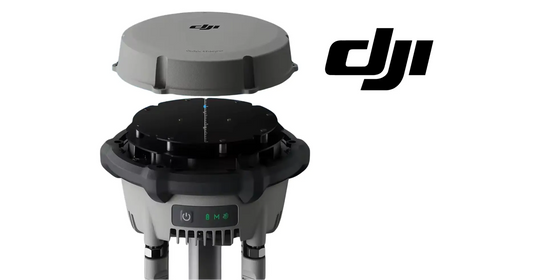
The verified product path is the DJI Agras T100 D-RTK 3 High-Precision GNSS Mobile Station.
Parts & Equipment Referenced in This Guide
Every part listed above is stocked by Ares Acres as a genuine DJI Agras OEM component, ships to Canada with free standard shipping, and shows CAD pricing at checkout for Canadian customers.
Shop Related Collections
Related Tutorials
🇺🇸 Reading from the United States? See the U.S. edition: DJI D-RTK 3 AG Storage & Battery Care Guide: 30-50% Charge and Long-Term Storage
Canadian Operator FAQ: D-RTK 3 AG Storage & Battery Care Guide
Does Ares Acres ship the D-RTK 3 AG base station and charging accessories to Canada?
Yes. Ares Acres ships genuine DJI Agras OEM parts, including the D-RTK 3 AG base station and charging accessories referenced in this guide, to Canada with free standard shipping, and Canadian customers see CAD pricing at checkout.
Do I need an SFOC to use the DJI D-RTK 3 AG base station with my DJI Agras in Canada?
The DJI D-RTK 3 AG base station itself needs no aviation authorization. The DJI Agras aircraft it supports falls into Transport Canada’s medium RPAS class (25–150 kg) under the November 2025 rules and is flown within visual line of sight on an Advanced Operations pilot certificate; a Special Flight Operations Certificate is still required for operations outside that envelope, such as beyond visual line of sight or payloads Transport Canada treats as dangerous goods. Confirm current requirements with Transport Canada and your provincial regulator before operating.
Is this storage and battery care different for Canadian operators?
No. The storage and battery care described here is identical in every country; only the regulatory framework, the purchasing path and the units used in this guide differ. Confirm current requirements with Transport Canada and your provincial regulator before operating.
Source and revision note
Primary source: DJI D-RTK 3 AG User Manual v1.0 (2025.07), pp. 12-13. The English source contains an ambiguous periodic-charging phrase, which is preserved rather than silently corrected.