
DJI Agras T70P Maintenance Schedule: 100 Flights, 100 Hours, 700 Hours & Service Intervals (Canada)
🇨🇦 CANADA — DJI Agras T70P Maintenance Schedule: 100 Flights, 100 Hours, 700 Hours & Service Intervals for Canadian Operators
🇺🇸 Reading from the United States? See the U.S. edition: DJI Agras T70P Maintenance Schedule: 100 Flights, 100 Hours, 700 Hours & Service Intervals
This Canadian edition is written for Canadian DJI Agras operators across Canada, from the Prairie grain belt of Saskatchewan, Alberta and Manitoba to the row crops of Ontario and Quebec and the orchards and vineyards of British Columbia and Niagara. It covers the 100-flight/20-hour basic service, 100-hour/1-month inspections, battery cycles, spray-system checks and 700-hour/36-month replacement limits. The procedure, specifications and warnings below are identical to the original edition linked above — the hardware does not change at the border. What changes for a Canadian operator is the regulatory and purchasing context: the DJI Agras T70P falls into Transport Canada’s medium RPAS class (25–150 kg) and flies within visual line of sight on an Advanced Operations pilot certificate under the November 2025 rules, with a Special Flight Operations Certificate for anything outside that envelope; spraying follows provincial applicator licensing and Health Canada PMRA aerial label directions, and pricing is shown in Canadian dollars. Ares Acres stocks T70P maintenance consumables and scheduled-replacement parts referenced in this guide as genuine DJI Agras OEM parts, ships them to Canada with free standard shipping, and shows CAD pricing at checkout.
The T70P manual contains two different maintenance layers. Section 3.7 gives a simple aircraft-wide interval — every 100 flights or after more than 20 flight hours — while Appendix 7.4 provides a component-by-component maintenance table extending through daily checks, monthly/100-hour inspections and 700-hour/36-month replacement cycles.
Quick Answer: Perform the manual's basic aircraft maintenance every 100 flights or after more than 20 flight hours. The detailed table adds recurring inspections such as monthly airframe/power checks, initial and repeating 100-flight / 100-hour propulsion checks, 100 battery charge cycles or one month for the standard battery, daily spraying-system checks, and a common maximum replacement cycle of 700 hours / 36 months for many components.

Basic maintenance: every 100 flights or more than 20 flight hours
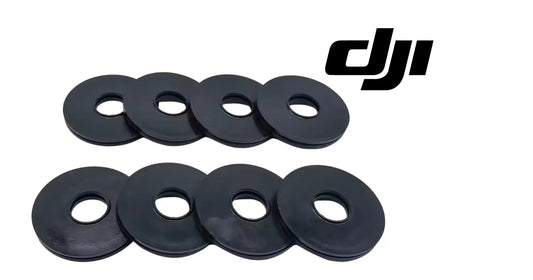
DJI says this maintenance interval keeps the aircraft in its best condition and reduces potential safety hazards. Check and replace worn propellers, check for loose propellers, replace propellers/washers as required, inspect aging plastic/rubber parts, check atomization, clean centrifugal disks and replace them if atomization remains severely poor, and replace the spray-tank strainer.
Storage and transportation
Before transportation, remove the battery and fold/secure the propellers. Remove or empty the spray tank for transportation or long-term storage. Keep the aircraft clean and dry with no liquid remaining in the tank, flow meter, pumps or hoses. DJI recommends aircraft storage from -20°C to 40°C.
For extended controller storage, the manual says to discharge the remote controller to 40%-60% and to recharge it immediately if its battery reaches 0%.

Remote controller
DJI lists a one-month inspection cycle and 700 hours / 36 months maximum replacement cycle for the remote controller, including cleaning/corrosion inspection and a functional power-on check.
Airframe and structural hardware
Battery slider, power-board connector, aircraft-arm connector, middle frame, fixing screws, arm lock levers and landing-gear hardware each have their own inspection cadence. Common checks include cracks, corrosion, deformation, missing rubber pads, abnormal gaps, loose screws and latching problems.
Aircraft arm power lines
The new aircraft receives its initial arm-power-line inspection after 100 flights. After that, the table calls for inspection every 100 hours or one month, with a 700-hour / 36-month maximum replacement cycle. Inspect protective tape and insulation for wear or exposure.
Radar, RTK and vision systems
Front/rear radar receives a six-month inspection. Radar supports are checked monthly. The SDR antenna and RTK module have six-month inspection intervals. FPV/vision hardware is listed at 12 months. Checks focus on physical damage, corrosion, power-up and HMS errors.
Flight battery
The standard battery is listed for inspection every 100 charging cycles or one month, with a maximum replacement cycle of 1,500 cycles. Inspect for swelling, dents or deformation, clean the terminals and charge/discharge at least once every three months to maintain battery activity.
Motors, propellers and ESCs
Motors and propellers receive an initial inspection after 100 flights and then every 100 hours or one month. Motor checks include rotor smoothness/looseness, mounting and motor-cover condition. Propeller checks include deformation, damage, looseness and cracks. Propeller clamps are checked for deformation and free movement. ESCs have a six-month inspection interval.
Spraying-system maintenance
Hoses and hose connectors should be checked before daily operations for wear, pinching, cracks and leaks. The spray tank receives daily cleaning. The delivery pump has a deeper inspection after 100 hours, one month or daily operation depending on use, and DJI lists pump-head replacement at 500 hours and pump-motor replacement at 1,000 hours.
Centrifugal/mist sprinklers are listed at 100 hours or one month. The strainer, continuous liquid-level meter and solenoid vent valve are checked before daily operation. The flow meter receives a one-month inspection.
Spreading and lift systems
Before daily spreading operations, inspect the throwing disc, auger and auger housing for stalled motors or fertilizer blockage. For the lift system, inspect the lift rope and hook for wear and cracks before daily operations.
Verified T70P service paths
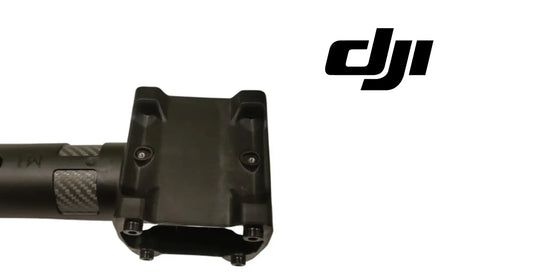
For model-specific replacement and service hardware use the DJI Agras T70P Parts collection. Examples include the T70P OEM Drone Arm Assembly, Rear Radar Module, 70L Water Tank, and T70P OEM Lifting System.
Parts & Equipment Referenced in This Guide
Every part listed above is stocked by Ares Acres as a genuine DJI Agras OEM component, ships to Canada with free standard shipping, and shows CAD pricing at checkout for Canadian customers.
Shop Related Collections
Related T70P Tutorials
🇺🇸 Reading from the United States? See the U.S. edition: DJI Agras T70P Maintenance Schedule: 100 Flights, 100 Hours, 700 Hours & Service Intervals
Canadian Operator FAQ: T70P Maintenance Schedule
Does Ares Acres ship T70P maintenance consumables and scheduled-replacement parts to Canada?
Yes. Ares Acres ships genuine DJI Agras OEM parts, including T70P maintenance consumables and scheduled-replacement parts referenced in this guide, to Canada with free standard shipping, and Canadian customers see CAD pricing at checkout.
Do I need an SFOC to fly the DJI Agras T70P in Canada?
Not for every operation. Under Transport Canada’s November 2025 rules, the DJI Agras T70P falls into the medium RPAS class (25–150 kg) and can be flown within visual line of sight on an Advanced Operations pilot certificate; a Special Flight Operations Certificate is still required for operations outside that envelope, such as beyond visual line of sight or payloads Transport Canada treats as dangerous goods. Confirm current requirements with Transport Canada and your provincial regulator before operating.
Is this maintenance-schedule procedure different for Canadian operators?
No. The maintenance-schedule procedure described here is identical in every country; only the regulatory framework, the purchasing path and the units used in this guide differ. Confirm current requirements with Transport Canada and your provincial regulator before operating.
Source and revision note
Primary source: DJI AGRAS T70P User Manual v1.0, 2025.11, section 3.7 and Appendix 7.4.