
DJI D-RTK 3 AG Setup Guide: Components, First Charge & Activation (Canada)
🇨🇦 CANADA — DJI D-RTK 3 AG Setup: Components, First Charge & DJI Agras Activation for Canadian Operators
🇺🇸 Reading from the United States? See the U.S. edition: DJI D-RTK 3 AG Setup Guide: Components, First Charge & Activation
This Canadian edition is written for Canadian DJI Agras operators across Canada, from the Prairie grain belt of Saskatchewan, Alberta and Manitoba to the row crops of Ontario and Quebec and the orchards and vineyards of British Columbia and Niagara. It is the first-use guide to the D-RTK 3 AG: components, PD3.0 charging, power-on and activation in DJI Agras. The procedure, specifications and warnings below are identical to the original edition linked above — the hardware does not change at the border. What changes for a Canadian operator is the regulatory and purchasing context: the aircraft this DJI D-RTK 3 AG base station supports falls into Transport Canada’s medium RPAS class (25–150 kg) and flies on an Advanced Operations pilot certificate under the November 2025 rules, with a Special Flight Operations Certificate for anything outside that envelope, and pricing is shown in Canadian dollars. Ares Acres stocks the D-RTK 3 AG base station, antennas and tripod accessories referenced in this guide as genuine DJI Agras OEM parts, ships them to Canada with free standard shipping, and shows CAD pricing at checkout.
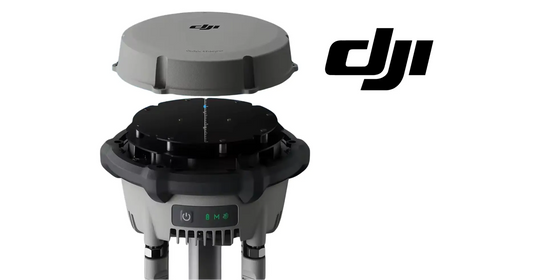
The D-RTK 3 AG manual separates first use into three jobs: identify the hardware, activate the internal battery by charging it correctly, and activate the station in DJI Agras before field positioning.
Quick Answer: Before first use, charge the D-RTK 3 AG through USB-C with a PD3.0 charger in the 9-15 V range and continue charging until the power indicator is green. Power on the aircraft and remote controller, confirm the aircraft is linked, power on the D-RTK 3 AG, then open DJI Agras and select Device Management → D-RTK Station. Select the station in the search results and complete activation while the remote controller is connected to the internet.

Know the external controls and ports
The manual identifies eight external items. The USB-C port is used for charging and DJI Assistant 2 computer connection. When the reserved and USB-C ports are not in use, DJI instructs operators to keep them covered to protect the product from moisture and dust.
First charge: activate the internal battery
DJI says the internal battery should be activated by charging the D-RTK 3 AG before first use. Use a PD3.0 USB charger with 9-15 V output, such as DJI's 65 W Portable Charger. When the power indicator lights, battery activation has begun; continue charging until the indicator is green before use.
The source also notes that if a non-recommended charger such as a 5 V-output charger is used, the D-RTK 3 AG can be charged only while powered off.

Power the station on and off
The manual uses a two-stage button action: press the power button, then press and hold it to power the D-RTK 3 AG on or off.
Activate the D-RTK 3 AG in DJI Agras
- Power on the aircraft and remote controller, and make sure the aircraft is linked to the controller.
- Power on the D-RTK 3 AG.
- Open DJI Agras and select D-RTK Station in Device Management.
- Select the desired D-RTK 3 AG from the search results.
- Wait while the remote controller connects to the station's broadcast network.
- Follow the app instructions to activate the station while the remote controller remains connected to the internet.
A slow-blinking red GNSS signal indicator can indicate the device is not activated, so activation belongs in the first diagnostic branch for a new station.

The verified store path is the DJI Agras T100 D-RTK 3 High-Precision GNSS Mobile Station. Activation also uses the DJI Agras T100 OEM Remote Controller when deployed with the T100 workflow.
Parts & Equipment Referenced in This Guide
Every part listed above is stocked by Ares Acres as a genuine DJI Agras OEM component, ships to Canada with free standard shipping, and shows CAD pricing at checkout for Canadian customers.
Shop Related Collections
Related Tutorials
- D-RTK 3 AG Site Selection & Tripod Setup
- D-RTK 3 AG Indicator Troubleshooting
- Existing D-RTK 3 Positioning Tutorial
🇺🇸 Reading from the United States? See the U.S. edition: DJI D-RTK 3 AG Setup Guide: Components, First Charge & Activation
Canadian Operator FAQ: D-RTK 3 AG Setup Guide
Does Ares Acres ship the D-RTK 3 AG base station, antennas and tripod accessories to Canada?
Yes. Ares Acres ships genuine DJI Agras OEM parts, including the D-RTK 3 AG base station, antennas and tripod accessories referenced in this guide, to Canada with free standard shipping, and Canadian customers see CAD pricing at checkout.
Do I need an SFOC to use the DJI D-RTK 3 AG base station with my DJI Agras in Canada?
The DJI D-RTK 3 AG base station itself needs no aviation authorization. The DJI Agras aircraft it supports falls into Transport Canada’s medium RPAS class (25–150 kg) under the November 2025 rules and is flown within visual line of sight on an Advanced Operations pilot certificate; a Special Flight Operations Certificate is still required for operations outside that envelope, such as beyond visual line of sight or payloads Transport Canada treats as dangerous goods. Confirm current requirements with Transport Canada and your provincial regulator before operating.
Is this D-RTK 3 AG setup different for Canadian operators?
No. The D-RTK 3 AG setup described here is identical in every country; only the regulatory framework, the purchasing path and the units used in this guide differ. Confirm current requirements with Transport Canada and your provincial regulator before operating.
Source and revision note
Primary source: DJI D-RTK 3 AG User Manual v1.0 (2025.07), pp. 5-6.