
DJI Agras T100 End-of-Day Spray Cleaning Guide: Tank, Strainer, Motors & Controller (Canada)
🇨🇦 CANADA — DJI Agras T100 End-of-Day Spray Cleaning: Tank, Strainer, Motors & Controller Care for Canadian Operators
🇺🇸 Reading from the United States? See the U.S. edition: DJI Agras T100 End-of-Day Spray Cleaning Guide: Tank, Strainer, Motors & Controller
This Canadian edition is written for Canadian DJI Agras operators across Canada, from the Prairie grain belt of Saskatchewan, Alberta and Manitoba to the row crops of Ontario and Quebec and the orchards and vineyards of British Columbia and Niagara. It is the end-of-day cleaning checklist: tank flushing, spray-tank strainer cleaning, aircraft and motor wipe-down and controller care. The procedure, specifications and warnings below are identical to the original edition linked above — the hardware does not change at the border. What changes for a Canadian operator is the regulatory and purchasing context: the DJI Agras T100 falls into Transport Canada’s medium RPAS class (25–150 kg) and flies within visual line of sight on an Advanced Operations pilot certificate under the November 2025 rules, with a Special Flight Operations Certificate for anything outside that envelope; spraying follows provincial applicator licensing and Health Canada PMRA aerial label directions, and pricing is shown in Canadian dollars. Pesticide application by RPAS is permitted for aerial-registered products under the Health Canada PMRA aerial label directions and your provincial applicator licence — check the label and your provincial rules. Ares Acres stocks T100 strainers, nozzles, hoses and spraying-system parts referenced in this guide as genuine DJI Agras OEM parts, ships them to Canada with free standard shipping, and shows CAD pricing at checkout.
The T100 Quick Start Guide ends its English operating section with a six-step daily maintenance routine for spraying operations. This is a different job from a long-term maintenance schedule: it is the shutdown-and-cleaning sequence an operator should perform after a day of spraying once the aircraft has cooled back to a normal temperature.
Quick Answer: Do not clean the T100 immediately after an operation. Wait until the aircraft returns to a normal temperature. Flush the spray tank with clean or soapy water or use Clean Hose, clean the spray-tank strainer, remove the flight battery before washing the aircraft body, wipe and dry motors and propellers, wipe the remote controller with a wrung-out wet cloth, and store the cleaned aircraft in a dry environment.

First rule: let the aircraft cool before cleaning
DJI says to clean the aircraft and remote controller at the end of each day of spraying after the aircraft returns to a normal temperature. Do not begin washing immediately after operations are completed.
1. Flush the spray tank and hose path

Fill the spray tank with clean or soapy water and spray the water through the sprinklers until the tank is empty. DJI also gives an app-based alternative: enable the Clean Hose function in Spray Setting. Repeat the cleaning step so the tank is completely cleaned.
The verified tank replacement path in the current catalog is the DJI Agras T100 OEM 75L Water Tank. This quick-start cleaning procedure applies to the installed spraying system; do not use a product-page link as a substitute for the manufacturer cleaning sequence.
2. Remove and clean the spray-tank strainer
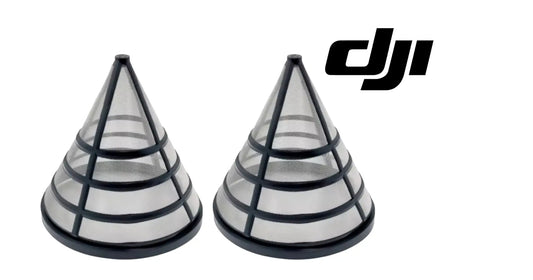
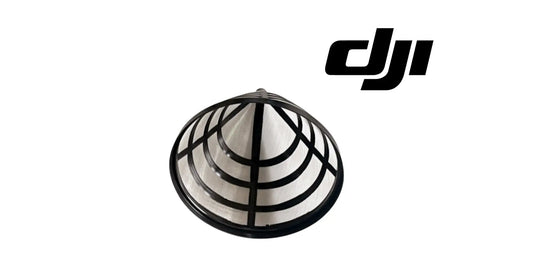
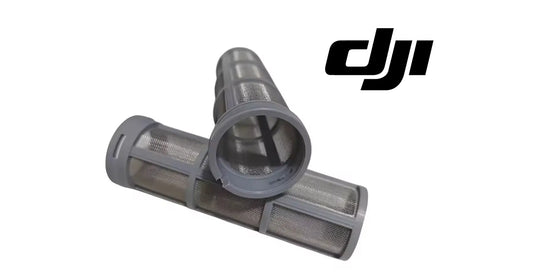
Remove the spray-tank strainer, clean it and clear any blockage. The Quick Start Guide does not publish a part number for that strainer on this page, so this article does not claim that a different filter SKU is the exact part.
For broader filtration and spray-system service, use the DJI Agras T100 Spraying System Parts collection. The store also carries T100 100 Mesh Filters (5 Pcs), but the Quick Start Guide does not identify those as the exact removable tank strainer described in this maintenance step.
3. Remove the battery before washing the aircraft
DJI says to make sure the aircraft structure is completely connected and the battery is removed before direct washing with water. It recommends a spray washer filled with water for cleaning the aircraft body, followed by a soft brush or wet cloth, then a dry cloth to remove water residue.
The active flight-battery path is the DB2160 Intelligent Flight Battery. Battery removal here is a cleaning-safety boundary, not an instruction to open or service the battery.
4. Clean motors and propellers carefully
If there is dust or pesticide liquid on the motors or propellers, wipe the affected surfaces with a wet cloth and then remove remaining water residue with a dry cloth.
For deeper propulsion inspection intervals and replacement logic, use the existing T100 motor/propeller/ESC maintenance article rather than treating daily cleaning as a propulsion overhaul.
5. Wipe the remote controller
Use a clean wet cloth that has been wrung out with water to wipe the controller surface and screen. The controller product path is the DJI Agras T100 OEM Remote Controller.
6. Store the cleaned aircraft dry
After cleaning and drying, store the aircraft in a dry environment. This is the final step in the Quick Start Guide's daily maintenance routine.
Daily cleaning vs deeper maintenance
This article owns the end-of-day spray-cleaning intent. For pump, hose, sprinkler and strainer diagnostics, use DJI Agras T100 Spraying System Maintenance. For time-based inspections and replacement cycles, use the T100 Maintenance Schedule.
Useful spraying-system service paths
For field spares after cleaning or inspection reveals wear, one verified current kit is the T100 Spray System Critical Spares Pack. Use exact component diagnosis before replacing parts; cleaning residue alone does not prove a component has failed.
Parts & Equipment Referenced in This Guide
- T100 OEM 75L Water Tank
- DB2160 Intelligent Flight Battery
- T100 OEM Remote Controller
- T100 Spray System Critical Spares Pack
- T100 100 Mesh Filters (5 Pcs)
Every part listed above is stocked by Ares Acres as a genuine DJI Agras OEM component, ships to Canada with free standard shipping, and shows CAD pricing at checkout for Canadian customers.
Shop Related Collections
Related Tutorials
🇺🇸 Reading from the United States? See the U.S. edition: DJI Agras T100 End-of-Day Spray Cleaning Guide: Tank, Strainer, Motors & Controller
Canadian Operator FAQ: T100 End-of-Day Spray Cleaning Guide
Does Ares Acres ship T100 strainers, nozzles, hoses and spraying-system parts to Canada?
Yes. Ares Acres ships genuine DJI Agras OEM parts, including T100 strainers, nozzles, hoses and spraying-system parts referenced in this guide, to Canada with free standard shipping, and Canadian customers see CAD pricing at checkout.
Do I need an SFOC to fly the DJI Agras T100 in Canada?
Not for every operation. Under Transport Canada’s November 2025 rules, the DJI Agras T100 falls into the medium RPAS class (25–150 kg) and can be flown within visual line of sight on an Advanced Operations pilot certificate; a Special Flight Operations Certificate is still required for operations outside that envelope, such as beyond visual line of sight or payloads Transport Canada treats as dangerous goods. Confirm current requirements with Transport Canada and your provincial regulator before operating.
Is this end-of-day cleaning different for Canadian operators?
No. The end-of-day cleaning described here is identical in every country; only the regulatory framework, the purchasing path and the units used in this guide differ. Confirm current requirements with Transport Canada and your provincial regulator before operating.
Source and revision note
Primary source: DJI AGRAS T100 Quick Start Guide v1.0, English Maintenance section.