
DJI Agras T40/T50 DB1560 Battery Motherboard Repair Guide: BMS Replacement, Firmware, Cycle Count & Data Recovery
🇺🇸 U.S.A. FIRST — DB1560 BMS Diagnosis, Motherboard Replacement Decisions, Firmware Recovery & Cycle-History Control
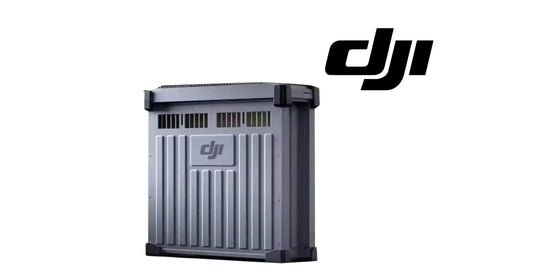
The DJI Agras DB1560 Intelligent Flight Battery is not simply a box of lithium cells with two power terminals. Inside the battery is a complete management and protection system responsible for monitoring the pack, communicating with the aircraft and charger, managing protection logic, reporting battery status, participating in firmware compatibility and preserving information that helps the Agras ecosystem decide whether the battery is operating normally.
That is why a DJI Agras T40 or T50 battery can fail in ways that do not look like a conventional “dead battery.” A DB1560 may contain usable cells yet produce a battery warning, incompatible-module message, update failure, communication fault, hardware-version error or other symptom that points toward the battery motherboard / BMS electronics rather than straightforward cell depletion. At the same time, a motherboard should never be blamed merely because the controller reports a battery error. Dirty contacts, damaged terminals, aircraft-side communication faults, charger issues, firmware mismatch, internal wiring problems, physical battery damage and deteriorated cells can produce overlapping symptoms.
This Ares Acres tutorial is designed to connect those pieces into one diagnostic framework. It uses the supplied field-repair screenshots as a real-world case study, combines them with Ares Acres’ existing DB1560 battery repair and fleet-management content, and separates what can be observed from what should be treated as an official DJI requirement.
The result is a technician-oriented guide covering DB1560 motherboard function, BMS diagnosis, circuit-board replacement decisions, cycle-count history, firmware alignment, data migration, post-repair validation, the visible 400A/70V fuse shown in the supplied motherboard photograph, replacement-board options, compatible Ares Acres OEM parts and the conditions that should stop a battery from returning to service.
Ares Acres supports DJI Agras operators with aircraft, genuine OEM replacement parts, batteries, charging equipment and long-form technical resources. For this system, start with the DJI Agras T50 OEM DB1560 Intelligent Flight Battery, DJI Agras T50 OEM DB1560 Battery Motherboard, DB1560 Battery Motherboard With Lid, DB1560 Battery Motherboard Fuse, or the DB1560 Motherboard + Lid + Fuse Assembly. You can also browse DJI Agras T50 Parts, DJI Agras T40 Parts, DJI Agras OEM Parts and the Ares Acres Product Catalog.
Source Context: What the Field Repair Post Actually Shows
The field report supplied for this tutorial describes a T40/T50 battery-repair scenario in which a battery circuit board is replaced and the technician discusses two possible post-replacement approaches: resetting the cycle count, or updating firmware and importing information from the faulty circuit board. The post also includes a controller screenshot showing an aircraft firmware entry of 01.03.1005+ and a battery firmware entry of 08.01.00.52, followed by a separate image captioned “Update worked!”
That information is useful because it shows a real technician treating motherboard replacement as more than a physical swap. It also reinforces a core point from Ares Acres’ existing battery articles: the DB1560 board participates in firmware, battery identity/history and system compatibility.
However, the screenshot is a field-repair report—not an official DJI service bulletin. The specific claim that a “weight limit kicks in after 1,000 cycles” was not verified in the current public DJI documentation reviewed for this article. DJI’s public 2024 T50 launch material instead describes the DB1560 as a 30 Ah battery with “1500 charge cycles,” and its footnote specifically states that batteries are covered by warranty for up to 1,500 charging cycles or 12 months, whichever ends first. That public statement should not be reinterpreted as a universal safe-life limit either; it shows why technicians should not turn an unverified 1,000-cycle social-media claim into a universal rule.

What You’ll Learn
- What the DB1560 motherboard/BMS does inside a DJI Agras T40 or T50 battery.
- Why a battery error does not automatically mean the motherboard has failed.
- How to separate cell, connector, charger, aircraft, firmware and motherboard faults.
- Which symptoms make a motherboard failure more likely.
- How the DB1560 battery communicates with the aircraft and charger.
- Why firmware compatibility matters after a board replacement.
- Why the firmware versions shown in a field screenshot should not be treated as permanent “latest versions.”
- Why cycle count is maintenance history rather than a cosmetic number.
- Why a reset cycle counter does not make used cells new.
- What the supplied field report means by importing data from a faulty board.
- Why corrupted or incompatible board data should not be copied blindly.
- How Ares Acres recommends preserving battery identity and service history outside the battery electronics.
- What the visible DB1560 motherboard photographs reveal about power, communication and protection architecture.
- What the visible MEGA 400A 70V marking in the supplied internal photo means—and what it does not prove about every DB1560 revision.
- When a fuse-only replacement, motherboard-only replacement, motherboard-with-lid assembly or full battery replacement may make more sense.
- How to use A/B testing with a known-good battery, aircraft or charger to narrow a fault.
- How incompatible-module, battery-update and hardware-version errors fit into the motherboard diagnostic tree.
- What should be documented before any internal battery work.
- How a qualified technician should structure post-repair firmware alignment and return-to-service validation.
- Which conditions should immediately stop a battery from being returned to flight.
Quick Answer: When Should You Suspect the DB1560 Battery Motherboard?
A motherboard becomes a stronger suspect when the fault consistently follows one battery across otherwise healthy aircraft/charger interfaces, external contacts are clean and intact, there is no obvious unsafe cell/pack condition, firmware/compatibility checks have been performed, and the symptoms specifically involve battery communication, module compatibility, firmware update, identification or BMS-controlled behaviour.
Critical Corrections: What the Screenshot Says vs. What You Should Treat as Established
| Topic | Field-report statement / visible evidence | Ares Acres interpretation |
|---|---|---|
| 1,000 cycles | The post states that a “weight limit kicks in after 1,000 cycles.” | Do not treat this as a universal DJI rule unless current model/firmware/service documentation confirms it. Current public DJI T50 launch material references 1,500 charge cycles and footnotes 1,500 cycles or 12 months for warranty coverage. |
| Cycle reset | The post offers reset of the cycle count as one board-replacement path. | A legitimate board replacement can change or initialize electronic records, but the physical cells do not become new. Preserve actual pack history externally and never represent a repaired used battery as new because its displayed count changes. |
| Board-data import | The post describes updating firmware and importing data from the faulty circuit board. | This is plausible as a qualified-service migration concept, but it is not a universal operator procedure. Only data that is valid, compatible and supported by the correct service workflow should be restored. |
| Battery firmware 08.01.00.52 | Visible in supplied controller screenshots. | Evidence of the firmware state in one repair case. Do not treat it as the permanent latest or correct target for every T40/T50 configuration. |
| Aircraft 01.03.1005+ | Visible in supplied controller screenshot. | Case-specific aircraft firmware context, not a universal target. |
| “Update worked!” | Caption in the field report. | Evidence of one successful reported update. It does not prove that firmware will correct every malfunction or that every failed battery has a board problem. |
| 400A/70V fuse | The supplied internal motherboard photograph visibly shows a fuse marked MEGA 400A 70V. | Useful identification evidence for the photographed assembly only. Confirm exact battery/board revision and OEM fitment before ordering or replacing a fuse; never bridge or substitute a fuse by appearance alone. |
DB1560 Technical Reference
DJI publishes the T50 DB1560 Intelligent Flight Battery as model BAX702-30000mAh-52.22V, with a nominal capacity of 30,000 mAh, nominal voltage of 52.22 V and approximate weight of 12.1 kg. Multiplying nominal voltage by nominal amp-hour capacity gives approximately 1.57 kWh of nominal stored energy, but that calculation is not the same thing as a guaranteed usable-energy rating under every load, temperature, age or protection state.
| Item | Reference | Why it matters to motherboard diagnosis |
|---|---|---|
| Battery family | DB1560 Intelligent Flight Battery | Establishes the battery platform being diagnosed. |
| Published T50 battery model | BAX702-30000mAh-52.22V | Useful for confirming the correct pack family and parts. |
| Nominal capacity | 30,000 mAh / 30 Ah | Shows why this is a high-energy aviation battery, not a small electronics pack. |
| Nominal voltage | 52.22 V | Reinforces the need for high-voltage service discipline. |
| Approximate battery weight | 12.1 kg | Relevant to safe handling and aircraft configuration. |
| Calculated nominal energy | ≈1.57 kWh | Illustrates energy scale; not a field service limit. |
| Public DJI launch-cycle language | Up to 1,500 charge cycles; warranty footnote up to 1,500 cycles or 12 months, whichever ends first | Important context when evaluating unverified social-media claims about a 1,000-cycle threshold. |
Official DJI public reference: DJI Agras T50 and T25 Global Launch. Always confirm the current manual, warranty terms and service documentation for the exact battery and region rather than relying on an older launch article alone.
What Is the DB1560 Battery Motherboard?
In Ares Acres battery content, “motherboard,” “main board,” “battery circuit board” and “BMS board” are often used around the same service conversation. Strictly speaking, a battery management system is the complete electronics-and-sensing architecture that monitors and protects the battery; the replaceable motherboard assembly is the central electronics hardware carrying much of that control and communication responsibility.
The board is the bridge between the electrochemical cell pack and the outside DJI Agras ecosystem. It is involved in interpreting the battery’s internal state, communicating with the aircraft and charger, enforcing protection decisions and exposing status or fault information to the controller.
Core Functions Associated With the DB1560 BMS / Mainboard
- Cell monitoring: tracking cell-group electrical condition through the battery’s sensing architecture.
- Temperature monitoring: using battery temperature information to support protection and charge/discharge decisions.
- Current / voltage protection: participating in protection when operating conditions move outside acceptable ranges.
- Cell balancing: helping keep cell-group state aligned during appropriate battery-management conditions.
- Aircraft communication: reporting battery state and status to the Agras aircraft.
- Charger communication: coordinating compatible charging behaviour and battery recognition.
- Fault reporting: making battery errors visible to the aircraft/controller ecosystem.
- Firmware compatibility: participating in module-version and update relationships between battery, aircraft and charging hardware.
- Battery history / state: maintaining electronic information associated with the pack, which is why motherboard replacement raises cycle-history and data-migration questions.
DJI’s public battery-design language also describes intelligent management that monitors cell status and conditions such as temperature, current and voltage, along with full-circuit short-circuit protection. That general architecture is consistent with why a board fault can affect more than a single number on the controller.
Motherboard Exterior: What You Can Identify Without Guessing at Hidden Circuitry

The exterior photograph is valuable because it shows that the battery board is not merely a low-power logic card. Large conductive interfaces coexist with smaller communication connectors and an enclosed electronics housing. That mixed architecture is exactly why internal battery work requires qualified handling: high-current power paths and low-voltage sensing/communication paths occupy the same assembly.
Motherboard Internal View: Fuse, Power Path and Communication Interfaces

| Visible area / component class | Likely system role | Service significance |
|---|---|---|
| Large metal terminal interfaces | High-current power path | Requires insulation, correct fastening and qualified high-energy battery service practices. |
| MEGA fuse marked 400A 70V in supplied photo | High-current protection component | Never bridge or bypass. Use exact OEM fitment for the battery/board revision. |
| Multi-pin connectors | Battery communication / sensing interfaces | Damage, contamination, incomplete seating or revision mismatch can produce communication symptoms. |
| Internal board assembly | BMS logic, monitoring, protection and communication | Potential source of firmware, identification or hardware-version errors after other causes are ruled out. |
| Housing, lid and sealing surfaces | Mechanical and environmental protection | Improper assembly can compromise protection against contamination, vibration and moisture. |
Ares Acres offers the DJI Agras T50 OEM DB1560 Battery Motherboard Fuse separately for cases where the diagnosed failure is limited to the correct replaceable fuse component. A blown fuse is not permission to bypass protection. The reason the protection opened must be understood before return to service.
Why a DB1560 Error Does Not Automatically Mean “Replace the Motherboard”
The most expensive diagnostic mistake is treating an error message as a part number. Intelligent battery systems are interconnected. A message displayed by the controller may be generated because the battery reports a problem, because the aircraft cannot communicate correctly with the battery, because modules disagree about firmware or hardware state, or because an electrical interface is physically compromised.
Ares Acres therefore recommends a fault-isolation ladder rather than motherboard-first replacement.
The Diagnostic Chain
Cell Pack / Internal Sensing → DB1560 Motherboard/BMS → Battery Contacts → Aircraft Battery Interface → Aircraft Firmware / Controller Display
During charging, a second chain matters:
Cell Pack → Motherboard/BMS → Battery Contacts → Charger Interface → Charger Firmware / Charging Logic
If the same DB1560 produces the same fault in more than one otherwise healthy environment while known-good batteries behave normally, the battery becomes a stronger suspect. If several batteries produce the same fault on one aircraft or charger, the external equipment moves higher on the suspect list.
Common DB1560 Symptoms and What They Suggest
| Symptom | Possible cause categories | Diagnostic direction |
|---|---|---|
| Battery not recognized by aircraft | Contacts, connector damage, motherboard communication, aircraft interface, firmware | Inspect external interfaces and compare with a known-good battery before internal repair. |
| Battery recognized by charger but not aircraft | Aircraft interface, battery-aircraft communication path, firmware compatibility | Compare same battery on another compatible aircraft if available and approved. |
| Battery recognized by aircraft but not charger | Charger interface, charger firmware, battery charge-communication path | Compare charger behaviour with a known-good DB1560. |
| “Battery update failed” | Communication interruption, board fault, incompatible module state, firmware mismatch, power instability | Preserve exact error and versions; do not repeatedly force updates without diagnosis. |
| Incompatible module versions | Firmware mismatch, replacement-board revision/configuration, interrupted update | Confirm supported firmware relationship across aircraft/battery/charger. |
| Incompatible battery hardware version / 0X1609 / 0Xc7 | Board revision/configuration/firmware/communication issue | Use as a validation trigger, not automatic proof that the board is defective. |
| Error 267000 / 0033-type battery fault | Battery electronics, communication, compatibility or other pack fault | Determine whether the error follows the battery and inspect broader system state. |
| Unexpected shutdown under load | Cell condition, connection, protection event, motherboard/BMS, extreme temperature | Remove from flight until cause is understood; this is a high-severity symptom. |
| Visible swelling / leakage / burning | Unsafe pack condition | Stop. Do not treat as a normal motherboard-only repair scenario. |
| Cycle count appears inconsistent after board change | Electronic history not preserved / new board initialization | Use external service history; never assume displayed count equals physical cell age. |
DB1560 Diagnostic Phase 1 — Document Before You Touch Anything
Before resetting, updating, opening or replacing anything, capture the battery’s existing state. This creates the reference needed to determine whether the repair actually changed the fault and helps prevent useful evidence from disappearing.
- Record the aircraft model: T40, T50 or other confirmed compatible platform.
- Record the DB1560 battery serial number / fleet identifier.
- Photograph the battery exterior from all sides.
- Capture the exact controller warning or error code.
- Record displayed battery firmware.
- Record aircraft firmware.
- Record charger/generator model and firmware where relevant.
- Record displayed cycle count and any available battery health/history information.
- Record whether the fault occurs during startup, charge, takeoff, hover, loaded flight, landing or storage.
- Record ambient/battery temperature context when relevant.
- Record recent repairs, impacts, liquid exposure, connector work or firmware changes.
- Identify whether the fault is repeatable.
This is especially important before motherboard replacement because the electronics may contain data that will not be represented identically after the board is changed.
DB1560 Diagnostic Phase 2 — Perform a Physical Safety Inspection
A battery with an electronics error still has to pass a physical safety screen. Do not let a software warning distract from visible evidence of a hazardous pack.
Stop Normal Service If You See or Smell:
- Swelling or case deformation.
- Cracking from impact.
- Electrolyte leakage or unexplained residue.
- Burning, melting or arcing.
- Discoloured or severely pitted high-current contacts.
- Loose or mechanically damaged battery terminals.
- Water or chemical intrusion beyond normal exterior contamination.
- Unusual heat that is not explained by normal recent operation/charge behaviour.
- Abnormal odour.
- Evidence of an internal short or thermal event.
If any of these are present, the case is no longer a routine “swap the motherboard and see” workflow.
DB1560 Diagnostic Phase 3 — Inspect the External Electrical Interface
The battery-to-aircraft interface is one of the highest-value checks because connector problems can imitate deeper electronic faults.
Inspect the battery and aircraft contacts for contamination, chemical residue, corrosion, pitting, heat damage, deformation and foreign material. Use the cleaning and inspection method appropriate to DJI equipment. Do not scrape protective surfaces aggressively or introduce conductive debris.
For the full external-fault workflow, use the Ares Acres DJI Agras Battery Error Guide: Connector Cleaning, Firmware Reset & DB2160 / DB1560 Diagnosis.
DB1560 Diagnostic Phase 4 — Use Known-Good A/B Testing
Known-good comparison is one of the strongest ways to avoid unnecessary motherboard replacement.
Test A — Known-Good Battery on the Same Aircraft
If another verified healthy DB1560 operates normally on the same aircraft, the original battery becomes a stronger suspect.
Test B — Suspect Battery on Another Compatible, Known-Good Aircraft
Where your service procedure and fleet resources permit, if the same fault follows the suspect battery to another compatible aircraft, battery-side diagnosis gains confidence.
Test C — Known-Good Battery on the Same Charger
If a healthy DB1560 charges normally while the suspect pack fails consistently, the battery moves higher in the diagnostic tree.
Test D — Suspect Battery on Another Known-Good Compatible Charger
If the fault follows the battery, the charger becomes less likely. If multiple batteries fail on one charger, diagnose the charger before opening battery packs.
Do not perform comparison testing with a battery that has already failed the physical safety screen.
DB1560 Diagnostic Phase 5 — Review Firmware and Module Compatibility
Firmware is one of the most important themes across the existing Ares Acres DB1560 article cluster. Intelligent batteries participate in a software-defined ecosystem. A physically correct replacement board may still produce an incompatible-module, battery-update or hardware-version error if its firmware, configuration or revision does not match what the aircraft expects.
Before blaming cells or replacing another component, record the exact module versions and compare them with the current supported update path for the aircraft, controller, battery and charging equipment.
Use the Ares Acres DJI Agras DB1560/DB2160 Repair Guide: Incompatible Module Versions & Battery Update Failed for deeper troubleshooting.
What the Firmware Screenshot Proves—and What It Does Not

The screenshot proves that those versions were present in that specific reported case. It does not prove that 08.01.00.52 is the correct target for every DB1560, or that 01.03.1005+ is the target for every T40/T50 aircraft. Firmware evolves. Regional packages, controller versions, board revisions and service procedures can also matter.
The correct technician question is not “What number did the Facebook screenshot use?” It is:
What firmware/configuration relationship is supported for this exact aircraft, controller, DB1560 board revision and charger today?
Field Report: “Update Worked”

A successful update after motherboard repair is meaningful because it shows the repaired battery re-entering communication with the DJI ecosystem. But return-to-service requires more than an update success message. The battery still needs to pass communication, charging, thermal, electrical and controlled-use validation appropriate to the service procedure.
Cycle Count: Why Resetting a Number Does Not Reset a Battery
Cycle count is one of the most misunderstood parts of intelligent battery repair. A cycle counter is an electronic record. Cell ageing is an electrochemical process. Those are related, but they are not the same thing.
If a motherboard replacement causes the displayed cycle count to initialize, reset or no longer match the historical count, the cell pack has not become younger. The battery’s physical history still includes every prior charge/discharge, high-load flight, hot operation, cold storage period, impact and maintenance event.
Why Ares Acres Treats Cycle History as an Asset Record
- It helps identify heavily used batteries.
- It gives context to cell imbalance and voltage behaviour.
- It helps compare fleet performance.
- It helps technicians understand whether a board replacement is being performed on a relatively young or heavily used cell pack.
- It prevents a new board from erasing the organization’s knowledge of the battery’s real life.
- It protects future owners/technicians from mistaking a repaired pack for new.
For this reason, Ares Acres recommends keeping an external fleet record containing battery serial number, acquisition date, repair history, approximate known cycles, major impacts, board replacements and other events that matter even if an electronic counter changes.
The 1,000-Cycle Claim vs. DJI’s Public 1,500-Cycle Language
The supplied post says that a “weight limit kicks in after 1,000 cycles.” That is a strong claim and should not be generalized without model/firmware-specific documentation.
DJI’s April 2024 T50/T25 global launch page publicly described the DB1560 as having 30 Ah capacity and 1,500 charge cycles. The associated footnote states that battery warranty coverage is up to 1,500 charging cycles or 12 months, whichever ends first.
Those statements do not establish that every DB1560 is guaranteed to remain healthy until exactly 1,500 cycles, nor that a pack becomes unsafe at 1,501. Battery condition depends on actual cells, temperature, load history, storage and fault state. The point is narrower: there is no basis in the public material reviewed here to treat the screenshot’s 1,000-cycle statement as a universal DB1560 rule.
Do not manipulate a cycle counter simply to evade a maintenance, protection or commercial disclosure requirement. If a qualified service procedure initializes a replacement board, preserve the original pack history separately.
What Does “Import the Data From Your Faulty Circuit Board” Mean?
The field post presents data import as an alternative to simply resetting the counter. Conceptually, this makes sense: a replacement motherboard is being installed into an existing physical battery pack, and some battery-specific information may need to remain associated with that pack for the electronics to represent it correctly.
However, this should not be turned into a generic instruction to clone every value from a failed board.
Questions a Qualified Technician Should Resolve Before Data Migration
- Which battery-specific records are required by the supported service procedure?
- Which values represent legitimate pack identity/history?
- Is the source board readable and trustworthy?
- Was the original failure itself caused by corrupted data or incompatible firmware?
- Is the replacement board the correct hardware revision?
- Is the destination firmware compatible with the aircraft?
- Will migrating a value recreate the fault being repaired?
- What external record should be retained even if the board data cannot be recovered?
Ares Acres therefore treats “data recovery” as a qualified service function, not a consumer copy/paste operation.
When Does the DB1560 Motherboard Become a High-Confidence Suspect?
The board becomes a stronger replacement candidate when several forms of evidence align.
| Evidence | Why it increases confidence |
|---|---|
| Fault follows one battery across compatible known-good equipment | Reduces probability of a single aircraft/charger fault. |
| Known-good DB1560 works normally on same aircraft/charger | Further isolates the suspect pack. |
| External contacts/interfaces are clean and undamaged | Rules out a common communication/power-path cause. |
| No swelling, leakage or thermal damage | Makes a controlled electronics diagnosis more reasonable, although it does not prove cell health. |
| Error concerns module versions, battery hardware version, firmware update or communication | Directly implicates electronics/compatibility more than a simple capacity complaint. |
| Problem began after interrupted update or board/service event | Raises the probability of firmware/configuration state. |
| Replacement board is known to restore communication in a controlled service test | Strong evidence of board-side failure—but still requires post-repair validation. |
When the Motherboard Is Probably Not the First Part to Replace
- The battery is visibly swollen or physically unsafe.
- High-current terminals are badly burned or mechanically damaged.
- Multiple good batteries fail on the same aircraft.
- Multiple batteries fail only on one charger.
- The fault disappears after correcting a contaminated external connector.
- The battery has severe cell imbalance or capacity loss that persists independent of board communication.
- A recent aircraft-side repair created the issue for several packs.
- The exact replacement-board hardware revision has not been verified.
Replacement Decision: Board Only, Board + Lid, Fuse, or Complete Battery?
| Option | Best fit | Do not choose merely because... |
|---|---|---|
| DB1560 Motherboard | Board has been isolated as the failed electronics assembly and housing/lid components remain serviceable. | An error mentions “battery.” |
| Motherboard With Lid | Board replacement is required and the lid/enclosure portion should also be renewed. | The old lid is cosmetically scratched. |
| Motherboard + Lid + Fuse | Service plan calls for a more complete top electronics/protection assembly. | It contains more parts and therefore “must” fix every fault. |
| DB1560 Motherboard Fuse | The exact fuse is confirmed failed and the root cause/protection event has been evaluated. | The battery will not power up. |
| Complete DB1560 Battery | Cell pack, enclosure, terminals or overall battery condition makes board-level repair uneconomical or inappropriate. | The battery has many cycles alone; actual condition matters. |
Qualified-Service Motherboard Replacement Workflow
Phase A — Quarantine and Identify
- Remove the battery from normal flight rotation.
- Label it with its fleet identifier and fault status.
- Record exact error codes, firmware and observed symptoms.
- Preserve cycle/history information before electronics are changed.
- Verify the battery is physically safe enough for qualified service.
Phase B — Confirm the Replacement Assembly
- Verify DB1560 battery family and exact fitment.
- Verify motherboard/lid/fuse hardware revision as required.
- Confirm the replacement is genuine and appropriate to the target aircraft ecosystem.
- Do not choose a board solely because its connector layout looks similar.
Phase C — Qualified Internal Service
- Follow the approved de-energization/internal-access procedure.
- Protect exposed conductive surfaces and insulation.
- Prevent tools, fasteners or debris from bridging high-current paths.
- Maintain connector identification so sensing/communication connections are restored correctly.
- Inspect sealing surfaces and mechanical protection while the assembly is open.
- Replace only diagnosed components rather than bypassing protection devices.
Phase D — Battery Data and Firmware
- Determine whether supported pack-data migration is required.
- Restore only valid battery-specific data through the qualified procedure.
- Preserve original cycle/use history separately regardless of displayed counter behaviour.
- Align battery firmware with the supported aircraft/controller ecosystem.
- Do not force a historical firmware number from a screenshot simply because it worked in one case.
Phase E — Communication and Charging Validation
- Confirm the battery is recognized correctly by the appropriate DJI system.
- Confirm the expected battery information populates without unresolved errors.
- Confirm compatible charger recognition.
- Observe initial charging behaviour and temperature under the approved service process.
- Stop validation if abnormal heat, smell, swelling, arcing or new faults appear.
Phase F — Controlled Return-to-Service Validation
- Do not move directly from “firmware update successful” to full production flight.
- Use the manufacturer/service return-to-service checks appropriate to the repair.
- Verify normal aircraft recognition and battery status.
- Use a controlled initial aircraft test rather than the most demanding production mission.
- Monitor voltage/battery status, warnings and temperature behaviour through the normal DJI interface.
- Document the completed service event and post-repair result.
- Only return the pack to the normal fleet after all required checks pass.
Red / Yellow / Green Battery Return-to-Service System
| Status | Meaning | Allowed use |
|---|---|---|
| RED — Quarantined | Unresolved fault, unsafe condition, repair in progress or failed validation | No production flight. |
| YELLOW — Diagnostic / Validation | Repair completed but full return-to-service evidence not yet established | Only controlled service validation under the applicable procedure. |
| GREEN — Returned to Service | Required repair documentation and validation completed with no unresolved safety fault | Normal fleet use, subject to ongoing monitoring and normal DJI requirements. |
This simple classification prevents an expensive mistake: a technician installs a new board, sees the battery appear in the controller, and someone immediately puts it into a full-payload production mission before charging behaviour and system stability have been verified.
Firmware Update Failed After Motherboard Replacement
If the battery appears physically normal but firmware update fails after board replacement, do not immediately conclude that the new board is defective.
Check These Categories
- Replacement-board hardware revision.
- Battery firmware starting state.
- Aircraft firmware and controller/app version.
- Communication quality at the battery contacts.
- Stable power through the update process.
- Whether the board is correctly recognized as the expected battery type.
- Whether an interrupted prior update left incompatible module state.
- Whether migrated board data is valid and compatible.
If the issue is “incompatible module versions,” use the dedicated Ares Acres module-version / battery-update guide before replacing additional hardware.
Incompatible Battery Hardware Version: 0X1609 / 0Xc7
Ares Acres has separately documented the incompatible battery hardware version 0X1609/0Xc7 class of errors. The important principle is that “incompatible hardware” is not identical to “burned motherboard.” The system may be rejecting a board revision, configuration state or firmware relationship.
When the error appears after a motherboard replacement, immediately compare:
- Old and replacement board identification/revision.
- Battery firmware.
- Aircraft firmware.
- Whether the replacement board came from a compatible DB1560 configuration.
- Whether the battery is recognized consistently by the charger.
- Whether the error follows that battery across known-good equipment.
See DJI Agras T50 DB1560 Repair Guide: Incompatible Battery Hardware Error 0X1609/0Xc7.
DB1560 Fuse Diagnosis
The supplied motherboard photograph shows a high-current MEGA-style fuse marked 400A 70V. A fuse is a protection component. When it opens, the diagnostic question is not only “How do I restore continuity?” but “Why did protection operate?”
Potential categories include a genuine overcurrent/short event, damage elsewhere in the battery, service error, connector incident or failure in another high-current component. Do not bridge the fuse, install a random automotive substitute or increase the rating in an attempt to stop repeat failures.
Where the diagnosed repair is limited to the correct OEM component, use the DJI Agras T50 OEM DB1560 Battery Motherboard Fuse and verify the exact battery/board revision.
Motherboard vs. Cells: A New Board Does Not Rejuvenate the Cell Pack
This distinction should be explicit because a motherboard replacement can dramatically change how a battery behaves electronically. A previously rejected battery may suddenly communicate, update and operate normally after the board is replaced. That does not mean the cells gained capacity or lost age.
The replacement can correct management electronics. It cannot erase physical ageing such as lithium inventory loss, internal-resistance increase, cell imbalance caused by cell deterioration, damage from heat or damage from impact.
After a Board Replacement, Continue Monitoring:
- Observed runtime compared with comparable batteries.
- Unusual voltage sag or DJI battery warnings under load.
- Temperature behaviour.
- Charging consistency.
- Cell-imbalance indicators exposed through supported diagnostics.
- Unexpected shutdowns.
- Repeat firmware/communication errors.
Motherboard vs. Connector Fault
A contaminated or damaged external connector can prevent good communication or power transfer while leaving the internal board functional. This is why connector inspection belongs ahead of internal battery service.
If cleaning/repairing a legitimate external connection fully resolves the error and the battery passes subsequent validation, motherboard replacement may have been unnecessary. Conversely, if a fault remains after external interfaces are confirmed good and it follows the battery across known-good equipment, the internal electronics become more likely.
Motherboard vs. Charger Fault
The DB1560 and charger communicate. A charger-side fault can therefore appear to the operator as a “battery that will not charge.”
Before opening the battery:
- Test a known-good DB1560 on the same compatible charger.
- Inspect charger connector condition.
- Review charger/generator warnings and firmware where supported.
- Determine whether the suspect battery is recognized elsewhere.
For compatible charging hardware, Ares Acres carries the DJI Agras T50 OEM C10000 Intelligent Battery Charger.
Motherboard vs. Aircraft-Side Fault
If multiple known-good batteries suddenly show the same communication or compatibility problem on one aircraft, do not replace all of their motherboards. Investigate the aircraft-side battery interface, aircraft firmware, relevant power/communication hardware and recent aircraft repair history.
The fault-isolation rule is simple: follow the symptom across known-good components and identify what the failures have in common.
Motherboard Balance / Sense Connections
Internal battery management depends on information coming from the cell groups. A main board cannot correctly monitor what it cannot sense. Damage, contamination, incomplete connection or hardware mismatch in the balance/sense path can therefore produce battery-management symptoms without necessarily proving the central processor itself has failed.
Ares Acres carries a dedicated DJI Agras T50 OEM DB1560 Battery Motherboard Balance Plug (3 pcs) for correctly diagnosed service needs. As with the board itself, verify exact fitment and follow qualified internal battery procedures.
DB1560 Battery Lid and Environmental Protection
The motherboard does not operate in an office environment. Agras batteries work around dust, fertilizer, spray residue, water, vibration, transport impacts and repeated hot/cold cycling. The lid and enclosure are therefore part of the system’s protective architecture.
If a board repair leaves sealing surfaces damaged, hardware missing or the enclosure improperly seated, the electronics may be temporarily functional yet more vulnerable to contamination later. That is one reason Ares Acres offers both the DB1560 Battery Lid and DB1560 Motherboard With Lid.
Fleet Record Template for a DB1560 Motherboard Repair
| Field | What to record |
|---|---|
| Battery ID | Serial number / fleet tag |
| Aircraft | Model and fleet identifier used during fault/validation |
| Original fault | Exact warning/error code and symptoms |
| Original battery firmware | Version before repair |
| Aircraft firmware | Version used during diagnosis |
| Displayed cycle count before repair | Capture before board change |
| Historical known cycles | External fleet record independent of board display |
| Physical condition | Swelling, impact, corrosion, terminal condition, contamination |
| A/B tests | Known-good battery/aircraft/charger results |
| Parts replaced | Motherboard, lid, fuse, balance plugs or other component |
| Replacement part/revision | Part identity and service source |
| Data migration | Whether performed and under which qualified procedure |
| Post-repair firmware | Validated version after service |
| Charge validation | Pass/fail, abnormal heat or warnings |
| Aircraft validation | Controlled test result |
| Final status | RED / YELLOW / GREEN |
| Technician/date | Who performed the work and when |
DB1560 Motherboard Diagnostic Decision Matrix
| Observed condition | Motherboard likelihood | Recommended next direction |
|---|---|---|
| One battery fails; all others work on same aircraft | Moderate to high battery-side likelihood | Inspect pack/contacts, then firmware and board. |
| All batteries fail on one aircraft | Lower motherboard likelihood | Diagnose aircraft-side interface/firmware first. |
| One battery fails on several compatible aircraft | High battery-side likelihood | Board, internal sensing, cells and contacts become primary suspects. |
| One battery fails only on one charger | Low confidence | Compare charger before battery repair. |
| Incompatible-module error appears immediately after board replacement | High compatibility/configuration likelihood | Verify board revision, firmware and supported update path. |
| Battery swollen or leaking | Irrelevant as first question | Remove from service; treat as unsafe pack condition. |
| Fuse repeatedly opens | Possible underlying high-current fault | Do not keep replacing fuse; diagnose root cause. |
| Board replacement restores communication but runtime is poor | Board fault may have been corrected, cells may still be aged | Evaluate actual cell/pack performance before normal use. |
| Cycle count resets after board change | Expected electronic-history issue possible | Preserve and use external historical record. |
Troubleshooting After DB1560 Motherboard Replacement
| Post-repair symptom | Possible category | Safe next step |
|---|---|---|
| Battery not detected | Connector, board fitment, communication, board revision | Stop and verify assembly/compatibility under service procedure. |
| Battery detected but update fails | Firmware path, module mismatch, communication | Record versions/errors; use supported update/compatibility diagnosis. |
| Incompatible hardware version | Wrong board revision/configuration | Verify exact board and aircraft ecosystem. |
| Displayed cycles unexpectedly zero/low | History not migrated / board initialized | Do not relabel battery as new; preserve external history. |
| Battery becomes unusually hot while charging | Cell, board, connection or charge-control abnormality | Stop validation and investigate; do not proceed to flight. |
| Battery powers aircraft but shuts down under load | Cells, connection, protection event, board | Remove from production use and diagnose high-severity fault. |
| Fuse opens again | Underlying overcurrent/short/protection issue | Do not bridge or repeatedly replace without root-cause diagnosis. |
| Aircraft works but charger does not recognize pack | Charge communication/charger interface | Compare against known-good charger and battery. |
| Charger works but aircraft rejects battery | Aircraft-side communication/firmware compatibility | Compare with another aircraft / known-good battery. |
Common DB1560 Motherboard Repair Mistakes
- Ordering a motherboard from the error message alone. Diagnose the full system first.
- Skipping the external connector inspection. Contact contamination can imitate deeper failures.
- Opening a swollen or thermally damaged battery as though it were a normal electronics repair.
- Assuming a successful firmware update proves the battery is flight-ready.
- Treating the firmware version in one screenshot as the permanent correct version.
- Resetting cycle count and then treating the physical cell pack as new.
- Failing to preserve battery history before motherboard replacement.
- Copying all data from a faulty board without considering whether data corruption caused the fault.
- Using the social-media 1,000-cycle statement as a universal DJI limit.
- Using DJI’s public 1,500-cycle/warranty language as a guarantee that every pack remains healthy until that number.
- Replacing a fuse without understanding why it opened.
- Bridging or upsizing a protective fuse.
- Buying a visually similar board without checking revision and fitment.
- Ignoring enclosure/lid sealing condition after board service.
- Failing to secure or validate communication/sense connections under the service procedure.
- Assuming poor runtime after a board repair means the new board is bad. The cells may be aged.
- Replacing several battery boards when every battery fails on one aircraft. Diagnose the common aircraft-side element.
- Replacing a battery board when several batteries fail only on one charger.
- Returning a repaired pack directly to a full-payload production flight.
- Deleting screenshots/logs before the intermittent fault is understood.
- Ignoring battery temperature during post-repair charging.
- Representing a repaired used battery as new because electronics were replaced.
Related Ares Acres DB1560 & Battery Tutorials
- DJI Agras Battery Fleet Management Guide: BMS Repairs, Firmware Compatibility, Cycle Tracking & Maintenance
- DJI Agras Battery Error Guide: Connector Cleaning, Firmware Reset & DB2160 / DB1560 Diagnosis
- DJI Agras DB1560/DB2160 Repair Guide: Incompatible Module Versions & Battery Update Failed
- DJI Agras T50 DB1560 Repair Guide: Incompatible Battery Hardware Error 0X1609/0Xc7
- DJI T100 / T50 Battery and Generator Power Supply Tutorial
- Browse All DJI Agriculture Tutorials
Frequently Asked Questions: DB1560 Battery Motherboard
What is the DJI DB1560 battery motherboard?
It is the central electronics/mainboard assembly used in the DB1560 intelligent battery management system. It participates in monitoring, protection, aircraft/charger communication, firmware compatibility and battery state reporting.
Is the motherboard the same thing as the BMS?
Technicians often use the terms loosely. The BMS is the broader battery-management architecture; the motherboard is the central replaceable electronics assembly carrying much of that functionality.
What DJI Agras models use the DB1560?
The DB1560 is associated with the T40/T50 battery ecosystem. Always verify the exact battery and aircraft fitment before purchasing a replacement board or battery.
What are the published DB1560 specifications for the T50?
DJI publishes model BAX702-30000mAh-52.22V, 30,000 mAh nominal capacity, 52.22 V nominal voltage and approximately 12.1 kg.
Does a DB1560 battery error mean I need a motherboard?
No. External contacts, aircraft interface, charger, firmware, cells, internal sensing and other components can produce overlapping symptoms.
How do I know if the motherboard is more likely?
Confidence rises when the fault follows one battery across known-good compatible equipment, other DB1560 batteries work normally, external interfaces are good, physical pack safety is acceptable and the error involves communication, firmware, module compatibility or hardware-version state.
Can I reset the DB1560 cycle count after motherboard replacement?
The supplied field report describes a reset path, but Ares Acres does not treat cycle reset as permission to erase the pack’s real history. If a qualified service procedure initializes a replacement board, preserve the battery’s known physical service history externally.
Does resetting cycle count make the battery new?
No. Electronic counter state does not reverse cell ageing.
Is there a universal 1,000-cycle weight limit?
The supplied field post makes that claim, but it was not verified in the current public DJI material reviewed for this tutorial. Do not use it as a universal rule without exact model/firmware documentation.
What does DJI publicly say about DB1560 cycle life?
DJI’s April 2024 T50 launch material described the DB1560 with up to 1,500 charge cycles and footnoted warranty coverage up to 1,500 charging cycles or 12 months, whichever ends first. That should not be interpreted as a guarantee of identical real-world health at a particular cycle number.
Can data be imported from the old motherboard?
The supplied field report says this can be part of a repair workflow. Treat data migration as a qualified-service procedure. Do not blindly clone information from a board that may itself contain corrupted or incompatible state.
What battery firmware is shown in the supplied repair screenshot?
The screenshot shows battery firmware 08.01.00.52.
Should I update every DB1560 to 08.01.00.52?
No. It is a case-specific screenshot, not proof of the current correct version for every aircraft/board revision.
What aircraft firmware is visible in the screenshot?
The supplied screen shows 01.03.1005+ for the aircraft in that repair case.
What does “Update worked!” prove?
It supports that the reported battery successfully completed an update in that case. It does not identify the root cause of every battery failure or replace post-repair validation.
What fuse is visible in the supplied DB1560 motherboard photo?
The pictured fuse is visibly marked MEGA 400A 70V. Confirm the exact OEM replacement for your battery and board revision before service.
Can I bypass the DB1560 fuse temporarily?
No. Do not bridge or bypass a high-current protection device.
Why would a replacement motherboard produce an incompatible-module error?
Possible categories include board hardware revision, firmware state, configuration, communication or an interrupted/mismatched update relationship.
What is error 0X1609/0Xc7?
Ares Acres uses this as an incompatible battery hardware-version diagnostic category. Treat it as a compatibility/validation warning rather than automatic proof of burned electronics.
Can an aircraft problem look like a battery motherboard failure?
Yes. If multiple known-good batteries fail on one aircraft, investigate the aircraft-side interface and firmware before replacing multiple battery boards.
Can a charger problem look like a battery fault?
Yes. Compare a known-good DB1560 on the same charger and the suspect battery on another known-good compatible charger where possible.
Should a repaired DB1560 go directly back into production?
No. Use a staged return-to-service process: quarantine, repair, communication/firmware/charge validation, controlled aircraft validation, then normal fleet status only after required checks pass.
Does a new motherboard fix weak cells?
No. It can correct electronics/management faults, but it does not reverse cell ageing, capacity loss or high internal resistance.
Why record the old cycle count before replacement?
The electronic count may change after board replacement. Recording it preserves useful fleet history.
What if the new board shows zero cycles?
Do not assume the physical pack is new. Carry the known historical usage into your external maintenance record.
Can I use a used motherboard from another DB1560?
Do not assume interchangeability based on appearance. Hardware revision, configuration, firmware and battery-specific data can matter. Verify the supported service path.
When should I replace the complete battery instead?
When the cells, housing, terminals, thermal condition, impact history or overall economics make board-level service inappropriate, a complete OEM DB1560 Intelligent Flight Battery may be the better repair decision.
Where can I buy the DB1560 motherboard?
Ares Acres carries the DJI Agras T50 OEM DB1560 Battery Motherboard and additional motherboard/lid/fuse configurations.
Where can I get help identifying the correct DB1560 part?
Contact Ares Acres with the aircraft model, battery identification, exact controller error, firmware screenshots and photographs of the relevant assembly.
Complementary DB1560 Parts & Equipment
- DJI Agras T50 OEM DB1560 Intelligent Flight Battery
- DJI Agras T50 OEM DB1560 Battery Motherboard
- DJI Agras T50 OEM DB1560 Battery Motherboard With Lid
- DJI Agras T50 OEM DB1560 Battery Motherboard Fuse
- DJI Agras T50/T40 DB1560 Motherboard With Lid + Fuse
- DJI Agras T50 OEM DB1560 Battery Lid
- DJI Agras T50 OEM DB1560 Battery Motherboard Balance Plug (3 pcs)
- DJI Agras T50 OEM C10000 Intelligent Battery Charger
- DJI Agras T50 C10000 + 3 DB1560 Battery Bundle
- DJI Agras T50 Parts
- DJI Agras T40 Parts
- DJI Agras OEM Parts
- DJI Agras Accessories
What Is Ares Acres?
Ares Acres is a U.S.-based agricultural robotics and DJI Agras equipment company supporting farmers, commercial applicators, technicians and fleet operators with agricultural aircraft, genuine OEM parts, batteries, charging systems, diagnostics and long-form technical education.
The Ares Acres battery tutorial library is designed around a simple principle: an intelligent battery should be diagnosed as a system. A warning may involve cells, contacts, the motherboard/BMS, firmware, the aircraft interface, charging equipment or several layers at once. The goal is to isolate the failure before ordering parts, preserve the battery’s real service history and use a controlled return-to-service process after repair.
That same system approach applies across the Ares Acres DJI Agriculture Tutorials, OEM Parts Catalog and model-specific T40/T50 support resources.
Need a DB1560 Motherboard, Fuse, Lid or Complete Battery?
If your DJI Agras T40 or T50 is showing a persistent DB1560 battery fault, begin by documenting the error and isolating whether the problem follows the battery. Once the motherboard, fuse, lid or complete battery is actually identified as the correct repair path, use genuine fitment rather than substituting visually similar components.
Shop the DJI Agras T50 OEM DB1560 Battery Motherboard, review the Motherboard With Lid, choose the Motherboard + Lid + Fuse Assembly, or contact Ares Acres with your battery photos, aircraft model, exact fault code and firmware screenshots for parts identification.
Final Takeaway
The DB1560 motherboard is one of the most important pieces of electronics inside the DJI Agras T40/T50 battery ecosystem because it sits between the physical cell pack and the digital systems that decide how the battery charges, communicates, reports faults and operates in the aircraft.
The supplied repair screenshots illustrate an important real-world point: after a motherboard replacement, the job may still involve firmware alignment and battery-data handling. They also illustrate why service claims need context. A cycle counter can be reset without making cells new. A firmware update can succeed without proving every DB1560 fault is fixed. A 1,000-cycle statement in a field post should not override current model-specific documentation. And a fuse should never be bypassed simply to restore power.
The correct repair sequence is evidence first, component second: document the fault → inspect physical safety → inspect interfaces → compare known-good equipment → review firmware and compatibility → isolate the motherboard only when evidence points there → preserve real battery history → perform qualified service → validate communication and charging → perform controlled return-to-service checks → then place the battery back into the working fleet.
Educational and service-safety notice: This article is an operator/technician reference based on Ares Acres’ existing DB1560 diagnostic content, the supplied field-repair screenshots and public DJI product information available as of September 10, 2026. The screenshots document one reported repair case and are not an official DJI service bulletin. Battery firmware, board revisions, service procedures, compatible parts and warranty terms can change. Internal high-energy lithium battery service should only be performed by qualified personnel using the correct service documentation, tools and safety controls. Never bridge a battery fuse, probe or short exposed high-current conductors, work casually on a swollen/leaking/thermally damaged pack, or treat a reset electronic cycle counter as proof that the physical cells are new.