
DJI T100/T70P Lift Operation Guide: Loading, Unloading, 3–4 m Descent, 6 m Clearance & Auto Balance (Canada)
🇨🇦 CANADA — DJI T100/T70P Lift Operation: Loading, Unloading, 3–4 m Descent, 6 m Clearance & Auto Balance for Canadian Crews
🇺🇸 Reading from the United States? See the U.S. edition: DJI T100/T70P Lift Operation Guide: Loading, Unloading, 3–4 m Descent, 6 m Clearance & Auto Balance
This Canadian edition is written for Canadian DJI Agras operators across Canada, from the Prairie grain belt of Saskatchewan, Alberta and Manitoba to the row crops of Ontario and Quebec and the orchards and vineyards of British Columbia and Niagara. It covers cargo handling: FPV and AR area checks, the 3–4 m extra descent, 6 m crew clearance, Auto Balance and release. The procedure, specifications and warnings below are identical to the original edition linked above — the hardware does not change at the border. What changes for a Canadian operator is the regulatory and purchasing context: the DJI Agras T100 or T70P falls into Transport Canada’s medium RPAS class (25–150 kg) and flies within visual line of sight on an Advanced Operations pilot certificate under the November 2025 rules, with a Special Flight Operations Certificate for anything outside that envelope; spraying follows provincial applicator licensing and Health Canada PMRA aerial label directions, and pricing is shown in Canadian dollars. Ares Acres stocks T100 and T70P lift systems, cables and hooks referenced in this guide as genuine DJI Agras OEM parts, ships them to Canada with free standard shipping, and shows CAD pricing at checkout.
Once task points are planned, DJI's lift manual uses a deliberate cargo-grounding and crew-separation procedure. The aircraft is not kept hovering directly over people while they handle the load. Instead, the sling or cargo is placed on the ground, the aircraft descends farther to release tension, and the aircraft moves away before the crew approaches.
Quick Answer: Manually take off, select the destination, and let the aircraft fly to it. Tilt the FPV camera downward and use AR projection to check the area. Lower the aircraft until the sling/cargo touches the ground, then continue descending 3-4 m. Move backward or another people-free direction about 6 m and hover before the ground crew loads or unloads. After ground work, return above the point and continue to the next destination. DJI says the 3-4 m and 6 m figures are recommended values that should be adjusted for the actual sling length and surroundings.

1. Manually take off and select the destination
Manually control the aircraft to take off, then select the destination point on the map. The aircraft will automatically fly to the selected destination.
2. Use the FPV camera and AR projection to inspect the destination
When the aircraft reaches the destination, tilt the FPV camera downward. DJI says the AR projection can then be used to confirm the safety of the surrounding environment before lowering the cargo.
3. Touch the cargo down, then descend another 3-4 m
Control the aircraft directly above the destination point and lower it until the sling or cargo touches the ground. DJI then recommends continuing to descend another 3-4 m. That extra descent reduces tension before the crew begins handling the load.
4. Move about 6 m away before ground crew approach
Fly backward, or in another direction where no people are present, about 6 m and hover. Only then should the ground crew unload or load cargo.
5. Return above the point and continue the task
After ground operations are complete and the crew has moved to a safe area, fly directly above the destination point and select the next destination on the map.

Manual flight to the load point is also allowed
The manual says operators can manually fly to a loading or unloading location without planning task points. The rest of the loading/unloading sequence remains the same.
The 3-4 m and 6 m figures are recommended values
DJI explicitly states that the descent height and movement distance are recommendations. Adjust them according to actual sling length and the surrounding environment. The separate rigging guide covers DJI's 10-15 m sling length and other sling/hook replacement requirements.
Auto Balance Control for cargo swing

DJI Agras can enable Auto Balance Control and set the control angle. If Auto Balance Control is not enabled and the swing angle becomes too large, use Balance Control in Operation View. Watch the surrounding environment during balancing so the corrective movement does not create a collision risk.

Battery overheating during continuous operations
If DJI Agras indicates the battery is overheating during continuous operations, promptly land the aircraft to prevent battery damage.
Stop and land or return when something is abnormal
During the operation, continuously watch aircraft and cargo status. If an abnormality occurs, DJI says to promptly land or return.
Lift-system service paths
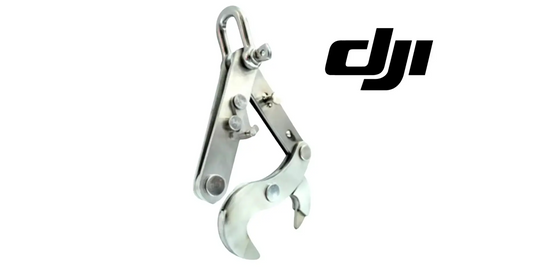
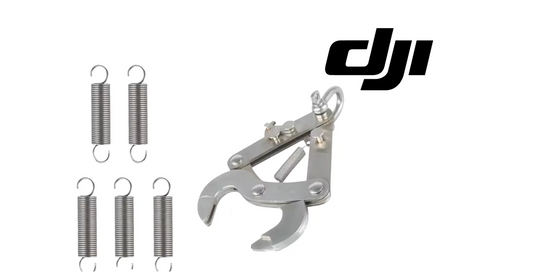
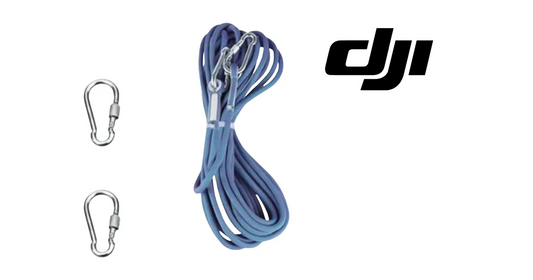
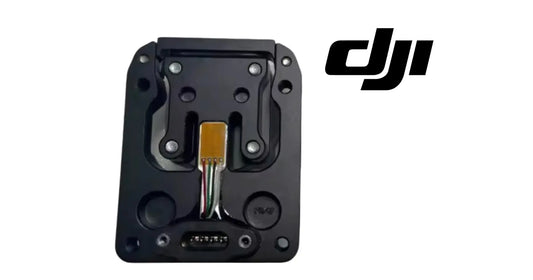
For T100 rigging hardware, the current catalog includes the OEM Lifting Hook, OEM Lifting Rope and OEM Damper Hook. The complete T100 assembly path is the T100 OEM Payload Lifting System Kit. For T70P, use the T70P OEM Lifting System.
Parts & Equipment Referenced in This Guide
- T100 OEM Payload Lifting System Kit
- T70P OEM Lifting System
- T100 OEM Lifting Hook
- T100 OEM Lifting Rope
- T100 OEM Damper Hook
Every part listed above is stocked by Ares Acres as a genuine DJI Agras OEM component, ships to Canada with free standard shipping, and shows CAD pricing at checkout for Canadian customers.
Shop Related Collections
Related Tutorials
- Agras Lift Task-Point Planning
- Lift Sling & Hook Requirements
- Existing T100 Lifting Safety Regulations Guide
🇺🇸 Reading from the United States? See the U.S. edition: DJI T100/T70P Lift Operation Guide: Loading, Unloading, 3–4 m Descent, 6 m Clearance & Auto Balance
Canadian Operator FAQ: T100/T70P Lift Operation Guide
Does Ares Acres ship T100 and T70P lift systems, cables and hooks to Canada?
Yes. Ares Acres ships genuine DJI Agras OEM parts, including T100 and T70P lift systems, cables and hooks referenced in this guide, to Canada with free standard shipping, and Canadian customers see CAD pricing at checkout.
Do I need an SFOC to fly the DJI Agras T100 or T70P in Canada?
Not for every operation. Under Transport Canada’s November 2025 rules, the DJI Agras T100 or T70P falls into the medium RPAS class (25–150 kg) and can be flown within visual line of sight on an Advanced Operations pilot certificate; a Special Flight Operations Certificate is still required for operations outside that envelope, such as beyond visual line of sight or payloads Transport Canada treats as dangerous goods. Confirm current requirements with Transport Canada and your provincial regulator before operating.
Is this lift operation different for Canadian operators?
No. The lift operation described here is identical in every country; only the regulatory framework, the purchasing path and the units used in this guide differ. Confirm current requirements with Transport Canada and your provincial regulator before operating.
Source and revision note
Primary source: DJI T70P / T100 Lift System User Manual v1.0 (2025.07), sections 1.3 and 3.2.