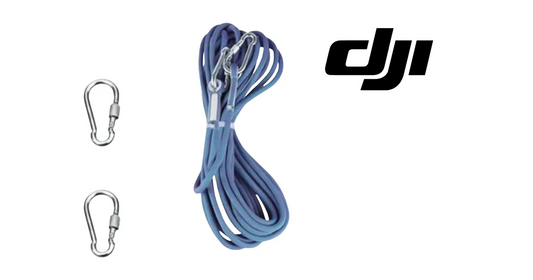

DJI T100/T70P Lift Installation Prep & Weight Sensor Calibration Guide (Canada)
🇨🇦 CANADA — DJI T100/T70P Lift Installation Prep & Weight Sensor Calibration for Canadian Operators
🇺🇸 Reading from the United States? See the U.S. edition: DJI T100/T70P Lift Installation Prep & Weight Sensor Calibration Guide
This Canadian edition is written for Canadian DJI Agras operators across Canada, from the Prairie grain belt of Saskatchewan, Alberta and Manitoba to the row crops of Ontario and Quebec and the orchards and vineyards of British Columbia and Niagara. It covers official installation preparation and tare calibration when the unloaded measured weight drifts. The procedure, specifications and warnings below are identical to the original edition linked above — the hardware does not change at the border. What changes for a Canadian operator is the regulatory and purchasing context: the DJI Agras T100 or T70P falls into Transport Canada’s medium RPAS class (25–150 kg) and flies within visual line of sight on an Advanced Operations pilot certificate under the November 2025 rules, with a Special Flight Operations Certificate for anything outside that envelope; spraying follows provincial applicator licensing and Health Canada PMRA aerial label directions, and pricing is shown in Canadian dollars. Ares Acres stocks T100 and T70P lift systems, weight sensors and cables referenced in this guide as genuine DJI Agras OEM parts, ships them to Canada with free standard shipping, and shows CAD pricing at checkout.
The Lift System User Manual does not reproduce the full mechanical installation procedure; it points operators to DJI's official T70 and T100 installation videos. What the manual does provide is the preparation checklist before installation and the exact condition and workflow for tare calibration of the lift weight sensor.
Quick Answer: Before installation, remove the Intelligent Flight Battery. Before removing the spraying system, clean residual liquid from the hose. On T70, DJI recommends removing the spray lance to reduce the risk of sling entanglement. If the aircraft is hovering without cargo and the measured weight is not zero, place the unloaded aircraft on level ground with the sling free, then use Tare Calibration in Operation View to reset the measured weight to zero.

Use DJI's official installation guidance
DJI says to strictly follow the official installation guidelines and states that users take responsibility for losses caused by incorrect installation. The manual supplies separate official tutorial links for T70 and T100 rather than duplicating the mechanical steps in text.
Remove the Intelligent Flight Battery before installation
The battery must be removed before installation work begins. On the T100, the active battery family includes the DB2160 Intelligent Flight Battery. Battery removal here is an installation-safety step, not a battery-service procedure.
Clean residual liquid before removing the spraying system
Before taking the spraying system off, clean residual liquid from the hose. This prevents the lift-system conversion process from being combined with an uncleared spray-fluid path.
T70: remove the spray lance when appropriate
When installing the lift system on T70, DJI recommends removing the spray lance to prevent entanglement with the sling.

When is weight sensor calibration needed?
DJI says calibration is needed when the aircraft is hovering without cargo but the measured weight does not equal 0.
Tare calibration procedure
- Place the aircraft on level ground.
- Make sure the aircraft is unloaded.
- Make sure the sling is not being pressed by another object.
- In Operation View, open the lift-system settings.
- Tap Calibration under Tare Calibration.
- Confirm the measured weight resets to zero.
Weight-sensing service paths
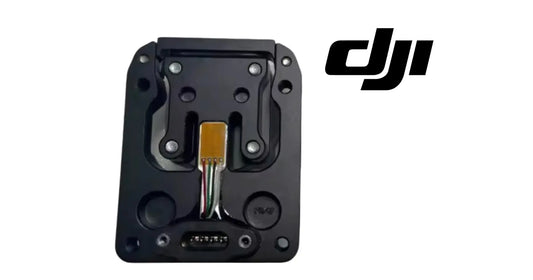
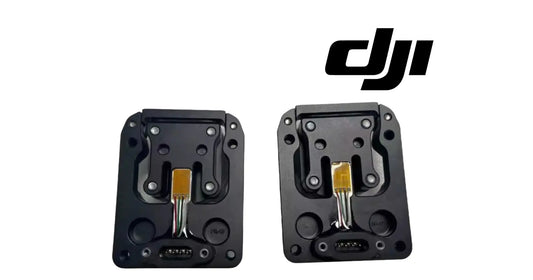
If repeated tare calibration does not resolve an abnormal reading, do not assume the complete lift system must be replaced. The T100 catalog includes a Weight Sensing Service Kit, Front Weight Sensor Module, Rear Weight Sensor Module, and Weight Sensor Signal Cable. Diagnose the actual fault before choosing a part.
The system-side control path is the T100 OEM Payload Lifting Control Module.
Existing installation resources
You already have a detailed T100 Dual-Battery Lift System Installation Tutorial and a T100 Lifting Interface Calibration Tutorial. This new page does not replace them; it anchors those workflows to the 2025.07 T70P/T100 manufacturer manual and owns the specific tare-calibration intent.
Parts & Equipment Referenced in This Guide
- T100 OEM Payload Lifting System Kit
- T70P OEM Lifting System
- T100 Weight Sensing Service Kit
- T100 Front Weight Sensor Module
- T100 Rear Weight Sensor Module
- T100 Weight Sensor Signal Cable
- T100 Payload Lifting Control Module
Every part listed above is stocked by Ares Acres as a genuine DJI Agras OEM component, ships to Canada with free standard shipping, and shows CAD pricing at checkout for Canadian customers.
Shop Related Collections
Related Tutorials
- T100 Dual-Battery Lift Installation
- T100 Lifting Interface Calibration
- Agras Lift Task-Point Planning
🇺🇸 Reading from the United States? See the U.S. edition: DJI T100/T70P Lift Installation Prep & Weight Sensor Calibration Guide
Canadian Operator FAQ: T100/T70P Lift Installation Prep & Weight Sensor Calibration Guide
Does Ares Acres ship T100 and T70P lift systems, weight sensors and cables to Canada?
Yes. Ares Acres ships genuine DJI Agras OEM parts, including T100 and T70P lift systems, weight sensors and cables referenced in this guide, to Canada with free standard shipping, and Canadian customers see CAD pricing at checkout.
Do I need an SFOC to fly the DJI Agras T100 or T70P in Canada?
Not for every operation. Under Transport Canada’s November 2025 rules, the DJI Agras T100 or T70P falls into the medium RPAS class (25–150 kg) and can be flown within visual line of sight on an Advanced Operations pilot certificate; a Special Flight Operations Certificate is still required for operations outside that envelope, such as beyond visual line of sight or payloads Transport Canada treats as dangerous goods. Confirm current requirements with Transport Canada and your provincial regulator before operating.
Is this lift installation and calibration different for Canadian operators?
No. The lift installation and calibration described here is identical in every country; only the regulatory framework, the purchasing path and the units used in this guide differ. Confirm current requirements with Transport Canada and your provincial regulator before operating.
Source and revision note
Primary source: DJI T70P / T100 Lift System User Manual v1.0 (2025.07), sections 2.1-2.2.